“Another pair of culturally informed eyes”: Kate Edwards on culturalisation without a triple-A budget


- A five-person team doesn’t need a triple-A process - Edwards breaks it down to three steps.
- Some markets have legally incompatible map requirements, and no neutral version satisfies both.
- Studios increasingly ask whether a decision is defensible, not whether it lands.
Kate Edwards built Microsoft's geopolitical strategy team before leaving to found Geogrify, the consultancy that focuses on content culturalisation. Three decades in, her client list runs from triple-A down to one-person studios. Her most recent large project was Indiana Jones and the Great Circle.
We speak to her about how small mobile teams can get culturalisation right on a budget, why there's no such thing as a globally neutral map and why playing it safe isn't the same as getting it right.
The closer to reality, the higher the stakes
Edwards' central idea is "allegorical distance", meaning how much of a fictional world invites comparison with the real one.
"The closer you get to recognisable geography, cultures, religions, political conflicts or historical events, the greater the expectation of accuracy - and the greater the potential impact of getting something wrong."
She says the principle applies just as much to small teams.
The three-step version
Her minimum viable process for a small team has three steps.
First, identify the handful of cultural elements fundamental to the game - "not every texture and prop, but the things players are going to notice and interpret". Second, research those using sources from within the culture, not your own assumptions. Third, get at least one knowledgeable person from that culture to review it while you can still change things.

"You don't necessarily need a huge culturalisation budget," she says. "You just need intentionality, some degree of research and another pair of culturally informed eyes. And critically, do that as early as possible in the process."
Culturalisation is cheaper than its reputation
Culturalisation is seen as a big-publisher expense. Edwards says it costs less than people expect if it's built in early: a few hours of specialist consultation at concept stage, some targeted research and one or two expert reviewers.
"I know several indie projects that leveraged an hour or two of a university professor's time and that helped set them on a better path."
The real cost comes from leaving it late. "The expensive version is discovering the problem after you've created the assets, recorded the dialogue, built the marketing campaign and announced the game."
When there is no right answer
Countries such as China and India both have legal requirements on depicting disputed territories, which can make one map unacceptable in the other market.
"Governments don't regard maps simply as artwork - they regard a map as a political assertion about their sovereignty," says Edwards.
“Sometimes the best culturalisation solution isn't changing the content. It's asking why the content needs to be there in the first place.”
Her advice is to find which markets have legal requirements, understand exactly what they cover and build regional variants. If that isn't feasible, question the content itself.
"Sometimes the best culturalisation solution isn't changing the content. It's asking why the content needs to be there in the first place."
Defensible, or good?
Edwards used to be hired to protect creative intent as a game crossed borders. That work continues, but clients now bring a new worry.
"I'm hearing much more anxiety now around: if somebody attacks this decision publicly, can we explain why we made it?"
She understands why - social media can reduce a creative decision to a screenshot and an accusation within hours - but is wary of where it leads.
“What concerns me is when culturalisation becomes purely defensive, when the goal becomes creating something nobody can possibly object to. That's neither realistic nor creatively healthy.”
“Almost any successful cultural artefact is going to offend or upset somebody somewhere,” she says.
"What concerns me is when culturalisation becomes purely defensive, when the goal becomes creating something nobody can possibly object to. That's neither realistic nor creatively healthy."
Her alternative is cultural resilience rather than cultural risk avoidance. Do the homework, understand the audiences being represented, know where the genuine risks are, document the reasoning - and then back the creative decision.
Pick a rule and keep it
The most common failure she sees isn't offensiveness. It's inconsistency, meaning real geography with fictionalised cultures, or the reverse.
Great Circle is her own example of getting it right, which she concedes sounds self-serving. The team understood where reality stopped and Indiana Jones began - real places in a specific period, alongside the supernatural archaeology the franchise runs on.
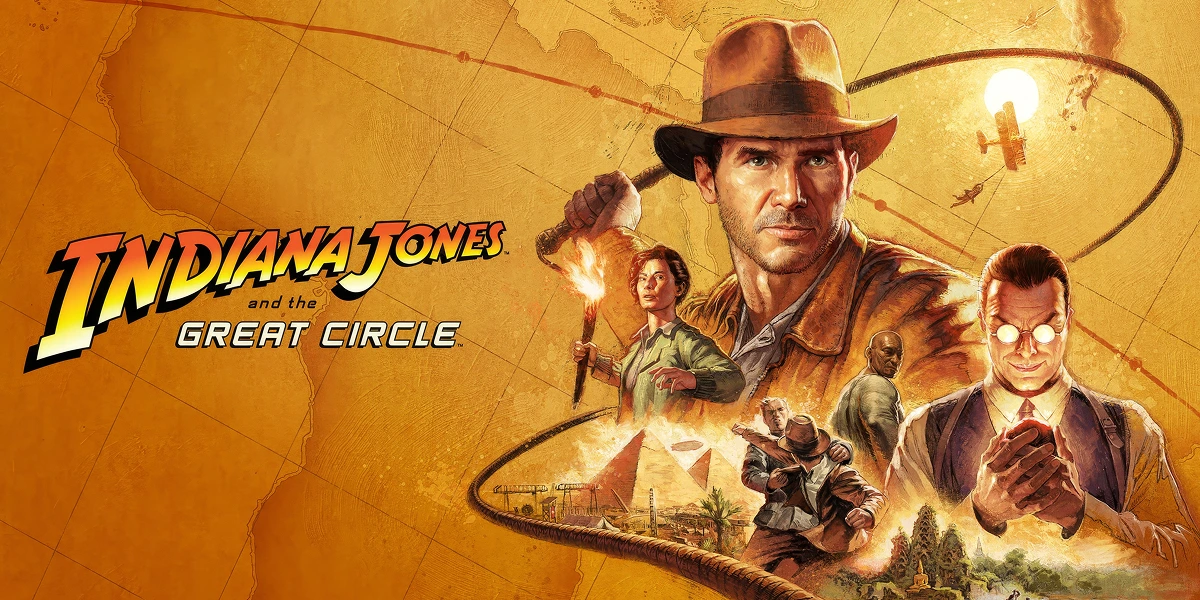
"Players are remarkably good at understanding the rules of a fictional world once you establish them. Problems arise when the game signals, this part is authentic and historically accurate, and then suddenly applies completely different rules without the player understanding why," Edwards says.
"Good culturalisation isn't necessarily maximum realism. It's coherence between the reality you've borrowed and the fiction you've created."
The handbook, eventually
People still ask her about the culturalisation handbook she has long promised. "The embarrassing answer is: still being written."
Part of the delay is a change of reader. The material started with triple-A production; now she wants it to work for developers with no geopolitical team, no localisation department and no legal budget - who, she argues, need it more precisely because they lack those things.
"I don't want to write a 500-page encyclopedia telling developers what's offensive in every country, because that would be obsolete almost immediately. I want to teach developers how to ask better questions."
The other side of the desk
Alongside her full-time consulting, Edwards has been helping build and fund SetJetters, a screen-tourism app that maps real-world filming locations - and, increasingly, game locations - with partnerships including Visit West.
Building a company, she says, has been educational and occasionally humbling.
"When you're consulting, you can identify the ideal solution. When you're running a startup, every ideal solution competes with 10 other ideal solutions for money, engineering time and attention."

Fundraising also showed her how differently creators and investors talk about value: creators describe the product, while investors ask about scalability, acquisition cost, retention and revenue.
It has also inverted her day job. After three decades studying how entertainment moves across cultures, she is now asking the opposite question.
"What happens when entertainment causes people to physically move through geography? A film, television show or game creates an emotional relationship with a place and suddenly somebody wants to go there."
If you’re a small team planning a global launch, you don’t have to work it out alone. Meet publishers, investors and fellow developers at Pocket Gamer Connects Jordan in Amman on November 7th and 8th. Tickets are here.
Companies

People
