Gamescom's loudest absence: A masterclass in not showing up

Adam Smart is the director of product gaming at AppsFlyer.
The games industry has spent weeks, if not months, talking and writing about the coming launch of GTA 6 – myself included.
How does the announcement of Rockstar's mega-release ripple through other studios' marketing budgets and investment decisions? And who can dodge the biggest event the industry has seen in years most skilfully, while still landing their own exclamation point in 2026?
Anyone expecting a giant Rockstar booth on the show floor was disappointed. Fans had to wait until Thursday evening for a new promo and it didn't drop on the Gamescom stage at all. It landed on Netflix and YouTube instead.
Rockstar's longest GTA VI footage yet leaned entirely on gameplay, with a level of detail that already hints this game will reset the bar. And yet, in spite of that (or maybe because of it), nobody at the show could stop talking about GTA 6.
That's the whole point of this wrap-up: the biggest marketing event of Gamescom 2026 didn't happen at Gamescom.
1) GTA 6 transcends Gamescom
One of the most interesting things about this year's Gamescom is what wasn't there: Grand Theft Auto 6. For most games, the show is a huge opportunity to get in front of players, build hands-on experiences and generate awareness ahead of a release. GTA 6 simply doesn't seem to need that traditional marketing stage anymore.
Instead, Rockstar built its own global media moment, including a Netflix-exclusive window for its latest extended look, ahead of a wider rollout. That says something fundamental about the scale of this release. You could almost say Gamescom is now happening in GTA 6's shadow.

The bigger trend behind it: the very biggest entertainment franchises are increasingly able to create their own media moments instead of leaning on traditional industry events to generate attention. GTA 6 doesn't need Gamescom, which is probably the clearest sign yet of just how big this release has become.
That's exactly why this matters for the wider advertising industry too, not just for games marketers. A release of this scale shifts media plans well beyond its own category.
Some brands will try to push extra budget into the market right before November 19th, making one last push before GTA 6's attention wave hits. Others will deliberately go quiet or shift their big campaign moments elsewhere, knowing there's no point competing head-on with a launch this size.
Both are really the same response to the same problem: when a single release can absorb this much attention, timing your own campaign around it becomes a strategic call – not just for publishers, but for any brand fighting for visibility in the same window.
2) Gaming has never been more crowded – and attention is the scarce resource
The sheer scale of Gamescom is striking. The business side was completely sold out, with an enormous number of publishers, studios and games companies competing for space and visibility. But the interesting part isn't the size itself, it's what that size represents: there are now an enormous number of games competing for the same finite resource, player attention.

That's especially true given the packed release calendar running up to November 19th, GTA 6's launch date. Publishers are working harder than ever to lodge themselves in players' minds before one of the biggest entertainment launches in history arrives and potentially soaks up a huge share of the available attention.
Gamescom is a microcosm of the wider industry: bigger booths, bigger activations, bigger trailers, ever more elaborate experiences – all attempts to answer the same question: How do I make my game matter when everyone else is shouting at the same time? Because the games industry doesn't have a shortage of great games anymore. It has a shortage of attention.
3) The industry is finally waking up to the female gaming audience
Another noticeable trend: more and more games are being designed and marketed with women explicitly in mind. Infinity Nikki, with its huge presence at Gamescom, is the most obvious example, but it sits inside a broader movement toward games built around aesthetics, self-expression, customisation, collecting, social interaction and lifestyle fantasy.

What's genuinely interesting here isn't the rise of 'women's games'. It's the recognition that a huge share of the potential gaming audience has historically been underserved by the industry's assumptions about what gamers want.
That's a much bigger commercial opportunity than simply targeting one more demographic: it's about expanding the addressable market itself.
The industry is slowly realising that growing the audience isn't just about finding more players. It's about making games for people who've never historically felt games were made for them.
That covers the big storylines from the show floor. Now, on to the topics that should actually be keeping marketers up at night.
4) PC and console are adopting mobile's growth mindset
One of the biggest shifts I'm seeing: PC and console are leaning harder into performance marketing and ongoing user acquisition. Historically, PC/console marketing has been heavily brand-led: build awareness, drive wishlists and pre-orders, engineer one big launch moment, concentrate activity in the first few weeks, then let it taper off.
That model is getting harder to justify when games stay commercially relevant for months, even years, after launch. If a game has longevity, you have to capture it and at scale, and that only happens through continuous new acquisition.
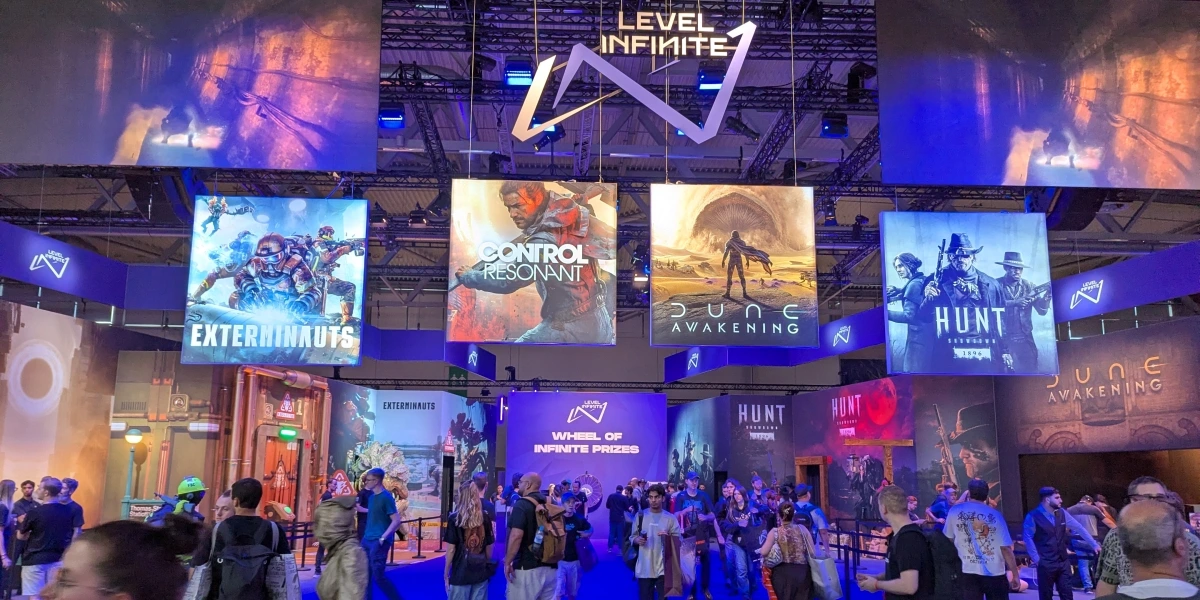
This is exactly where mobile and PC/console are starting to converge. Mobile has spent a decade obsessing over acquisition, retention, LTV, ROAS and the relationship between marketing spend and player value. PC and console increasingly have to think the same way.
The question is no longer just "how many people can we get to buy this game at launch?", it's becoming "how do we build a machine that keeps finding valuable players for years?".
PC and console are learning what mobile has long since internalised: a game's launch isn't the end of the marketing cycle. It's the start of the acquisition cycle.
You can see it in what a game's revenue actually depends on today. The one-off sale on launch day matters less than what happens afterward: in-game purchases, season passes, live ops content that keeps players engaged for months.
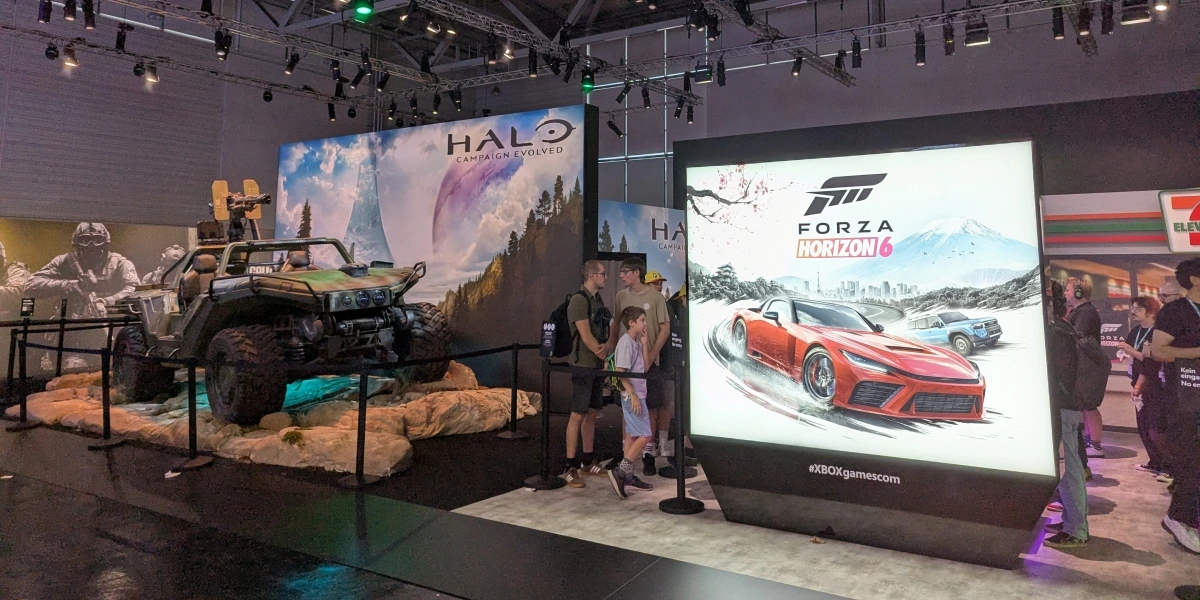
That's exactly the business model mobile has spent years perfecting – and it's shifting PC and console marketing away from the single purchase moment and toward customer lifetime value.
Loyalty is becoming the real KPI. It's no longer just about how many players you win on launch weekend, but how much a single player is worth over their entire time in the game and what it takes to unlock that value.
5) Mobile wasn't dominant on the show floor – but it was everywhere around it
Mobile wasn't dominant at Gamescom itself. No surprise there: PC and console own the picture, the booths, the trailers. And yet the big console and PC players have stopped dismissing mobile as "not real gamers" a long time ago – increasingly, they're eyeing mobile's revenue numbers with a mix of curiosity and envy.
That's exactly what the events happening around the show floor were for, including the State of Gaming Summit from Sensor Tower and AppsFlyer, which brought together CMOs, VCs, studio leaders and performance marketers from mobile, PC and console. The topics on the table there are a good proxy for where the industry actually stands.
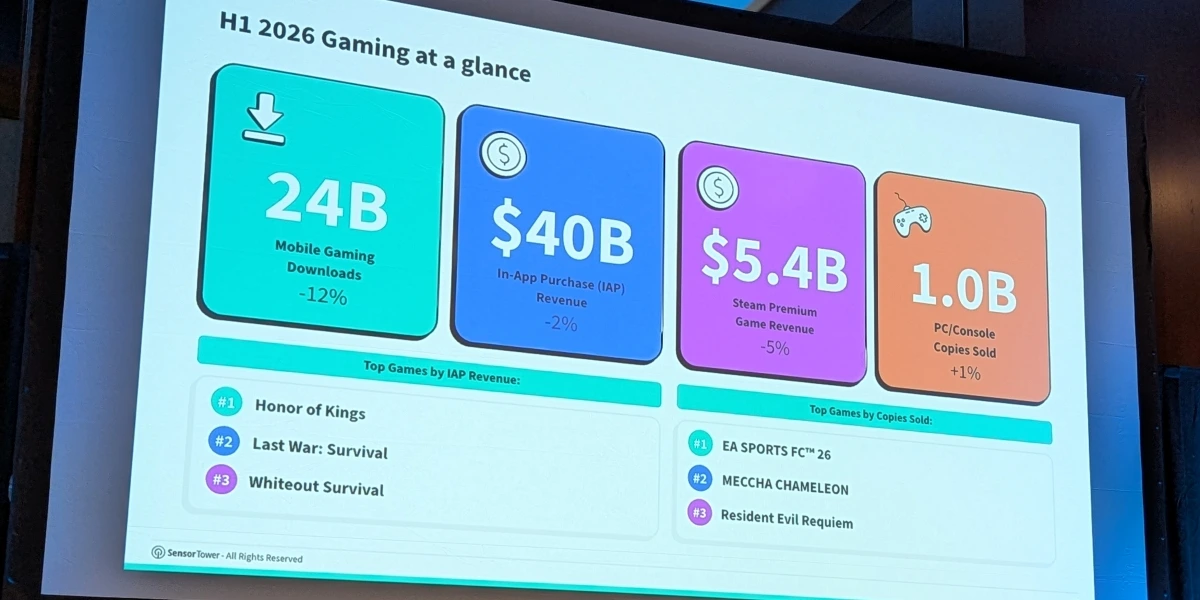
Rising mobile CPIs are forcing marketers to rethink acquisition. Mobile user acquisition keeps getting more expensive, pushing marketers beyond traditional paid channels. Influencers and creators are the obvious part of that shift, but what's interesting is how their role is evolving.
It's less and less about paying for a fixed number of installs. Increasingly, companies are building real communities around creators and games, something that sits between paid and organic. The value isn't in a single piece of content's immediate performance; it's in the community that forms around it and the ongoing discovery, advocacy and acquisition that flows from it.
Mobile acquisition is moving outside the app store. The classic mobile funnel used to be simple: ad → app store → install. More marketers are now questioning whether that has to be the journey.
Instead, companies are acquiring users on the web, engaging them there, building intent and only then converting them into mobile players. Part of the appeal is economic – web traffic offers another route into the funnel and can lower effective acquisition costs.
But it also reflects a broader shift in thinking: the web doesn't need to be the product. It can simply be another acquisition layer before the player moves into the mobile ecosystem.
Direct-to-consumer payments are creating a growing measurement problem. Perhaps the most important trend from an industry-wide view: more mobile games are pushing players toward external stores and alternative payment methods to reduce their dependence on platform fees.
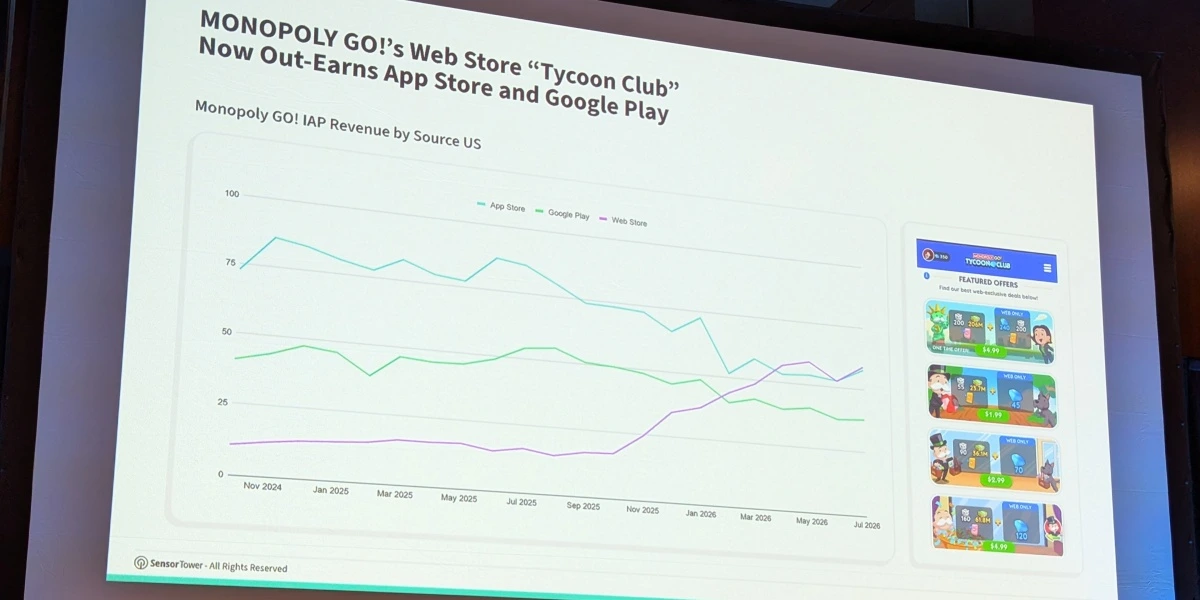
The problem is that a growing share of that revenue never shows up in the datasets traditionally used to measure the mobile games market. If third-party estimates keep leaning primarily on App Store and Google Play data, they'll increasingly paint an incomplete picture, one with real consequences once investors, analysts and financial institutions start making decisions off those numbers.
The irony: the industry's own success in moving players away from platform payments is what's making the industry itself harder to measure. We're increasingly measuring the money that flows through the app stores rather than the money players are actually spending.
It's entirely possible the industry looks like it's shrinking on paper while individual businesses are actually growing.
The bigger picture
Put all of these observations together and I see one overarching story: gaming is becoming a far more sophisticated business — and a much harder one to measure and grow.
There are more games competing for attention. The cost of acquiring players keeps rising. PC and console are adopting mobile's performance mindset. Mobile companies are thinking beyond the app store. Publishers are building communities instead of just buying installs. And a growing share of revenue is moving outside the channels the industry has traditionally used to measure itself.
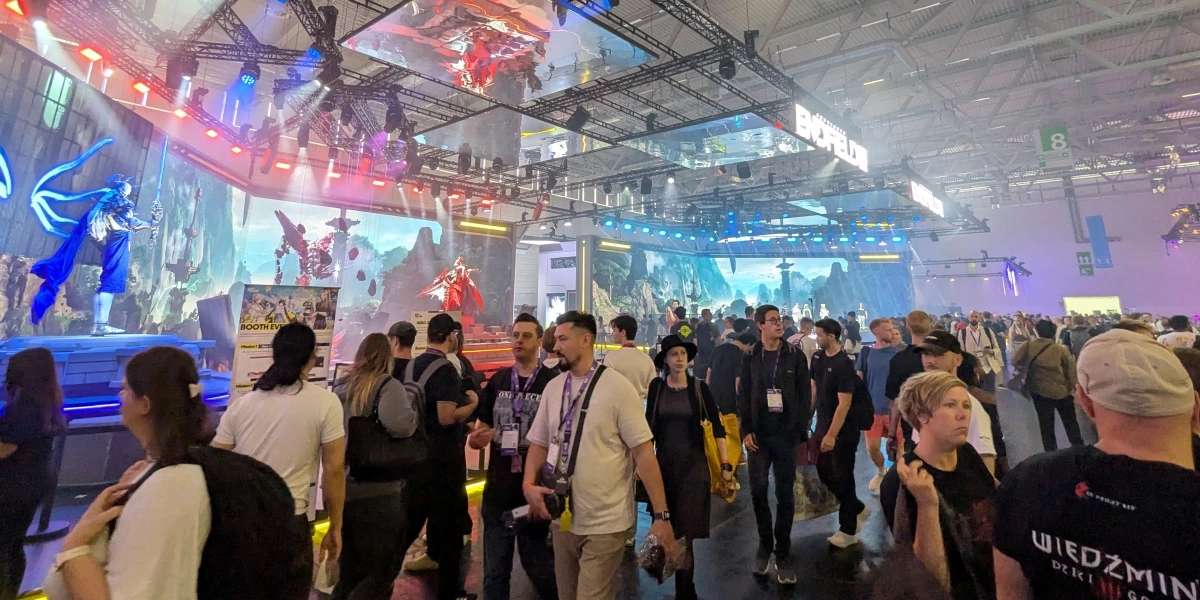
At the same time, the very biggest games have become powerful enough to create their own global media moments without needing traditional gaming events at all.
The result is an industry where attention, acquisition and accurate measurement are becoming some of the most valuable commodities there are.
And that might be the real takeaway from this Gamescom: the games industry has never been bigger, but that doesn't mean it's getting any easier to run.
The fight is no longer just about making a great game, but about winning attention, acquiring the right players and understanding where the value is actually being created.
And only in the rarest of cases, as GTA 6 just proved, is the best way to win that fight not to show up at all.
Companies


People

Events