My.Games' $50m a year benchmark for new forever franchises



My.Games operates more than 40 live games across mobile, PC and console. Its mobile titles include the likes of War Robots, Rush Royale, Tacticool and Hustle Castle.
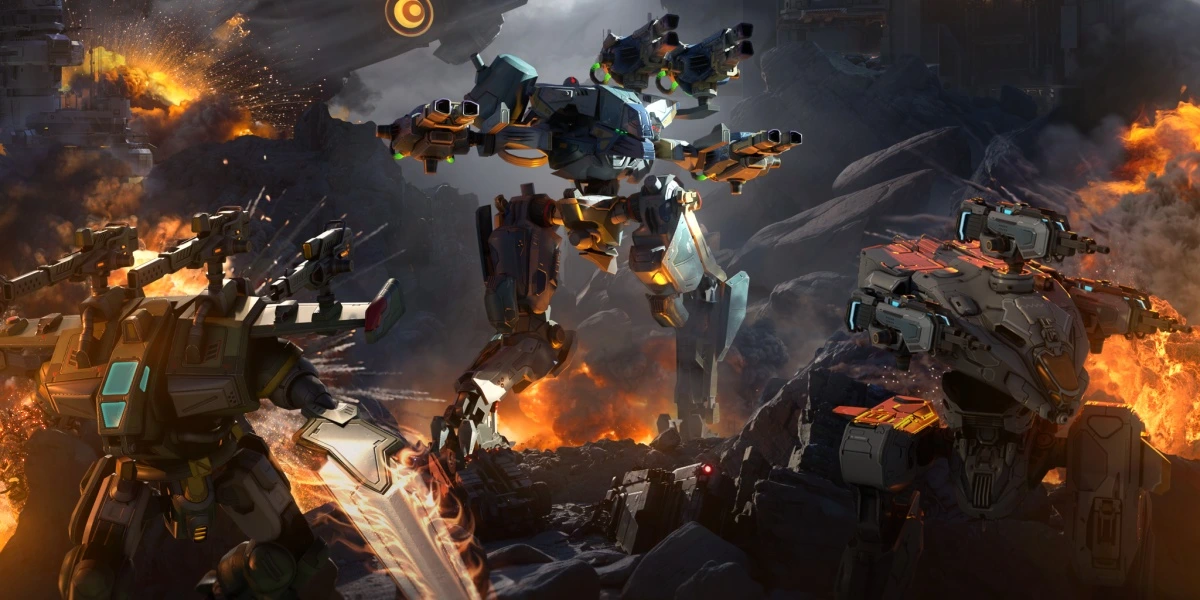
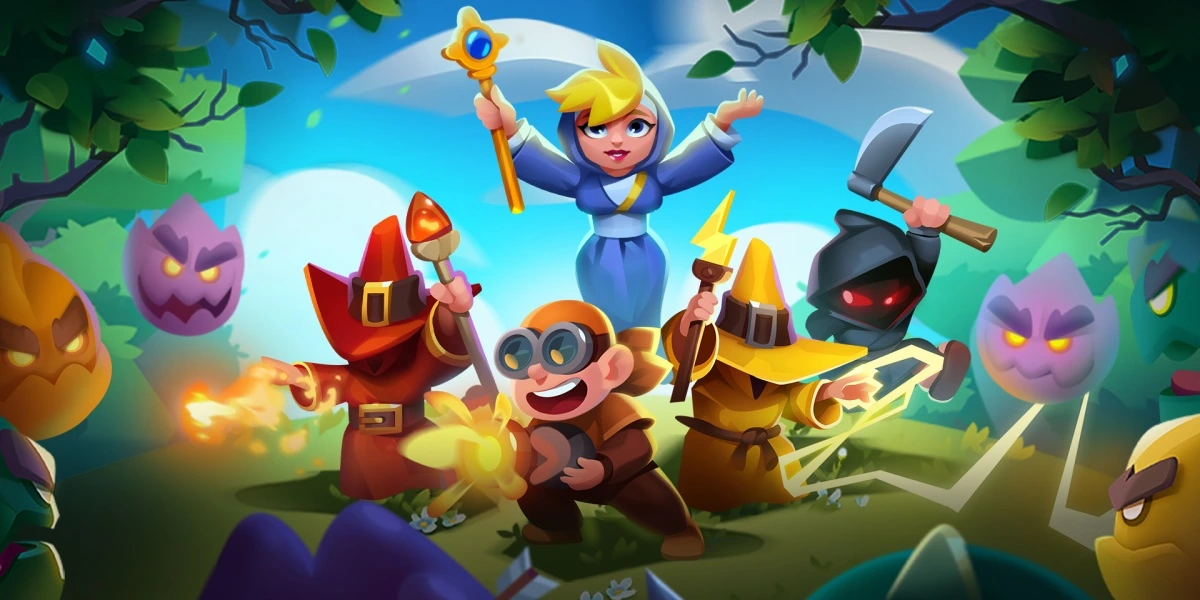
Flagship title War Robots, developed by Pixonic, has accumulated more than $1 billion in revenue and attracted 325 million players - the company also claims it gets 20m new players annually. It was also said to recently have had its best performance over the past seven years. Meanwhile, Rush Royale, a blend of merge and tower defence, has picked up $500m in lifetime sales.
So how does My.Games keep its forever franchises running for the long-term and, like the challenge of so many other mobile publishers, how will it find its next hit? We spoke with CEO Elena Grigorian on the PocketGamer.biz Podcast to find out more, as part of our new expanded video series with industry leaders.

Forever games
“I don't think that there is any shortcut for how to build a long-lasting game,” says Grigorian.
“Success stories like War Robots and Rush Royale are definitely the result of years of hard work, constant iterations and a lot of mistakes, but at the same time the incredibly talented team.
“People usually look at these successful titles and think that they are overnight successes. But there are many years of work, understanding player behaviour, testing ideas, learning from failures and knowing how to scale the things that truly resonate with the audience.
“And when the games prove their potential, the work actually starts at this moment. So we have to keep the listening community, improve the experience constantly, invest into live ops and never assume that yesterday's success guarantees tomorrow’s. So that's how to build the franchise that players want to come back to year-on-year.”
One of My.Games’ strategic priorities is building its direct-to-consumer platforms. The company joins other publishers around the world in moving players off store to make purchases. As we recently covered, Stillfront its making 44% of sales from its D2C platforms now, while Playtika D2C revenue accounts for 39.2% of sales and MTG’s D2C efforts makes up 39%.
Grigorian doesn’t provide a specific percentage, but she claims that My.Games has more than 2x'd its revenue from D2C every single year.
“For us, D2C is significantly more than just improving the unit economy. It's more than just communication,” says Grigorian. “It's about building the direct relationship with our players from the very beginning until the very end.”
She adds: “So we have built our own D2C platform, bringing together live ops, payments, CRM and player engagement structure into a single ecosystem. And that works great."
Knowledge-sharing
My.Games has grown its operations over the years through the acquisition of War Robots developer Pixonic and the launch of new divisions like PC and console publishing arm Knights Peak and mobile investment and publishing outfit MGVC.
Today, the company has around 1,000 employees. Grigorian says knowledge-sharing is a big part of the company’s culture. My.Games regularly organises internal meetups throughout the year to share experience, including for engineers, marketers, designers, artists and other disciplines.
“The most important [thing] for us is that we use a united tracking system for all of our games,” explains Grigorian.
“It means that this united tracking system creates a transparent knowledge system for all of us. It's open for everyone. It means that as soon as you decide to talk with other game designers, with different teams, they can openly discuss everything connected with numbers. It means that at our internal events, it's without any secrets. We can share all the data, all the numbers.”
A benchmark for success
Like many publishers, My.Games has found it challenging launching hit new games on mobile to the scale of War Robots, Rush Royale or Left to Survive, which recently crossed $170m after eight years. Though Grigorian challenges that assumption, insisting that the company has launched several new games over the past 18 months.
“Some of them are showing very encouraging first numbers and are already approaching one million-plus players, which is a good result for the start. That said, yes, the reality is that launching new, successful games nowadays is much more difficult than it was five, ten years ago.”
To improve its chances of success, over the past year My.Games has “essentially redesigned” its R&D process - with the benchmark to release a long-lasting game that can make $50m per year, played by a wide audience.
The company now works with smaller teams, evaluates ideas much earlier and uses a common criteria of success across all projects. The goal, Grigorian says, is to test more titles, more ideas, learn faster and make investment decisions based on real data, rather than expert opinions or any other assumptions.
“Not every prototype becomes a game and not every game becomes a hit,” she states.
Grigorian says the company’s current philosophy is to increase the number of “smart experiments”, which consist of a combination of fundamental components. The first is whether this is the kind of game the company would like to make and why they believe it’s going to be successful. The second is to ask the question: why can My.Games make this title better than anyone else in the world and what is the USP?
“In this area, we are mainly talking about our detailed expertise in this exact genre, for example, or we can do this quicker than others because we have this tool, for example, or this solution that can increase our time and so on.
"The third criteria, and I believe that maybe this is the most important: having the team that's capable of executing this idea and who believes in it more than in anything else. So having these factors, it's okay for us to start a new experiment, and we are trying to increase the number of these smart experiments inside of our R&D team.”
Practical AI
One of the most talked about trends in the games industry right now is AI - and Grigorian says the company has moved beyond the stage where the tech is something staff experiment with separately. Today, it’s in the process of AI becoming a part of teams’ everyday workflow.

What initially started as a top-down approach to get staff hands-on with AI eventually became a bottom-up process, Grigorian explains. For R&D in particular, she says AI tools can be a gamer changer in terms of the speed of checking new ideas.
“I wouldn't even be able even to name a single department in the company that doesn't use AI in its work. It's everywhere - in development, in localisation, in marketing, in finance, in legal, in HR, everywhere.
"I think that the crucial next step for every company and for My.Games is to ensure that this acceleration remains seamless across the whole workflow. Because if it's not that way, we just move this bottleneck from one step to another step without any significant effect on the final result.
“What is really important is to guarantee that we use AI and succeed to increase the speed for the whole entire workflow. And this is the main pain for us at the moment, the main point of our interest, how to build the whole infrastructure, the whole process of game creation and game support with the help of AI quicker than we did before.”
Companies

People
