African games industry has moved from potential to production says Maliyo CEO Hugo Obi

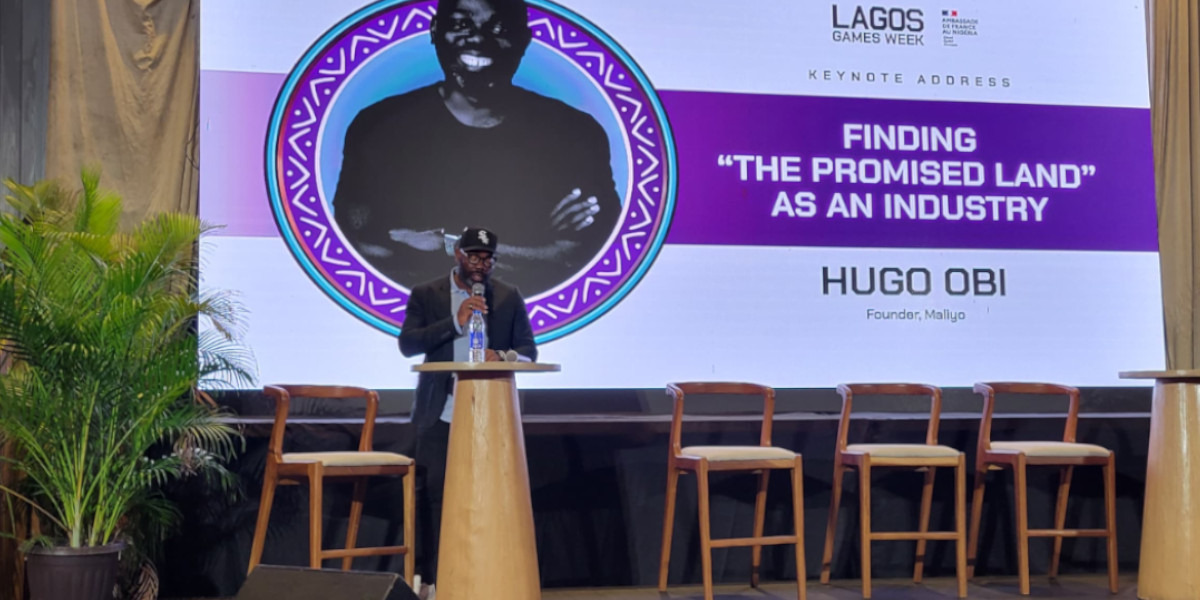
- African games industry is shifting from "potential" to "production", according to Maliyo Games founder Hugo Obi.
- Obi argued that the sector should now be measured by shipped products, jobs and studio growth.
For years, the African games industry has been defined by its potential. Today, however, developers across the continent are shipping products, forming studios and generating revenue, a shift the sector has long awaited.
Delivering the keynote address on the opening of Lagos Games Week 2026, Maliyo Games CEO and founder Hugo Obi argued the industry has entered a new chapter defined by output rather than promise.
"When people talk about the African industry, they often talk about potential. Potential market, potential players, potential talent, potential growth," said Obi. "But I think we are finally entering a new chapter. The chapter where we stop talking about potential and start talking about production.”
“I think we are finally entering a new chapter. The chapter where we stop talking about potential and start talking about production.”
Hugo Obi
Obi, who has worked in the industry since 2012, pointed to the pace of change as evidence, noting that the studios, jobs and shipped games visible at the event did not exist five years ago.
"The speed and acceleration that we are seeing is unprecedented," he said. "I'm seeing developers, not aspiring game developers, actual developers, people who are shipping products."
The future belongs to teams
While celebrating the progress, Obi was direct about what the next stage demands, urging independent developers to stop trying to do everything alone and to start collaborating, hiring and asking for help.
He drew on his own experience scaling Maliyo Games in 2021, when the cost of growing the studio felt unsustainable, to make the case that building capacity pays off.
“The strongest ecosystems in the world are not built purely on individual abilities. They're built on collaboration. The future belongs to teams.”
Hugo Obi
"The moment you really tap into the capacity, the energy, the skill of the people, somehow the world has a mechanism of giving you more," he said.
Making a game requires designers, developers, producers, writers, marketers, community managers, data analysts and business roles, Obi noted, arguing no single person should attempt all of it. "The strongest ecosystems in the world are not built purely on individual abilities. They're built on collaboration. The future belongs to teams."
His challenge to developers in the room was practical: meet someone new, share an idea, join a project, hire someone even temporarily, pitch, take meetings and show up. "Opportunities rarely come to you in your bedroom," he said.
Building toward 2030
Obi closed with continuity, framing the work as building a foundation for a generation still in school today.
“Our job is just to sustain this foundation, and it's not hard. Run an event once a year, bring international speakers, keep showing up.”
Hugo Obi
"There are kids today who are like 15, by 2030 they're going to be 18, 19. And if we build an industry for them, they will come and create," he said, pointing to the music industry as the template for how a few early successes can produce a wave of talent.
He argued the connections African developers can now access, from platform holders to international partners, were unimaginable a few years ago, and that sustaining them is the task ahead.
"Our job is just to sustain this foundation, and it's not hard. Run an event once a year, bring international speakers, keep showing up.”
Companies
