Gaza Sky Geeks' Leyan Zahdeh on training game developers in Palestine amid displacement and war

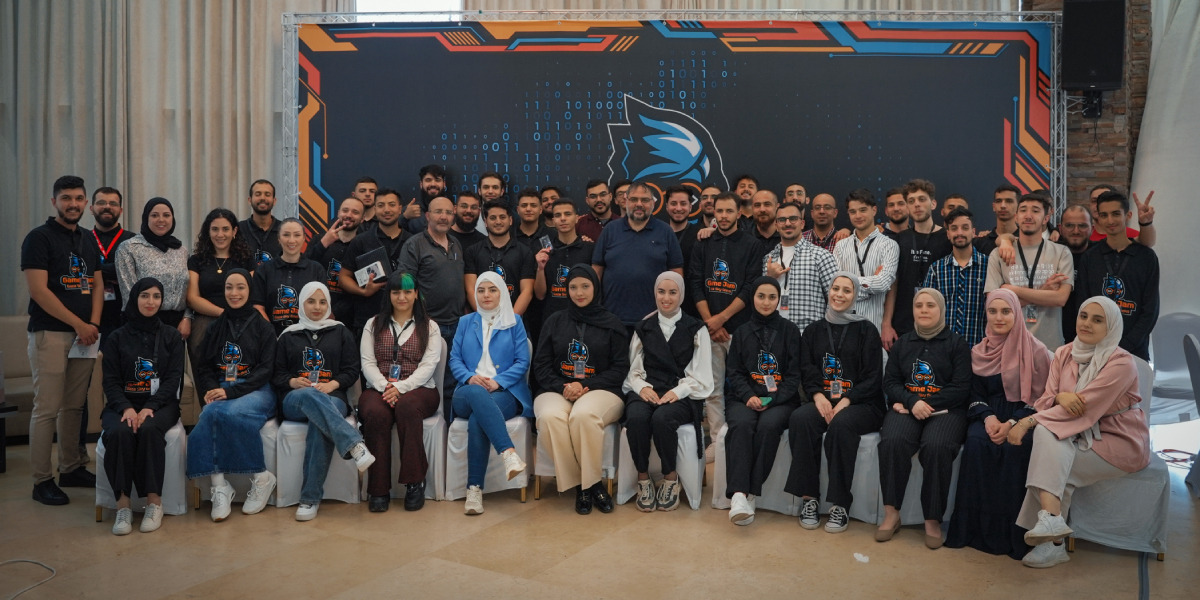
- Gaza Sky Geeks grew its game development programme from 150 participants to over 1,000 registrations in a year.
- The programme was redesigned around blackouts, weak internet, and damaged laptops.
- Gaza Sky Geeks is onboarding 26 volunteer mentors this year to close the gap between student prototypes and industry standards.
- A Palestinian games studio is under exploration for 2026
- Students use AI for debugging and prototyping
Game development training has multiplied across emerging markets over the last few years. But for participants in Gaza, talent was never the bottleneck, working conditions were.
That's the problem Gaza Sky Geeks is confronting through its game development programme, which took in 150 participants last year and has since drawn over 1,000 registrations, with around 600 currently in training across Palestine.
We spoke to Gaza Sky Geeks programme tech unit officer Leyan Zahdeh to discuss why demand jumped so sharply, how the curriculum works around blackouts and displacement, and why the next stage isn't a studio announcement but a production pathway.
Creating pathways
The Palestinian tech hub, a program of NGO Mercy Corps, has spent 14 years running startup accelerators, coding academies and freelance training. Games are the newest addition, and the scale of demand caught even the team running it by surprise.
"There is a clear hunger among young Palestinians for practical, future-facing digital skills," said Zahdeh. "Many young people do not want training that ends with a certificate only. They want to build visible work, publish something, and prove their abilities through a portfolio."
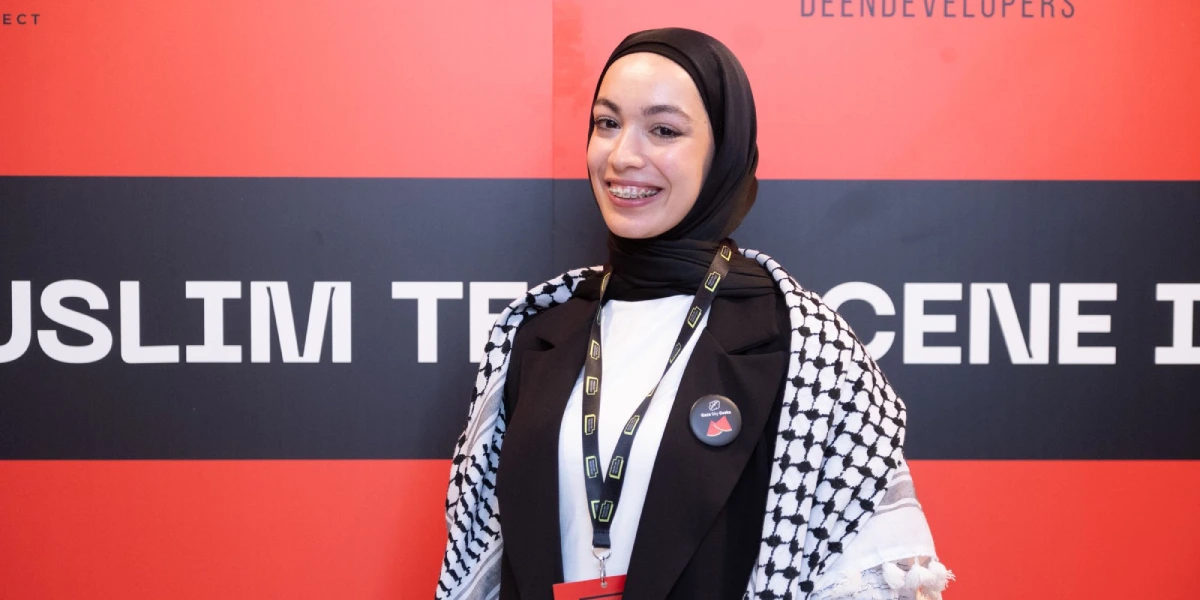
Since October 2023, GSG has kept its training, mentorship and support programmes running. Individuals and technology companies working with the hub have used it to reach international markets and build livelihoods outside Gaza's collapsed local economy.
“Today, Gaza Sky Geeks works with partners, mentors, employers, investors, and industry leaders around the world to ensure that Palestinian talent is seen, supported, and connected to opportunity, said Zahdeh.
When asked why GSG launched games as its own dedicated track rather than folding it into existing software training, Zahdeh said making a game is not the same as writing functional code. It demands interaction design, systems thinking, player psychology, art direction, and more, adding that success is measured by whether the game is engaging and fun, not just whether it runs.
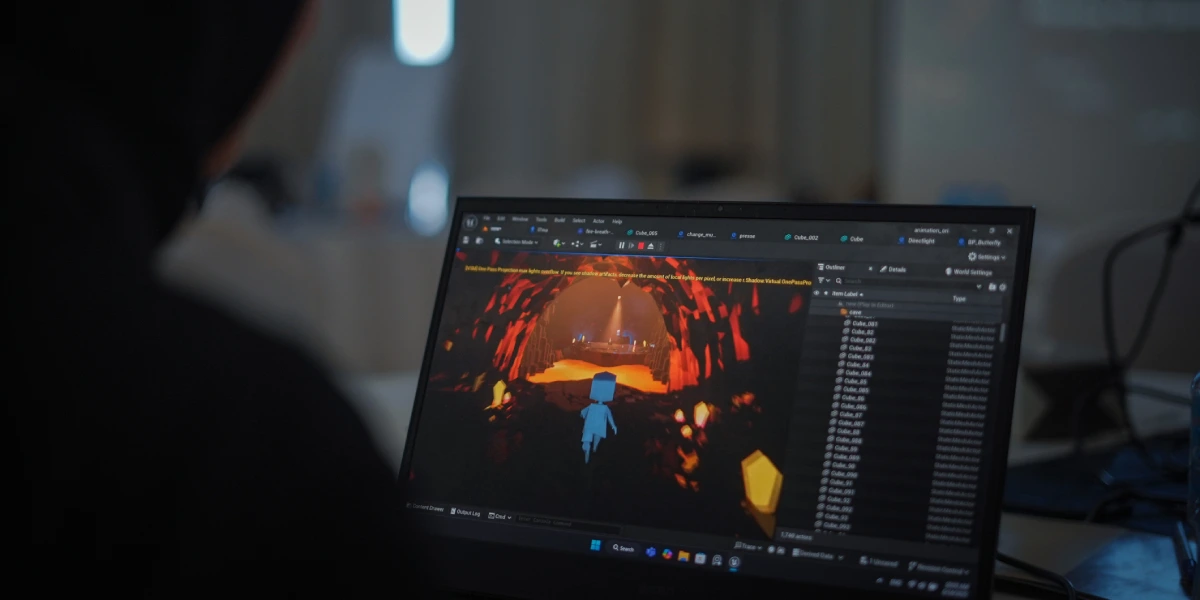
"We wanted students to learn how games are actually made in practice: through prototyping, iteration, playtesting, feedback, failure, polishing, and public presentation. At the same time, we also needed a pathway that includes more than just programmers, opening doors for artists, designers, storytellers, level designers, animators, UI/UX designers, sound-focused creators, and future producers.”
Growing demand
On what drove the jump from 150 participants to over 1,000 registrations, with around 600 currently in training, Zahdeh shared that there's demand for training that produces visible work rather than just a certificate. Games also pull in students who wouldn't otherwise fit a traditional software role, since the work covers coding, art, UI, animation, sound and production.
Last year's cohort gave the programme real proof, actual student projects and public showcases that made the promise believable.
“We cannot run 600 learners as if they are a small classroom. The program needs clear tracks, shared foundations, recorded references, weekly assignments, portfolio milestones, mentor support, technical troubleshooting channels, rubrics, peer review, and production-style checkpoints,” she said.
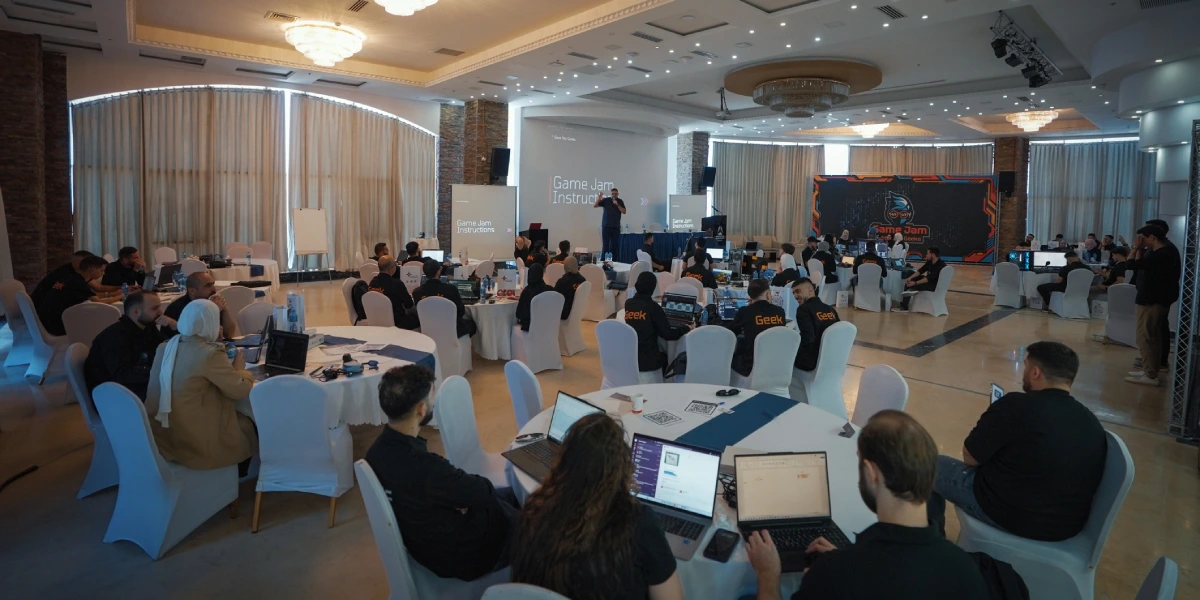
Zahdeh added that: “The aim is not simply to “teach content.” The aim is to move learners through a pipeline: fundamentals, practice, small prototypes, team collaboration, portfolio work, mentorship, public showcase, and then possible employment, freelance work, internships, or studio incubation.”
As for what the 8-month curriculum covers and whether GSG has technical training partners, Zahdeh described two tracks built on the same foundation of prototyping, iteration and portfolio work, rather than teaching tools in isolation.
“The deeper problem is that students are trying to build games while daily life itself is unstable and unsafe. ”Leyan Zahdeh
Programming students work in Unity and C#, learning version control and debugging while building playable gameplay systems. The art and design track covers 2D and 3D asset creation, UI/UX, animation and level design. Both share the same toolset: Unity, Blender, Figma, Aseprite and FMOD.
On partners, Zahdeh said the curriculum was shaped with input from experienced game development experts, though delivery runs on industry volunteers and mentors. GSG is actively looking for studios and publishers who can help align the training with professional standards, and build a pathway from the classroom into paid work.
Training under blackout
According to Zahdeh, running training in Gaza comes with conditions that are hard to grasp from the outside. Students deal with unstable power, weak internet, damaged or unavailable laptops, no quiet place to work, plus displacement and constant uncertainty.
“Sometimes the problem is not only that Unity is heavy, or that a file is too large, or that the internet is slow,” Zahdeh explained. “The deeper problem is that students are trying to build games while daily life itself is unstable and unsafe.
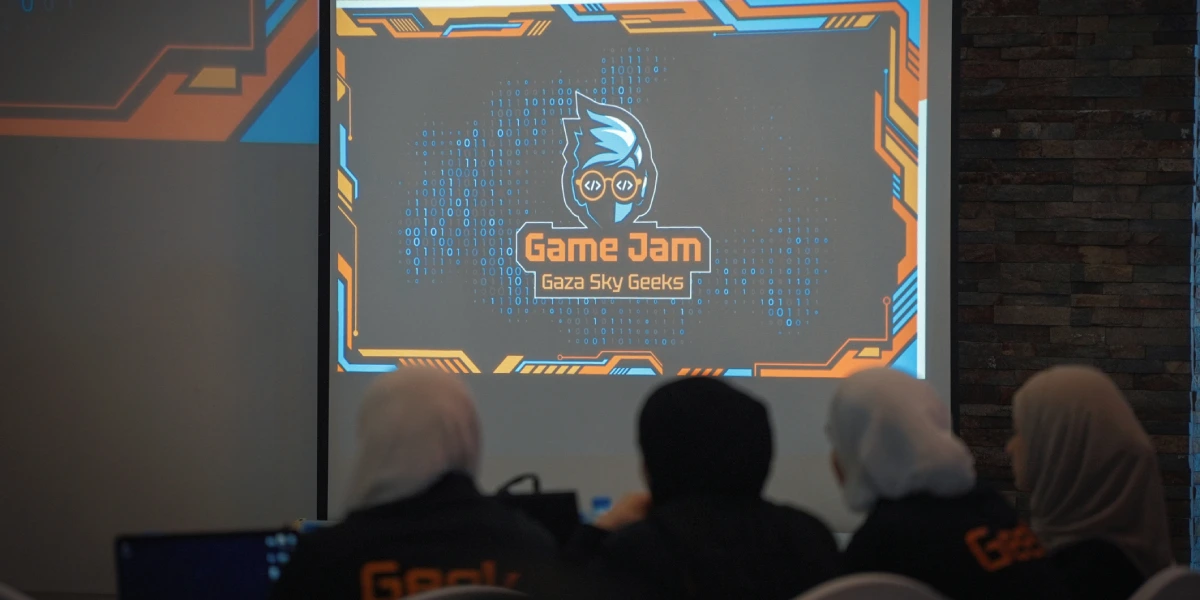
“Some moments reflect this reality in a very human way, for example, a student attending a live online session while facing a sudden escalation in their surroundings, and still choosing to return and continue learning afterwards. What stays with you is not only the disruption itself, but the determination to continue despite it. That tells you something about the resilience we are working with,” she said.
That reality changed how the programme was built. GSG moved students toward simpler workflows, mostly 2D and light 3D projects kept small on purpose, so work could survive a dropped connection or a missed session.
Students lean on recordings, written instructions, lighter tools, smaller milestones and flexible deadlines instead of fixed live classes. Teams cap at three students, picked so members can support each other locally where possible, with clear roles, regular backups and careful file handling to cut down on friction.
“Many students are building projects for the first time in a structured environment, but they often lack exposure to how games are evaluated in professional studios.”Leyan Zahdeh
“Despite all of this, quality games have come out of these conditions,” said Zahdeh. “Gazan students have created games out of their imagination, dreams, hope, memory, daily struggle, fear, humour, and the future. “For many of them, game development became more than a technical skill. It became a way to express what they are feeling, what they are thinking, and what they still want to build.”
She added: “When we talk about infrastructure in Gaza, we are not only talking about electricity, internet and laptops. We are talking about whether young people can still have the space to imagine, create, collaborate, and produce under extreme conditions. And our job is to make the training flexible enough, humane enough, and technically realistic enough to keep that possibility alive.”
Beyond training
When asked how many of last year's 150 graduates have moved into paid work, Zahdeh said GSG is still formalising how it tracks outcomes and can't provide a figure. What she could confirm, however, is that several have picked up freelance assignments, internships, educational and psychological game projects, small mobile titles and art outsourcing work.
That gap is part of why GSG is exploring a studio for next year to find out what it would take to build a real production space in Palestine that connects training to actual industry work, since training alone doesn't give junior graduates supervised work with deadlines and professional expectations.
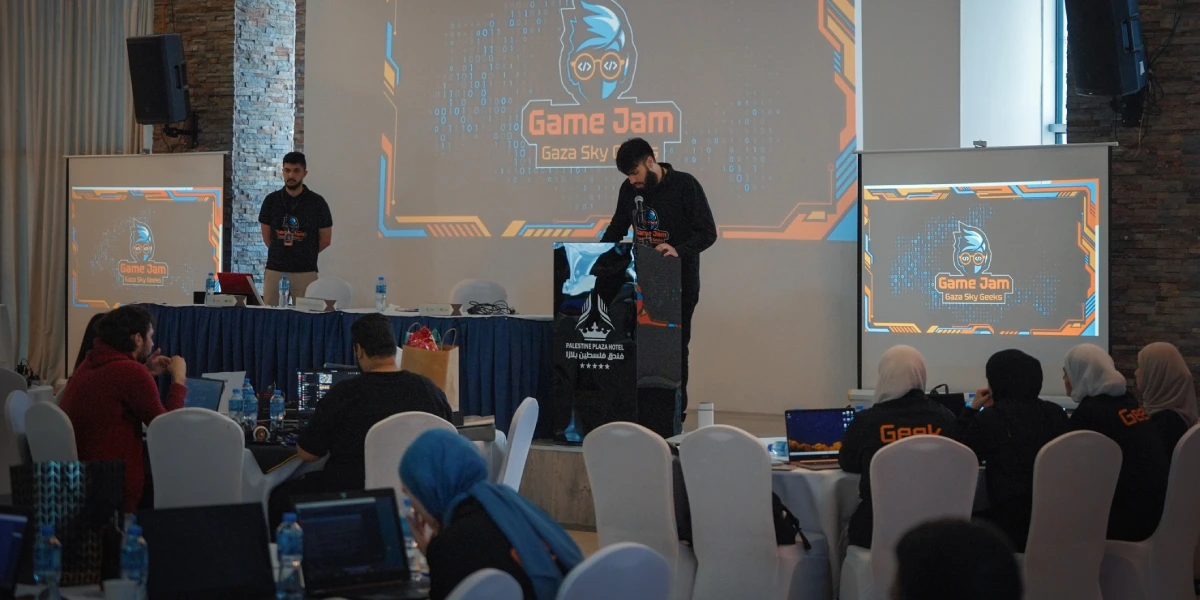
The model under discussion is small, closer to a production nucleus than a company. Early work would likely mix co-development and service jobs, Unity prototyping, educational games, QA, UI work, before building slowly toward original Palestinian IP. Getting there would also depend on senior leadership, funding, legal structure and industry partners willing to hand over real client work.
“Ultimately, success would not be measured by the size of the studio, but by whether it can consistently do four things: identify strong talent, support them in a structured production environment, deliver real work with partners or clients, and produce high-quality, finished projects that reflect a clear Palestinian creative voice,” Zahdeh continued.
“If those conditions are met, then the studio becomes not just a company, but a foundational step toward a sustainable game development ecosystem in Palestine.”
Mentors are part of that same bridge, with GAG onboarding 26 volunteer mentors this year to help close the gap between student prototypes and what a professional studio would actually expect by reviewing builds, giving scope feedback, and helping with portfolio and interview prep.
Zahdeh said the most useful mentors have real hands-on experience across programming, art, design, production or publishing, and that even a small, steady commitment, like monthly office hours or recorded feedback, matters more than a big time investment. Mentors based near Palestine handle live sessions, while others further away contribute through recorded reviews and written feedback.
“The biggest gap mentors fill is access to real industry feedback,” said Zahdeh. “Many students are building projects for the first time in a structured environment, but they often lack exposure to how games are evaluated in professional studios.”
Building for the future
AI is already part of how students learn and work at Gaza Sky Geeks, used for debugging C# scripts, translating between Arabic and English, generating placeholder art and dialogue, and supporting early prototyping. Zahdeh said the real question isn't whether students use it, but how.
“If AI is used without understanding or verification, it can easily produce work that looks correct but does not function well within the overall game,” said Zahdeh. “For this reason, we focus strongly on critical use rather than passive use.”
AI speeds up production, Zahdeh said, but the skills that actually define a strong graduate are technical ability, design thinking, teamwork and the discipline to finish a playable game.
She also pointed out that AI is not a substitute for developers. “The aim is to prepare graduates who can use AI intelligently and critically, knowing when it helps, when it misleads, and when it should not be used at all,” said Zahdeh.
“The aim is to prepare graduates who can use AI intelligently and critically, knowing when it helps, when it misleads, and when it should not be used at all.”Leyan Zahdeh
When discussing what success would look like for the programme by January 2027, Zahdeh said it will be measured in concrete terms, not attendance or registration numbers. That means students leaving with playable portfolios on platforms like GitHub or itch.io, and several teams producing showcase-level prototypes that mentors and industry partners can actually review.
From there, success means graduates picking up their first internships, freelance work or junior roles, not full-time jobs yet, but real engagement with the industry.
The bigger measure, Zahdeh said, is making sure strong graduates don't disappear once the programme ends, and instead move into a second stage of mentorship, production labs or paid project work.
“Beyond individual outcomes, the longer-term vision is ecosystem building,” said Zahdeh. “The goal is to position Palestine as an emerging game development hub with a clear identity: small but skilled teams, strong creative direction, remote collaboration, and a focus on cultural storytelling, educational and serious games, co-development services, and original IP.”