How Wooga turned Wicked and Agatha Christie into growth for June's Journey

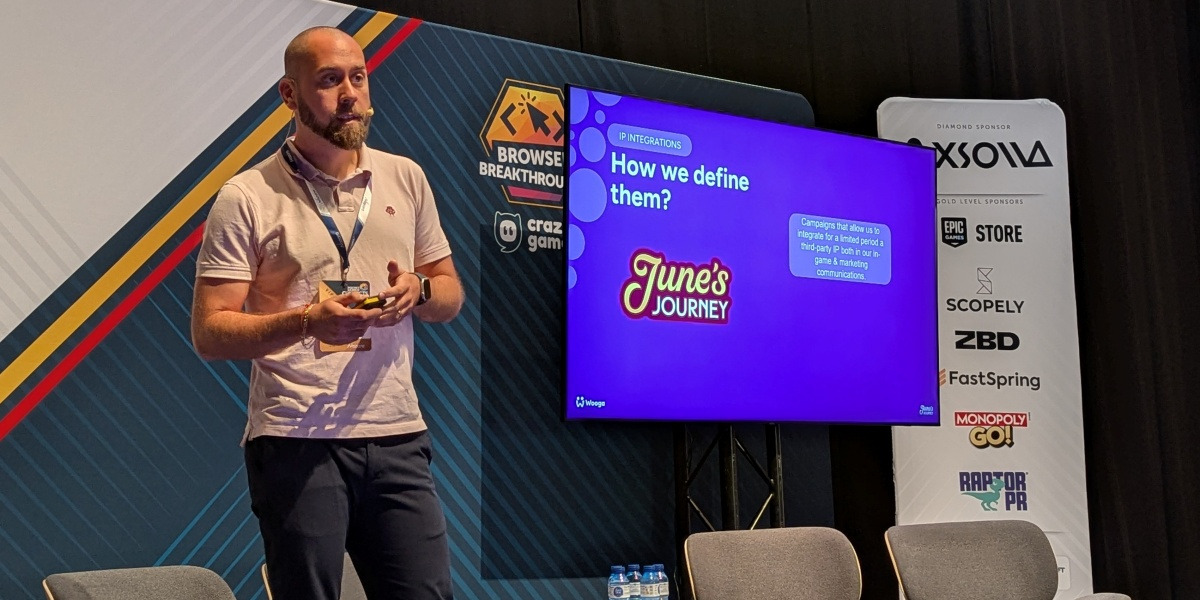
- Wooga's $1 billion hit June's Journey has opened a new growth channel through IP deals with Wicked and Agatha Christie.
- Martin Rusev says the wins come from carrying the licence across the whole player journey, not just reskinning the art.
- Early results are strong: video CPI down 33%, static CPI down almost 20% and the game's best store featurings in two years.
For most of its near-decade on the App Store, June's Journey has grown on the strength of its own content - a 1920s hidden-object mystery, with more than $1 billion in lifetime revenue.
"In the past year, we opened a new channel," Wooga publishing director Martin Rusev told Pocket Gamer Connects Barcelona during his keynote on day one. "We started working on IP integrations."
Drawing on Rusev's talk, we look at how Wooga chose and built its first two licences, Agatha Christie and Wicked, the results they drove and what he'd tell studios looking to do the same.
The case for IP integrations
Rusev set out four goals:
-
Fresh content for existing players. The integrations create "something new, something fresh… that they can enjoy for longer in the game," with limited-time items that, once unlocked, "stay in the game with them forever".
-
New players. The campaigns bring players in organically and give user acquisition fresh, branded creative to scale with.
-
Winning back lapsed players. With the game "nine years old in a couple of months", a familiar pop-culture name is a reason for long-gone players to return.
-
Growing the genre. As the market leader, Wooga feels an "obligation to continue expanding it", using big IP to pull film and book fans into hidden-object games.
Choosing the right IP
The hard part, Rusev stressed, is research, not the licence. Each campaign begins "with surveys, with focus groups, with internal discussions" before anyone approaches a licensor - and the test is fit, not fame.
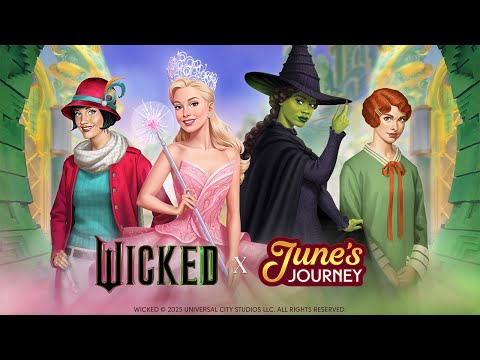
Wicked was a deliberate reach for a younger, female audience around the second film, while Agatha Christie was a natural match for what is, at heart, "a murder mystery game", letting Wooga retell stories like Murder on the Orient Express "in a new medium".

Player feedback also shaped the choices in unexpected ways. Many suggested Sherlock Holmes, yet "explicitly said how they don't want June to be overshadowed by Sherlock", Rusev said. The rule he took from it was to "not to run something just for the sake of branding it".
Every step of the funnel
Wooga's results came from carrying the IP across the entire player journey, not just the artwork - it "branded everything in terms of the player funnel", from UA ads and the store listing to loading screens with "quirky texts in the loading tips".
The toughest part, he said, was the early gameplay: "Game teams are not that inclined to make changes to the tutorial."
So the team built a "foreshadowing" mechanic telling new players that they "need to play that much more" to unlock the branded content. This was A/B tested on Wicked, then reused for Agatha Christie.
For engaged players, the IP "would take centre stage for a period of four, six, eight weeks", with the daily story built around it and exclusive rewards, such as the Orient Express train and Wicked's Emerald City, locked into the collectible "Memoirs" album.
Looking at the data
Across both campaigns Wooga produced more than 500 videos and over 600 statics, each cleared by the licensor.
For Wicked, "the KPIs that we have for our in-game sales, for Diamond sales, for the participation in various events - all went up", and the marketing assets "improved our top-of-the-funnel metrics, with higher RPM and higher CTR".
“We managed to reduce the CPI of our static asseets with almost 20% while our CPI went down by 33%”Martin Rusev
The studio also secured "the best featurings for the past two years" on both the App Store and Google Play.
For Agatha Christie, Rusev said the team "managed to reduce the CPI of our static assets by almost 20%" while "our video CPI went down by 33%".
Takeaways for other studios
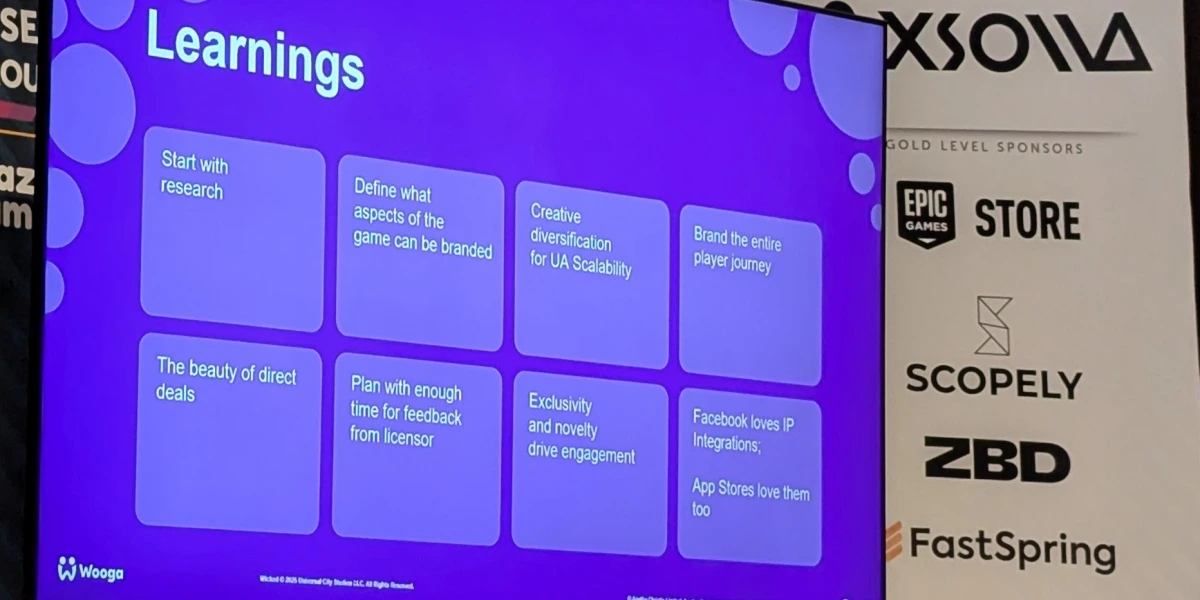
Rusev left the room with a handful of takeaways. Start with research rather than the licence. Brand your everyday ads, not just the big-budget ones, to scale UA. Carry the promise across the whole funnel. And favour direct deals, because "there is a beauty in direct deals - you build that relationship".
Just plan early, he warned, because licensors "truly love their IPs, they protect them and they want enough time to go through a huge cycle of approvals".
Companies

People

Events
