Moye Interactive Entertainment on Gods and Demons' development and global expansion

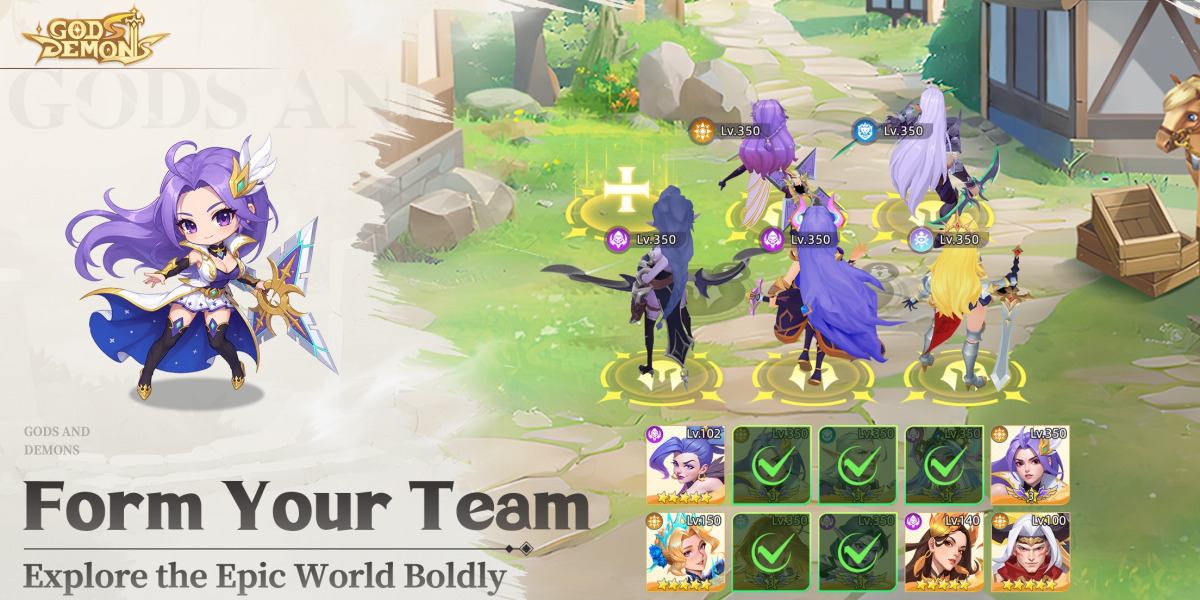
- Moye Interactive Entertainment is rolling out Gods and Demons across multiple app stores.
- Huawei's installed base across harder-to-reach markets lowered barriers to entering markets which were previously too difficult.
- AppGallery's comprehensive toolset and engineering support proved invaluable for testing and implementing cross-platform integration.
- In a closed beta 1,421 new players created characters & day-one retention reached 41.93%, exceeding the 35% benchmark.
Xiao Han, head of publishing at Moye Interactive Entertainment (Xiaoxi Technology Group), speaks to PocketGamer.biz about Gods and Demons and the decision to roll out the game across multiple platforms as a cross-play title.
PocketGamer.biz: Gods and Demons brings together two distinct gameplay elements: accessible idle mechanics and strategically deep team building. How did the design team balance these different experiences?
Xiao Han: From the outset, we saw idle progression and strategy as complementary parts of the same experience. Idle systems reduce the time required for everyday progression, while strategy gives players meaningful decisions and satisfying challenges.
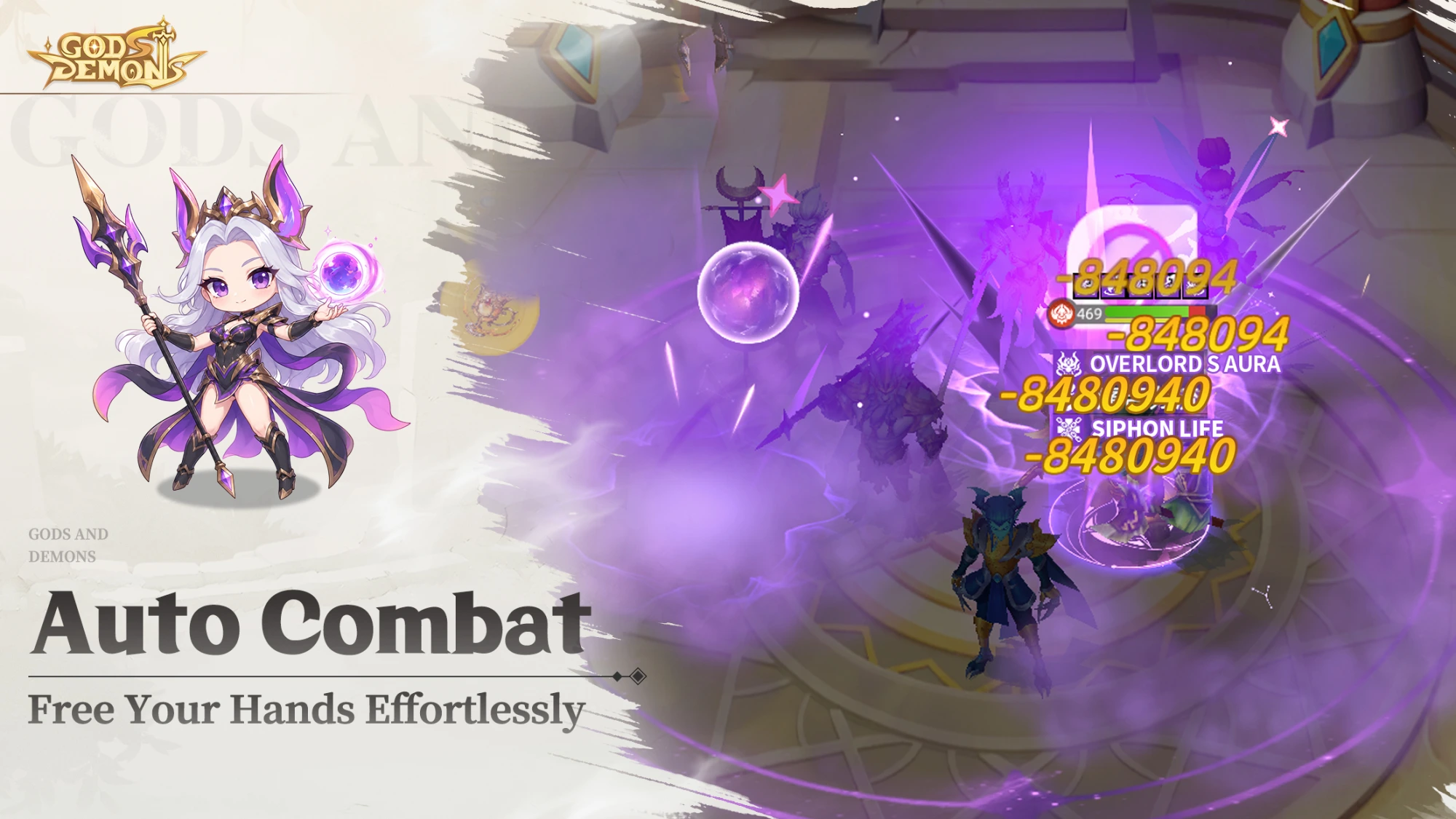
With around half an hour of play during a commute or a break, alongside offline rewards and background battles, players can collect most of the essential resources they need to develop their teams. Missing a day should not feel like falling behind.
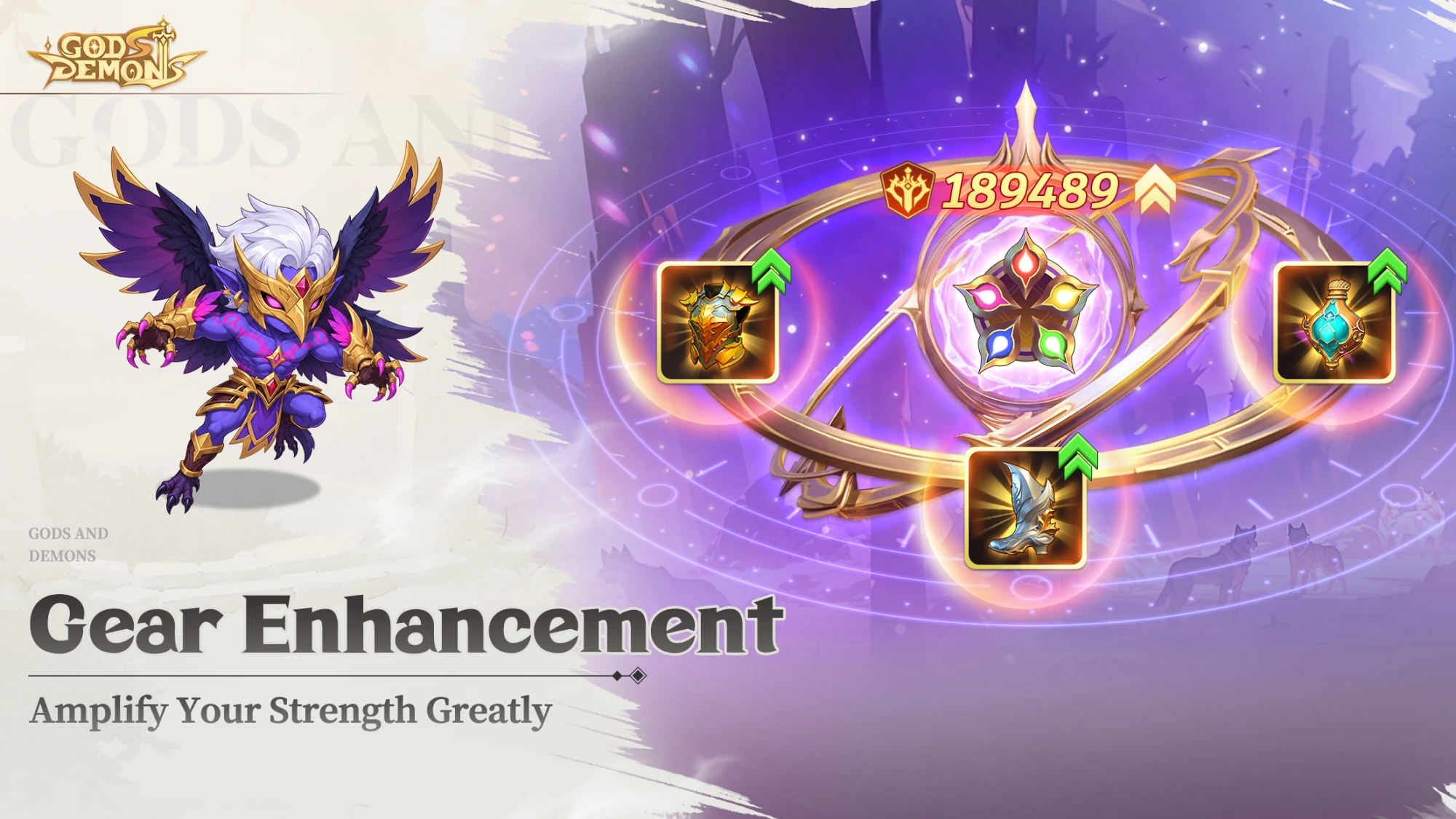
In our core 6v6 turn-based battles, however, success depends on how players combine the abilities of more than 60 heroes with customisable loadouts of Sacred Runes, Battle Seals and Aether Cores, supported by team-wide passive effects from Sacred Beasts.
At comparable progression levels, those choices determine how far a team can go. In the Arena, the War God’s Temple and cross-server ranked competitions, we want team composition and tactical decisions to matter more than time spent online.
The two systems create a positive cycle: idle rewards strengthen the team, battles put that team to the test, and the lessons learned help players decide where to invest their resources next. Idle progression keeps the experience accessible, while strategy gives dedicated players room to explore and improve.
In the competitive hero-collection market, what makes Gods and Demons stand out? How do you encourage and reward experimentation with different teams and playstyles, rather than pushing players toward a single dominant approach?
Xiao Han: A common problem in this genre is that one overwhelmingly powerful team becomes the answer to almost every challenge. We wanted to avoid that from the beginning, so we built around three elements: a roster of more than 60 heroes, flexible customisation and varied encounters that put different team compositions to the test.
“We built around three elements: a roster of more than 60 heroes, flexible customisation and varied encounters that put different team compositions to the test.”Xiao Han
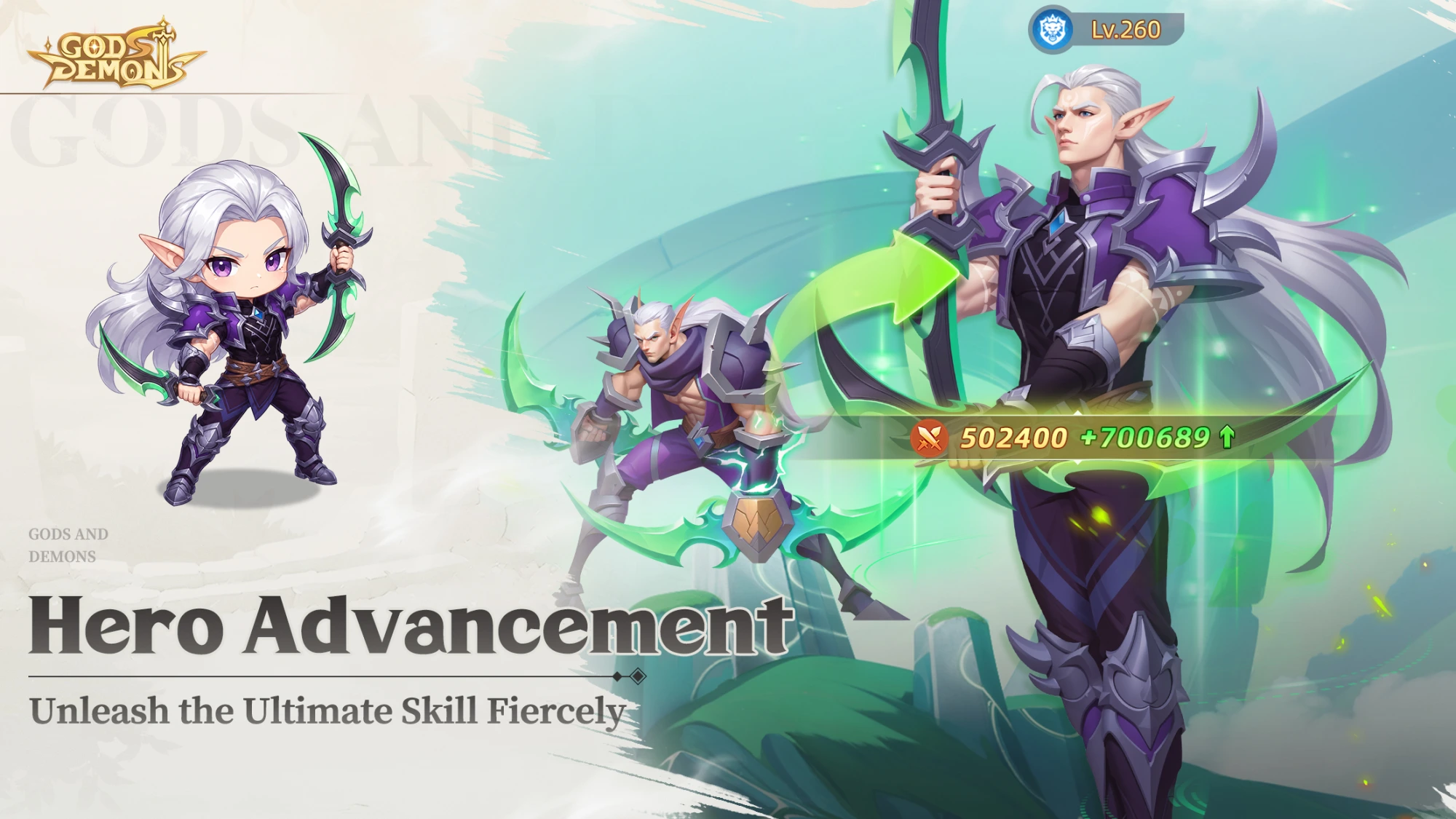
Each hero has four core skills, but their role can be adjusted through Sacred Runes, Battle Seals and Aether Cores. Combined with the effects of Sacred Beasts, this allows the same hero to serve very different tactical purposes across different modes.
PvE modes such as the Sky Tower and Epic Monuments ask different things of players than the Arena or cross-server PvP. Single-target burst damage can be crucial against bosses, while coordinated crowd control can make the difference in ranked battles. Our aim is to prevent any one lineup from becoming the best answer everywhere.
Players can experiment without losing their investment. The Sacred Soul Altar allows players to recover all resources spent on hero levelling with a single action, making it easier to develop new heroes and try different combinations.
Mobile players are increasingly conscious of how much time a game demands. How have you designed progression, daily routines and session lengths to deliver meaningful progress at each player’s own pace, without disadvantaging those who play in short bursts?
Xiao Han: Respecting players’ time was a foundational principle in our original design documents, and it has shaped the systems we have built.
“Our aim is to prevent any one lineup from becoming the best answer everywhere.”Xiao Han
Standard daily tasks are designed to take less than 30 minutes, while major limited-time events run for seven to 14 days, giving players more flexibility to participate. Individual battles take around three to five minutes and can be paused, making it easy to fit a couple of encounters into a commute or lunch break.
We want players to feel that there is something enjoyable waiting whenever they choose to log in, and that occasionally taking a day off will not undermine their progress. We believe that creates a healthier foundation for long-term retention.
Community plays an important role in the long-term health and retention of a live service game. How do your guilds, cooperative modes, events and opportunities to share strategies turn individual progression into meaningful social experiences?
Xiao Han: In an accessible hero collection game, social features should not become another set of daily obligations. Our main goal for the guild system is to make each player’s progress feel valuable to the wider team.
The foundation is shared rewards: members work together on guild tasks and benefit from their collective progress.
“In markets and audience segments that are harder to reach through traditional storefronts, Huawei’s devices and system-level discovery channels give us another route to players.”Xiao Han
Beyond that, there is a sense of shared achievement. Modes such as the War God’s Domain and cross-server ranked competitions allow guilds to compete together, giving highly developed players the satisfaction of helping their guild climb the rankings.
Topping a leaderboard alone can eventually feel isolating. Helping your guild reach a higher cross-server tier creates a shared sense of achievement and belonging - and that is what makes these social systems meaningful.
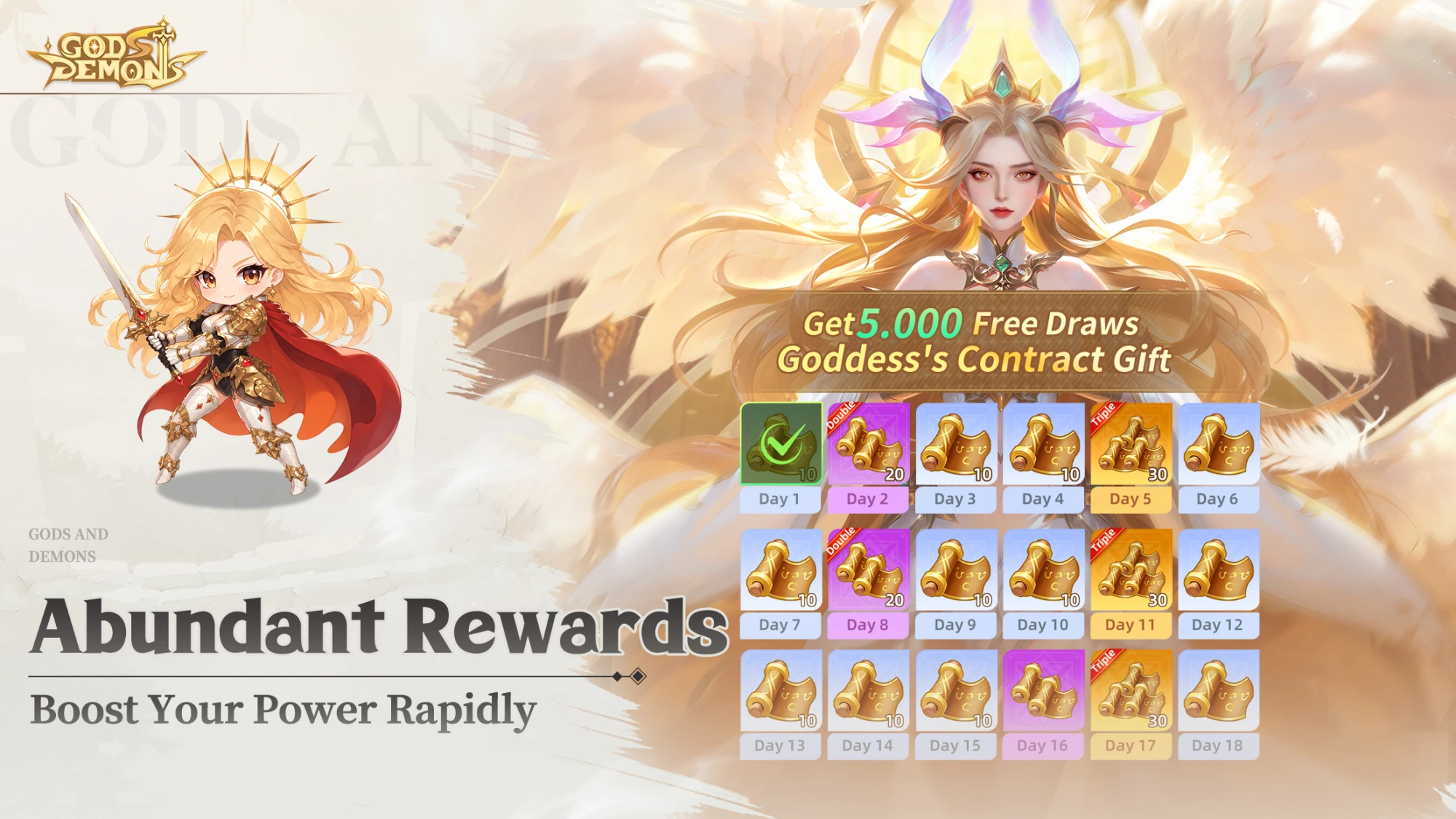
You are gradually bringing Gods and Demons to Google Play, the App Store and Huawei AppGallery. From an operational and commercial perspective, why did you decide from the outset to include alternative app stores alongside the established mainstream platforms?
Xiao Han: Publishing across multiple stores was always part of our strategy. We are targeting a broad audience in Europe and North America, where players access games through different storefronts and device ecosystems. Focusing on just one platform would limit our potential audience from day one.
Commercially, a broader distribution strategy gives us more opportunities for growth and reduces our dependence on a single store. It also makes the business more resilient to changes in platform policies or revenue-sharing terms.
Acquisition efficiency is another consideration. In markets where AppGallery has a strong presence, we see opportunities to reach relevant audiences with less intense competition.
Google Play provides an initial foundation for validating the core experience and reaching a broad audience. AppGallery offers a complementary route to growth through Huawei’s device ecosystem, particularly in emerging markets. Each platform contributes a different strength to the overall strategy.
The game is currently in public testing on Google Play. What key feedback or data have you gathered so far, and how have those findings influenced your plans for the App Store and AppGallery releases?
Xiao Han: One of our earliest encouraging signals came from the initial closed beta, after which player progress was reset. During its first two days, 1,421 new players created characters and day-one retention reached 41.93%, exceeding our initial benchmark of 35%.
Those results gave us greater confidence in the appeal of an idle hero-collection experience with generous rewards, particularly among the emerging-market audiences included in the test.
Throughout testing, we have focused on three areas. The first is retention and the points at which players leave, which helps us refine the pacing of the early experience and tutorials.
“One of our earliest encouraging signals came from the initial closed beta, after which player progress was reset.”Xiao Han
The second is how players respond to our monetisation model, including the pricing and progression of monthly cards, growth funds, bundles and battle passes.
The third is performance on lower-end Android devices, particularly heat generation, alongside the fit and readability of localised text.
These findings inform our phased release strategy. We are using Google Play to refine the core build and game balance, adjusting the pacing of monetisation for the spending patterns we expect on iOS and preparing to scale through AppGallery’s reach within Huawei’s device ecosystem.
Developing, maintaining and updating a live-service game across several app stores can create significant challenges for version management and quality assurance. How have you structured your build and release processes to keep updates aligned and deliver a consistent experience across platforms?
Xiao Han: The biggest challenge is coordinating versions across stores with different review timelines. Our approach has three pillars: a shared core codebase, separate platform builds and clearly decoupled SDK integrations.
- Architecture: We maintain one codebase for the core game logic, with platform-specific SDKs handling accounts, payments and push notifications. Much of our live content and event configuration can be updated through the server, reducing our dependence on simultaneous store approvals.
- Build pipeline: Our automated build and release pipeline produces packages for each platform under a unified versioning scheme. Testing includes automated functional checks, performance profiling and store-specific compliance reviews.
- Release coordination: Updates that require a new client version are submitted to each store in advance. Smaller balance adjustments and event updates are delivered through live updates where supported. We also use staged rollouts and monitor crash rates to help maintain a smooth experience across storefronts.
For many independent and mid-sized studios, integrating a third platform’s SDK can create an additional technical burden. What was your experience integrating Huawei Mobile Services (HMS) and GameCenter into Gods and Demons, and what direct engineering support did Huawei provide?
Xiao Han: At the beginning, we did wonder whether another SDK integration would add disproportionate development costs. The actual process helped put those concerns to rest.
The documentation for HMS Core and GameCenter was clear, and the modular account, payment and push-notification components made the integration manageable.
“AppGallery Connect, or AGC, provided a useful set of tools for crash analysis, cloud debugging and remote configuration.”Xiao Han
Huawei also provided practical engineering support. Their dedicated technical support group responded promptly, and when we encountered more complex crashes, we could arrange remote debugging sessions to investigate them together. Access to cloud testing on real devices also reduced the time and cost involved in device compatibility testing for a team of our size.
AppGallery Connect, or AGC, provided a useful set of tools for crash analysis, cloud debugging and remote configuration. These allowed us to manage routine operational settings and monitor quality on the platform without creating a significant additional development burden.
The relationship between a developer and an app store can sometimes become limited once a game has been submitted. From a developer's perspective, what has stood out about working with AppGallery and GameCenter’s business development and editorial teams?
Xiao Han: What stood out most was the level of detail and continuity in the collaboration.
Before launch, the business development and editorial teams worked closely with us to improve our store assets and guide us through the process of submitting the game for featured placement.
After launch, that collaboration continued through regular discussions about category trends and coordinated promotional campaigns around key moments. For us, the value has been in having an ongoing working relationship throughout the publishing process.
AppGallery has a broad presence in regions where access through traditional app stores can be fragmented or less established. How has working with Huawei helped Gods and Demons reach valuable players in markets that are typically difficult or expensive to enter?
Xiao Han: Huawei’s installed device base has been an important part of that opportunity. In markets and audience segments that are harder to reach through traditional storefronts, Huawei’s devices and system-level discovery channels give us another route to players.
For a broadly accessible idle hero-collection game like ours, the users we have reached through AppGallery have been a good fit in terms of both their device profiles and spending habits.
That has lowered the barriers to entering markets where conventional paid acquisition previously felt too expensive or difficult to scale. The partnership gives us a more practical way to reach those audiences through an ecosystem they already use.
Many studios hesitate to expand beyond Google Play and iOS because of concerns about complexity or limited resources. Based on your experience bringing Gods and Demons to AppGallery, what advice would you offer studio leaders and user acquisition managers considering Huawei’s ecosystem?
Xiao Han: We would highlight three lessons from our experience:
- Make platform expansion manageable through early architectural decisions.
Our core development team has just 11 people, yet we were able to work through the platform integration and release processes successfully. The key was separating core game logic from platform-specific SDKs early on. Once that structure is in place, adding another platform becomes much more straightforward.
- Give each new platform a dedicated operating plan.
Invest in editorial submissions, make use of AGC’s operational tools and pay attention to localisation and device compatibility. Teams that actively work with the resources a platform offers can uncover valuable opportunities for organic growth.
- Explore different acquisition routes in emerging markets.
With international user acquisition costs putting pressure on developers, open-market advertising is only one option. Official app stores with strong local device ecosystems can provide an effective and more cost-efficient route to relevant audiences.
For small and mid-sized teams, an additional platform partner that offers practical support and is willing to work closely with the studio can make international publishing more sustainable.
Companies

People