A peek behind the curtain of triple-A games, with Epic Games' Ari Arnbjörnsson

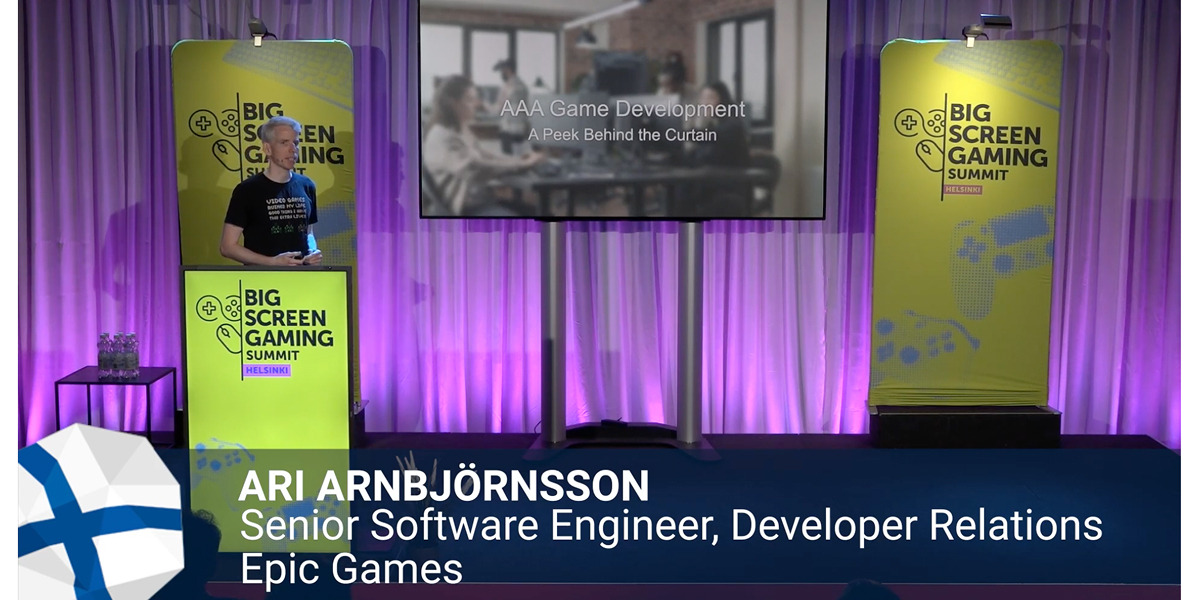
- Arnbjörnsson said triple-A studios aren't all experts: teams run on a normal curve from interns to specialists and that's by design.
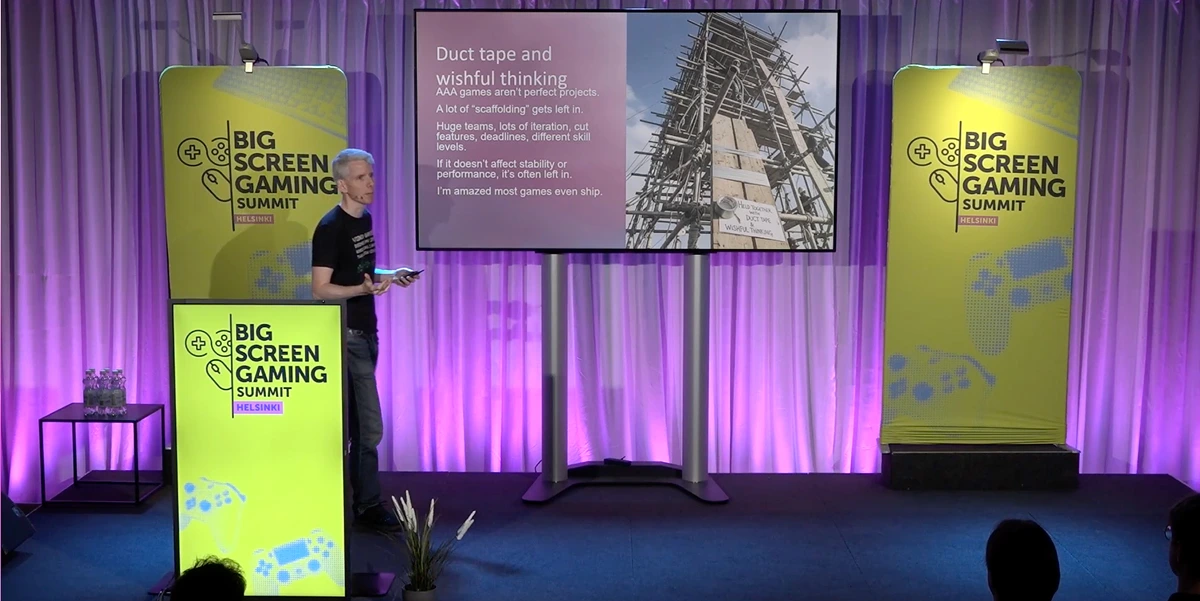
- Shipped games are held together with "duct tape and wishful thinking", with old scaffolding and quick fixes left in.
- Building for a global audience is brutally hard, from right-to-left UI to why games say "3x" instead of a plural.
Most players imagine triple-A studios as rooms full of experts running flawless projects. The reality, according to someone sent in to fix those projects when they break, is messier and far more human. That was the pitch from Ari Arnbjörnsson, senior software engineer, developer relations at Epic Games, in a behind-the-scenes session at the last Pocket Gamer Connects Helsinki.
Arnbjörnsson has spent more than 18 years in games, including four and a half years at Rovio on Angry Birds titles and a stint as lead programmer on Returnal at Housemarque. His Epic role sends him into triple-A studios building Unreal games "when they're having problems", so he sees plenty.
We dive into what he's learned.

Not everyone is an expert
The first myth he dismantled was talent. "I used to think triple-A games were just all experts of their craft," he said, but skill "can actually vary a lot." A studio runs on a normal distribution, from underperformers through a large average middle to a handful of genuine experts "basically moving the medium forward" - and that spread "actually makes financial sense."
“I used to think triple-A games were just all experts of their craft, but skill can actually vary a lot.”Ari Arnbjörnsson
That fed a point about impostor syndrome, which more than half the room admitted to. Comparing yourself to the intimidatingly smart people on your team is "very detrimental", he argued, not least because it stops you learning: "you don't want anyone to know that you don't know something." His fix was simple. "Be the one who asks questions, because when you ask questions, you learn something, you become better."
Specialisation runs deep
Coming from indie, where "we have to wear so many hats", the degree of specialisation surprised him. "One person can be assigned to an eye shader for months," he said - and he wasn't joking, having just been discussing exactly that problem with another studio, "the wetness between" eyeball and eyelid. Some games even hire actual fashion-industry designers for in-game clothing.
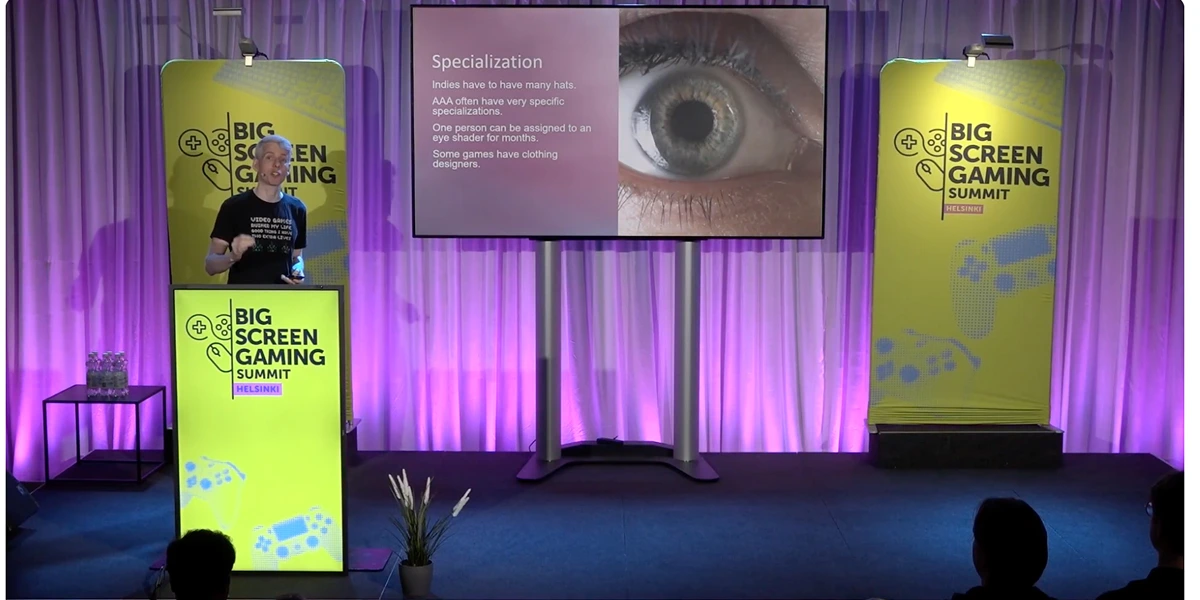
Even the engine-makers specialise. "No one at Epic Games knows the whole engine," he said. On studio visits, "more than half of them, I just have to say, I don't know, it's another team."
Duct tape and wishful thinking
Shipped games, he said, are "not perfect projects", and he was "surprised by how much scaffolding gets left in." Huge teams iterate constantly, and each abandoned attempt leaves "a bit of vestige" behind, especially where one feature depends on the foundation of another that was cut. Junior work that isn't optimal but doesn't hurt stability tends to stay in too.
"I'm actually amazed that most games even ship," he admitted, describing the moment a project comes together as a kind of "magic" studios don't feel until the final month. His mental image: "you have this tower of scaffolding, and then it just stops shaking and you go, 'it's good, ship it.'"
He illustrated creative constraint-solving with a favourite example from Fallout 3's Broken Steel DLC. The designers wanted a moving train, but DLC couldn't alter the binary or add vehicle mechanics - so they strapped a train model onto the player's head and slid the character along the track.
"So it looks like you're in a train, but the train is you." Players who moved the camera could see it, but QA almost certainly caught it and left it in, because the team's time went on crash bugs. "If it's janky, oh, I love janky bugs, because they're not crashing the game."
The global audience is a nightmare
The section that drew the most recognition was internationalisation. Ship only in English and "aren't you lucky" - you never had to worry whether your UI survives right-to-left languages, or that German and Russian can need 30 to 50% more characters, which is why triple-A scrolls and menus so often sprout a scroll bar.
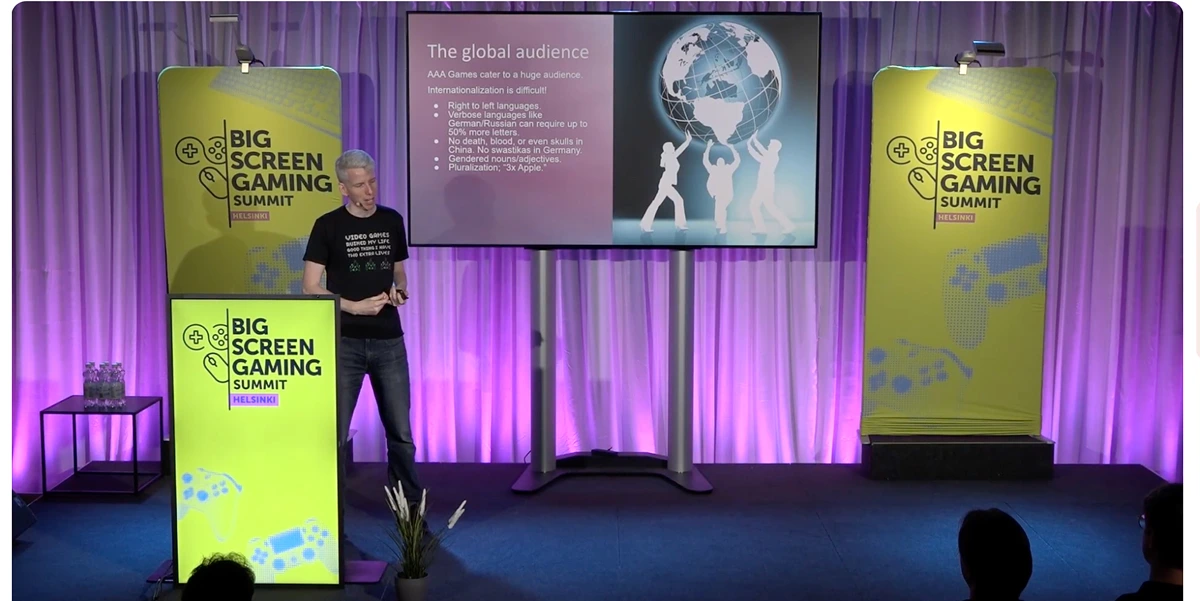
There's cultural adaptation too: China's aversion to red blood and skulls, Germany's rules on swastikas, and the fact that "no one dies in Fortnite" - defeated players kneel and get teleported away by a drone.
Grammar is its own trap. Gendered nouns and brutal pluralisation rules (some languages have five plural forms) are why games never say "apples" - "it will always say 3x or apple plus three. It just, it's not worth the hassle." Then there's PlayStation's X-versus-circle confirm button, flipped between West and Asia, and French AZERTY keyboards that break WASD movement.
A more level field than you'd think
Knowledge, he argued, is increasingly shared. Triple-A CTOs "watch the same tutorials you do", Epic's pro support answers are now publicly mirrored, GDC Vault talks are affordable and conference talks are free. Console forums are open to any developer shipping on the platform, indie or not.
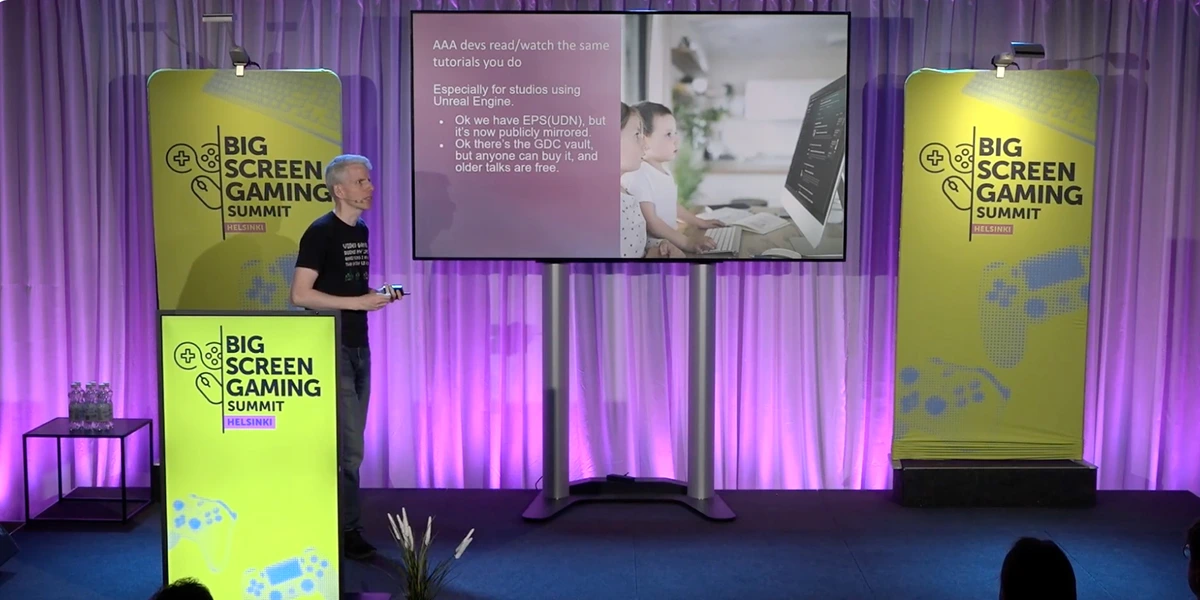
But not everything is equal. Triple-A studios get to ask the questions in Epic's pro support (indies only see the answers later), hold recorded internal-only conferences, and, crucially, have "direct escalation" contacts at Steam, Epic, PlayStation and Xbox to fix store problems fast. "This is something that indies usually don't get, unless they have a publisher."
Epic Games returns to Pocket Gamer Connects Nordics, the rebranded PGC Helsinki, on October 20-21. Register here.
Companies

People