All Stars, ASMR and IRL experiences: Candy Crush’s marketing strategy unwrapped

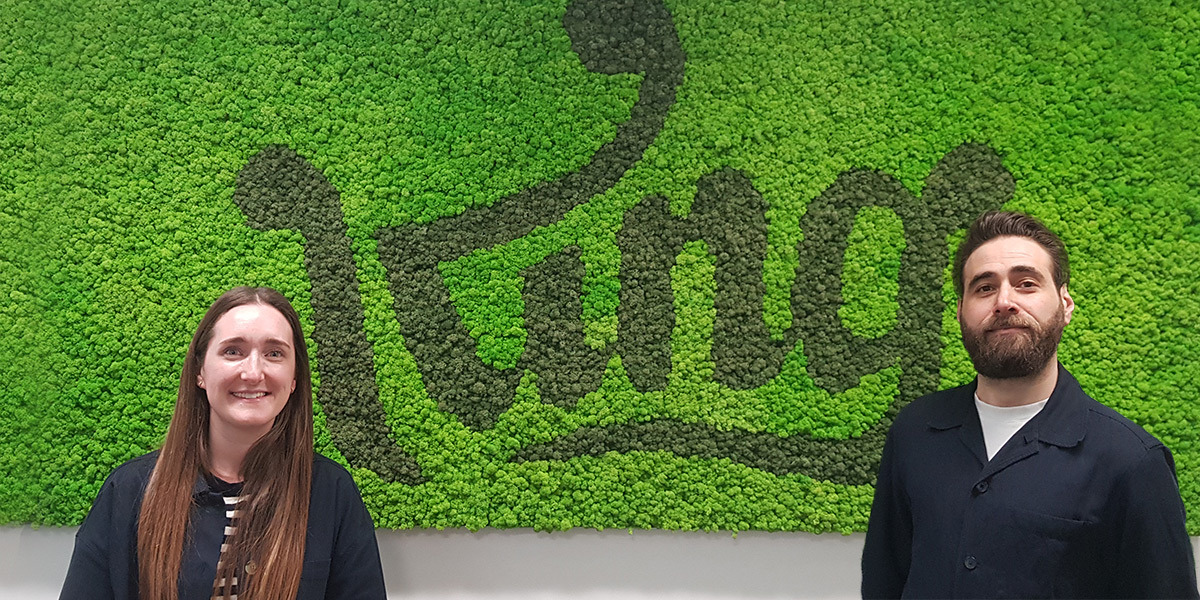
- Advertising King's portfolio requires multiple teams, including performance marketing, product marketing, CRM, social and more.
- King’s senior director of marketing studio Sian Finnis highlights different approaches on different platforms, such as memes on Instagram and puzzles on Facebook.
- Candy Crush’s senior director, product marketing Roberto Kusabbi explains how "tentpole" seasons are treated like a new game launch.
- Candy Crush marketing has been going IRL.
Candy Crush is among mobile’s most successful mainstays, now a 14-year-old IP with billions of dollars to its name and various spinoffs from Soda Saga to Solitaire.
The original Candy Crush Saga remains among the most lucrative match-3 games every year and has long since surpassed $20bn in lifetime earnings. Yet even a brand as recognisable as Candy Crush continues to see the value of marketing, with a frequent rollout of new campaigns, social media posts, IRL initiatives and more to reach the masses.
At King, marketing on this scale requires multiple teams. The Marketing Studio is an in-house creative team producing assets and helping to ensure all campaigns feel consistent. Performance marketing focuses on driving installs. Product marketing, brand marketing, CRM, digital, social and PR all help to support launches, engagement and player communications.
And, there are game-specific teams which work closely with central marketing too. Members of these teams are spread across many King offices, based in London, Stockholm, Malmo, Berlin and Barcelona. (And Pocket Gamer Connects will be heading to Malmo on May 27th to 28th, before hosting our Barcelona show on June 15th and 16th).
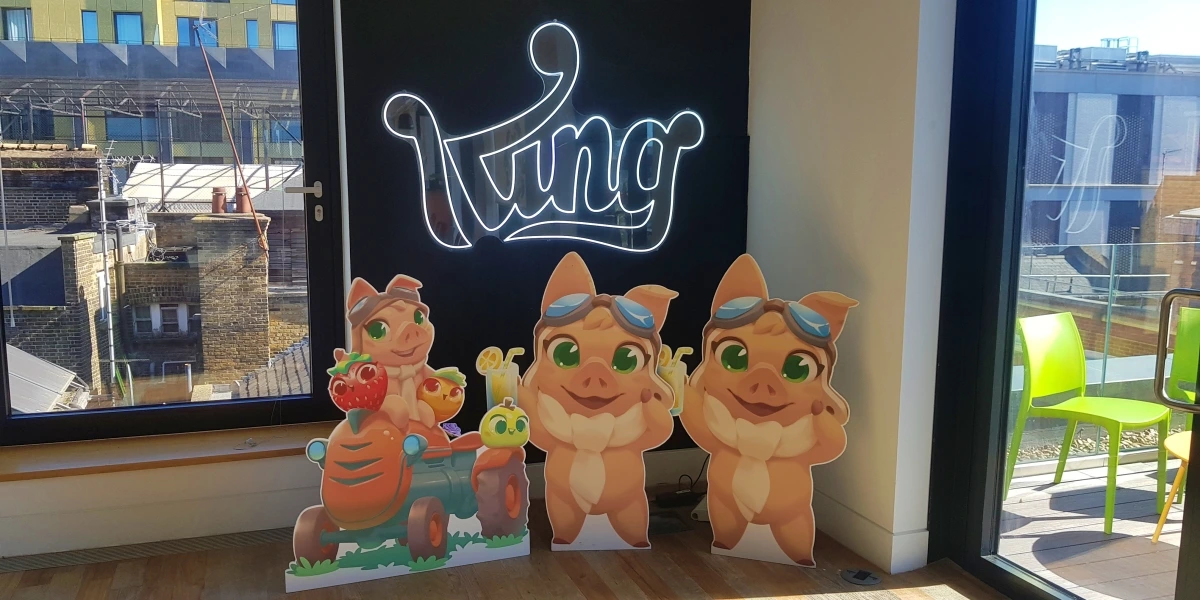
During our visit to King’s London headquarters, we learn more about the giant’s diverse marketing strategy, how teams work collaboratively on in-game seasons and why marketing is still important for an already world-renowned brand. We speak with King’s senior director of marketing studio Sian Finnis, as well as Candy Crush’s senior director, product marketing Roberto Kusabbi.
“We’re able to look at every touchpoint that a player will have inside and outside the game and build a system that really connects it all.”Sian Finnis
"I think one of the biggest advantages of being an in-house creative studio is that we are not just designing the marketing assets, but we're actually kind of designing and influencing the entire experience," Finnis begins.
"We’re able to look at every touchpoint that a player will have inside and outside the game and build a system that really connects it all."
Markets, platforms and purpose
King markets its mobile games in many different ways: gamified content, memes, IRL activations, ASMR videos, UGC and more. Naturally, each approach is tailored to a platform and its users.
For example, within consumer marketing the goal is to reach established fans even when they aren’t playing. This might mean social media content that resonates with them, or "silly and eccentric" posts. Memes work especially well on Instagram, and Candy Crush is finding success with audio-centric content like an ASMR series - candies breaking, or Swedish Fish being squeezed.

"Things that organically sit on either our Instagram or our Facebook won't often be seen on both channels because we know they've got different audiences," Finnis notes.
"On Facebook, we find that mini puzzles and things are really, really engaging for our players."
Meanwhile, King has used YouTube to share behind-the-scenes development insights with fans through its longer-form Crush & Tell series.
This was first conceptualised as a "quite quick and scrappy" opportunity to explain Fish 3.0 to players after the classic booster was overhauled, but it evolved into a video series released over multiple months, exploring various aspects of Candy Crush with the people who develop it.
Elsewhere, recent snappier posts include computer-generated claymations, King’s Yeti character depicted as a King Kong-like figure and Where’s Wally-style videos where familiar candies move across the screen with an imposter among them.

Finnis calls performance marketing "a completely different beast". This team’s goal isn’t to engage with fans but rather to target potential new users when they’re forced to watch an ad - through paid socials or inside other apps and games.
"The environment is really competitive and you are fighting for attention in a really fast-scrolling feed. This is someone who's being forced an ad, so we kind of describe it internally as having to win this thumb war. That really is the challenge," Finnis says.
"Gameplay absolutely is king for performance marketing, for all of our competitors as well. Making beautiful gameplay remains a core part of what my marketing team does."
“The environment is really competitive and you are fighting for attention in a really fast-scrolling feed.”Sian Finnis
We ask whether King also cross-promotes between its games - advertising Candy Crush Solitaire in Candy Crush Saga, for example. Finnis answers that this doesn’t "normally" happen because each game has different players with different motivations.
"We tend to focus on Candy Crush as its own thing, Soda Saga is its own thing, Farm Heroes Saga as its own thing. Honestly, I think the games are so strong in themselves there hasn't ever been a point where we're like, ‘To market Farm Heroes Saga we're going to have to mention Candy Crush’."
When games and marketing collide
After more than 20 years in the games industry, King continues to experiment and expand how it markets its IPs.
We ask if AI plays a role in the ideation process for marketing campaigns today and Finnis reveals there are no hard rules either way.
"It's certainly a really fun tool that we give to the team so that they can experiment with it and use it. When using any kind of technology really, not just AI but even traditional technologies, there's so much thought that goes into it. I've got a really fantastic team that add it to their toolbox of different things that they're using."
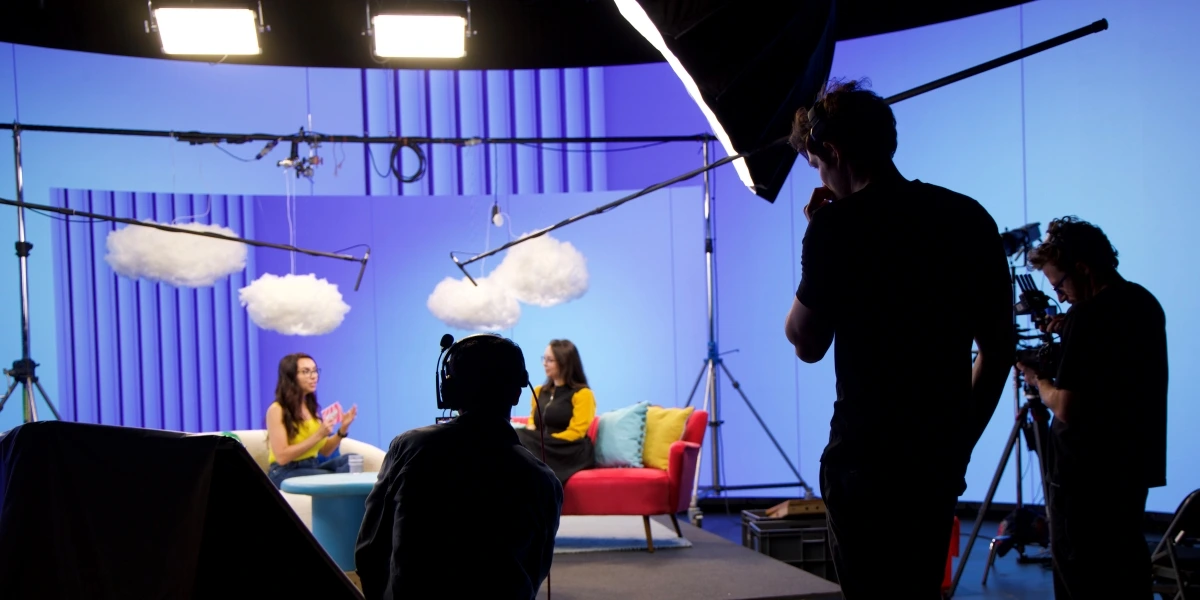
To ensure marketers have a strong grasp of King’s games, they spend time at work playing various titles. A few days before our visit, product marketing took time to catch up with Candy Crush Saga, for example.
“We look to make our seasons and tentpoles to be as if we were launching a new game.”Roberto Kusabbi
"The closer the marketing and the product teams are - and I don't just mean Candy Crush but in general - the better the player experience. We work incredibly closely. We align on priorities together," Kusabbi shares.
As Candy Crush is a live service game, monthly seasons form the backbone of new content with fresh themes and ideas aiming to keep players engaged. Seasons are designed primarily to retain active players, but at the same time, marketing does have to consider how to bring lapsed players back and attract newcomers.
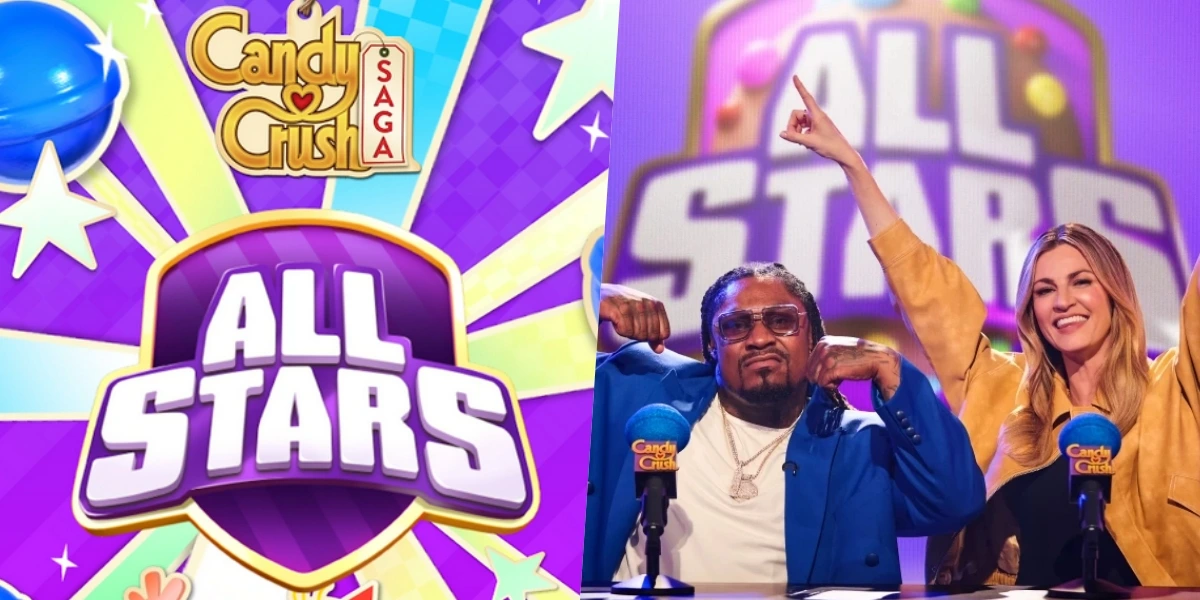
All Stars, for example, has a fresh look for the 2026 season with a new logo. It was down to the marketing team to represent and emphasise a sense of competition - through research of sports teams, logo layouts, materials, patterns and experimenting with colours and typography.
"We asked ourselves the question: if Candy Crush was a physical paper product, what would that be?" Finnis recalls.
"It’s kind of like the ultimate shiny Pokémon card, or a sports collectable card. This became a really core visual idea for the campaign - the idea that players are competing and progressing and becoming champions.
"We really deliberately leaned into American sports, esports iconography, and really sharp shapes, bold typography, strong colours. I think it gives the tournament a kind of sense of legitimacy and scale."
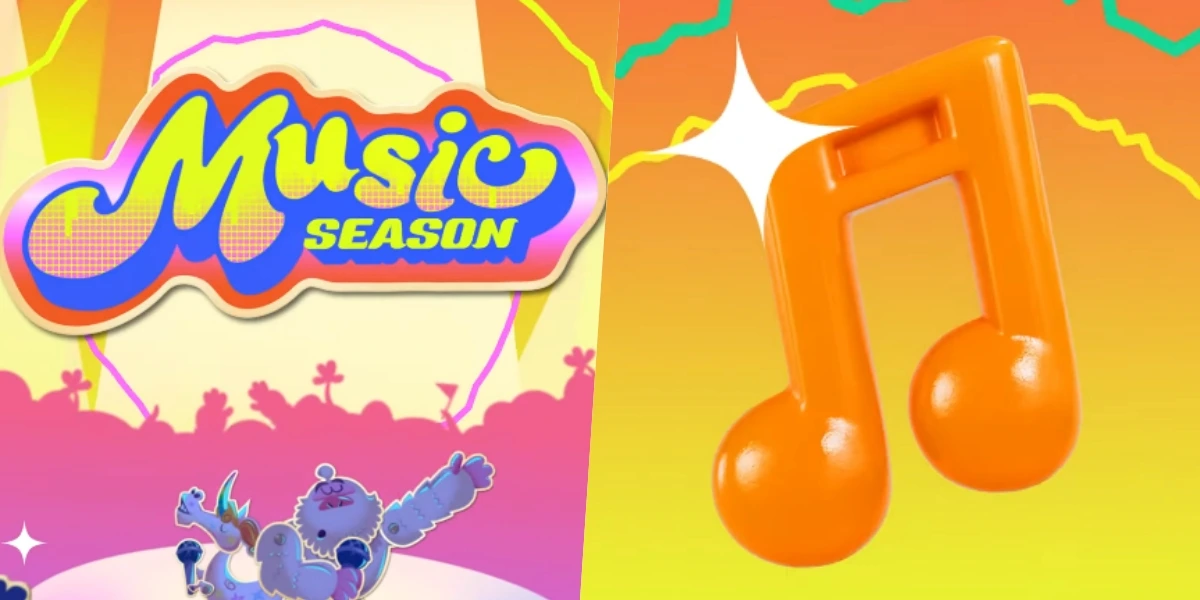
Kusabbi notes that All Stars forms one of Candy Crush’s "tentpoles", a supercharged season treated almost like a new game launch. He explains that while Candy Crush fits 12 seasons into a year, some like All Stars and Music Season receive special emphasis.
"We look to make our seasons and tentpoles to be as if we were launching a new game. Each of those brings a launch energy to it," he says.
"All Stars and Music Season do two different things. One is a competitive experience, which was born out of player insight. Players wanted an experience that was more competitive. Music Season was our second tentpole, and that was very much focused on how we drive buzz, how we make sure that people are associating us with culture and music."
Ensuring the right feel comes across requires the collaborative efforts of game designers, developers and, of course, marketing.
Always experimenting
Recently, King’s marketing has included growing its IRL presence.
Building on the knowledge that Chicago has more Candy Crush players than any other US city, last December the marketing team brought a giant jar of candies to the city - and tasked passersby with guessing how many were inside.
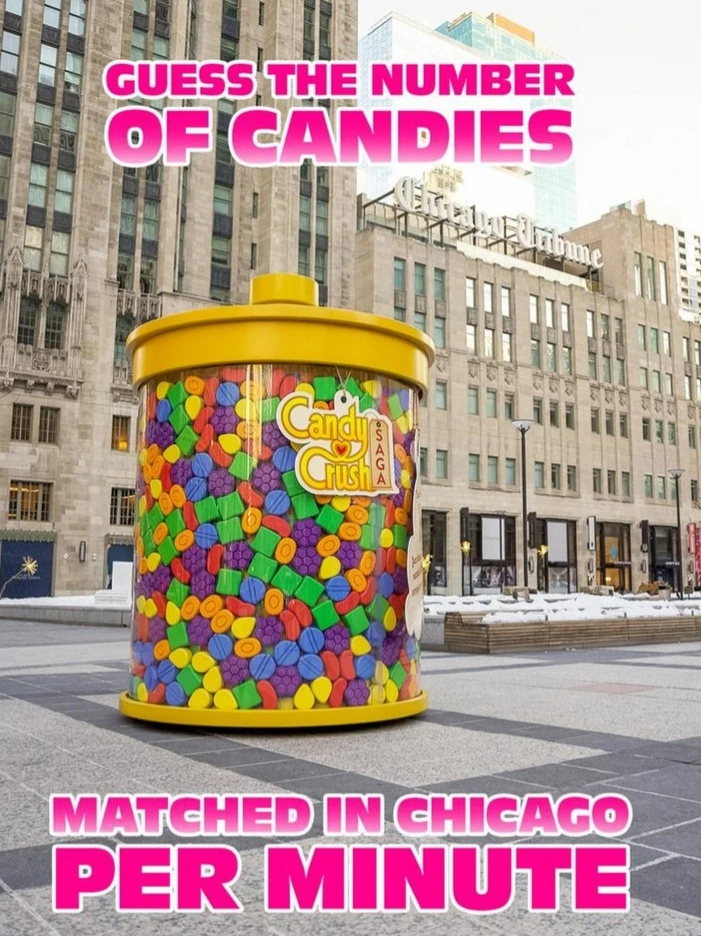
The success of this smaller test has since led to a larger-scale IRL experiment: a Candy Crush takeover in California’s Intuit Dome. Sports fans expected to watch a regular game but were gate-crashed by the IP during the pre-game and halftime show.
"We always want to think about how we retain and engage our players," Kusabbi says.
“We always want to think about how we retain and engage our players.”Roberto Kusabbi
Considering Candy Crush’s renown as a brand and long-lasting player base, we ask how important it is to continue advertising the game after 14 years. Finally, we also ask whether the approach when marketing Candy Crush differs to an IP like Farm Heroes Saga - a $2bn success in its own right, but much less famous than the flagship.
Finnis confirms they are marketed differently, but she believes this is more a reflection of why people play each game. Candy Crush marketing has higher energy with lots of edits and quick cuts, which mirrors the combos and explosions in-game, where Farm Heroes Saga is naturally much calmer, so is promoted as such.
"Everybody knows what Candy Crush is, and that does present a creative challenge in a really good way. I think people kind of know what to expect, but some people won't have seen the game for years - they would have picked it up in 2012 and they haven’t seen it since," suggests Finnis.
"So, I think it is sometimes still a new product to people. It looks different. We've got new features. There's lots of new things to always be able to market beyond just the core gameplay."
Kusabbi concludes: "We like to move fast. We have to work at pace because the market changes so much, but we also have a high standard.
"Everything we do, we try to learn from. Some things land, some things don't, but we really take that to the next year or the next version of what we do. That's really the beauty of mobile and the beauty of what we can do in our games."
Companies

People

