DigiPen Institute's Raymond Yan: “A gaming hub must be built by and for the people of that country"

- NEOM’s Level Up Accelerator, supported by DigiPen, is in its third cohort and has funded 15 Saudi studios.
- Yan says Saudi founders can make games but often lack the business skills to build lasting companies.
- He believes Saudi Arabia needs more publishers and industry veterans to support studios once the grants run out.
- His biggest worry for Vision 2030 is an industry run mostly by foreign talent rather than Saudis.
Saudi Arabia has no shortage of people who want to make games. Modern tools mean that even high school students in the Kingdom can now build a working platformer or get a 3D character moving around a scene. However, turning that into a company that survives realistic market conditions is a different matter entirely.
Closing that divide is what the Level Up Accelerator sets out to do: NEOM’s 12-month programme supported by DigiPen Institute of Technology. It has now reached its third cohort and has funded 15 Saudi studios to date.
Ahead of Pocket Gamer Connects Jordan on November 7th and 8th, we catch up with DigiPen Institute senior executive Raymond Yan to discuss what DigiPen looks for in a gaming startup, why Saudi studios need to start thinking like businesses, and what it will take for the Kingdom to build a games industry run by its own people.
From making games to building companies
DigiPen has spent six years in the Kingdom running workshops, masterclasses, incubators and accelerators. Over that time, Yan says, the talent has become more serious and more capable. The problem now lies elsewhere.
"There is still a significant gap between being able to make a game and being able to build a sustainable game company," he says.
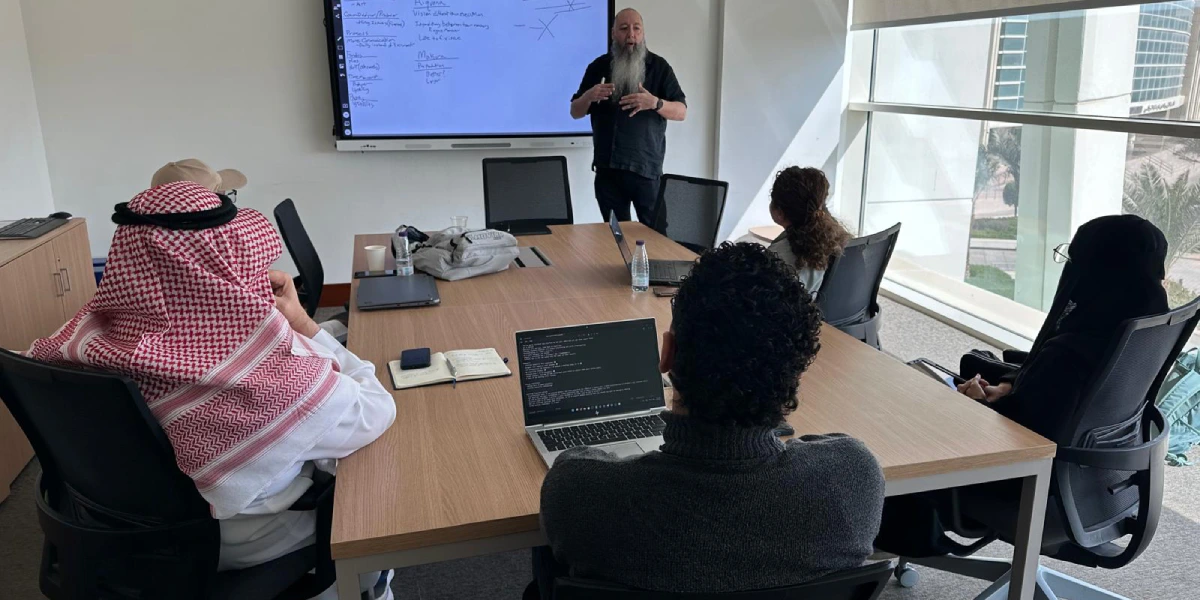
Getting past a prototype takes a lot more depth. Studios need system design that scales, software that performs reliably and the ability to implement advertising, monetisation and live ops while understanding what each costs to run.
"Then there's the harder part: figuring out how to weave all of that into the actual design of the game rather than bolting it on," he explains.
“A lot of very talented Saudis are still encountering aspects of running a business for the first time, so naturally some decisions are being made without the information or experience that would exist in a more mature industry.
“Running a studio is a lot like producing a film. It takes many talented people, but there still has to be a clear chain of command with defined roles and responsibilities, or nothing moves with real conviction.”Raymond Yan
"The good news is that learning initiatives and resources continue to be made available, and we're finding individuals who are ready to take this seriously and represent Saudi Arabia well on the global stage.”
Yan notes that Spoilz and Kamelna have already found success, and a newer wave of studios, including Starvania Studio, Ash Games Studio and Fahy Studios, is coming up behind them.
"To me, that's proof of what Saudi talent can do once it's given time to develop. The business maturity gap is still the biggest lever left to pull, but the overall trajectory is clearly moving in the right direction,” he affirms.
Leaders, not committees
When DigiPen assesses applicants, the prototype or vertical slice is only part of the picture. Yan wants to see someone on the founding team with credible business and operational ability, or at least the willingness to grow into that role.
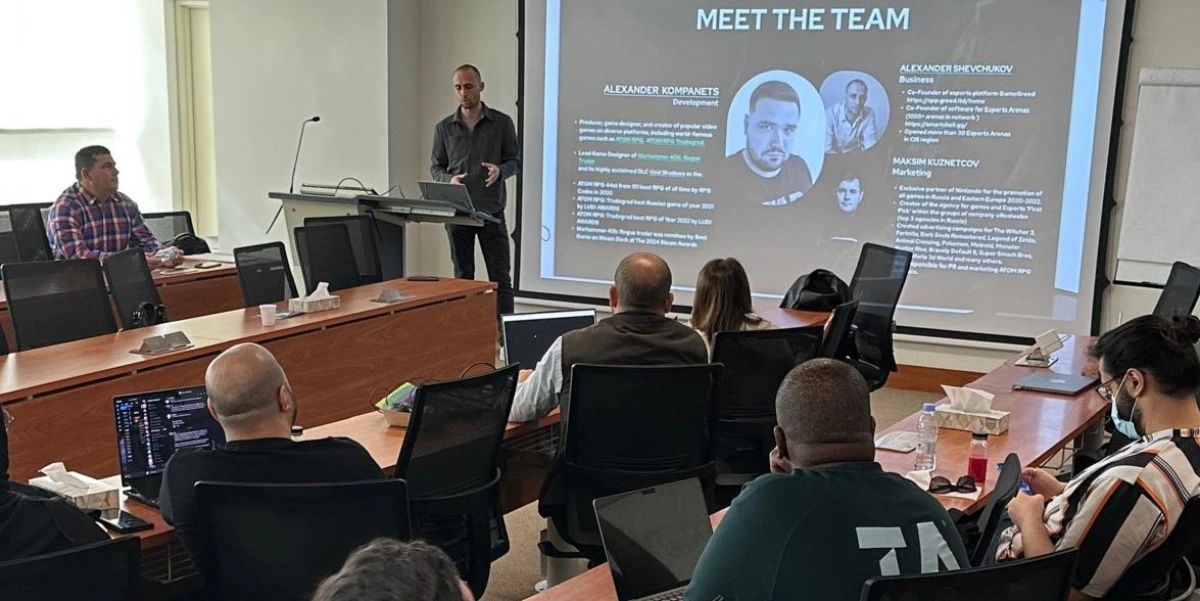
"This industry needs more than developers who love making the game," he says. "It needs people who take responsibility for understanding financing and investment, marketing and community building, data analytics, publishing, monetisation and even legal issues. Too often that's missing entirely, or there's one person who believes they can cover all of it themselves.”
In contrast to a founder who believes they can cover everything alone, Yan warns against another problem in which a studio may be run by committee, where "every decision gets passed around for consensus and no one actually owns the outcome".
“Running a studio is a lot like producing a film,” Yan explains. “It takes many talented people, but there still has to be a clear chain of command with defined roles and responsibilities, or nothing moves with real conviction.”
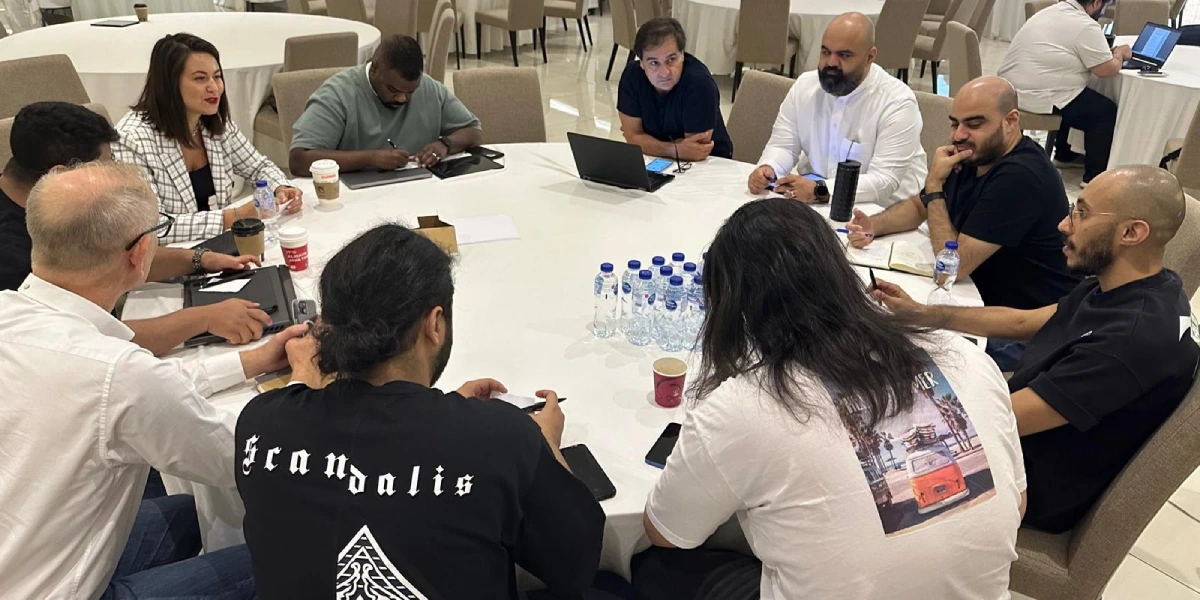
Yan says the best studio leaders set high standards but stay humble enough to admit they don’t have all the answers. They also can’t afford to wait for certainty before making decisions, because games are a business full of things nobody can control and players have endless other options.
"The key question is less about whether the person leading it knows how to make a game and more about whether they recognise this is a business, not a hobby."
A great game alone won’t satisfy publishers, investors or banks. Once a studio grows, its leader becomes responsible for people’s livelihoods. Yan says the best leaders he's seen "take care of their team as seriously as they take care of the game”.
The missing third leg
Yan describes the Saudi ecosystem as a three-legged stool. The first leg is Saudis willing to commit to a tough industry. The second is government support building the talent pipeline. The third is the industry itself, providing mentorship, publishing relationships, production know-how and services.
“A lot of energy goes into why the game is great, barely any into how it makes money, who the player actually is, or what happens after launch.”Raymond Yan
He says the first two legs are in much better shape than a few years ago, with organisations such as MCIT, NEOM, Merak Capital and Impact46 continuously working together. The third is where an issue persists.
"The government has done a good job supporting the entry points - things like incubators, accelerators and competitions," he says.
"What's still missing is the next layer of support - real publishers and industry veterans who can step in right where government agencies need to step back once the grants stop and a studio is facing real market conditions for the first time.”
In Yan’s view, funding and marketing problems usually come from that missing industry support rather than them being separate issues. He also warns that outside partners coming in to help shouldn’t assume a playbook developed in another market will transfer "without significant adaptation”.
“What the ecosystem needs most are partners prepared to take the time to understand the Kingdom and develop solutions appropriate to its needs, rather than assuming that a model developed elsewhere can simply be transplanted here.”
Pitch the business, not the game
Asked about the most common mistake founders make in front of investors, Yan doesn't hesitate.
"The most common mistake, and this isn't just a Saudi thing, is founders pitching the game instead of the business," he says. "A lot of energy goes into why the game is great, barely any into how it makes money, who the player actually is, or what happens after launch."
He points to several blind spots, including how founders underestimate how long funding and publishing deals take, and they hand out equity too freely to speed things up. Once they do raise money, many treat it as life support instead of using it to accelerate.
“Discoverability keeps getting harder too, and wishlist conversion isn't what it used to be, so it's not enough to just build a community anymore, retaining it is becoming just as critical. This is exactly where a publisher or an experienced advisor earns their keep,” Yan continues.
For investors, his message is that backing studios in the Middle East means getting in earlier than they would in a mature market.
“You're betting on a team's trajectory and the ecosystem's growth as much as one game's commercial chances. It's a longer game, but that also means getting in at the ground level, with a real chance to help shape how this ecosystem develops, the kind of opportunity I'd think would appeal to a motivated angel investor.”
Measuring success
Asked what a successful cohort looks like once the 12 months are up, Yan says it isn’t a good demo day or even a funding cheque. It’s a studio that’s still around and still releasing games two years or more after the programme ends.
“I do think this next phase also means getting comfortable with some of these studios failing,” he adds. “If every single one that came through an accelerator survived forever, safely inside the protective layer of grants and programmes, it would mean the market wasn't real and people were just being propped up.”
He warns founders against waiting for a perfect plan that guarantees success, because that plan never comes. Instead, he talks about “earning the right to fail”: do your research, pay attention to what the industry and your players are telling you, and make the best decision you can.
If the game still fails because of something you couldn’t control, he says you can stand behind that choice. That’s very different from failing because you never did the work and it’s the kind of failure the industry should be more comfortable with.
Built by Saudis, not just hosted there
Asked what the biggest stumbling block would be if, five years from now, Saudi Arabia hasn’t met its Vision 2030 gaming goals, Yan says it wouldn’t be funding. The country has already shown it’s willing to invest seriously.
“It would be if the ecosystem ends up mostly staffed and run by imported talent instead of Saudis themselves,” Yan answers.
“A gaming hub, like any industry hub, eventually must be built by and for the people of that country, not just hosted there.”
He points to examples like Aramco, which started as a foreign partnership and became fully Saudi-owned. Mining firm Ma’aden built its aluminium business with US partner Alcoa, then in 2025 bought out Alcoa’s remaining stake. Yan hopes gaming follows the same route, with outside partners first and Saudis taking over in the end.
His worry though, isn’t about ambition. It’s making sure foreign experts coming in teach Saudis the skills instead of doing the work for them long-term. DigiPen is offering full scholarships for up to 100 Saudis to complete game development degrees at its US campus. More details and applications are available here.
Pocket Gamer Connects Jordan takes place next month, on November 7th and 8th.
Companies

