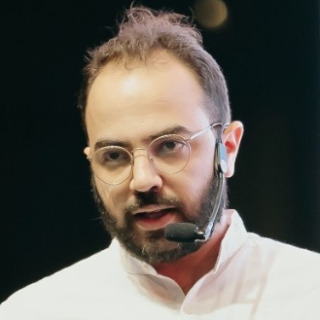
FitNot’s Abdallah Elshabrawy: “Culture gets a game noticed. Quality keeps players”

- Saudi Arabia accounts for about a quarter of FitNot’s ad impressions but over 60% of its revenue.
- Egypt makes up about 16% of FitNot’s impressions but under 6% of its revenue.
- He says rising acquisition costs are the biggest problem for small studios.
Egypt has the largest player base in the Middle East and North Africa but the lowest spend per player - and that split shapes how Cairo-based studio FitNot builds its games.
A graduate of Merak Capital’s Exel accelerator and AUC Venture Lab, FitNot was named among PocketGamer.biz’s Top 30 MENA Game Makers of 2025 and built the Fananees titles for MBC Group for Ramadan of the same year.
Ahead of the new year, we caught up with FitNot Games founder and CEO Abdallah Elshabrawy to discuss the region’s rising acquisition costs, how Türkiye offers a model for government support, and the funding MENA studios still lack between prototype and launch.
Learn more about the MENA region when Pocket Gamer Connects returns to Dubai and Jordan next year. Stay tuned for further announcements.
PocketGamer.biz: How would you assess the MENA games scene at the moment?
Abdallah Elshabrawy: Growing fast, earning slow. Mobile is the region's main platform. In the Middle East, mobile takes 64% of games spending. In Africa it takes 82%. That is roughly $4.2 billion in the Middle East and $1.6 billion in Africa this year. In MENA-3, 94% of players play on mobile.
The problem is acquisition. Global mobile downloads fell 25% in H1 2026 and cost per install rose 30% to $0.56. Studios with big budgets absorb that. Studios like ours feel it every day.
What do you think are some of the challenges facing the games industry in Egypt and the wider MENA region?
Four things:
Uneven spending power. Only 4% of Egyptian gamers earn over $900 a month. In Saudi it is 86%. The region has huge audiences in places like Egypt and Iraq that engage a lot and spend little.
Acquisition cost: Paid installs get more expensive every quarter and low-spending markets cannot cover that.
Capital: It is concentrated in a few countries and a few big deals. Early-stage studios across the region rarely see it.
Talent: Few people have run a live mobile game from launch to scale. Those who have get pulled toward higher salaries.
Beyond funding, what are some other opportunities in the region? And how can the government further help the region's games industry grow?
Arabic content. Most global mobile publishers still treat Arabic as a translation job. A studio that builds for Arabic players from day one has a real edge. Direct-to-consumer is the second one. Studios are moving more revenue to their own web shops to avoid store fees and local payment methods make that work here.
“Egyptian players give us time and reach. Saudi players give us the money. So we test in Egypt, where it is cheap, and earn in the Gulf.”Abdallah Elshabrawy
Third is AI. A team of 10 can now prototype at the speed of a team of 30. On government, look at Türkiye. Studios there get tax breaks on export revenue, tax-free salaries for R&D staff in technology zones and state support that covers a large part of international marketing and store fees. That is a big reason Turkish mobile studios can grow fast and reinvest early.
Saudi Arabia is already moving, with targets of 39,000 jobs and 250 gaming companies. Every country in the region needs its own version: tax treatment for studios earning in foreign currency, funding for production and not only events, and training that leads to real studio jobs.
What changes have you observed in the local games industry in Egypt? Specifically consumer behaviour towards games.
More women are playing. In MENA-3 they went from 32% to 38% of gamers in three years. Our own ad data shows the gap clearly. Saudi Arabia is about a quarter of our ad impressions and over 60% of our revenue.
Egypt is about 16% of impressions and under 6% of revenue. Egyptian players give us time and reach. Saudi players give us the money. So we test in Egypt, where it is cheap, and earn in the Gulf. Any studio building from Cairo has to plan around that split.
Including FitNot, which game companies would you consider as the key players in the MENA games scene in 2026?
Savvy Games Group sets the pace in money and scale, with Scopely and Moonton in its portfolio. On mobile, Tamatem, Yalla Group and Maysalward lead in Arabic. MBC Group matters on the publishing side. Sawa Group and Naphora are ones to watch. Out of Egypt, 2024 Studios and Game Hermits are doing work worth watching.
“A team of 10 can now prototype at the speed of a team of 30.”Abdallah Elshabrawy
FitNot is a small Cairo studio, a graduate of Exel by Merak, Merak Capital's gaming accelerator, and of AUC Venture Lab. PocketGamer.biz named us in its Top 30 MENA Game Makers last year. We built the Fananees titles for MBC Group for Ramadan 2025. I would call us a studio to watch, not a key player yet.
From your perspective, what’s unique about the startups you’re seeing in MENA compared to those from other regions? Is it greater use of AI, a focus on certain genres, or something else entirely?
Culture and language, and I do not think AI is what separates us. Everyone uses AI now. What is different here is Arabic card games like Trix and Tarneeb, anime-style RPGs built for Saudi players, and stories that reflect the region. Most emerging markets also lack government backing them the way Saudi does.

Mobile is still where the players are and it is the market I know best. But some teams, mainly in Saudi Arabia, are betting on premium PC and console with an Arabic voice. We are making that move ourselves.
What do you think MENA could realistically become known for in global game development?
Two things. Saudi Arabia becomes the owner and operator. Savvy already owns Scopely and Moonton, so the region has its own capital sitting on top of global mobile hits. The rest of MENA becomes the home of games rooted in our culture.
We know the humour, the family life, the streets and the history, and we can put that into games with a depth only people from here can give. Arabic card and social games already have huge audiences here, and that is the base to build from. To travel beyond the region, the games have to be excellent. Culture gets a game noticed. Quality keeps players.
Looking ahead five years, what is your outlook for the MENA games industry, and if you could change one thing about the sector today to help it reach where you want it to be, what would it be and why?
Growth will come from players spending more, and I expect Saudi to lead it. The Gulf is where the spending power is and the rest of the region supplies the players and increasingly the studios.
The one thing I would change: financing that carries a studio from prototype to launch without taking its IP. The region has accelerators and pitch events. What it lacks is money for the hard middle, where good mobile games run out of runway before they find their audience. That gap is not theoretical to me.
Learn more about the MENA region when Pocket Gamer Connects returns to Dubai and Jordan next year. Stay tuned for further announcements.
Companies

People