How culture and technology are shaping the future of games


- Superbloom’s Emily Yim, Huey Games’ Rob Hewson and NAK3D’s Kelly Vero identify changes, challenges and opportunities in the UK and wider games market.
- Learn from more industry experts at Pocket Gamer Connects London on January 19th to 20th, 2026.
The games industry is transforming at a rapid pace. But as new technologies, distribution models, monetisation strategies and player expectations reshape the industry, the door has opened to new creative possibilities.
Ahead of Pocket Gamer Connects London on January 19th and 20th, we spoke with some of the event speakers about current changes, challenges and opportunities in games.
One thing they all agree on: the future of games is bright, as long as you’re able to understand your players and adapt to evolving demands.
Understanding your audience
Superbloom is a mobile game studio creating what CEO and co-founder Emily Yim calls “elevated and meaningful” lifestyle experiences for women. Its first title, Venue, is a design-focused game which seems to have hit a sweet spot.
“The reviews consistently mention relaxation, beautiful visuals, and the feeling of ‘finally a game made for me’,” explains Yim.
Doubling down on the mission of serving female players, she says it’s one of the biggest industry opportunities.
“They’re one of the largest, most engaged, and most loyal segments in gaming, yet still massively underserved in terms of genre variety and quality.”
“In a changing market, your strongest differentiator is understanding your player better than anyone else.”Emily Yim
As for the biggest challenge, Yim mentions the demand for both craftsmanship and operational excellence to succeed.
“Beautiful games alone aren’t enough," she states. "You need tight live ops, clear audience understanding, strong data foundations, and disciplined user acquisition.
“It’s a high bar, especially for small studios.”

While sharing her expertise at PG Connects London in January, she wants to highlight the advantage of building for women when it’s done “intentionally, respectfully, and with depth”. She also hopes to show that there’s still a way forward for small teams who genuinely understand their audiences and focus on building for them.
“I’d love to see the industry shift away from hype-driven trends and instead focus on audience-driven innovation," says Yim.
“In a changing market, your strongest differentiator is understanding your player better than anyone else.”
The need to remain agile and rethink funding
Identifying the biggest challenge and opportunity in the games market, Huey Games CEO and creative director Robert Hewson points out the pace of change.
“The industry has accepted that it isn’t returning to the way it previously operated, and that success now requires flexibility, nimbleness and a willingness to adapt to a rapidly changing market," he states.
“We have to remain agile and alert to shifts in both the market and the technology we use to build games,” he says, adding that this change is also the biggest opportunity.
“Those who can validate audiences early and harness new technologies to streamline development will be able to move faster and gain a real competitive edge.”
“Success now requires flexibility, nimbleness and a willingness to adapt to a rapidly changing market.”Robert Hewson
Hewson's studio, Huey Games, is a work-for-hire developer working on console, mobile and PC games. Specialising in high-quality co-development, porting and networking solutions, it’s currently working on Outbound and Amazing Frog?.
Having run what he calls “21 successful Kickstarter campaigns”, Hewson’s view on revenue and funding differs from the mainstream. When asked what change he’d like to see in the games industry, he mentions both funding and “how we validate audiences".
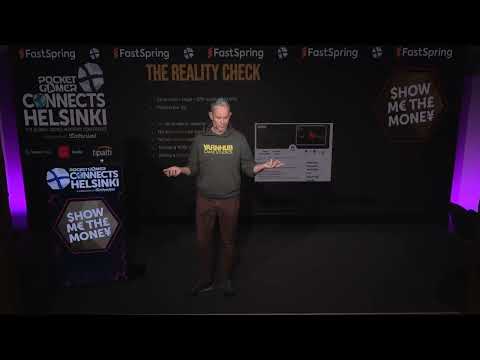
Calling for more cooperation between developers and publishers to meet today’s realities, he says: “Developers can’t simply make a game they personally enjoy and expect it to get signed, and publishers can’t rely on developers to self-fund vertical slices and early marketing without support.”
Speaking at PG Connects London, he’d like to emphasise two key takeaways. “First, cash is king, and having a hustler’s mindset to generate revenue wherever you can is invaluable," says Hewson.
"Second, validating audiences early is more crucial than ever, and there’s a huge amount we can learn from crowdfunding when it comes to testing ideas, building communities and reducing risk.”
UGC is the future
Devoting her entire career to games, NAK3D technical founder Kelly Vero has experienced more than one industry transformation.
About the current phase, she says: “Games are shifting from play to win to lifestyle to live. People aren’t just gaming for mechanics anymore; they’re gaming for identity, culture, community and self-expression.”
Not coincidentally, this trend is exactly what her own company NAK3D is focused on, creating platform-ready playable assets.

"We take the mystery out of monetised digital goods so players can enjoy the things they love, and studios can survive in a world that’s becoming more UGC-driven and a lot less ‘walled garden’.”
As for the current industry sentiment, she says it’s “cautiously optimistic, but definitely brighter than it has been”, emphasising that this change is not just a disruption, but a huge opportunity.
“Players care deeply about how they show up in digital spaces, from sneakers to silhouettes to full-on couture moments," says Vero. "Whoever can deliver personalised, high-quality avatar items at scale is going to shape the next decade of gaming.
She adds: “If we build for what players love, not what we assume they want, the industry has a huge decade ahead."
“Whoever can deliver personalised, high-quality avatar items at scale is going to shape the next decade of gaming.”Kelly Vero
Of course, the games market changing has brought a set of issues to light, too. Mentioning content overload as one of them, Vero says there are also other challenges.
“Many studios don’t yet know how to sustain their worlds," she says. In this regard, Vero hopes to see more “playful collaboration” across games and other creative sectors like “fashion, beauty and music”, resulting in “richer storytelling and assets players actually want to use.”
“Real longevity comes from IP depth, cultural relevance, and giving players reasons to return that go beyond missions and mechanics.”
All this - and more - are points Vero will highlight as she speaks at PG Connects London.
Join us on January 19th to 20th for essential games industry insight from over 290 expert speakers - book your PG Connects London ticket today.
Companies


People


Events
