InnoGames' Zoran Gjorgiev on rebuilding Heroes of History's live ops one layer at a time


- Gjorgiev has moved from an event every day to clustering events and letting the game breathe.
- Heroes of History's seasonal events have been rebuilt layer by layer around hero rewards.
- Next up are "Big Beats": four to eight week themed arcs, three or four times a year.
Zoran Gjorgiev joined InnoGames' Forge of Empires late in its life, with years of events and entrenched expectations already in place. He then moved to Heroes of History, where the calendar was his to create. The former, he says, taught him how to build a live ops pipeline and the latter posed a different question - where to start and what to build towards.
Two years on, he credits the approach itself. "I believe that our desire to find the best live ops approach for us, rather than simply looking at competitors or sister games, has been the most helpful factor in that growth."
Speaking to PocketGamer.biz, ahead of his appearance at PGC Nordics, Gjorgiev reflects on the experience has taught him, from rethinking how often events should run to rebuilding seasonal events layer by layer, reading the data behind them and turning standalone events into multi-week arcs.
Rhythm over frequency
The biggest change in his thinking concerns how often events should run at all.
"I used to firmly believe that you needed an event every day, but while I still advocate for extensive live ops, I have learned that synergy and rhythm are more important than sheer coverage," he says.
The result is a calendar built on clusters rather than coverage: several joint events compressed into a short window, then deliberate space in which the game can breathe.
The second shift concerns where an event's weight comes from. Gjorgiev initially assumed gameplay was the deciding factor. "Now I believe it's the rewards that matter most. If a reward is seen as strong or important by players, everything else is secondary."
“Whatever a player does, it should either be fun in the moment or bring them closer to achieving something they want - or ideally both.”
So instead of chasing a headline mechanic every time, the team looks for genuinely worthwhile rewards and delivers freshness through theme, flavour and small iterations on existing content. Underneath it sits a constant: "Whatever a player does, it should either be fun in the moment or bring them closer to achieving something they want - or ideally both. That North Star still holds true."
Why formulas expire
His case for constant iteration rests on a specific diagnosis of failure. "A successful formula doesn't suddenly become unsuccessful," he says. "It stops working either because players have learned how to beat it, or because they have lost interest in it over time."
He has watched strong-performing designs end up described as stale and monotonous, for no reason beyond nothing changing and the audience growing accustomed to them.

"The real danger is not the decline itself, but reaching that point with no new, proven ideas. If you haven't been iterating, you have no direction - you're starting from scratch at the worst possible moment. Small changes rarely turn things around at that stage, and you can't afford the time that big changes require because you needed results yesterday."
Iterating continuously leaves a trail of progress instead: smaller but still significant changes, each generating feedback. It also changes the relationship with the community, who see the freshness, tell the team what worked, argue about what didn't, and recognise their own influence on the next version.
"Having people invested in that evolution is a hugely powerful factor, and it's something you won't get from a format that never changes."
Reactive isn't the same as careless
Fast iteration risks churn that confuses players and exhausts teams. Gjorgiev divides change into two kinds, the ones a team wants to make, and the ones it doesn't plan but has to, and argues neither should be feared or avoided.
"Being reactive isn't necessarily a bad thing. The key is to have a vision and a clear direction that you're deliberately building towards."
Every change is then checked against that direction: does it bring the game closer to the goal? If not, the risk of derailing the longer journey is high, however well-reasoned it looks in isolation. And when a reactive change lands badly, in the data or in player feedback, it has to be recognised and actively addressed next time round. "Otherwise, you will be building the rest of your system on a broken foundation."
One practical guideline does most of the work: change one layer at a time. Reward, structure, runtime or theme, but at different moments, so each impact can be measured against previous versions.
Forge of Vulcan is the working example. The seasonal event is approaching its sixth iteration and has differed every time, launching with a different reward to its predecessors before taking on a balancing pass, a different sub-event structure for earning progress, a brand-new reward type and a general visual makeover. The team doesn't rebuild it every quarter, applying tweaks wherever possible without making them too complex or disruptive.
The event currency and 21-day runtime, meanwhile, have been constant throughout - the stability and habit players need, leaving everything else open to change.
Rebuilding seasonal events
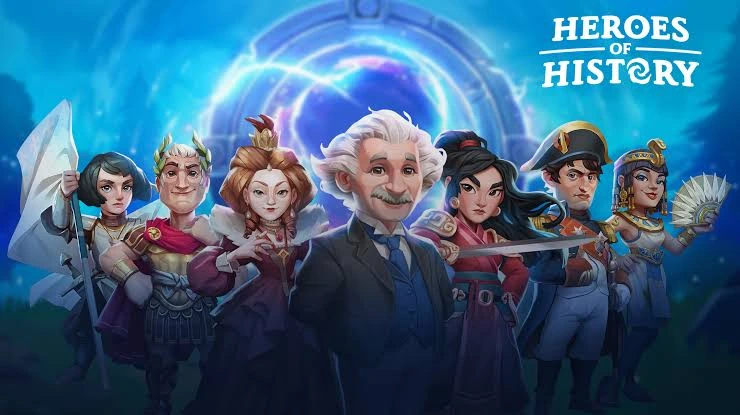
Heroes of History's seasonal events are the clearest demonstration. They began with what the team internally calls a chest mechanic: earn event currency, pick a reward, progress towards a Grand Prize. Functional, but lacking depth for this particular game.
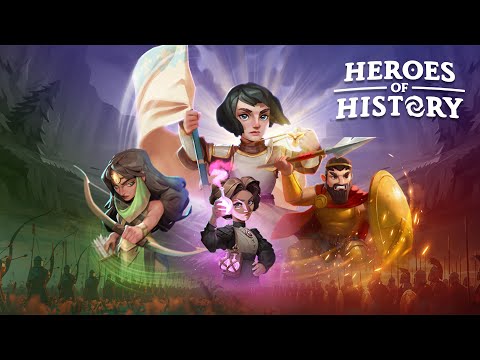
Within the first few runs came Relics, equippable items that make heroes stronger, as a deliberate correction. "These characters are at the heart of Heroes of History, and we wanted as a main reward something players would be genuinely excited for," he says. "It tied the event to the part of the game that players were already invested in."
Changes since have arrived in stages. Themes were reworked to fit the game's historical premise, producing The Moon Landing and The Journey of the Titanic. The single linear track for earning energy gave way to a series of mini-events, each a different route to event currency, varying the gameplay and allowing a balancing system where harder actions pay out more than easier ones. Hero star-ups followed, letting players upgrade a favoured three or four-star hero to five stars - again built around what players care most about.
“If you compare one of these seasonal events from the initial launch with the current version, you will find very few similarities between them.”
The iteration now launching adds a gacha system carrying both brand-new and previously released relics, which Gjorgiev says brings relics closer to the game's hero setup and resolves several weaknesses in the current approach. It also means improving one of the first major features the team ever added to its live ops.
"If you compare one of these seasonal events from the initial launch with the current version, you will find very few similarities between them," he says. Some parts have survived since the beginning, though - a sign, he reckons, of refinement rather than complete reinvention.
Reading the signals
Knowing when to change direction means weighing community feedback, feature participation, gameplay time and player spending, each against the team's hypothesis of how players would engage and what it would do to the game economy.
Clear outcomes are the easy case. "The first real challenge arises when the picture isn't crystal clear," he says - at which point the investigation extends beyond community reports and dashboards, drawing on specialists from other departments.
Day to day, the discipline is simpler: hold an expectation about how things should progress, then check whether the community and the data reflect it. If they don't, that is cause for concern.
“One of the saddest things is when you deliver an update that introduces a change, yet you see no noticeable impact from it.”
The worst outcome is not a bad result but an absent one. A/B tests on pricing and on how game content is accessed have moved no KPI whatsoever. "One of the saddest things is when you deliver an update that introduces a change, yet you see no noticeable impact from it," he says. "It's a bit weird to say that, but I would rather see a negative trend resulting from a change, because at least it teaches you a valuable lesson about what to avoid in future."
What is next for Heroes of History?
What comes next for the game is structural: isolated events giving way to connected story arcs. "To use an everyday TV analogy, we are moving away from doing standalone movies and towards a series with several seasons," Gjorgiev says.
Driving it are what the team calls Big Beats - extensive live ops projects running four to eight weeks, comprising a variety of events around a single topic. They pay off on four fronts at once: real buzz and discussion in the community; an easy opening for marketing to refresh creative and chase new players; a substantial amount of new gameplay rather than more of the same as last month; and new problems worth working on for the team itself.
Only a few have run so far, but the aim is three to four a year on either free or licensed IP, with the format evolving significantly as that cadence increases.
The larger ambition is reach. Events traditionally live in the mid-game, and Gjorgiev wants Big Beats to make the whole game feel fresh: landing on players at the very start of their journey, while adjusting end-game content so long-term players have something to look forward to within the same arc.
"Ideally, we can create one cohesive theme that resonates with both brand-new players and veterans. This is our main current focus in terms of live ops."

Zoran Gjorgiev speaks on 'Discovering Your Game's Live Ops Needs' at PG Connects Nordics, in Helsinki on October 20-21. Tickets are here.
Companies

People