Maysalward founder talks 2026 MENA games industry: "Capital on its own has never created a games industry anywhere"

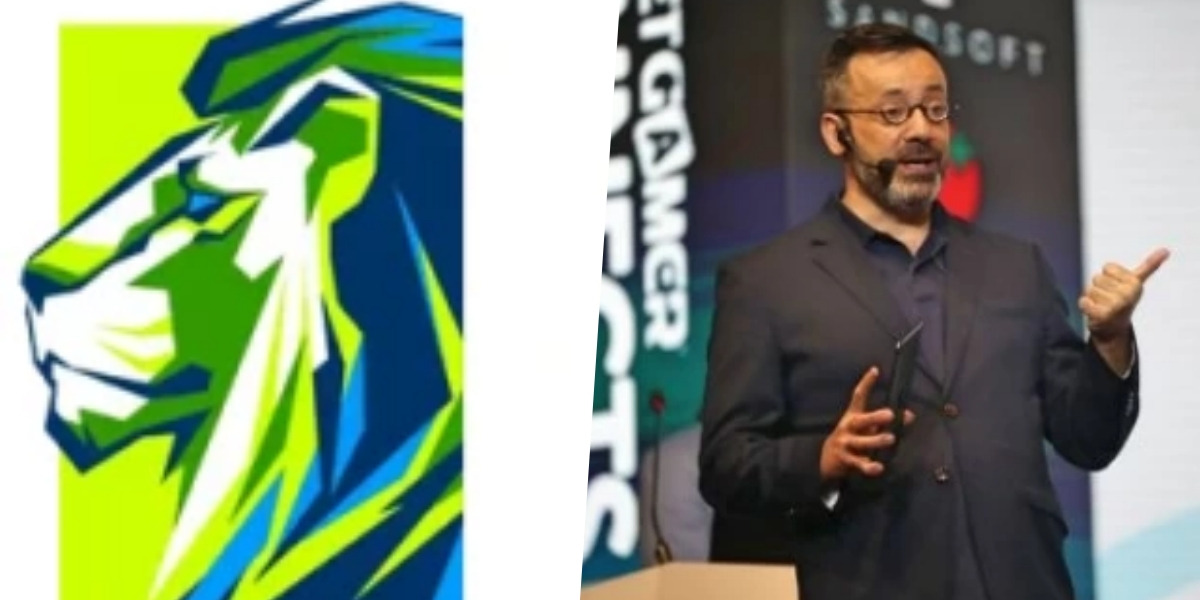
- Maysalward founder and CEO Nour Khrais says he no longer needs to prove the games industry is real in the MENA region.
- He beileves the region now has attention, capital and players.
The MENA region has seen impressive growth in recent years, with MENA-3 (Saudi Arabia, UAE and Egypt) in particular projected to reach $3 billion in player spending by 2030.
Amid the region’s development and opportunities, there are also challenges. So, ahead of Pocket Gamer Connects Jordan on November 7th and 8th, we speak with Maysalward founder and CEO Nour Khrais for the latest market perspectives.
PocketGamer.biz: How would you assess the MENA games scene at the moment?
Nour Khrais: We have stopped having to prove that gaming is a real industry here. That argument is over, and I am glad, because I spent close to 15 years making it in rooms where nobody wanted to hear it.
The question I care about in 2026 is a different one. We have attention, capital and players. Can we turn that into studios that ship and survive?
I would be careful with the word region, though. There is no single MENA market. Saudi Arabia is building at a scale nobody else here can match, through investment, esports and infrastructure. The UAE has become the easy place to base a publisher or bring in international talent.
“We have attention, capital and players. Can we turn that into studios that ship and survive?”Nour Khrais
Egypt has the population and the engineers. Jordan has more than 20 years of mobile development, publishing and training behind it, which is a different kind of asset and often an underrated one.
What I see across all of them is a shift from consumption to production. For a long time MENA was described as a place where people play games. The better question now is what gets built here, who owns it and whether it survives past one title.
What do you think are some of the challenges facing the games industry in Jordan and the wider MENA region?
Four things: depth of experience, discoverability, fragmentation and patience.
Talent is not the problem. We have strong programmers, artists and designers, and more of them every year. What we are short of is people who have shipped several commercial games and lived through the full cycle, product management, live operations, monetisation, analytics, user acquisition, community and publishing. You do not get that from a course.
You get it by shipping, failing and keeping the same team together long enough for the lesson to stay inside the company. Jordan has done a lot on the training side. The Jordan Gaming Lab was launched by the King Abdullah II Fund for Development in 2011, and Maysalward ran it as the Fund’s technical partner for fourteen years, until 2025.
It grew to eight branches, from Amman and Irbid down to Aqaba and Tafileh, and it continues under the Fund today. I am proud of that work. But a lab produces people. It does not produce companies. We need more studios able to hire those graduates and put them on a real product with a real release date.
The second issue is discoverability. A developer in Amman, Cairo or Riyadh competes for exactly the same player attention as a studio in Helsinki with a hundred times the marketing budget. The app stores do not sell us cheaper installs because we are an emerging market.
“Money is the easy part of the sentence. Capital on its own has never created a games industry anywhere.”Nour Khrais
Then, fragmentation. We share Arabic, and that is roughly where the similarity ends. Saudi Arabia, Jordan, Egypt, Morocco and the UAE behave differently as consumer markets, in humour, in payment behaviour, in when people actually play. Culture is behaviour, not translation. If localisation stops at the text file, the product still feels foreign to the player holding it.
Last, patience. Games are an IP business and IP takes years. If one commercial failure means the team is dissolved, nothing accumulates and the next attempt starts from zero. That is the most expensive habit in our industry.
Beyond funding, what are some other opportunities in the MENA region? And how can the government further help the games industry grow?
Money is the easy part of the sentence. Capital on its own has never created a games industry anywhere.
The bigger opportunity is people and material. We have a young population that plays constantly, and we have cultural material that global games have barely touched: history, mythology, cities, music, humour, food, the way families gather.

There is also a genuine business opportunity in regional publishing and culturalisation. Tamatem built a company on exactly that, bringing international mobile games to Arabic players properly rather than word by word, and now reports more than 50 released titles and 150 million downloads.
For governments, the most useful work is boring work. Make it simple to open and run a studio. Employment rules and tax treatment that do not punish a team of 15. Support for internships inside real companies. Help getting developers to international events and in front of publishers. Universities that talk to the industry instead of about it.
Prototype funding is useful too, because that is where the risk is highest and private money is most nervous. But the target has to be a company that earns from players. A studio living on grants is a project with a longer deadline.
What governments should not do is decide which games get made. Make it easier to build, hire, export and keep people here. That is the job.
What changes have you observed in the local games industry in Jordan? Particularly consumer behaviour towards games.
We have a player who first bought a game from us on a Nokia feature phone and is still playing our games on a smartphone 22 years later. The relationship can last decades if the product keeps deserving it. That is also the range of change I am describing.
The Jordanian player got much harder to please, and it is the healthiest thing that has happened to us. 20 years ago an Arabic mobile game was unusual by itself. Today the same player compares us against the best product in the world, on the same screen, in the same minute.
Nobody lowers their standards because the studio happens to be down the road. Expectations moved on everything: performance, matchmaking, progression, how often you update, how fast support answers, whether friends can find each other inside the game.
“What governments should not do is decide which games get made.”Nour Khrais
The second change is how social play has become. Here a card or board game works like a digital majlis. People come for the table and stay for the company. We see it in our own titles, where the chat, the rematch and the group of regulars matter as much as the rules.
Jawaker built a large business on the same behaviour, running traditional card and board games as live services with chat and community around them.
Payment behaviour changed as well. Buying something inside a game used to need explaining. It does not now. Younger players also move between mobile, PC and console depending on the game and the creator they follow. Platform loyalty is weak in that group.
Consumer expectations in Jordan have grown faster than local production capacity. Our job is to catch up with the player.
Including Maysalward, which other companies would you consider as the key players in the MENA games scene in 2026?
I would not rank them, because they are not doing the same job. Savvy Games Group belongs in the conversation on scale alone, and Scopely has sat inside it since July 2023 - a $4.9 billion acquisition, which tells you how far the reach goes.
Saudi Arabia treats games and esports as a national commitment rather than a side project. Tamatem is still the most important Arabic mobile publisher in the region and one of Jordan’s clearest success stories.

Jawaker was built by Jordanians around regional card and board games and was acquired by Stillfront in 2021 for £205 million upfront. It settled an old argument by showing that a culturally specific game can become a large, durable product.
There are more coming, and I expect this list to look different in two years. Maysalward sits in a different lane and I am comfortable there. We build our own titles, we own the IP and we spend a serious share of our year training the next group of developers.
“The real advantage is that we understand an audience the global industry has never properly studied.”Nour Khrais
Since 2003 we have shipped more than 100 of our own titles and we ran the Jordan Gaming Lab as the King Abdullah II Fund for Development’s technical partner from 2011 to 2025.
A healthy industry needs publishers, platforms, esports businesses, small independent teams and the people doing the unglamorous training work.
We take education and capacity building seriously. Maysalward is the official partner of Minecraft Education in Jordan, supporting a Ministry-led programme that has reached more than 140 public schools, with teacher training and student projects across the Kingdom.
From your perspective, what’s unique about the startups you’re seeing in MENA compared to those from other regions? Is it greater use of AI, a focus on certain genres, or something else entirely?
AI is not our advantage. Everyone has the same models, mostly on the same monthly subscription.
What AI does for a region like ours is lower the cost of being wrong. A team of five can test an art direction, a narrative idea, a marketing angle or a localisation pass in a day instead of a month. Where studios are small and runway is short, that changes what you are willing to attempt. It is a tool. It is not a plan.
The real advantage is that we understand an audience the global industry has never properly studied. Why one card game carries weight in Jordan and a different one does in Saudi Arabia. How friends insult each other affectionately and what that means for chat design. What Ramadan does to session times and to spending. Which Arabic word on a button feels natural and which one reads like a printer manual. None of that is in a spreadsheet.
Jawaker built on it. Tamatem built a publishing model on it. Other teams found real audiences in local car culture and similar themes that nobody outside the region would think to make a game about.
So I would not claim we win by using more AI than everybody else. We know a very large audience better than the people currently serving it. AI can speed that knowledge up. It cannot supply it.
Regions that become successful game development hubs often develop a particular technical or creative speciality. Turkey, for example, has developed a reputation for mobile game development, while China is known for operating games at enormous scale. What do you think MENA could realistically become known for in global game development?
I do not want us to become a cheaper Turkey or a smaller Finland. That road ends with us doing other people’s production work at a discount.
If I had to name one speciality, I would say social games built on culture and community, run properly as live services. Look at how people gather here. The majlis, the diwaniya, the café table, the family on a Friday, the football argument, the constant teasing. That behaviour produces games that travel, because wanting to play with other people is not a regional habit. It is a human one.
The second thing is worlds. We have thousands of years of stories, characters, cities and folklore that global games have barely opened. I would rather we build those than reskin somebody else’s hit and add Arabic text.
“I do not want us to become a cheaper Turkey or a smaller Finland.”Nour Khrais
So, two things: games that connect people, and worlds that could only have come from here. Made in Amman, Riyadh, Abu Dhabi, Cairo or Casablanca, and played by somebody in Tokyo, São Paulo or London who could not find Casablanca on a map.
We spent years proving that Arabs play games. The next thing to prove is that a globally successful game can be made here. I would like Maysalward to be part of that proof, and I would be almost as happy if somebody else gets there first. The proof will not be a funding round. It will be a studio here still shipping its fourth title.
Pocket Gamer Connects Jordan on November 7th and 8th, 2026.
Companies

People
