Ouaz Games on surviving hypercasual's collapse and the rise of browser games

- Returning to Google Play is about maintaining a portfolio presence, not chasing monetisation.
- New African studios chasing console or Steam projects are skipping the stage that actually generates revenue.
- Investors avoid games studios in MENA and Africa because the model doesn't scale the way publishers do.
Most studios pick a platform and stick with it. Ouaz Games has changed direction twice and is about to do it again.
Out of Morocco, the 10-person team rode hypercasual through Voodoo, watched Apple's ATT changes kill that model overnight and pivoted into browser and instant games.
We speak with founder and CEO Yasser Ouaziz about what it took to walk away from a model that once worked, why the studio is converting its entire back catalogue into browser titles with a target of 50 games live by the end of 2026, and why he thinks most new African studios are building for the wrong audience entirely.
PocketGamer.biz: Could you tell us a bit about Ouaz Games and what you’re up to right now?
Yasser Ouaziz: Ouaz Games started in 2017, but I was already working solo on games since 2014 before that. We started in hypercasual with Voodoo. The hard part in the beginning was that we didn't have a hypercasual game designer on the team, so we had to bring people in and train them from zero. We got close to big hits many times and we also shipped some successful games on our own, like Webmaster 3D with TapNation.
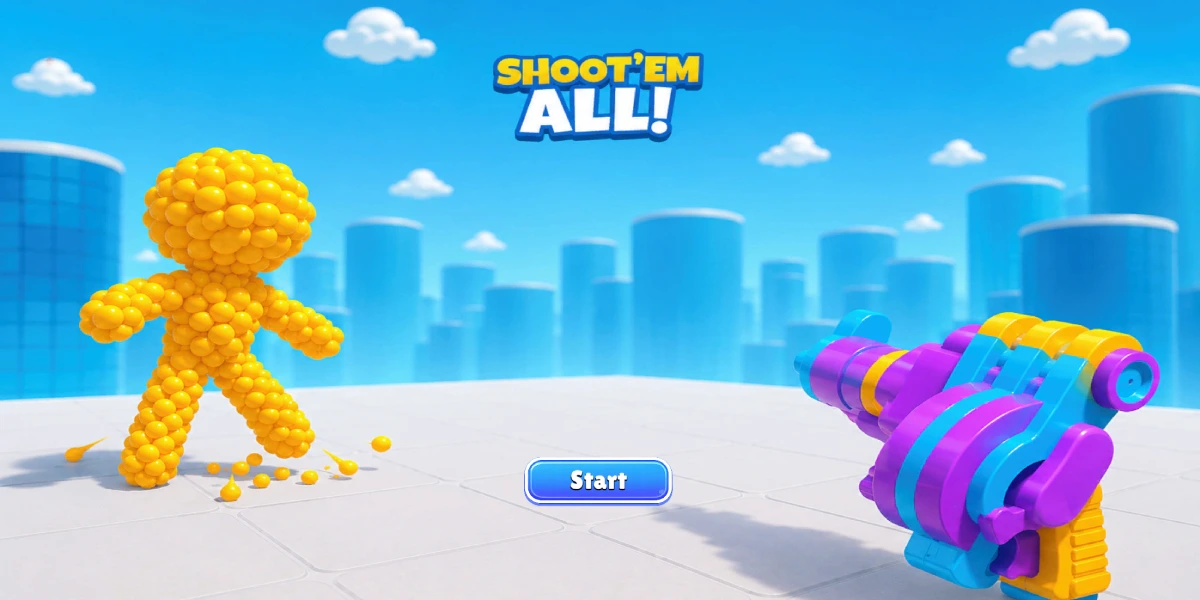
Then Apple ATT happened, the Facebook situation happened and hypercasual basically died for studios our size. CPI went up, the market started moving towards hybridcasual and casual. We didn't follow that wave because it's risky, one prototype per month and a very low success rate. You need to test a lot before one works.
At the same time, we were watching Poki and CrazyGames grow, and we noticed the same publishers we used to work with were now publishing there. Add to that WeChat Mini Games, Douyin Mini Games, Facebook Instant Games, all moving in the same direction. So we shifted focus to browser games and instant games.
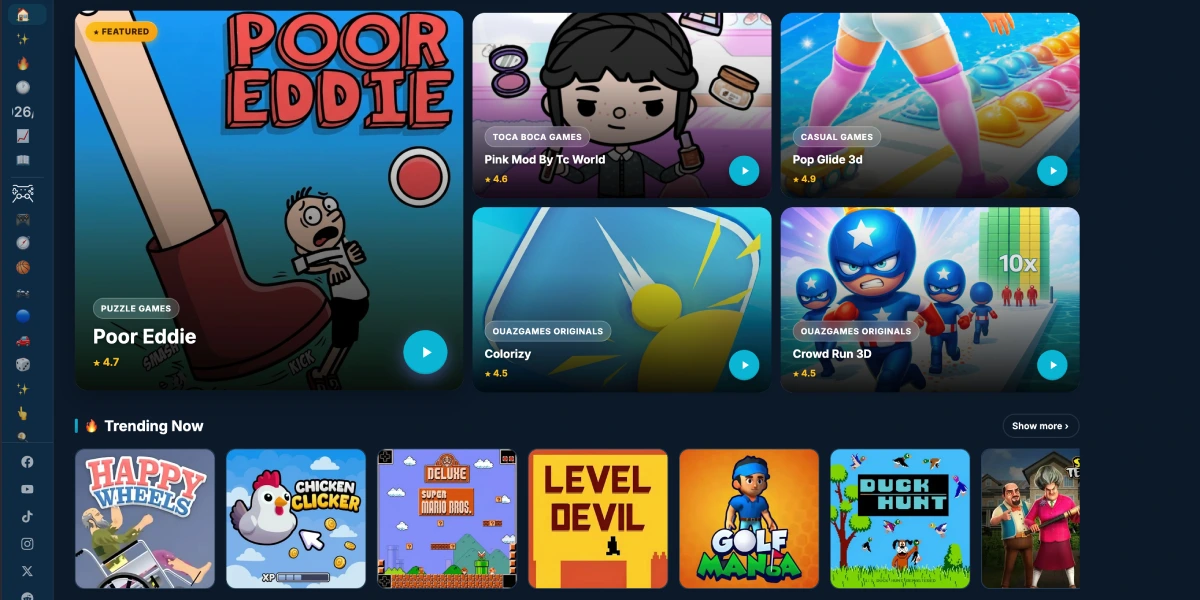
We started with our own site (ouazgames.com) which began bringing traffic through SEO, then we partnered with CrazyGames and had a game do well with them, then we moved into YouTube Playables and TikTok Mini Games. Right now, the main focus is publishing a lot of games across YouTube, Facebook, TikTok and CrazyGames. We're still on mobile, but it's not the main bet anymore.
How many staff do you currently employ and where are they based?
We're a team of 10 right now, growing slowly. Most of the team is in Morocco. I moved to Dubai and I'm setting things up to move part of the team here, too.
You started as a mobile studio and have since moved into browser gaming. What drove that decision? Was it a response to market conditions or something you'd always planned?
It was a reaction to the market, not something we planned from the start. Apple ATT and the Facebook situation killed hypercasual for studios our size. The market moved to hybridcasual but we couldn't afford that game, the prototypes are too long and the hit rate is too low. In parallel, browser games were quietly becoming huge.
“I see new studios with no capital trying to ship console or Steam titles... They don't realise that hypercasual and hybridcasual can bring in millions of dollars a month for the teams that crack it.”Yasser Ouaziz
Poki and CrazyGames were growing, publishers were going there, WeChat and Douyin Mini Games were exploding in Asia, Facebook Instant Games was picking up. All the signals were pointing in the same direction, so we pivoted.
Has there been a shift in how the studio operates? Your games are currently unavailable on the Google Play Store. If there have been changes, why?
We actually went back to Google Play recently and published our first game there. But to be transparent, the goal isn't really monetisation through Play, it's more about keeping a portfolio.
Google Play today is pay-to-play; you have to pay for traffic to get anywhere and that math rarely works for small studios. Browser games are the opposite - the traffic is already there, your job is just to focus on quality.
You've developed mobile games and web-based titles. How has Ouaz stayed competitive and what does your current game portfolio actually look like?
Honestly, the main thing that kept us alive is that we read the waves early. We saw the hypercasual decline coming. We saw the browser wave coming. No magic, just paying attention.
Current portfolio:
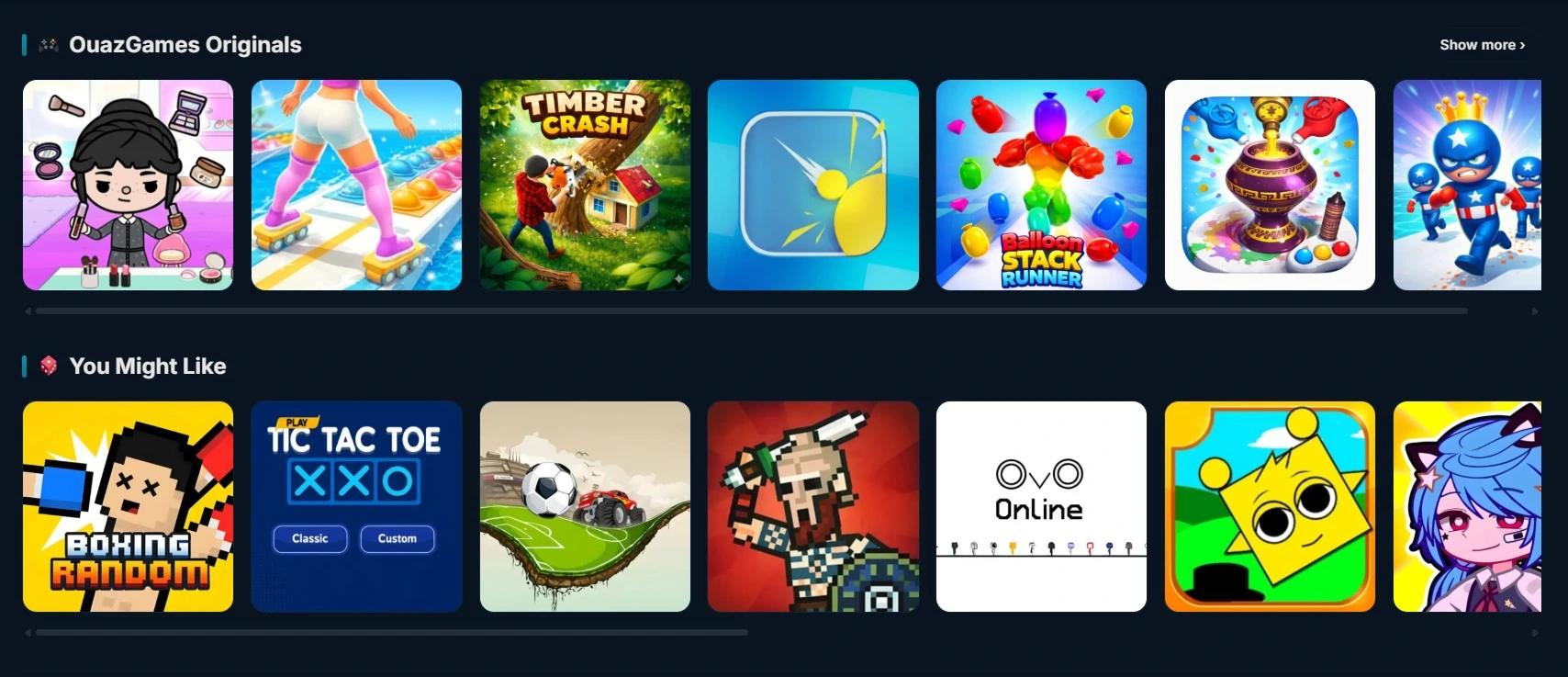
- Our own platform: www.ouazgames.com - around 90k monthly active users. Browser / YouTube Playables: Ant Kingdom Rush (901k plays), Save The King (535k plays), Pop Glide 3D (321k plays).
- Mobile: Prison Escape Idle, Colorizy, Ant Kingdom Rush, Infinite Craft Older, Webmaster 3D with TapNation.
Hypercasual mobile is a crowded and increasingly difficult market. How have your games been received internationally outside the MENA region?
From day one we've always targeted Tier-1 countries, mainly because RPM is high enough there for the model to make sense. MENA is home but it's not really the commercial target for us, the monetisation math just doesn't work the same way.
“We saw the hypercasual decline coming. We saw the browser wave coming. No magic, just paying attention.”Yasser Ouaziz
What do you see as the current opportunities and challenges facing the games industry in Morocco and the wider MENA region?
I'll talk about Morocco specifically and maybe parts of Africa close to it. There's a big wave of new studios in Morocco right now, which is great.
The problem is most of them don't have enough contact with the global market to know what actually works. I see new studios with no capital trying to ship console or Steam titles because they think that's what makes you a "real" studio.
They don't realise that hypercasual and hybridcasual can bring in millions of dollars a month for the teams that crack it. They should start by focusing on trends and on games they can ship with good quality in a short timeframe, instead of burning money on big projects with very low odds of success.
Events would help a lot, just to open people's eyes to what's actually moving in the industry. I used to organise events in Morocco in 2016 and 2017, but after I left the country I stopped, and I haven't had the chance to go back and share what I've learned.
Talk to us more about Africa. What do you think is the key to tapping into this audience? And why do you think some still overlook the market despite its growth potential?
You don't really target by country, you target by language. If your game supports Arabic, French, English and Spanish, it's going to work across pretty much the whole continent, because every African country speaks at least one of those. Games with an actual "African identity" or African theme, that's a later-stage thing.
It'll come naturally when African studios are financially stable enough to think about identity instead of survival. Right now most studios are just trying to make something work and stay alive, which is normal for any emerging scene. On why publishers overlook the market, it's not just Africa, by the way. Parts of Asia and parts of North America get overlooked the same way.
“If we want more investment flowing into the MENA/Africa games scene, we need to help small studios grow first.”Yasser Ouaziz
The reason is simple: it's RPM. Publishers work on ad arbitrage, they need to spend on UA and make it back through ad revenue. That math is clear in Tier-1 and Tier-2 countries. An RPM of $10 is not the same as $0.10, you'd need 100 users in the second case to equal one user in the first. It's just not practical from a UA standpoint.
In terms of funding and support for game studios, what has been your experience navigating the funding landscape? And how do you think the MENA games market could attract more investment?
We're fully bootstrapped, I'm a solo founder, no external investment. The reality is, investment comes when a company wants to scale or has a very clear business plan. The "games studio" model isn't really attractive to investors, they prefer publishers in this space.
I saw it firsthand in the UAE with Playgama, they raised $3m, but not as a studio, they're funded as a publisher and a bridge between devs and HTML5 platforms.
If we want more investment flowing into the MENA/Africa games scene, we need to help small studios grow first. That means incubators, support programs and real local success stories. Without those, investors won't move.
What are your plans for the rest of 2026? Will you be exploring new platforms? And are there any specific initiatives or projects on the horizon that we should look forward to?
Right now we're in the middle of converting our portfolio (the games we've built since 2017) into browser-ready titles. The goal is to have 50 games live in the browser space by the end of the year. That's the main mission for the rest of 2026.
We'll keep publishing across YouTube Playables, Facebook Instant Games, TikTok Mini Games and CrazyGames. Mobile will stay in the picture but with a different approach than before.
Companies

People