Report: 35% of game founders have decided against hiring because AI can do the work

| Date | Type | Companies Involved | Key Datapoint |
|---|---|---|---|
| Sep 14, 2026 | report | Values Value | 35% chose AI over hiring |
- 35% of game founders have decided not to hire someone because AI could handle the work.
- 78% of game workers say AI has changed how they work in 2026.
- 60% of founders deliberately keep their teams small.
Artificial intelligence is already changing how game companies approach their workforce, with 35% of founders saying they have decided not to hire someone because "AI tools could handle the work instead".
That’s according to the 2026 Big Games Industry Employment Survey, featured in the Talent Signals Reshaping the Games Industry report, with 1,800 respondents across 90 countries.
According to the report, 78% of respondents said AI has changed how they've worked this year, with 33% describing the impact as significant and 45% as somewhat significant. Only 22% reported no change.
AI pressure
The growing use of AI is also creating concerns among workers. Some 61% cited pressure to work faster and produce more, while 53% were concerned about declining work quality. A total 29% noted ethical concerns.
Another 46% said AI is making it harder to judge real skills, while 35% raised concerns about job losses or reduced demand for their roles. The report claimed one match-3 giant plans to cut its headcount from 3,000 to 500 people.
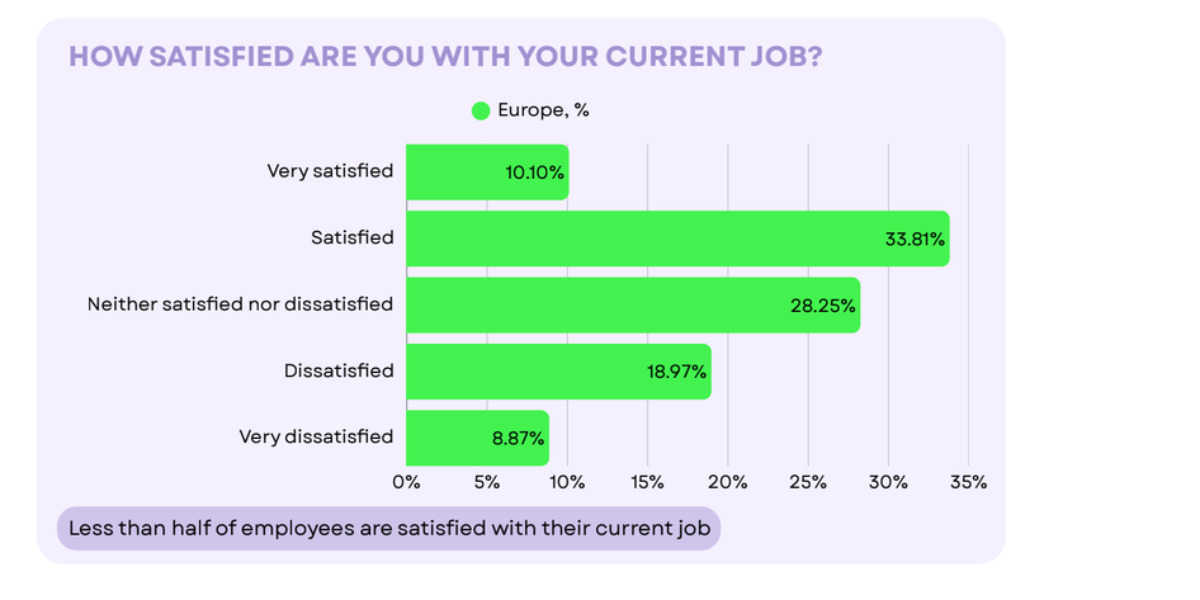
Meanwhile, 60% said keeping their team small is a deliberate strategy, while employee loyalty in Europe has also fallen, with eNPS dropping from 9.7 in 2024 to -9.8 in 2026.
New roles like AI strategy, AI ownership and AI management are also emerging. In the EU, middle-level art and design roles have also seen a bump in median salary, up from €25,000 ($28,800) to €33,000 ($38,000) in just two years.
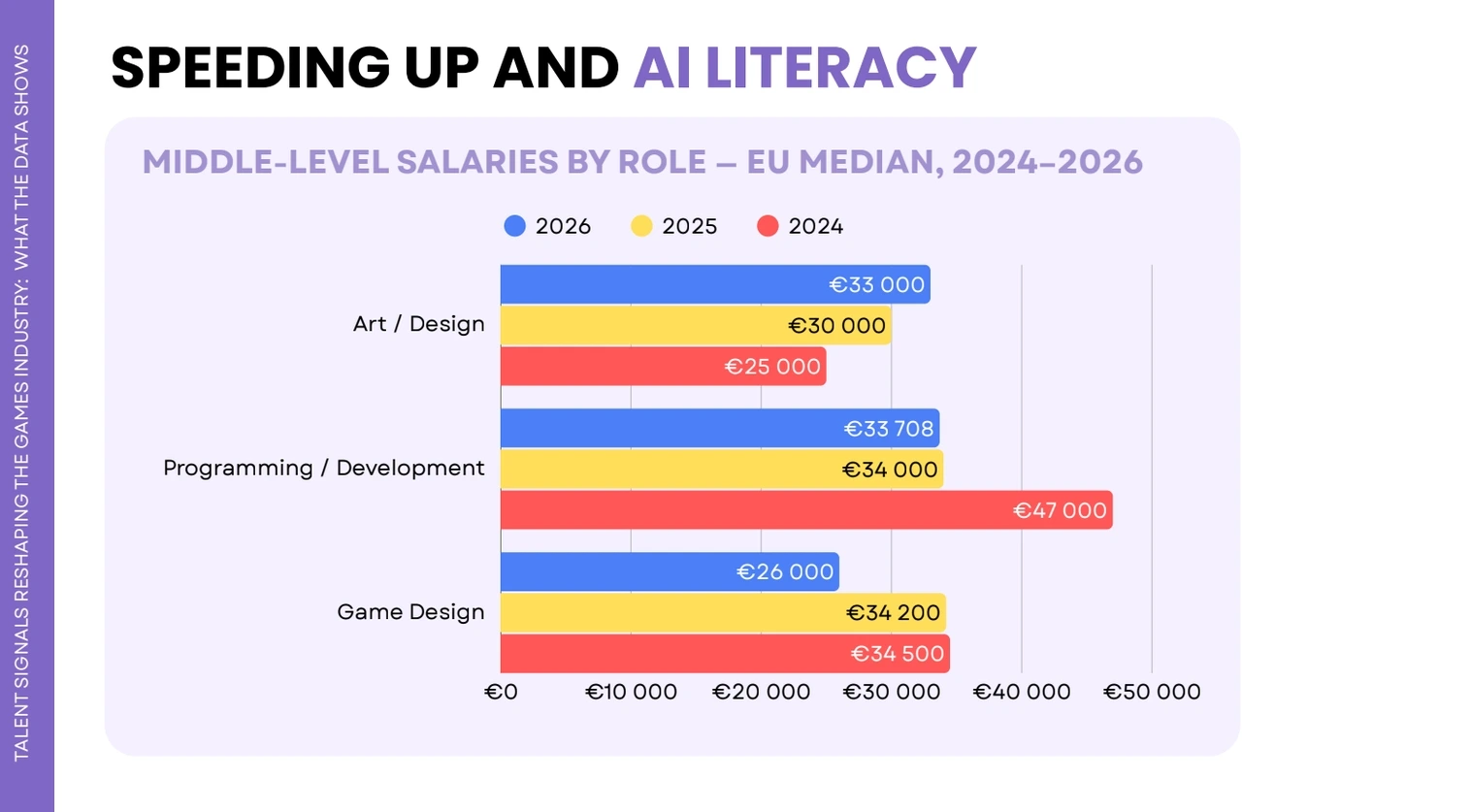
Meanwhile, programming and development roles were seen to have declined from €47,000 ($54,200) to €33,700 ($38,900) while game design pay fell from €34,500 ($39,800) to €26,000 ($30,000).
The findings come amid financial pressure for games companies, with 48% of founders saying their company is currently operating at a loss.
You can access the full report here.
Companies
