Sucker Punch's Chris Zimmerman on the attention barrier, finding the spark and the arrogance of starting things


- Starting from nothing is still possible, Zimmerman says - the barrier is attention, not making the game.
- Sucker Punch prototypes until something feels magical once, then makes it happen consistently.
- Next up: an indie project, a design book he hasn't cracked and a studio he won't leave.
At Pocket Gamer Connects, as well as covering all facets of the mobile games industry, our star speakers cover all other platforms, too. Here, as with our events like PGC Nordics on October 20th and 21st we get some insights from outside the mobile sphere.
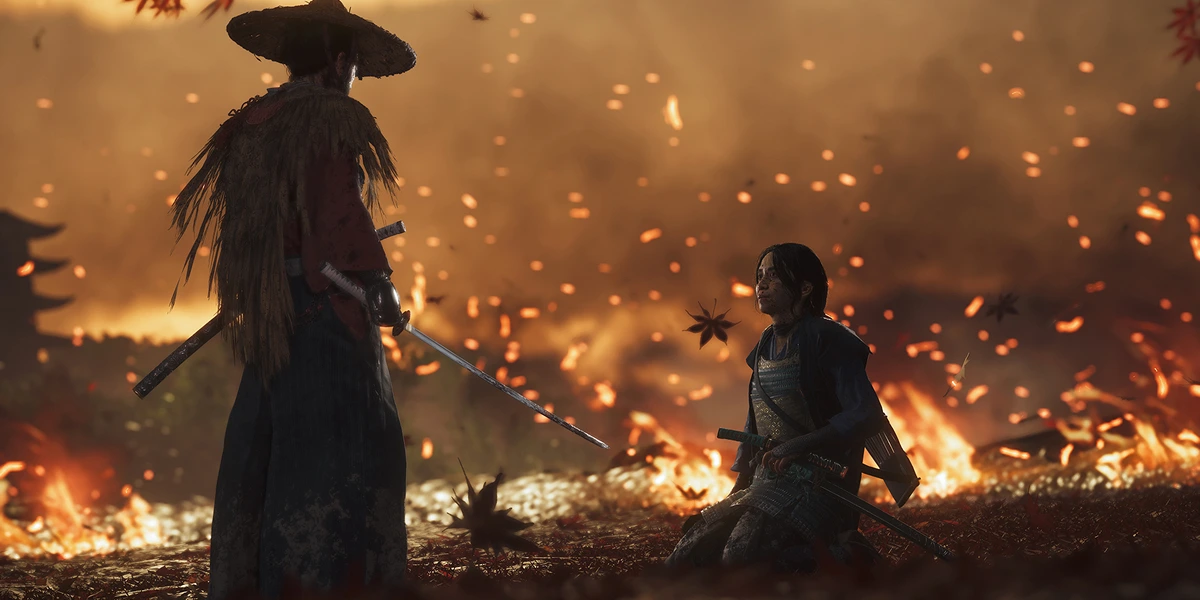
Sucker Punch was founded in October 1997 by six Microsoft alumni with no publisher, no engine and no game. Twenty-nine years later it is a PlayStation Studios team of around 160 people whose last two releases, Ghost of Tsushima and Ghost of Yōtei, are among Sony's biggest first-party properties.
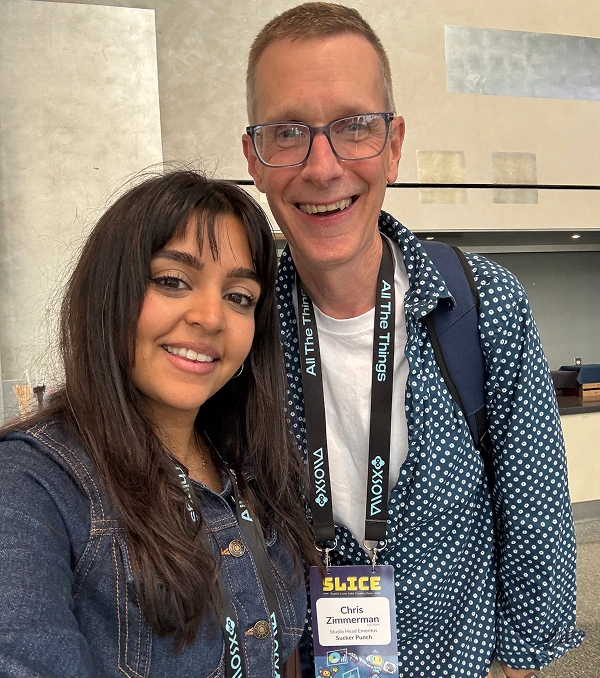
During SLICE 2026 in Seattle, where we hosted the Big Indie Pitch, we caught up with speaker Chris Zimmerman, co-founder and studio head emeritus at Sucker Punch.
He was was fresh off the stage after his talk on the models his studio uses to find what is special about a game. Our conversation covered what has genuinely closed off for new studios, how Sucker Punch decides what to carry forward from a hit and why he keeps failing to start his second book.
What's actually closed off in 2026
To kick off, despite the success of the studio, Zimmerman is quick to reject the premise that his own path is a template.
"It's so different. It's hard to draw the parallels because the games industry was so different in 1997," he says. "We had to do everything from scratch. There were no game engines. You could not make a game without programming skills. You had to get a licence from the console platform to even develop for the hardware."
Almost all of that has eased. Tools, access, Steam. The problem is that the same easing applies to everyone.
"The problem isn't making a game, it's making a game that actually anyone notices."
He illustrates the shift with arithmetic. When Sucker Punch started, it picked the N64 deliberately: roughly 500 PlayStation games against roughly 50 on Nintendo's console.
"That was smart because it meant that even though we were nobody coming from nothing, when we had a game, it was one of whatever, 80, 100 at that point, not one of 500.
"But these days those aren't the numbers. The numbers are 500,000 or even more if you're on the iOS or Google Play stores. So the problem is so different. The barriers are so different. It's a barrier of attention that you need, not making the game."

His counter-example is close to home. Jean Nguyen, a senior animator at the studio, posted a clip of a spinosaurus sword fighting with a buster sword in its mouth, which blew up around the time he was interviewing at Sucker Punch - one of the reasons the team looked at him. That became Dinoblade, released on Steam in July 2026 and sitting at around 1,700 user reviews.
"He's an animator. He doesn't know how to program. He doesn't know how to do anything except he's a really good animator, but he's also super driven and made the game all on his own and now it's out. It's actually a success."
So the path is open, in his telling, just not the one he walked.
Finding the spark
The core of Zimmerman's SLICE talk, a version of which he gave at GDC, is a process for locating the one thing a game is about.
"Every successful game has something that is very special about it. It's not everything in the game, it's just part of it typically."
The counterfactual is stark. "A game can be consistently competent, completely professional, well made across the board, but if there's nothing special, people won't play it. And that's a disaster for us.
“Our criteria is 10% of all PlayStation owners play our game. That's our bar. So you can't miss.”
For an open world game, he says, the bedrock is a strong character fantasy - one you can convey in a sentence. You get to be a cowboy in the old west. You get to be a gang member in South Central LA. "Everyone knows what game I'm talking about."
“Our criteria is 10% of all PlayStation owners play our game. That's our bar. So you can't miss.”
From there it is prototyping until something works. On Tsushima, that took 10 months: six to get to what he calls a competent but uninspired melee game, then four more of ideas that didn't land before they hit the skill-based parry, where a late block sends the attacker past you into a counter.
"Once we saw it happen once - you're like, oh, that was cool. Our experience is that once that happens, you can make it consistent."
The rest is accumulation, and it runs late. He showed a chart in the talk plotting when each element people now think of as core to Tsushima's combat actually arrived.
"It's just stunning, because we worked on the game for five years, six years and important stuff came up in year five."
The other half of the talk, he adds, is simply about not making stupid mistakes.
Following a game people already loved
Ghost of Yōtei is set three centuries after Tsushima with a new protagonist. Zimmerman frames the decision through the same lens as everything else.
"You take the thing that's special and you make it more special." That meant combat - "we just spent all of Yōtei development making more and more the distilled essence of Tsushima combat" - and the environments.

The new lead was a deliberate choice rather than a compromise.
"The best open world games are ones that are origin stories, because then the player's experience playing the game mirrors the protagonist's experience. Anything you can do to bring those two things into alignment makes the immersion stronger."
He was candid that this would cost the studio something.
"We knew that there were a lot of people that were going to be really disappointed that Jin wasn't in the game" - a disappointment he compares to moving past Cole for Infamous: Second Son. The judgement was that Jin's story had been told and that continuing it would leave the magic behind.
He also, at this point, told us to hold the story until the following morning. On September 3rd, at State of Play, Sucker Punch announced Ghost of Yōtei Complete Edition: the Echoes of Sekigahara narrative expansion and Most Wanted, a single-player combat survival mode with four playable characters - Atsu, Oyuki, Nagato and Jin Sakai, returning with all four Tsushima stances. Both arrive on October 1st.
Success to success, and the part it doesn't cover
Zimmerman describes his own approach as building success to success - write the thing, find a publisher, sell a thousand copies - and is clear about where the framework stops.
"There are two halves to it. There's the creative process of building the game and then there's a practical process of keeping your life on track. And when you're doing indie game dev, they can conflict with each other."
“Success to success helps a lot with the building the game side of it, but it doesn't really address the practical side of how am I going to keep the lights on?”
Sucker Punch's founders skipped some of that. "We had the luxury of having enough money to fund the initial development of our games."
He does not present this as replicable, however.
"Success to success helps a lot with the building the game side of it, but it doesn't really address the practical side of how am I going to keep the lights on? And that's tough for a lot of people right now, because the games industry is going through what it's going through. Hopefully we'll turn the corner. At the moment it's pretty ugly."
He is applying the same ladder to his own hobby project - literally titled Chris's Hobby Game, or Chug, and is honest about which rung he is on.
He has something he likes; other people have played it and said nice things; none of them kept playing. "That's kind of the next goal, to get to the thing where I've got something that people are like, I want to play this some more."
Which is Nguyen's route, more or less. "He was a full-time guy at Sucker Punch doing great work on Ghost of Yōtei, managed to find 10 hours a week, made Dinoblade in his spare time. You could completely do it. It's just hard."
Scale as a constraint
The flip side of Sucker Punch's position is that it cannot make small games.
"Our team's so big, our budgets are so big, we have to sell five million units. Otherwise it's just not worth us making the game."
That rules out the narrow, focused games he says the team personally likes, and it caps how far any new project can stray from what the studio already knows how to build.
"We kind of have to stay at least a little bit close to home. It's kind of the tyranny of success of being big - it costs too much money to run the studio. We can't be super, super experimental because we burn cash so fast."
Moving between franchises, then, is less about market positioning than exhaustion.
"After 10 years of working on Infamous, we were ready for something new. It's been your whole life for 10 years. We felt like we'd said what we had to say."
He adds, more bluntly: "We're out of good ideas, too."
The book he can't work out how to write
Away from making games, Zimmerman has written a book, too. His first, The Rules of Programming, came out in 2023. A second is the obvious next move, but he keeps stalling on it.
“I was at peak level of confidence that I knew things when I was 23. Ever since then, it's been all downhill," he says.
"There's definitely a level of arrogance in starting a games company. There's a level of arrogance in starting any creative project," Zimmerman adds, highlighting the arrogance of believing other people will want the thing you make.
"I make pottery just for myself. There's no arrogance in that."

The first book hit the same wall. "I would write a chapter and then I would read it back and I was like, who is this guy preaching at me?"
He shelved it, then solved it structurally: build every chapter around concrete examples, put lots of source code in. "I wasn't just saying things with no foundation. Once I had that pattern, then I could write the book pretty quick."
A game design book has no equivalent grounding mechanism, and he has not found one. "I can write a book that's just like, do this, do that. But when I read a chapter I've written, I'm like, I don't know whether I believe this guy."
Asked what comes next, he lists the indie project, the book and - unprompted - his golf game, which is not improving so much as being played more often. But the part-time arrangement is not a step towards the exit.
"In addition to my side projects, I love working with my friends at Sucker Punch and can't imagine giving that up," he says. "It's pretty intoxicating to work with a group of such talented, driven and friendly people."
When asked whether he might write about starting a company instead, Zimmerman waved it off: everything he has to say on that, he reckons, is stuff nobody wants to hear.
He ends with a compromise: "Turn off your recorder and I'll tell you what my things are."
Learn more about studio-building, big screen gaming and indie routes to market at our Pocket Gamer Connects conferences around the world. The next big show will be PGC Nordics in Helsinki on October 20th and 21st.
Companies

People