The AI paradox: why mobile embraces AI and triple-A holds back

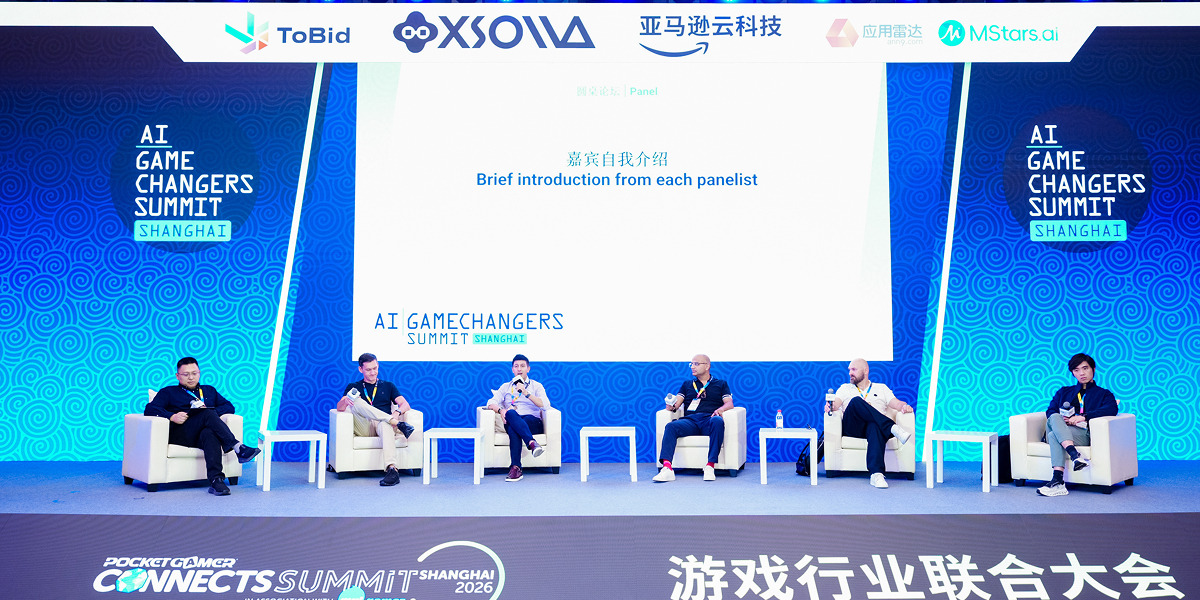
- The panel agreed AI is already embedded across development, UA and live content.
- Free-to-play adopts faster because its players are content-starved and forgiving; triple-A protects the craft.
- Their AI-native studio visions ranged from leaner teams to one dev running thousands of agents.
Everyone in games is talking about AI, but the industry can't agree whether it's a revolution or a bubble.
Pocket Gamer Connects Summit Shanghai gathered studio operators and investors for a panel titled "The AI Paradox: Creative Resistance vs Industrial Revolution," moderated by Wenfeng Yang of BBX Ventures.
The line-up spanned: Devin Nambiar, COO of Mattel163, Kartik Prabhakara, founding partner of games investment bank Aream & Co, Harri Manninen, founding partner of Play Ventures, Jonathan Huang, partner at BITKRAFT Ventures and Drew Higbee, head of AI/ML product management at Amazon Web Services' games division, AWS Game Tech.

Hype or not?
The opening question, whether AI is overhyped, drew a near-consensus that it is not, though with caveats.
Huang kicked off the discussion, comparing games to food. Now that content is easy to mass-produce, "has this produced better food, or has this produced more food?" More, he argued, but not necessarily better, "because you cannot scale craftsmanship." There are still only around 140 to 150 Michelin restaurants in the world, and AI has simply "put a bigger premium on people that have greater curation and greater craftsmanship."
“You cannot scale craftsmanship.”Jonathan Huang
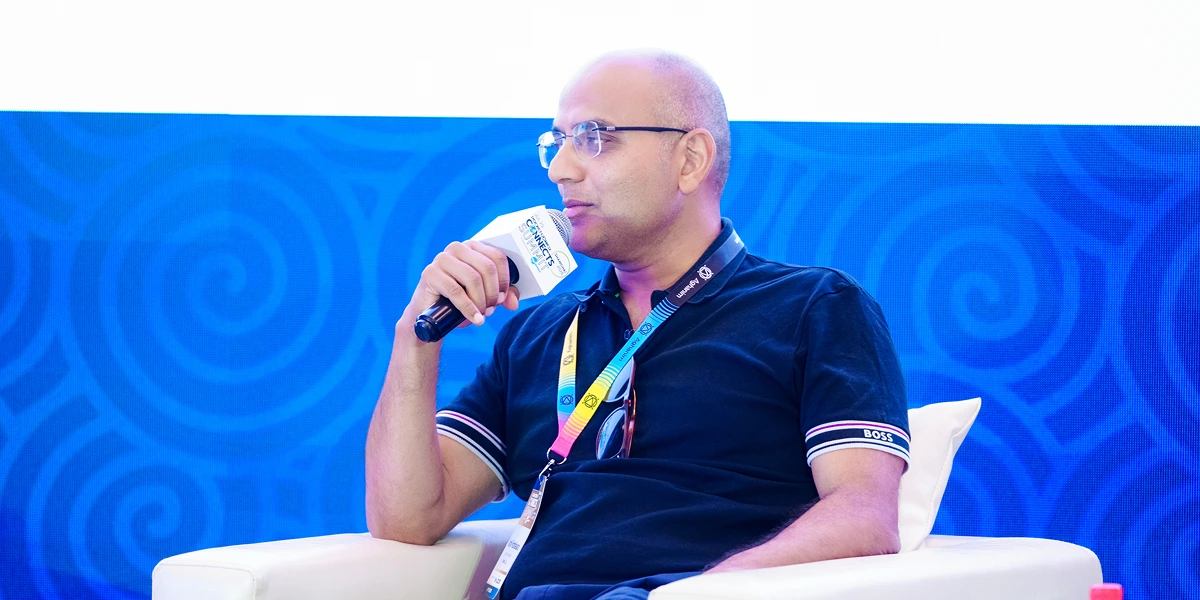
Manninen agreed the shift is real and already visible across his portfolio's studios, but drew a line: what remains unproven is whether AI can "truly create new play patterns, new types of games, new distribution channels." Prabhakara, speaking from an M&A perspective, went further: gaming actually "needs more hype," because AI's utility here is unusually high. His open question was economic, whether the value will accrue to developers or leak elsewhere in the chain, noting that historically "making content cheaper doesn't necessarily mean the value has accrued" to developers.
Nambiar brought the operator's view. Running a studio, he said, AI is "definitely a real thing," already in use across UA creative, content generation, live content and even vibe-coded game modules. That, he warned, has created a landscape of "haves and have-nots": free-to-play studios that have fully adopted it are pulling ahead, and those that haven't "are going to be struggling to catch up."
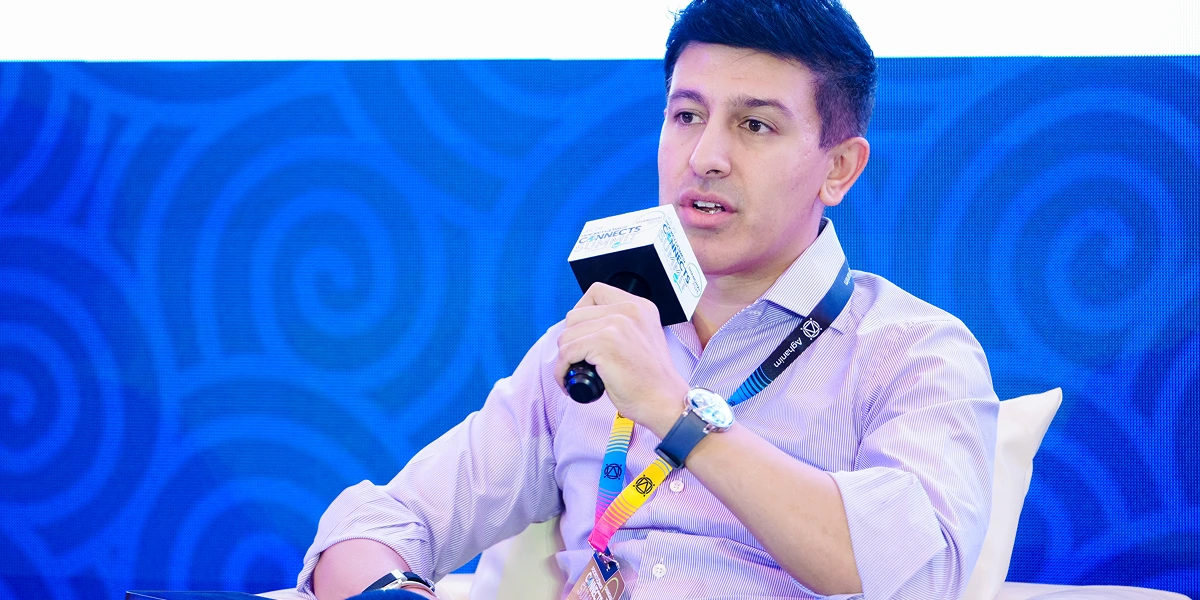
Higbee reached for a different metaphor: "we were all using shovels and now we all have heavy machinery." Anyone breaking into the industry has to learn to operate it, but the upshot excites him, because it lets "very creative people" who lacked technical skills finally build.
Why free-to-play races ahead
The panel's core question was why AI adoption looks so different between triple-A and free-to-play, and between the West and China.
Much of it, they agreed, is the audience. Mobile players, Nambiar said, are "content-starved" and more forgiving, while console and triple-A audiences are "more reactionary" and quick to punish visible AI. Manninen added that the smartest studios treat AI as a tool "to unlock creativity" regardless of platform, and suspected some triple-A teams are quietly "downplaying" their usage. He also cautioned that recent layoffs are "not purely due to AI" but partly over-resourcing.
Huang framed the divide structurally. Mobile is "popcorn entertainment," played in disposable sessions, patched weekly, where an upset community can be soothed with "20,000 gems." Console and PC players "care a lot about how characters look, that they are genuine, that they're crafted," which is why AI shows up in triple-A production, art and tooling but not yet in the visible experience. "You can't really do that with Witcher 3," he said, "once it's out in the wild, it's out in the wild," and the blowback costs you fans.
Prabhakara pointed to feedback loops. Triple-A runs on three-to-five-year cycles where "retooling midway is never easy," whereas free-to-play has always been built on short loops and fast iteration.
Higbee tied it together as a risk-reward calculation: triple-A studios are "stewards of IP" whose fans expect "100%, 100% of the time," while mobile players accept content that is "95%" if it arrives every two weeks with a catch-up mechanism. That, he predicted, means mobile will keep experimenting and triple-A will inherit the refined techniques later, "just like we saw" with mobile mechanics crossing into triple-A in the 2020s.
The moderator, Yang, added a China data point: on Steam, the share of games involving AI has risen from around 20% last year to over 30% this year.
What an AI-native studio looks like
Asked to picture an AI-native studio, the panel offered a spectrum. Higbee argued the label may soon be meaningless, "like asking what a studio that uses computers looks like." All studios, he said, will be "native AI within two or three years."
Nambiar talked about a nearer-term version: a smaller studio where senior functional leaders remain "indispensable" but working-level tasks across engineering, art, design and QA are handled by agents, producing a team "more concentrated on talent density."
“All studios will be native AI within two or three years. ”Drew Higbee
Manninen commented on what the "wildest version of this" would look like - a single developer "who doesn't even have a laptop," talking to an orchestration agent on their phone that commands "thousands of sub-agents" doing end-to-end development and publishing. He also flagged a Play Ventures investment, a stealth studio using no rendering or game engine at all, where the outputs are entirely generative media, "the game is the prompt."
For Huang, the real prize is a net-new experience: whenever a new technology arrives, "someone invents a new game experience" for it, and he is watching for the studio that uses AI to do something "not possible before." One example that stuck with him: a studio trying to capture human emotion and feed it into a game's world model, since "none of the world models out there can capture human emotion."
The shared-experience question
On what AI-native games might feel like to play, from endless dungeons to NPCs that respond differently every time, the mood turned more reflective.
Manninen said he was excited by "infinite personalisation" but also worried by it, because "shared experiences are very important for humans." A game that is subtly different for everyone risks losing the common cultural moment.
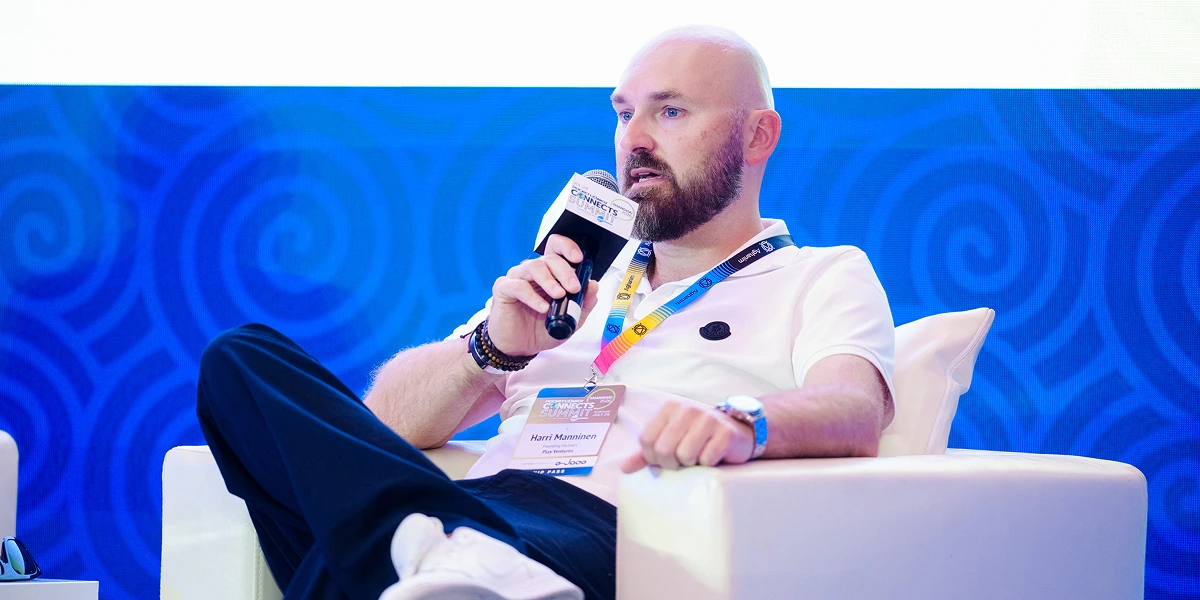
Huang voiced a sharper concern that media is sliding toward "drip-feeding you dopamine and making you addicted," something "AI is very good at," and hoped for more than that from AI-native games.
Prabhakara returned to economics: personalisation "to the nth degree" only matters if players will pay for it, and the cost of the tokens involved may prove a bigger constraint than any developer's creativity.
Nambiar and Higbee landed the panel on a human note. Procedural generation has existed for years, Nambiar said, and while personalised PVE experiences have a place, the urge "to congregate with others and share a moment" endures.
Higbee agreed the next great genre will still come from human creativity: "it's just better tools to express human creativity and give us all really cool shared experiences."
AI Gamechangers Summit returns to PGC Nordics on October 20-21. Get your ticket here.
Companies





People






Events
