The truth behind mobile gaming's $17bn D2C market

- Appcharge CMO Gil Tov-ly says people are "sleeping on how huge this industry has become" and believes $17bn is conservative for D2C revenue.
- D2C leads to a net revenue increase, not just margin growth, he claims.
- Apple and Google deserve more than 0% - but the current numbers from the Epic and Google settlement don't work.


Appcharge and GDC estimated in a recent report that the global direct-to-consumer market for games is worth $17 billion - or around 15% of the global in-app purchase sector.
The headline figure is derived from a 15% median average of the percentage revenue that comes from D2C, as per an industry survey, against Newzoo's 2025 estimates that mobile market IAP sales hit $113.3bn in 2025.
Other stats in the report include:
- 92% of publishers expect their D2C revenues to grow this year.
- 41% forecast double-digit growth.
- 18% anticipate gains of 30% or more.
- Across all respondents, D2C generated a median revenue uplift of 15%, rising to 35% among leading adopters.
- 62% of publishers said they consider themselves behind their peers when it comes to D2C.
- Just 25% said their D2C efforts are scaling or mature.
- 52% of respondents still said they have not yet made significant strategic changes to their business.
- Only 25% reported increasing investment in D2C channels.
To get further insights into the report and the D2C space, we spoke with Appcharge chief marketing officer Gil Tov-Ly on the PocketGamer.biz Podcast - part of our new expanded video series with industry leaders.

“We feel that people are sleeping on how huge this industry has become,” says Tov-Ly, who claims that the $17 billion figure is conservative.
“Because I think the sample side is skewed towards small studios,” he continues. “And we all know that the majority of revenue in the mobile games industry, 80% to 90%, is probably attributed to the top two hundred studios-ish. And if you look at overrepresentation or underrepresentation in dollar amount, I think that you would find that this sample size is probably skewed down.
“I think this was good enough to try to get to the ballpark and I think the ballpark is important enough because we're not in the millions, we're not in the hundreds of millions. We're not in the billions. We're at 11 figures. And do we land on $20bn? Do we land on $16bn? Do we land on $23bn? We did our best with the knowledge we could get our hands on.”
D2C revenue share
The report sees some studios open up on their specific D2C revenue share. Playstudios said it had hit 60%, while Gamesture reached 70%. We recently also reported on D2C revenue share from the world’s top publishers, with MTG claiming a 39% share, Stillfront hitting 44% and Playtika making up 39.2% of sales from D2C.
Meanwhile, AppMagic head of market insights Alina Zlotnik claimed, according to the market intelligence firm’s estimates, that Monopoly Go sees more than 30% of revenue coming from D2C. Scopely has officially shared revenue generated from its D2C platform.
Overall, in the US alone, AppMagic estimates D2C revenue has increased 26% year-over-year.
But does an increase in D2C revenue hide a lack of real growth at these publishers? And is it all just getting sucked up by UA? In MTG’s case, it appears to be taking these returns and pumping them into UA.
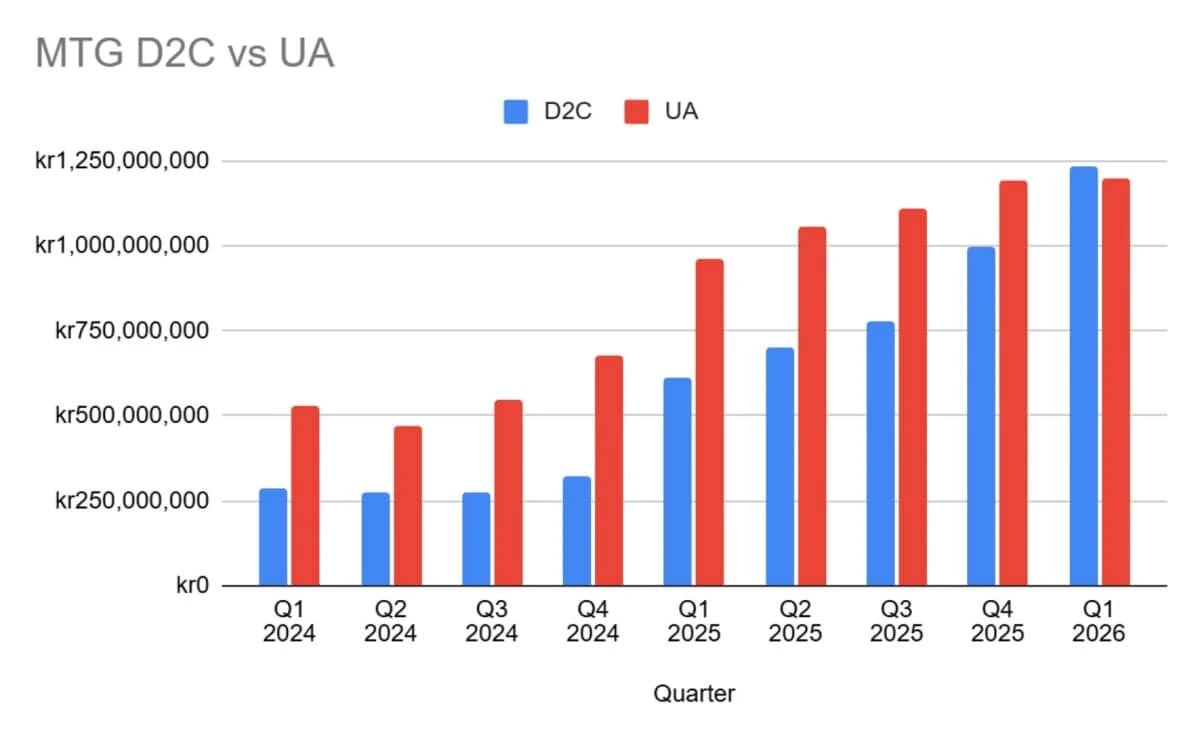
We ask if it’s wrong for anyone to expect the market to grow bigger because of D2C.
“I don't know if I can get behind that,” says Tov-ly. “We often see a net revenue increase.”
He adds: “On the web store front, we usually find that there's a net gain. You don't just shift transactional volume from place A to place B. You're actually getting like a one plus one equals three type of situation. … It's not just about shifting from one pocket to another. It there actually is incremental growth oftentimes we see.”
“It’s not zero”
In March, Google and Epic reached a global settlement (pending approval by a Judge for the US) to reduce fees, effectively creating a platform fee at 20%, with an extra 5% for use of Google Pay. The deal also sees the removal of anti-steering policies, with other extra incentives to reduce Google’s revenue share based on the type of user, subscriptions and use of Google Play features.
We previously asked Epic Games Store GM Steve Allison if the years of court battles were worth it to get to these figures.
“Is it worth it? It's not for me to answer. It's for a developer [to answer]," he stated. "I think that those that want to lean in and get that 20% and maybe in some cases, 15%, I would say that's worth it.”
He added: “Would we like it to be 12% or 10%? Of course. But where we land is where we land.”
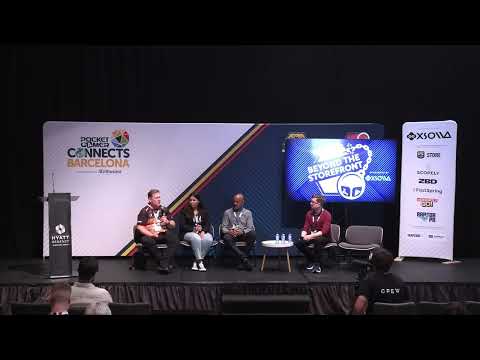
During Pocket Gamer Connects Barcelona last month, we posed the question to a D2C panel, who were unimpressed by the settlement - even if it does ultimately reduce fees. Tov-ly says he’s happy about the direction of movement, but the numbers “don’t make sense”.
“It was ostensibly a good deal that moves the 30% to a 20%, but not really, because it was not for old users, it was just for new users, and you had like a lot of hoops to jump through to get to that 5% off,” he explains.
“And it wasn't a meaningful enough change. Which is why the judge said ‘you guys are confused, go back, check the numbers’. And the judge did not accept this settlement, because it's not for the benefit of the industry. I think that this could be a good thing if the numbers are tweaked a bit.”
We push Tov-ly on what he thinks is a good fee. “I don’t know, it’s not zero, I’ll tell you that.”
He adds: “Apple and Google at the end of the day have created these platforms and they own the user base, they develop the hardware. There should be some form of agreement that they see some of the value, even if it's linked out of the platform.”
Check out the video for the full interview. You can also download Appcharge’s D2C report here.
You can learn more about D2C strategies, regulatory changes and industry trends at our Pocket Gamer Connects conferences, such as PGC Summit Shanghai on July 29th and PGC Nordics on October 20th and 21st.
Companies

People
