In the Hot Seat: The ex-Riot producer betting mini-games will be China's next big export


The next guest in our In the Hot Seat interview series is Bo Mei, founder of cross-border advisory firm GoodDay Solution and PGC Summit Shanghai speaker.
Mei's path here wasn't a straight line: R&D engineer at Panasonic, nearly eight years at Riot Games, where he helped launch Riot's China office and worked closely with Tencent, then executive producer at an AI games studio, before founding GoodDay Solution.

Trust is the hard part, not information
Alongside his consulting work, Mei runs a media project called The Ninth Wave and organises industry events at GDC and ChinaJoy. The goal, he says, is closing the gap between having information about a market and knowing what to do with it. Chinese game professionals aren't short on international news, in his experience - what's missing is the judgment to turn that news into a product or business decision.
Of the three ingredients he says cross-border deals need: product judgment, decision-making alignment and trust - trust is the one that resists shortcuts. The first two sharpen through normal operating experience, he argues, but trust "really wouldn't feel like it exists until something becomes difficult."
As he puts it: "A warm introduction may open the door, but it really doesn't immediately bring you into the trusted circle. That takes time, consistency and following through."
Why China's games industry feels more confident right now
Mei doesn't credit AI alone for the sense of momentum he sees in China's market. He points to mini-games, which have grown roughly twentyfold over five years and now run through platforms like WeChat and TikTok, alongside policy tailwinds.
China's latest five-year plan explicitly backs high-quality games going overseas, and game design became a standalone undergraduate major in 2025 - a shift he reads as games gaining cultural legitimacy, not just commercial success.
Why mini-games could finally cross west
Western markets have resisted Chinese monetisation before, but Mei separates that resistance from the mini-games format itself. Aggressive ad load and fast progression, he agrees, can feel like pressure rather than enjoyment when transplanted wholesale.
Mini-games are different: they're already spreading through YouTube, Discord and Telegram's own ecosystems, and their short discovery-to-play loop matches increasingly fragmented player attention spans globally.
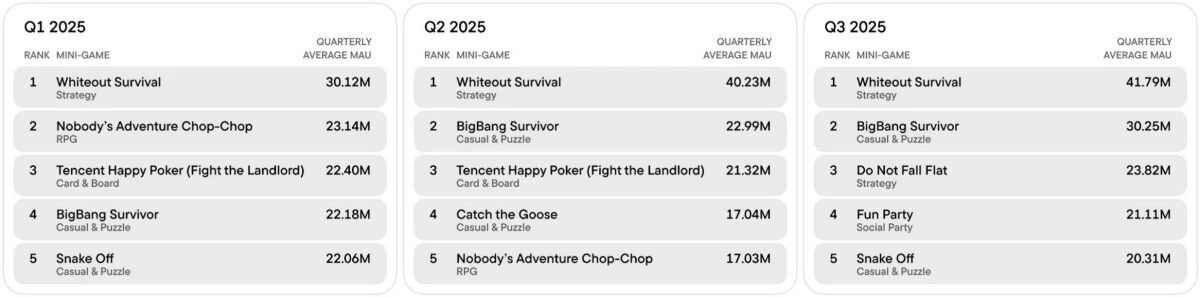
"The operational knowledge accumulated from the past five years can actually travel globally," Mei says, "combined with the customised meta and the monetisation - not simply translating the pricing tag and language."
Where cross-border launches go wrong
The recurring mistake Mei sees in his advisory work is timing: studios lock in progression, economy and monetisation, then bring in a local publisher only at launch to translate and adjust pricing - by which point the decisions that matter most are already made.
He's seen it fail in both directions, with Chinese titles landing too aggressively in Western markets and Western titles arriving too slow-paced for Chinese players' expectations. His fix is bringing local insight in early enough to still shape the product, validated through local cohort testing rather than assumption.
The Chinese studios flying under the radar
“You will see mini-games go viral in the West, operated by someone you've never heard of - but who has deep roots in the Chinese market.”Bo Mei
Beyond the household names - Tencent, NetEase, miHoYo - Mei says there's a much larger tier of Chinese studios with years of development and publishing experience that Western observers simply haven't heard of yet.
"They may be quieter today, but many of them will be part of the next wave of Chinese games going global," he says.
"You will see mini-games that have gone viral in the Western market, introduced and operated by someone you never heard of before - but who has their roots deeply in the Chinese market for many years."
What he brought to Shanghai
At PGC Summit Shanghai's "Bridging The Gap: Dissecting The East's & West's Ad Monetisation Playbooks" panel, Mei wanted those who attended his session to retire one assumption in particular - that Chinese monetisation succeeds mainly through aggression: more ad placements, higher frequency, more pressure on players.
"The visible ad load is only on the surface level," he says. "You really need to look deeper inside." The teams he's worked with consider monetisation far earlier in development, thinking about acquisition, progression and reward structure as one connected system rather than a bolt-on feature.
Next stop: PGC Nordic. Tickets are available here.
Companies

People