Make it Meme’s expansion from web game to mobile app: "Frankly, our players made this decision for us a long time ago"

- Make it Meme has been played by millions on the web since 2021.
- The title is expanding to mobile as most already play the broswer version on their phones.
Multiplayer party game Make it Meme has been operating on the web since the depths of the pandemic, turning meme creation into a game mechanic popular with Gen Z. Since 2021, it has amassed more than 600 million games played.
Now, five years after launch, the web title is expanding into a mobile app.
The dedicated Make it Meme app entered public beta on Android in mid-August and is aiming for a full release this September. Meanwhile, the iOS version recently launched in full, delivering the web game experience in a new form.
It’s an expansion being made as roughly 60% of the player base already accesses the browser game on mobile. The app is designed to convert those players from day one.
To find out more about developing Make it Meme, the mobile app and security for younger players, we speak to the game’s founder and prealpha CEO Sandro Wahl. We also hear from marketing lead Jaromir Prager and lead developer Liam Kranz.
"Our aim is to keep web and mobile as close to each other as possible. It keeps our development workflow manageable and it lets players choose whatever device suits them," says Wahl.
Making Make it Meme
Make it Meme was conceived of long before prealpha was established. According to Wahl, the project began as a hobby during the original lockdown in 2020.
"Like a lot of people in 2020, my friends and I were doing remote game nights and working through every party game we could find. One of the Jackbox games, where players write and perform jokes, was the direct inspiration. We basically said: that, but with memes," he recalls.
"There was no vibe coding back then, so it was a lot of evenings and weekends. I wrote most of it myself, but I had real help from volunteers in the community along the way on translations, on code, even on our cloud setup. Honestly, I had not planned to release it publicly at all - it was truly meant for my own game nights with the boys."
Wahl spent around a year building the title alongside his job and studies, opting for a browser experience given his prior knowledge in web development. It was a decision based on practicality rather than strategy, therefore.
Wahl took Make it Meme live on March 14th, 2021, and that practical decision soon paid off.
"It turned out to be the single most important decision we made. The web is as accessible as a platform gets: no download, no account, no payment, and it works on essentially anything with a screen. Someone once sent us a photo of Make it Meme running on their smart fridge, which still makes me laugh, but it also tells you exactly why the game spread the way it did," he explains.
"That instant, frictionless start is very hard to replicate anywhere else, and it is why the browser version will always stay a first-class part of what we do."
“The studio came out of the game, not the other way around.”Sandro Wahl
In under a year, Make it Meme had scaled to millions of players almost entirely from word of mouth, all before prealpha formed. Wahl calls it "about as organic as a founding story gets", which has set the tone ever since. In fact, the company wasn’t officially founded until a deal was struck with online games platform Poki.
"When we decided to partner with Poki for distribution, I suddenly needed a legal entity to sign the contract and pay taxes, so prealpha was founded in 2022," says Wahl. "The studio came out of the game, not the other way around."
Over the years since, prealpha has grown organically to five people and a handful of contractors and partners, entirely funded by the game itself and with support from volunteers in the community. Even with millions of players, Wahl and Kranz are still the only full-time people on the team.
The partnership with Poki also wrapped up "on good terms" in 2025, meaning Make it Meme is run independently again today.
"Last year we also acquired Pixoguess.com to strengthen our position in the party game space," Wahl adds.
"We joke internally about our boutique attitude to game development. We are not chasing a quick exit. We are trying to grow Make it Meme into a party game at the scale of a Gartic Phone or a GeoGuessr, and we would rather take the slow route and keep our players happy than the fast one."
Make it Meme’s move towards mobile saw a milestone moment when version 2.0 released in December 2024. At that time, the team transitioned from treating it as a browser title that happens to work on phones to a mobile-first platform. Make it Meme underwent a complete rework.
"Everything we have shipped since, including the app, sits on that foundation," says Wahl.
"We built version 2.0 with mobile in mind, both in terms of responsive design and the underlying technology, which is what allowed a very small team to ship apps on both platforms in a reasonable timeframe.
“Around 60% of our web traffic already comes from mobile devices and 37% is iPhones alone.”Sandro Wahl
"Frankly, our players made this decision for us a long time ago. Around 60% of our web traffic already comes from mobile devices and 37% is iPhones alone. We have always known where the game is actually being played. We also knew a browser is a compromise on those devices.
"Browsers behave differently on every device and version - there are bars and gestures getting in the way, and payments feel less trustworthy, which shows up directly in conversion. An app fixes a lot of that at once, and mobile as a platform performs better for us commercially as well."
Entertaining and expanding
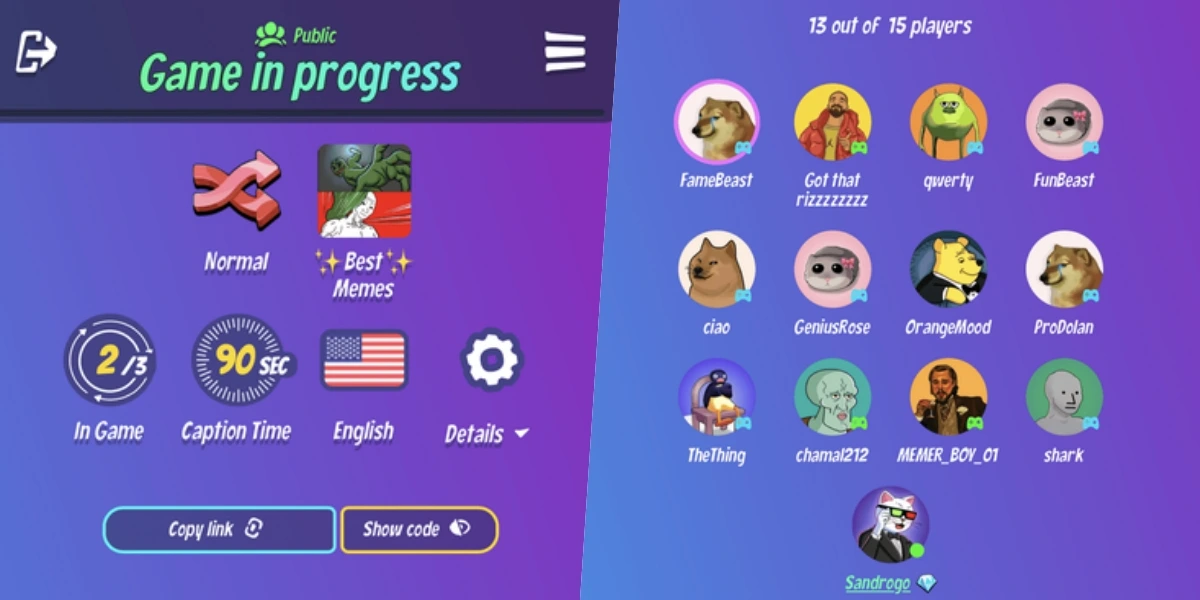
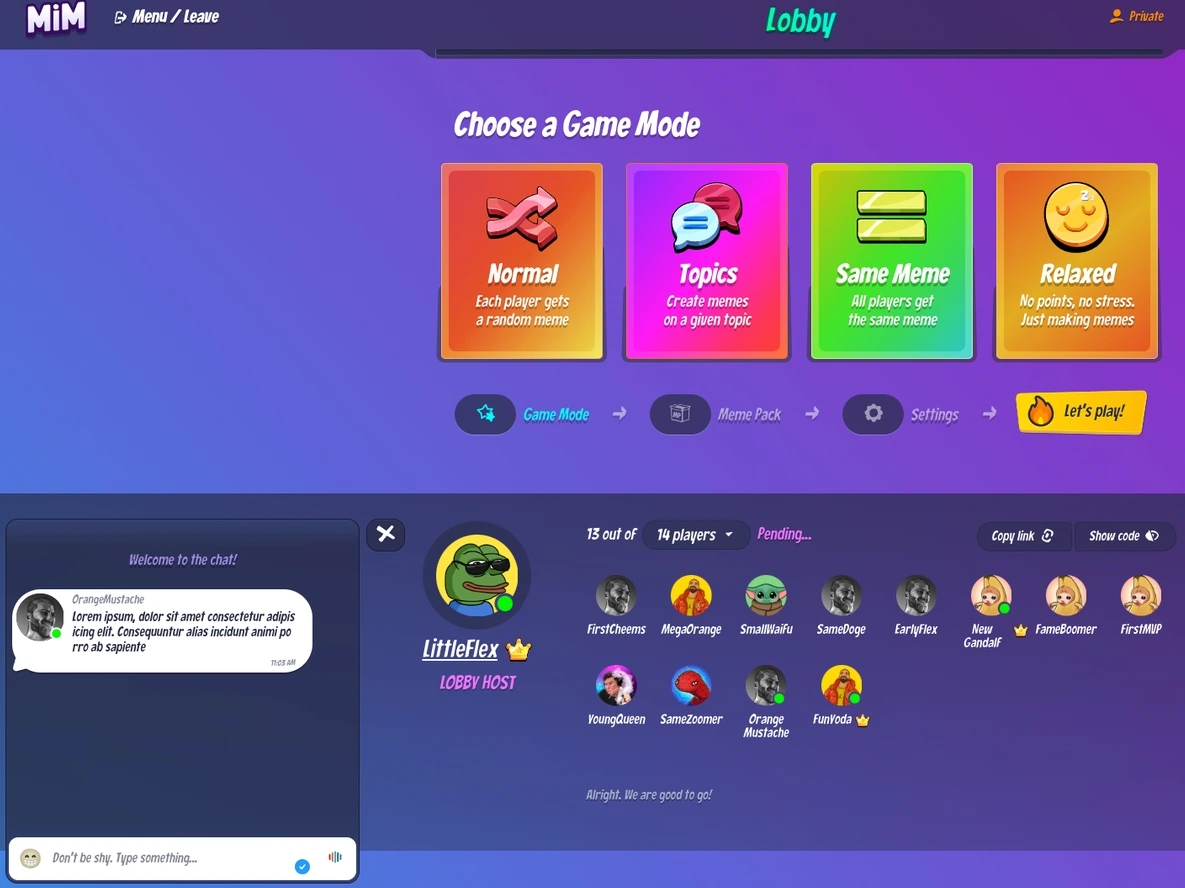
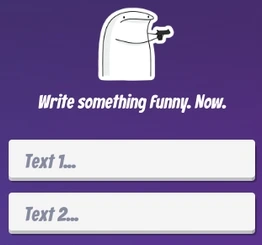
Make it Meme sees players choose from four game modes: Normal, Topics, Same Meme and Relaxed. Each round, players get a meme template and 90 seconds to add the funniest caption they can think of. Then everyone votes for the best.
Normal mode accounts for more than 90% of overall games played, while Same Meme and Relaxed serve as variations of the core format. Topics is more the home of players with inside jokes, where they can write a list of subjects and then build memes around them.
"That combination of creative output and social play is what makes it work as a party game," says Wahl.
Overall, the title attracts more than four million players per month. The majority of its revenue comes from advertising on the web, with prealpha working closely alongside ad partners on placements, formats and testing new suppliers.
Make it Meme also monetises through subscriptions at multiple tiers, with features like the removal of ads or Meme Studio, which allows subscribers to upload and share their own content.
The Elite subscription plan allows players to host a lobby without ads for the whole group, which Wahl notes is "surprisingly popular" with social organisations, youth leaders and teachers using the game to work through subjects in a format students can enjoy.
"It feeds into our Education Programme. We have also just introduced an in-game currency, MiM Coins, which players can earn or buy and use for certain in game actions," he says.
"Mobile is where we expect the mix to shift. Conversion rates for purchases are simply higher in an app than in a browser, where payments feel less familiar to players, so a bigger share of in-app purchases is one of the things we are building towards as the apps mature."
“An app fixes a lot of that at once, and mobile as a platform performs better for us commercially as well.”Sandro Wahl
As for why the mobile expansion is happening in 2026, more than five years on from the web launch, that comes down to resources. With a bigger team the app could have been made sooner, but instead prealpha does "one thing at a time".
The mobile app hasn’t seen a full native rewrite, either. prealpha effectively put the web app inside a cross-platform native runtime, granting access to underlying operating system features. The team "definitely imagined it would be easier" to recreate the game as a mobile app than it’s ended up being, with Kranz noting even small differences between iOS and Android.
"The clearest example is performance. The iOS build ran well almost from the start, but I spent close to a month purely on optimising the Android version. That delayed the release, and we took the time because it matters to us that Make it Meme runs properly on older and lower-cost phones, which is a real part of our audience," he reveals.
"The other adjustment was process. Both stores have detailed review and compliance requirements, and meeting them without a legal or admin department behind you takes real time and patience. It is a completely reasonable bar, it is just a bigger lift for a two-person team than it would be for a studio with a compliance function."
Demographics and duties
Having grown up largely online, Gen Z has proven a sizeable audience for Make it Meme, especially in Germany - which accounts for around 30% of all players alone. Wahl believes memes form a central part of Gen Z’s culture both online and offline, constantly evolving.
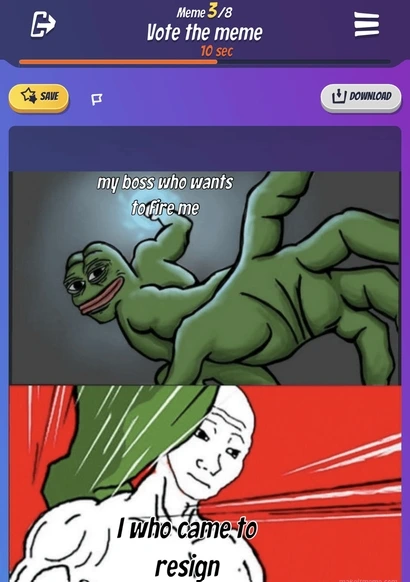
More specific demographic data is unavailable, however. "That is by design."
As a large part of Make it Meme’s audience is young users, prealpha deliberately collects as little personal data as possible. An age gate is used, meaning users under 13 only see non-personalised ads, but otherwise Wahl says "we simply do not ask for the kind of data that would let me hand you a demographic chart".
Qualitatively, from working with the community in the game, on Discord and on social channels, he knows many players are also playing at school between the ages of 13 and 18, meaning Gen Alpha is also reached. He thinks this demographic will have a growing interest in Make it Meme and "arrive in their own time" with their own formats and references.
"We seem to have a persistent appeal to a certain age range, somewhere between 13 and 30, that keeps refilling itself with new players," shares Wahl.
"Memes being an evolving but persistent part of culture is actually the reason we believe a meme-based game can be an evergreen product rather than a moment. It also means we do not get to stand still."
Meanwhile, prealpha’s UA focus is sustainable acquisition with clear reasons to come back. Prager, who leads marketing, suggests that as an indie, Make it Meme is not going to outbid larger companies for ad inventory, and isolated viral moments have not led to conversions. The game’s reach may spike with virality, but that’s not what drives downloads.
Instead, prealpha goes "straight to the source" and sees content creators show off the game.
"That works particularly well for us because the game adapts to whoever is playing it. Communities can build their own meme packs, which means almost any audience can bring their own references into Make it Meme, and it gives players a reason to keep playing long after a stream ends," Prager explains.
"By platform, the difference is mostly in role. TikTok, Instagram and YouTube are where discovery happens, and creators produce that content natively on their own channels because that is where it feels authentic. We leave the gaming to the pros. Our own channels are the informational space where a potential player can find out what the game actually is."
Finally, Wahl shares that Make it Meme runs closer to a social platform than a traditional game, with clear reporting tools, an active moderation process and an ability to quickly take down flagged content. This is something continually invested in as the game grows. As it expands onto mobile, he confirms cross-play with the web version, too.
Companies

People