"Gen Alpha plays very differently": Club Penguin and Fortnite veterans build Imagine Island

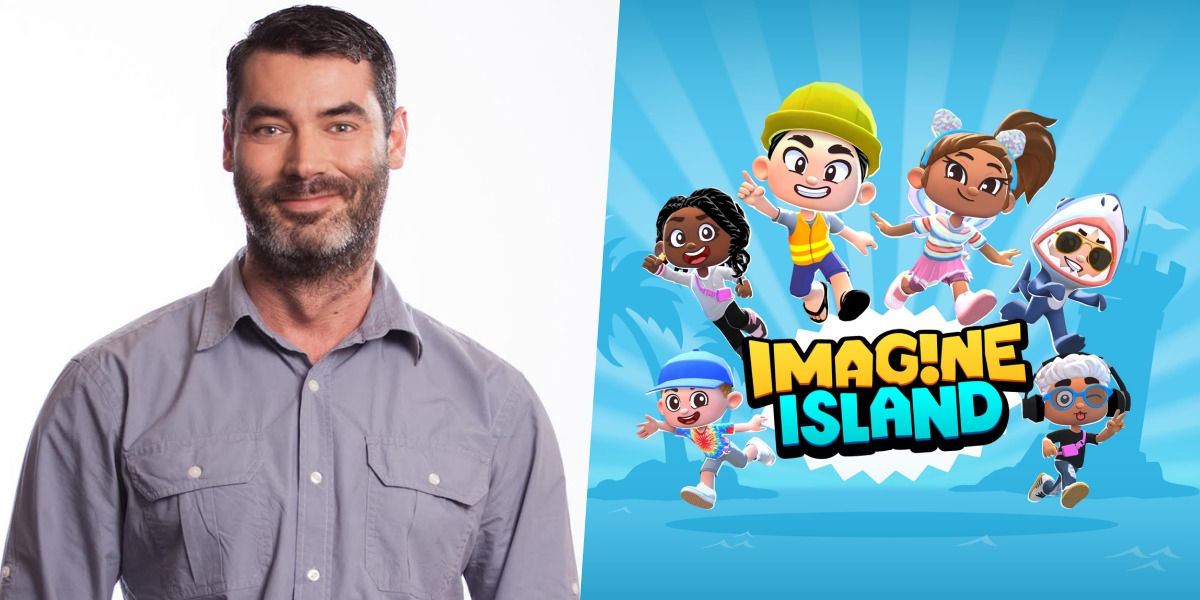
- Magic Potion Games founder and CEO Stephen MacDonald talks Gen Alpha and web games.
- Child safety must be at the top of the priority list.
The games landscape has come under increasing scrutiny around player safety, security and appropriate measures from studios. Whether it’s Apple Tracking Transparency or more recently AI facial age scanning, the focus on protecting users is growing, most of all children.
That extra spotlight and scrutiny isn’t stopping studios from developing titles aimed at younger users. As Gen Z ages up, it’s Gen Alpha that’s become the target audience for many. That includes Magic Potion Games, a company comprised of Club Penguin veterans aiming to reach today’s kids with virtual space Imagine Island.
To find out more about the company’s ambitions, navigating online safety and a recent Series A round, we speak with Magic Potion Games founder and CEO Stephen MacDonald, an industry veteran with 25 years in the business.
"The funny thing is, all of us as founders actually met working at Club Penguin. So even though we’ve gone on to work at places like Epic, EA and others, we all share that same foundation and already have years of working together under our belts," MacDonald shares.
A strong start
Magic Potion Games has been backed by investors like Square Enix, 1AM Gaming, 1Up Ventures and Konvoy, supporting its vision to reimagine what online games can be for Gen Alpha. Among the angel investors is Lane Merrifield, co-founder of Club Penguin.
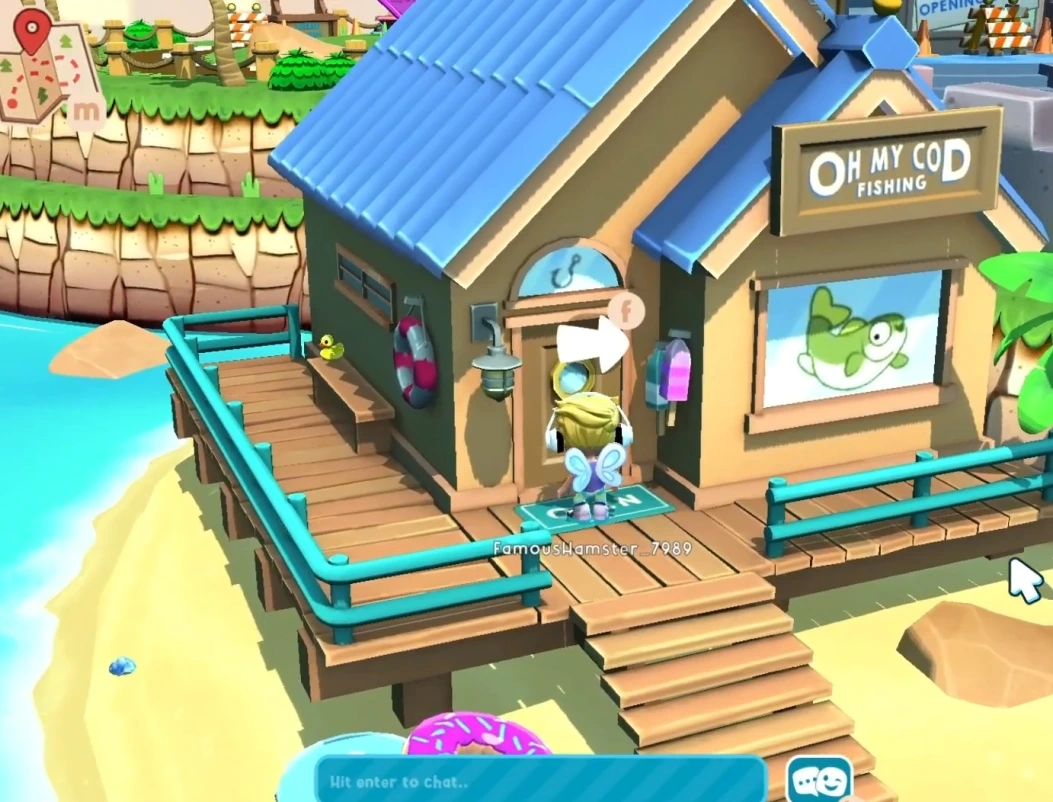
The sum of funding raised hasn’t been officially disclosed, but the company has revealed its beta test of Imagine Island reached more than one million players organically. In its current form, Imagine Island has already earned a nomination for Best Web Game of the Year in the Pocket Gamer Awards 2026. Magic Potion is also hiring.
“We’re all parents, we’re all gamers and we all bring really different skill sets to the table.”Stephen MacDonald
"We haven’t been sharing the amount publicly, but this round is really about getting us into the next stage of growth for Imagine Island. Our first million users came without any real marketing behind the game, and now we’re ready to start opening it up to a much bigger audience and investing in what comes next for the product," says MacDonald.
"We’re all parents, we’re all gamers and we all bring really different skill sets to the table. Between us, we have decades of experience building and running kid-safe online experiences for hundreds of millions of kids.
"Then you layer in experience working on something as culturally impactful as Fortnite, and you get an amazing perspective on how social games, live service and player expectations have evolved and where they’re going next."
Later this year, the company intends to launch new gameplay experiences, creator tools and several partnerships within Imagine Island that will bring major children’s franchises to the platform. There are also plans for a parent-friendly membership model, described as one that won’t rely on aggressive monetisation.

"Web games are seeing a massive resurgence right now, and for us it really came down to wanting Imagine Island to be as easy to access as possible. We know a lot of our audience might be playing on a parent’s computer, and asking them to download and install a game can create a surprising amount of friction," MacDonald explains.
"With a browser game, you click a link and you’re playing. That’s it. It lets us reach a huge audience without asking families to jump through a bunch of hoops first."
“Games aren’t just something they play anymore, they’re places they go to hang out, be social, create and express themselves.”Stephen MacDonald
Additionally, MacDonald confirms a mobile app version of Imagine Island is currently in development. He hopes it will arrive "soon", noting that ultimately, the goal is to deliver Imagine Island wherever players may be.
"We really want to meet Gen Alpha where they are. This is a generation that’s grown up online, where their virtual presence can be just as important to them as their real-world presence. Games aren’t just something they play anymore, they’re places they go to hang out, be social, create and express themselves. And they have so many options."
Competition, Club Penguin and a new generation
Among those options is Roblox, an established goliath that’s achieved far higher concurrent player counts in single experiences than any title on Steam.
Meanwhile, Magic Potion Games’ team brings experience from Club Penguin, a platform that was discontinued in 2017, before most of Gen Alpha was old enough to game. For this reason, we ask how Imagine Island hopes to stand out - whether its goal is to capture some old magic for a new audience.
"They are too young, and honestly that blows our minds all the time. The good news is, we’re also parents to kids this age, so Gen Alpha isn’t some audience we’re trying to understand from a distance," MacDonald answers.
"I think the DNA of what made Club Penguin special is pretty timeless. It was all about goofy stories, roleplaying with your friends, being kind, using your imagination, easy-to-play minigames. Those things don’t really go out of style. Somewhere along the way, I think the industry started losing sight of the fact that games are about connection, not just building better free-to-play economy engines.
"I don’t know if I’d call it recapturing old magic as much as creating that same feeling for a new generation."
The audience that grew up with Club Penguin was primarily Gen Z, so MacDonald adds that this generation is more than welcome to play, too. Magic Potion isn’t going to focus on Gen Z over Gen Alpha, however.
“A lot of us had the amazing privilege of working on Club Penguin, where we helped pioneer what a safe social world for kids could look like.”Stephen MacDonald
"We have a huge amount of love and connection to that group, but we also know they’ve grown up and moved on to other games, and we’re nothing but proud to watch them go out, make new experiences for other people and keep the spirit of Club Penguin alive," he shares.
"Part of watching kids grow up is letting them grow up. We’re not going to chase them and try to make Imagine Island something it isn’t just to bring them back. But they’ll always be welcome to come visit, hang out and hopefully find a little bit of that same magic in everything we build."
Based on early results from Imagine Island, MacDonald adds that Club Penguin’s "secret sauce" still works today, but the goal isn’t to rebuild the old title. It’s more about extracting the timeless elements from Club Penguin and applying them to the way Gen Alpha plays.
"That era got hit hard by the move away from Flash, while at the same time the way kids wanted to play was changing dramatically. UGC and player creativity took off in a massive way, and a lot of those older virtual worlds just weren’t built to respond to that shift," MacDonald expands.
"Gen Alpha plays very differently. They expect to create, customise, build, share and have the world constantly changing around them. That’s a huge part of Imagine Island."
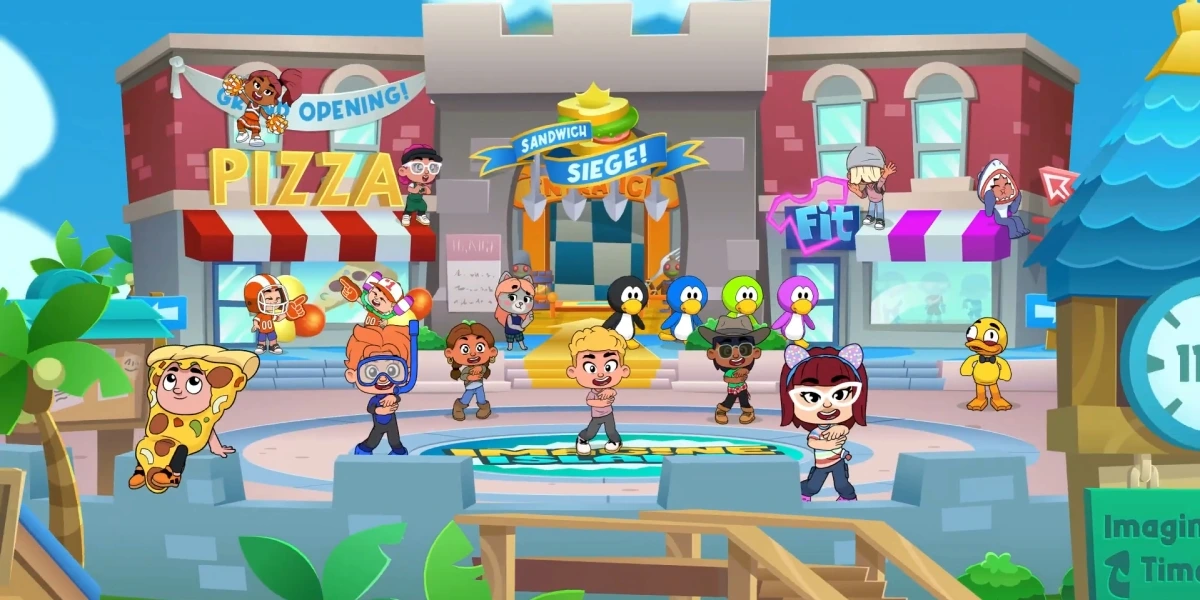
He thinks that while the old Flash era went away, the audience hasn’t. And, he believes Imagine Island has identified an opportunity to deliver a platform specifically for that audience - at the same time acknowledging that developers today can’t simply build a product, put it out into the world and expect players to arrive and stick around.
"You have to keep changing, growing and giving them new reasons to come back. For us, that means making Imagine Island feel alive - new things happening all the time, listening really closely to our players and showing them that what they say can actually influence where the world goes next."
Is child safety possible online?
MacDonald believes the end of Club Penguin and the Flash era also meant the removal of hubs where young people could learn to be part of online communities. By extension, it removed an entry point for them to begin learning about being safe online.
Today, while platforms like Roblox may be popular with young users, they frequently come under fire over child safety concerns.
“We shouldn’t hand people unlimited tools that can be used to prey on young or vulnerable players and then act surprised when someone abuses them.”Stephen MacDonald
Roblox itself has seen no shortage of lawsuits and government investigations, for example, despite attempts to increase security with AI face-scanning and a $1.5 million investment into a Nevada-based law enforcement liaison role.
"Today, I think kids are being asked to age up way too quickly. They go from products designed for preschoolers straight into massive online spaces they share with adults," MacDonald shares.
"The internet changes incredibly quickly, and we’re not perfect, but we’re constantly adapting and trying to make Imagine Island the safest place for kids that we possibly can.
"A lot of us had the amazing privilege of working on Club Penguin, where we helped pioneer what a safe social world for kids could look like. We learned a tonne from that experience, not just about moderation and technology, but about the responsibility that comes with building a place where millions of kids are spending their time."

So, to conclude, he suggests that safety must be at the very top of the priority list, with "a lot of magic that needs to happen behind the scenes so that kids can just be kids".
Thought must also go into the features and tools Magic Potion implements into Imagine Island, as he says the studio has a responsibility to the audience it invites in - as all developers do. As adults, the team must help keep children safe and build a platform that facilitates that safety.
"We shouldn’t hand people unlimited tools that can be used to prey on young or vulnerable players and then act surprised when someone abuses them," he says.
"If it takes a village to raise a child, we want to make sure we’ve built the right village."
Companies

People