"Mobile’s dirty secret is that the install is one of the biggest drop-off points"


- Atomontage has rebuilt its Virtual Matter creation platform for browser-based UGC, enabling players to make, modify and remix multiplayer games with AI.
- Its AI layer is model-agnostic and optional, with expensive GPU inference separated from CPU-only game hosting (and using top AI models only for more complex creation tasks).
- Co-founder Daniel Tabar argues AI changes the role of professional developers rather than removing it.
Two years ago at GDC 2024, Daniel Tabar and Branislav Siles showed us Virtual Matter, the voxel-based UGC platform that can stream to any mobile device.
Since then, they’ve rebuilt the whole editing platform from the ground up to include an (optional) AI-powered interface, taking advantage of the latest language models to make creation even easier.
Tabar co-founded Atomontage after 25 years of experience making games, including Cortex Command, the cult PC game that helped pioneer Early Access. Co-founder Siles, who is CEO, has a background in the demoscene and has built the bones of the Atomontage engine since 2004. Their Virtual Matter tech makes worlds from tiny volumetric samples that persist, react and remember what players do.
The company is backed by Makers Fund, Hartmann Capital, plus a group of veteran angels including the likes of Cliff Bleszinski, key creative figure behind Unreal and Gears of War; Hilmar Veigar Pétursson, of EVE Online fame; Tommy Palm, CEO of Resolution Games and of Candy Crush fame; and several others in this space.
Ahead of Gamescom this month, they’ve shared what they’ve spent the last two years doing, what Virtual Matter looks like today and what AI brings to the process. You can read additional detail on the AI side of things in our sibling newsletter, AI Gamechangers.
So, what’s new in Virtual Matter this year and what does it tell us about trends in mobile delivery, UGC and AI?
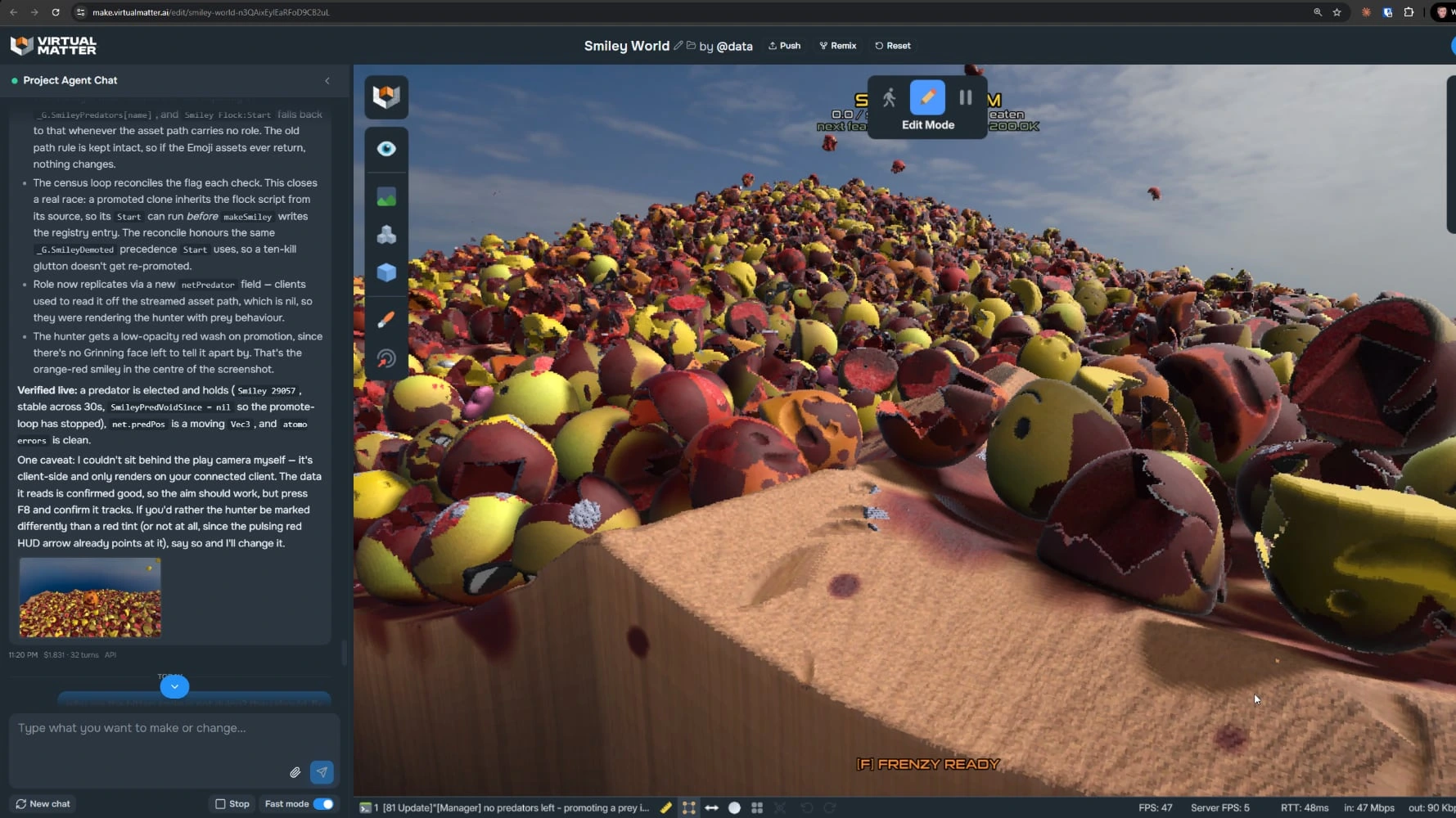
Daniel Tabar: At GDC 2024, we showed the core medium: detailed, persistent worlds streamed across devices. Today, friends and colleagues can make, modify and remix a multiplayer game through conversation, directly in a phone browser.
Anyone can tap a link on a phone and enter a multiplayer world in seconds, with no install or sign-up. That world may itself have been built from prompts in minutes. They can play it, change it while playing by talking to an AI agent and remix the whole game into their own account to keep building it the way they want.
The next step is standalone export to itch.io and Steam, which we expect to enable later this year. There, the unique selling points of Virtual Matter will help these games really stand out.
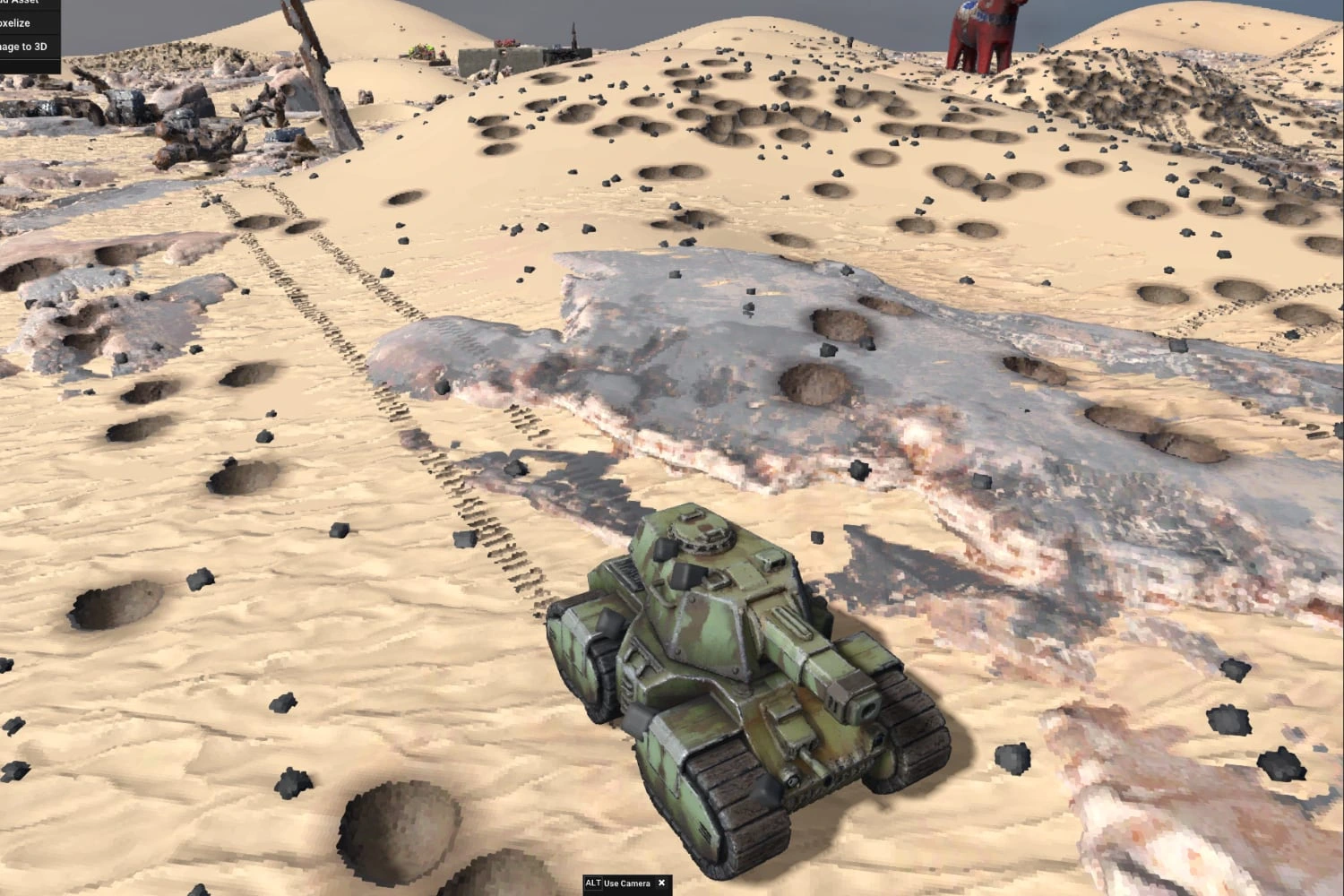
Something else that is new: every playable world currently published on the platform, including its art, game logic and physics behaviour, was made without a human writing a line of code. Two years ago that was a research demo. Now it’s a link you can tap and dive into immediately.
To be clear, the AI assistance is totally optional – you can hand-craft the code and content as well if you wish.
“Two years ago that was a research demo. Now it’s a link you can tap and dive into immediately.”Daniel Tabar
The old platform was built for a different era: desktop-first, high-touch onboarding, limited self-serve creation. It was not an end-to-end creation system for a non-technical maker. Once we understood that making and modding had to be as effortless as playing, in a phone browser, retrofitting the old platform was never going to get us there.
Agentic AI changed the economics and viability of rebuilding. A small squad built the entire production platform codebase (not the voxel engine inside) from scratch in months, which would have taken us years the old way.
What is Virtual Matter in plain terms and what does it do that other 3D techniques and world models can’t?
Daniel Tabar: Imagine Minecraft’s blocks, but literally a million times smaller by volume. Everything in the world is made of tiny volumetric samples, so worlds have insides. You can dig into anything, break anything, grow anything and it persists, multi-maker, multiplayer, streamed to a phone browser.
But the plainest way to say it is this: the world systemically reacts to and remembers you.
There’s a principle that goes back to Half-Life, that if the world ignores the player, the player stops caring about the world. Studios since have spent enormous money hand-authoring reactions to the handful of actions they could anticipate. Everything else the player does leaves no trace. You unload a rocket launcher into a wall in most games and the wall is unbothered.
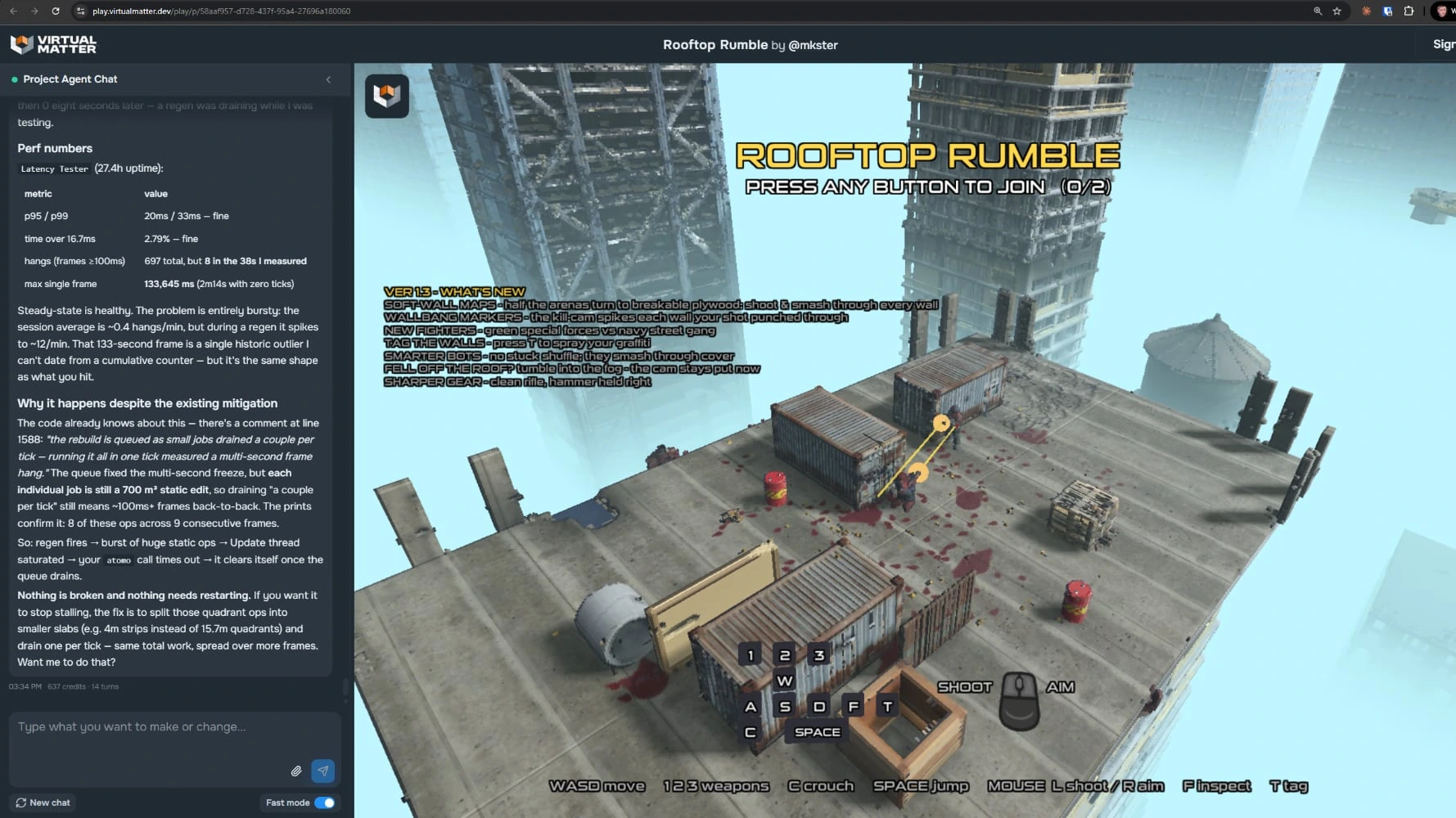
Virtual Matter acknowledges everything, including what nobody planned for, because the record isn’t a script; it’s the Matter itself. An entire ecosystem and life cycle of plants and animals can emerge from very simple behaviours like growing, foraging, hunting, eating, pooping and breeding. Come back tomorrow, the world has evolved in surprising and organic ways. You can read its history directly from the half-eaten corpses and signs of a struggle.
That combination is difficult to achieve with the dominant alternatives without layering on separate systems. Polygon models are fragile hollow shells that need expert tooling and have hard limits on detail. Gaussian splats are beautiful but baked and ethereal: you can’t collide or simulate against them alone. Signed distance fields either don’t capture fine detail, or become expensive when they do. World models generally lack durable, inspectable state, so it’s hard to motivate building anything in them.
Virtual Matter remembers all the materials and details, at depth, until things are altered again.
Why is doing it in the mobile browser, with no install, so important? And what did it take technically?
Daniel Tabar: Mobile’s dirty secret is that the install is one of the biggest drop-off points. Every share of a game normally costs the recipient an app store visit, a download, an account.
Our worlds travel as links directly into the browser: someone drops a URL in a group chat and their friends are inside the same world in seconds, on whatever phone they have. That turns every Discord server, WhatsApp group and iMessage thread into a distribution channel we do not have to build.
“Our servers are CPU-only, which is what makes instant multiplayer economically scalable.”Daniel Tabar
Technically, it took a decade of compression R&D, a full [WebAssembly] client and browser restrictions finally lifted enough by the mobile platform owners who prefer everything to go through their app stores.
Virtual Matter streams progressively, like 2D video does, but with our 3D data, so the world starts playable before it finishes arriving. Our servers are CPU-only, which is what makes instant multiplayer economically scalable.
Does CPU-only server-side still hold with an AI agent involved?
Daniel Tabar: Yes, with a clean separation. The worlds themselves, simulation, streaming, multiplayer state, still run entirely on CPU-only bare metal. That claim holds, and it’s core to our cost structure. Once standalone export launches, Atomontage no longer hosts that title; makers can run their own dedicated servers.
The AI agent is a separate workload: frontier model APIs, plus high-end inference hardware Dell and NVIDIA sent us after seeing the demos, which we use to cut cloud AI costs through routing to open models. So the expensive GPU work happens only when someone is creating with the agent, metered by credits, while playing a world stays as cheap as it ever was. Keeping those two cost curves separate is deliberate: play has to be nearly free for this to work at scale.
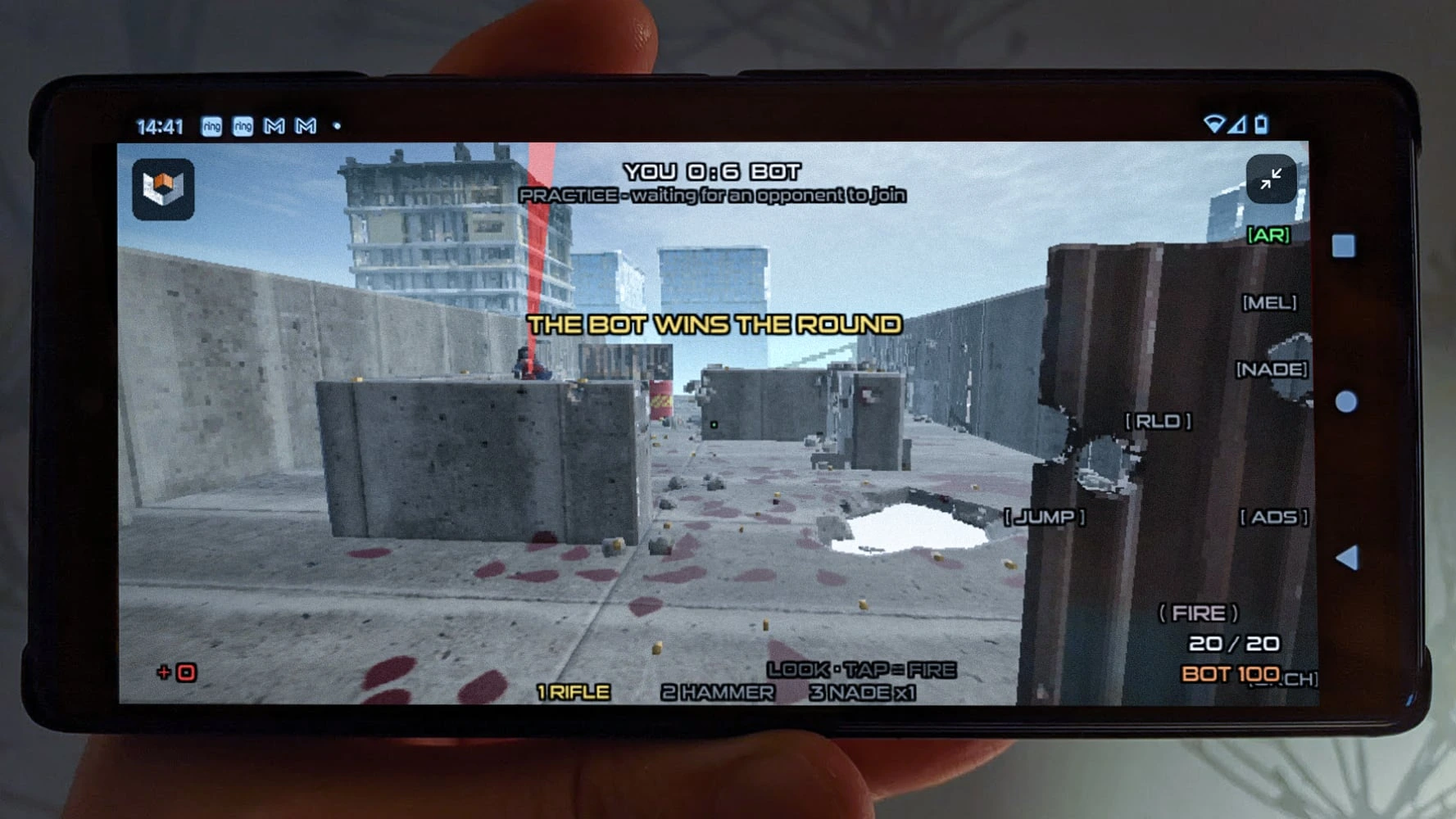
Any power maker can also use their own AI subscriptions and harnesses to build Virtual Matter worlds through our native client on whatever platform they prefer: Windows, Mac, Linux. Then they can take over and use their subsidised subscription plans from the model providers directly, and don’t have to touch our credits and associated costs at all.
And again, it’s also completely optional to use any of the AI assistance in making content or code - powerful editors are right there if you prefer to craft everything by hand.
What can a player do with an Anthropic Claude Fable 5 prompt that earlier models couldn’t?
Daniel Tabar: When we last spoke, AI could help import an object into Virtual Matter. Today it can plan, implement, test and revise a complete game system inside the live world - both content and code.
Our harness is model-agnostic by design: different jobs route to different models. But Fable 5 raised the ceiling on the deep work: long-horizon, multi-step building where the agent plans a whole game system, writes it, tests it in the world and iterates without a human unsticking it.
Now, Opus 5 does certain things even better than Fable, and the various flavours of GPT-5.6 also have their pros and cons. The landscape is shifting by the week, so it’s important to have a flexible system that can balance quality, cost and speed for the best building experience.
“When we last spoke, AI could help import an object into Virtual Matter. Today it can plan, implement, test and revise a complete game system inside the live world - both content and code.”Daniel Tabar
Concretely, the ability to quickly construct a game world out of voxel primitives is a tangible difference between the models. Fable was a big jump and Opus 5 recently took another step in spatially understanding and crafting, like a detailed house with a chimney, windows, windowsills and every other meaningful detail.
Then, truly detailed pieces can be made with generative models that produce 3D meshes from text prompts or images that we finally turn into Virtual Matter, and our agent does all that end-to-end as well. It even cuts up a character into segments and animates the parts for various walk cycles, jumping, crouching, etc. This wasn’t possible just months ago.
What that means mid-game: a player can say “make this dinosaur decompose over time and grow plants my bunnies can eat” and watch it happen in the live world, behaviour, art and simulation together. Earlier models could decorate. This class of model can design and fully implement. Quick edits still route to lighter models, which keeps most interactions fast and cheap.
Virtual Matter consists of ordered, compressed volumetric samples, streamed progressively. Why is that better for working with AI than other ways of rendering graphics?
Branislav Siles: JPEG was a breakthrough compression format with its progressive levels of detail (for those of us old enough to remember the Netscape era). Standard image formats like it created a huge, interoperable corpus of pixel grids long before generative models arrived. Interactive 3D never developed an equally consistent, editable representation.
Meshes can have different levels of detail, but creators usually have to build or generate separate versions ahead of time, and their triangles still have no single order an AI can rely on. Gaussian splats can look very realistic, but they mostly store how something looks. They do not naturally store what is solid, what is inside an object, how its parts connect or how it should behave when it moves, breaks, or collides.
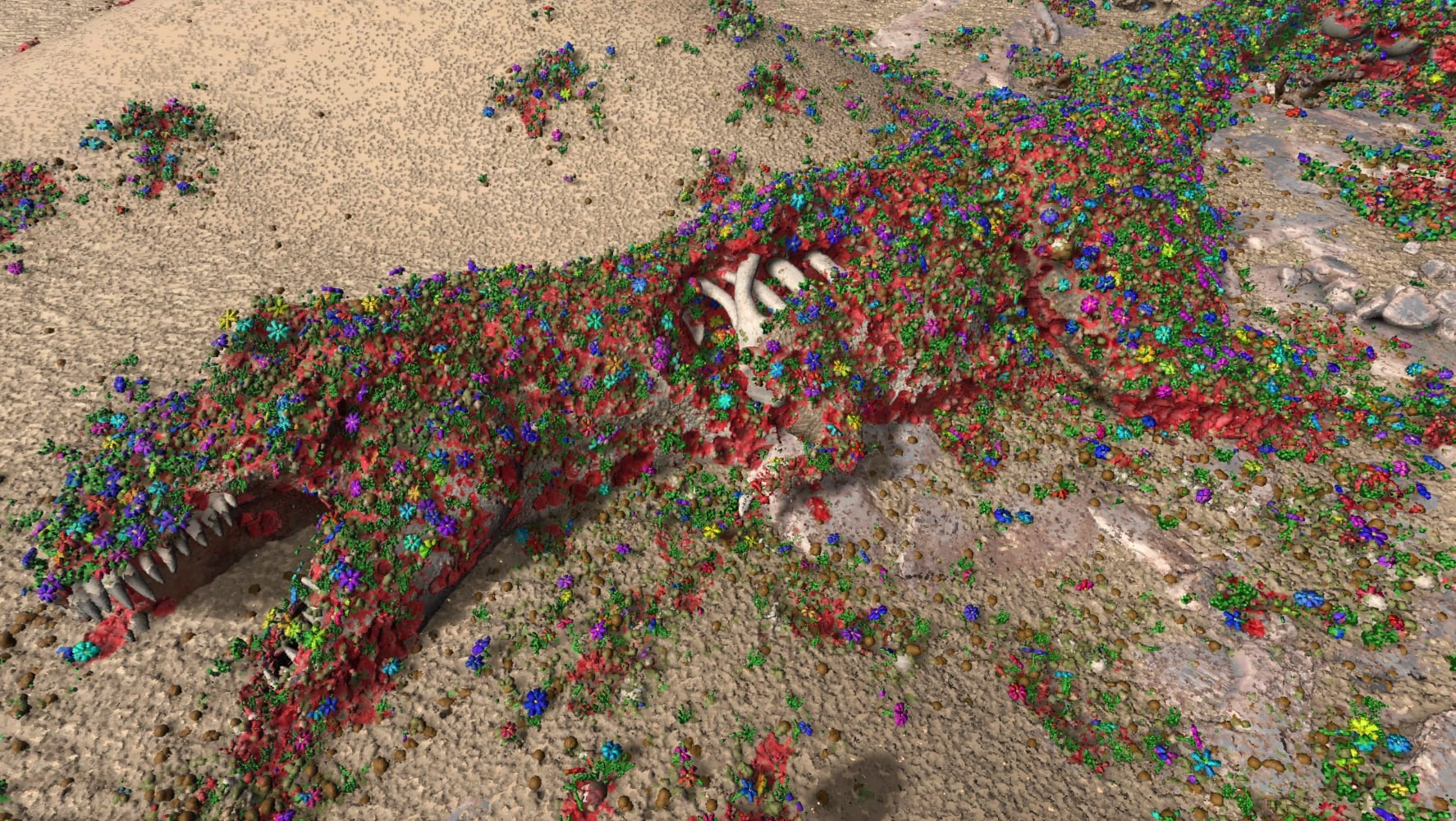
Virtual Matter consists of ordered, compressed volumetric samples, a structure generative models handle well, much as they handle pixel grids and audio samples. That is one reason images and audio became AI-native earlier than interactive 3D.
Because the format stores volumetric material data rather than only a surface, interiors and composition remain explicit through edits and simulation. It avoids relying on separate high-resolution meshes, textures and collision representations, and can stream the detail each device needs and can handle.
It also matches how people naturally reason about physical objects: volumes made from materials. We think of it as giving interactive 3D the file format the AI era was missing.
You frame creation as vision and taste with no tech or art skills needed. What does that mean for professional developers and how does AI-native creation change the craft?
Daniel Tabar: I’d flip the framing. Yes, the floor drops: someone with no tools background can make something real, the way phones made everyone a photographer. But phones didn’t end professional photography. They made taste the differentiator, and the pros with taste thrived.
However, Virtual Matter raises the ceiling even more than it lowers the floor. A professional designer can test dozens of game mechanic ideas in an afternoon that used to require separate implementation cycles, in a medium with genuinely unexplored design space.
“We think of it as giving interactive 3D the file format the AI era was missing.”Branislav Siles
There’s a whole category of design problems that mostly disappear: you no longer have to anticipate and hand-author every reaction, because the world records what players do by default. For decades, game budgets have gone into hand-authoring signs that the world noticed the player. Getting that acknowledgement by default changes what designers spend time on.
The craft shifts from implementation to direction. Level design becomes shaping possibility spaces. Systems design becomes tuning emergence you can feel in minutes rather than days.
The professionals who treat this like early Unreal, a new medium to master before anyone else has, are going to make the defining games of it. That is why our next key hires include world-class artists and designers: as implementation gets cheaper, creative direction becomes a larger constraint.
In short, two years ago we expected makers to learn our Lua tools. Natural language is now the default entry point, while professionals can still exercise deep and complete control.
Can you tell us about your business model?
Daniel Tabar: Three layers, in the order they arrive.
Today, makers pay a subscription plus metered AI credits. Playing remains free; credits cover the model calls and asset generation that create variable compute cost. When makers export standalone games, we take a small engine royalty only after the game begins earning significant revenue, so our upside is tied to theirs - modelled on Unreal Engine’s royalty structure.
At platform scale: a marketplace where makers sell and remix each other’s work and players spend inside worlds, with the platform earning a share of transactions. The long-term shift is toward participating in maker success, while subscriptions and metered creation cover the compute-heavy work today.
What do the next six to 12 months look like for you?
Daniel Tabar: Three things. First, widening the waves: we onboard makers in controlled batches, learn from each one and open further as the platform hardens.
Second, we expect to enable standalone itch.io and Steam exports later this year as product readiness and IP work conclude. We will test the pipeline with our own sample titles: prototype rapidly on the platform, then validate which concepts attract players before investing in full production.
Third, the ecosystem: the first games made entirely by outside makers, a growing community on our new Virtual Matter Discord and an asset library that makes every next game faster and better to build than the last.
You can start with a blank world at VirtualMatter.dev or try the Lovable-like prompt-first experience at VirtualMatter.ai to make their game ideas come alive today!
You can read more of this – along with interviews with more AI-and-games leaders – at AI Gamechangers now. There is an AI Gamechangers Summit taking place alongside PGC Nordics in October. Gamescom Dev runs 23-25 August, with Gamescom proper running 26-30 August in Cologne - you can visit PocketGamer.biz and AI Gamechangers in Hall 2.1, booth E033.
Companies

People

