Starform's Lou Fasulo on staying at 26 people, AI-native development and who really funds a live game

- AI gave Starform more throughput, not new capability - and Fasulo is clear about where it stops.
- Starform pivoted every mechanic in Metalstorm rather than improve a bad build by 10%.
- The players keep the game alive, he argues, not the studio feeding it.
Starform launched Metalstorm in November 2023. By the time the Seattle studio raised $6 million from Bitkraft in late 2024, the 5v5 air-combat game had three million players across the App Store, Google Play and the Epic Games Store. Lou Fasulo, CEO and co-founder, now puts that figure at 15 million.
We caught up with him at SLICE 2026 in Seattle, where he appeared on a panel about how indie teams get built, to ask what AI has actually changed, why the studio isn't raising and how a team of 26 keeps up with 15 million players.
What being AI-native means
Fasulo won't oversell the term his studio uses about itself. "AI-native is more of a journey than it is a state. And I wouldn't say that AI enables us to do something we couldn't already do."
What changed was throughput. "We've shipped way more features. We've addressed so much more feedback from players and ultimately we have a better player experience."

The internal framing for the team means mundane work at one end, judgement calls at the other. "The more our team gets to be on the higher order of that decision making and creativity, the more a small team can be ambitious."
He is equally clear about the limit. Responding to one-prompt-one-game demos recently, he counted the decisions behind a single Metalstorm aircraft - acceleration curve, energy bleed in a hard turn, silhouette readability at 800 metres.
“When you don't specify one, the model just makes something up.” Across a full game, he thinks the count runs into the tens of thousands. "When you don't specify one, the model just makes something up. That's fine for a prototype."
Every voice or none
The team size question, he says, is usually asked wrong. "The right size for a game is probably different from the right size for a company. What you're really drilling into is what's the team size that optimises for culture, shared vision and passion for that vision."
His case for a small team is about whose feedback can actually be processed. "When the team is so large that you cannot process all the feedback from the 2,100 people that worked on the last Halo update, their voice and their contribution diminishes so much. And that's the cultural miss."
“I don't think double-A is a place you arrive. It's a cost structure.”
Metalstorm launched in November 2023 and had three million players by Starform's $6 million raise a year later.
A bigger team means a higher breakeven. "I don't think double-A is a place you arrive. It's a cost structure."
One session length, two platforms
Metalstorm runs on mobile and on PC through the Epic Games Store. Fasulo's general view is that those audiences don't want the same game. The exception was an accident of prototyping: the team tested five to seven-minute matches and watched what happened when a round ended.
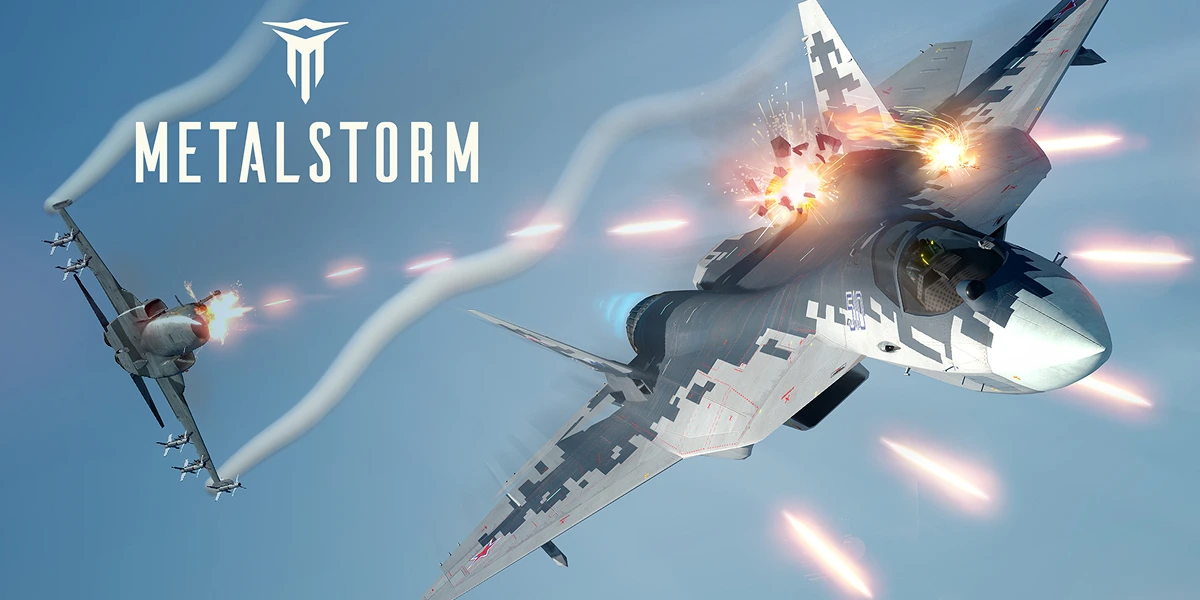
"They would not stop and turn and talk to us about what was happening. They just kept playing. We see them play multiple matches almost like eating chips out of a bag."
That behaviour, not a platform strategy, convinced them the format could travel across devices.
Hard decisions are part and parcel of running a studio
After July's Xbox layoffs, Fasulo wrote that mass redundancies are the consequence of decisions the people losing their jobs never made. His alternative is to make the hard calls while they're still small.
His own hard call came early on Metalstorm. The game was simulation-heavy and initial players loved it. When thousands more arrived, the reception was wildly different.

"The easy thing would've been, oh, we'll make it 10% better. Instead we did a hard pivot on all of the mechanics and said we're nowhere close to success." It would cost a tonne of work and, he thought at the time, possibly some of the team.
"The key thing is developing the muscle memory to make the smaller calls so that the bigger ones are just more natural."
The players are funding it
Starform's last disclosed round was two years ago. Fasulo says the studio isn't raising and takes issue with the idea that a live game is something a studio feeds.
“Studios that don't have passionate players that are willing to invest their time and money become irrelevant."”
"We're not the reason the game is still alive. It's the players that love it. Studios that don't have passionate players that are willing to invest their time and money become irrelevant."
Most of the money that went into new studios, he argues, never produced a game that found an audience. The industry blames tourism. He doesn't.
"The new games aren't winning players from their hobby."
Discovery got cheap
Metalstorm is live and the next game is in early planning, which for 26 people raises an obvious question: how do they manage both? Fasulo's answer is that the expensive part has moved.
"That discovery and the R&D that you think of as innovation in gameplay, that is not expensive. What becomes expensive is taking it all the way into and scaling production to deliver it to players."
Learn more about live ops, UA and studio-building at our Pocket Gamer Connects conferences around the world. The next big show will be PGC Nordics in Helsinki on October 20th and 21st.
Companies


People
Events
