Windup Minds' Bernie Yee on Plants vs. Zombies, UA costs and the wrong lessons from free-to-play

- PvZ 2 monetised gently on purpose - a plan Yee says wouldn't work now.
- Windup Minds looked at mobile for its virtual pet and walked away over UA costs.
- Free-to-play needs the install base first, the industry keeps trying to copy the outcome.
At Pocket Gamer Connects, our speakers span every platform, not just mobile - as they will at PGC Nordics on October 20th and 21st.
Bernie Yee's CV tracks three platform shifts: online RPGs with EverQuest, mobile with Plants vs. Zombies 2 and VR across seven years at Oculus and Meta on demos like Toybox and First Steps.
Since 2023 he has been co-founder and CEO of Windup Minds, a Seattle studio building virtual pets on a $1.6 million seed round with a team drawn from Oculus, EA and Bungie. In July it launched two games on the same day: Stay: Your Forever Pet into Steam Early Access at $12.99 and Stay: Ember's Desktop Adventures, a $4.99 desktop companion.
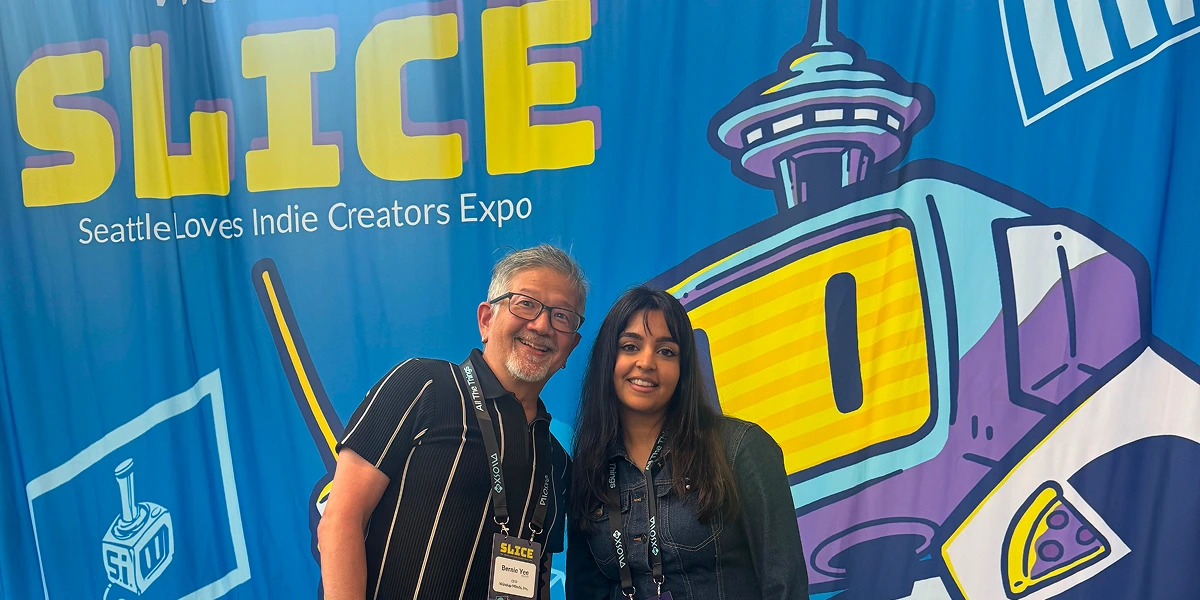
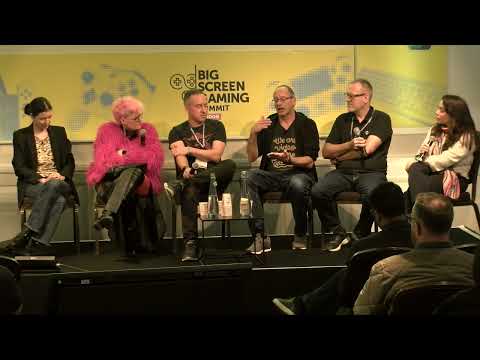
During SLICE 2026 in Seattle, where we hosted the Big Indie Pitch, we caught up with Yee to talk about what mobile taught him about business models, why his studio looked at the platform and backed away, and what he thinks the industry misread about free-to-play.
The gentle version of free-to-play
Yee joined PopCap as a senior producer in 2012, at a point when the industry was shifting into free-to-play. He was there because he wanted to be: he rates the original Plants vs. Zombies among the 10 best games ever made and thinks touch controls are what turned the IP from a great game into an even bigger-selling one.
"I played it. I immediately thought to myself that it is so good. It's elegant and beautiful and simple. Even though it was on PC, it really shined on touch."
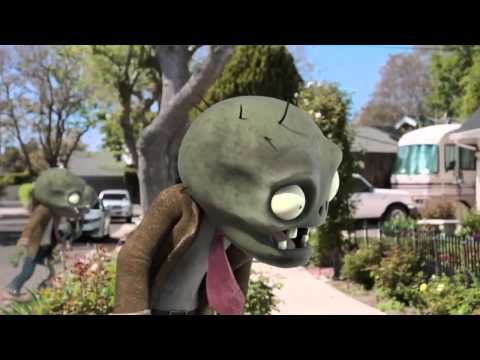
The job was to reboot it. PvZ 2 arrived in 2013 with a big launch, took DICE's Casual and Mobile Game of the Year awards, and moved one of the most valuable premium franchises in the business onto a model it had never used. Yee is careful about how much of that decision was his.
"I didn't necessarily take it. That was part of the mandate, because free-to-play was becoming quite dominant at the time."
“The vision was always: you can't ruin the franchise. So they wanted to be very gentle with monetisation.”
What the team controlled was how hard to push. "The vision was always: you can't ruin the franchise. So they wanted to be very gentle with monetisation."
The plan, as he describes it, was sequenced. Launch soft, make it up on volume because it is PvZ, bring a premium-trained audience into a forgiving system and add monetisation gradually once they are there. Edge scored it 9/10 and noted how little it asked of players - no paywalls, no energy system.
He is unsentimental about what happened after he left, when more monetisation went in. "I don't think that's true to the original vision, but I also think the original vision is no longer valid. You've got to make money."
He adds: “Are you going to compete with the user acquisition costs of Monopoly Go? You can't, right?”
And he does not think the runway he had still exists. "We were lucky to launch in that time."
Why Windup Minds isn't on mobile
Since 2023, Yee has been the CEO at Windup Minds, which has launched two games on Steam this year - Stay: Ember's Desktop Adventures and Stay: Your Forever Pet. He says the company ran the numbers on mobile for its virtual pet and concluded the form factor was right and the economics were not.
"We think it's a great form factor for a virtual pet, because it's most like Nintendogs. But the user acquisition costs are so high. We're thinking, how can we do that? We can't get the users."
He adds: "I think mobile's a really hard place to be in." A sharp statement from someone whose signature credit is a mobile game.

The studio went to PC instead. It was the cheapest platform to move to from a development standpoint and Yee believed the audience was findable there. "Cosy gamers aren't in VR," he says, even though he thinks VR is a great cozy space.
The move was not free though, of course. "It cost a lot. We used up what cash we had to get to that point."
Steam has not solved the problem either - the game has not sold as well as the team wanted - but he describes the possibilities space as bigger. "All we need to do is find the right audience, the right feature set and we can get there."
The wrong lessons
Asked whether the industry took the right lessons from free-to-play's move off mobile and into everything else, Yee does not hesitate. "Almost certainly no."
His example is VR, where he says the success of Another Axiom's Gorilla Tag, in which players outrun or chase their oponents in a grand game of tag, produced a wave of free-to-play imitators chasing the same audience, reinforced by an algorithmic store that learned to promote the pattern. The flaw, he argues, is arithmetic rather than taste.
"Free-to-play requires a massive install base for it to be a viable ecosystem.
"I'm talking into a mobile phone because there are a billion of these probably in Seattle alone. So you need a billion devices for free-to-play to be a viable ecosystem. 20 million VR devices? It's impossible."
“Free-to-play requires a massive install base for it to be a viable ecosystem.”
He continues: "People were chasing the end result at the beginning. You need the install base before you can have the slope monetisation. You can't do it."
What that produced, in his description, is a closed loop: a set of free-to-play games aimed at 12 and 13-year-old boys, competing for each other's users. "They're fighting over the same audience and that doesn't expand the business."
It is a diagnosis that transfers cleanly to mobile's own mature market challenge, where the install base exists and the competition for attention inside it has become the constraint instead.
"Get videos on TikTok" is not a strategy
Discovery is where Yee is most exasperated and the specifics will be familiar to anyone marketing a mobile title.
"I would ask people, all right, how do we get people to understand our game? And they're like, get videos on TikTok. That's not a marketing strategy. It's like rolling dice and hoping you roll a natural 20 three times in a row to find virality."
His objection is not just the odds but what the mechanism selects for. Chasing virality skews content towards whatever is memeable, "which is a small slice of the possible experiences that can exist in the platform".
"You have to have a hit single. And I don't know that it's easy to do that."
He extends the point past his own studio. "There are a lot of really great studios that have shipped really quality games that have struggled to find an audience. So what is it? I don't know why. That's the big question."
Two games, one day
For Windup's latest games, the studio took the deliberate risk to launch two titles Stay titles together. Stay: Your Forever Pet is the main game, while the desktop companion existed to drive an idea of persistence across both games grow attachment to your virtual pet.
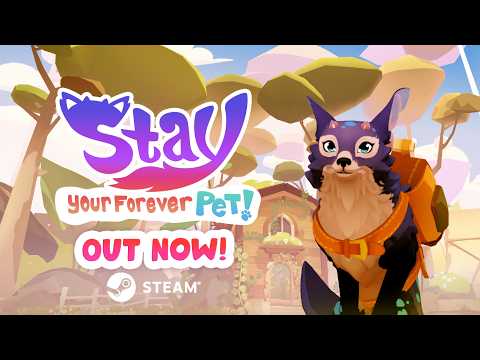
He is candid about the join not fully working, though. The plan was for the pet's state to carry across - hungry in the game, hungry on your desktop - but only visual persistence made it in. "That was too much work. So we couldn't do it."
“It's impossible to believe that VR is not a platform that can be as big as console games.”
But he says he would still take the swing at such creative risks. "It was true to the vision as opposed to what was safe, because I also don't think playing it safe is the right thing for a studio to do."
The thing people would argue with
Yee has a reputation among former colleagues for saying what he thinks, so we asked him what belief he holds that most of the room would reject.
He gave two, and they cut against each other. The first is that dismissing VR is wrong - not on sales, but on the fundamentals of putting someone in a space and having their body believe it. "It's impossible to believe that that is not a platform that can be as big as console games."
The second is that the way the industry has pursued it is wrong, including the prestige projects. Half-Life: Alyx and the triple-A VR titles were good games that "didn't move the needle", and he thinks the console design model - superhuman fantasy, stick locomotion - is the reason.
"The reason why VR is powerful is your synthetic body is doing what your real body is doing. So if your synthetic body is moving and your real body is not, then you fundamentally broke one of the things that makes VR great."
The usual response, he says, is that he is old and kids adapt. "I don't care if that's true. If you're going to sell to someone who makes six figures a year and I'm not going to play it because I get sick, you lost people - not about the quality of the experience, but the pure physical reaction."
Where does it end?
Asked for closing words, Yee went somewhere bleaker. He had just run into a former Bungie colleague laid off from their second job since.
"This is not sustainable. I don't know how - and when does it end? I feel for a lot of younger developers coming up. Where are they finding their place in the world, in this industry?"
He is unconvinced by the standard answer about outsourcing to cheaper markets. "A lot of the answer I hear from business people is, well, development's moving to Asia where it's cheap. I'm like, great. How does that help people from Santa Cruz or DigiPen?"
His argument against it is a product argument rather than a sentimental one. "There's got to be a product quality cost to offshoring stuff. We're not making jeans or cheap electronics. If you're making a skinner box, then maybe you can offshore it. But if you want to make an experience that really moves people, maybe that's not the right place."
Learn more about business models, UA and discovery at our Pocket Gamer Connects conferences around the world. The next big show will be PGC Nordics in Helsinki on October 20th and 21st.
Companies



People

Events
