"The question isn't whether it's the right intent, it is whether it will actually work": The Mobile Mavens on the UK's social media ban

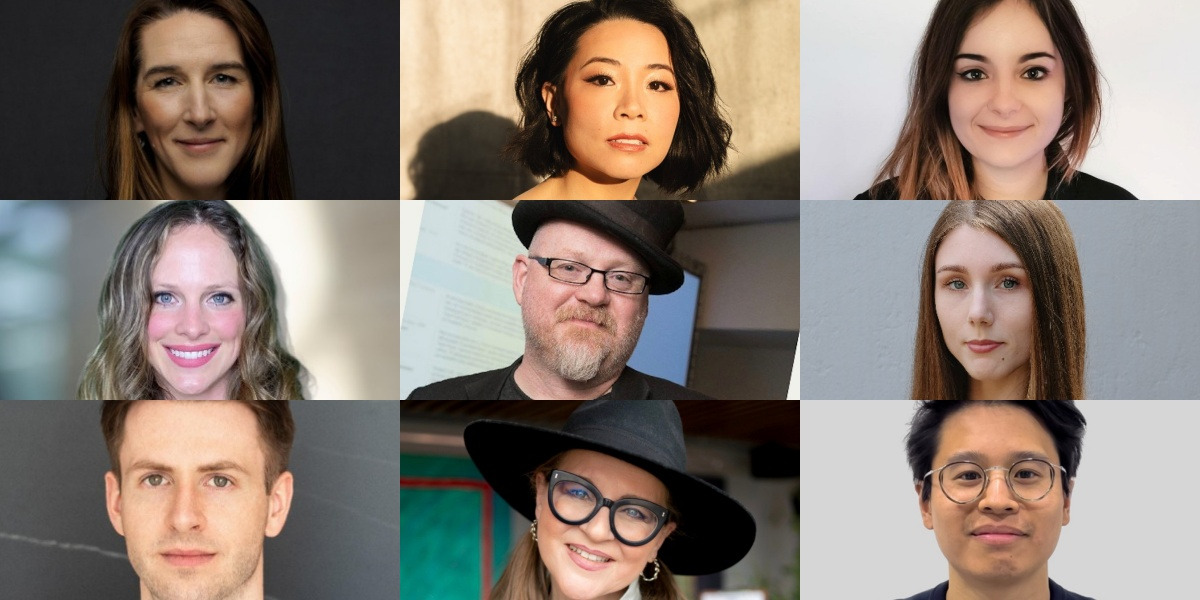
- “A ban suggests the government sees no value in children under the age of 16 having access to social media or social gaming platforms, when the evidence suggests otherwise.” - Rebecca Liao.
- “I believe in protecting children. But do it with guardrails that actually work, aimed at the companies that built the problem.” - Oscar Clark.
- “Bans give platforms further room to acquit themselves of responsibility, saying “well they aren’t supposed to be here.” - Kate O'Loughlin.
The UK government's proposed social media ban for under-16s has sparked widespread debate about online safety and platform responsibility.
While the proposals are primarily aimed at social media platforms, the government has indicated that it is considering restrictions on certain features within game services, such as communication with strangers.
We asked our Mobile Mavens what impact these proposals could have on games and whether the restrictions are the right approach.

Rebecca Liao
Digital bans are barely enforceable as a general rule, and certainly most kids, by the time they are 13 - the social media platforms' age limit - let alone 16, have enough facility with tech to circumvent bans.
The general effect of a ban will be that social media platforms and gaming companies will start to de-prioritise the UK as a market. If it's extra cost to operate there because these bans need to be implemented on the platforms, and these platforms will lose significant revenue from a key demographic, resources will go elsewhere.
“The general effect of a ban will be that social media platforms and gaming companies will start to de-prioritise the UK as a market.”Rebecca Liao
The unfortunate part of all of this is that a ban is not necessary to achieve the government's safety objectives. The proposed laws could easily have asked for stricter controls on outreach from strangers, greater ability for parents to control the accounts of their children under 16, even controls on length of sessions in an app.
A ban suggests the government sees no value in children under the age of 16 having access to social media or social gaming platforms, when the evidence suggests otherwise. As outlets for creative development and ambition, hubs for social relationships, and channels for useful information, these social platforms are uniquely useful.
They undeniably have well-documented harmful effects on the mental health of young people, but the answer is better controls, not a blanket ban.

Oscar Clark
There's no question that Under-16s face genuine issues from the way social media works - addictive loops, stranger contact risk, mechanics designed to exploit attention. And this isn’t the first time I’ve thought about this.
Back in ’99, I was part of developing an industry-wide voluntary code recommending that GPS games should have a PEGI 18 rating, and I gave a talk in 2015 at GDC on ‘The Magic of Habit’ and our responsibility to vulnerable people.
For me, the problem isn't really children using these services, it's that the companies are not being held to account for how their algorithms operate and how they protect their audience. If we want genuine change, we need improvements across the board, and that means we have to hold the tech giants to account.
“The censorship instinct here is the same - ban the thing you don't understand rather than fix the behaviour behind it. And it won't work.”Oscar Clark
Instead, governments keep reaching for regressive measures. The UK's "Australia‑plus" ban on social media for under‑16s - now explicitly naming games - is the latest. UKIE has highlighted that the PEGI rating system helps (and it does), but if I read correctly, in-game chat remains high on the agenda.
The censorship instinct here is the same - ban the thing you don't understand rather than fix the behaviour behind it. And it won't work.
These restrictions are trivially easy to get around, and in trying, we risk pushing curious kids toward workarounds that leave them more exposed, not less. The unintended consequences land on the very children we claim to protect, just like it does with the Online Safety Act.
What also worries me most is what this does to our industry as it piles on yet another disproportionate regulatory burden - and as ever, it's the smaller teams who carry it. Complying properly is non‑trivial, and for less‑experienced studios it becomes a tax the giants simply absorb.
The result is a chilling effect: less innovation, more caution, and much costlier user acquisition - already brutal - made even harder as legitimate channels and features get locked down.
I believe in protecting children. But do it with guardrails that actually work, aimed at the companies that built the problem - not another regressive rule that punishes players and innovators and quietly kneecaps the developers we should be backing - completely undermining any benefit we have seen from increased government funding.

Kate O'Loughlin
While we await the full details and practical implications of the proposed UK social media ban, the way ahead is clear; digital experiences will be mandated to be safer and more age-appropriate. Features such as chat with strangers and livestreaming will and should face greater scrutiny. The obligation to determine users' ages before allowing them to communicate, share, or enter older content is coming to nearly every platform and socially-enabled gaming experiences.
“The goal shouldn’t be to remove young people from digital experiences, but to ensure those experiences are designed keeping their safety front and center.”Kate O'Loughlin
The UK environment - and indeed other jurisdictions - is changing quickly. In May, the UK appeared to be considering a range of approaches focused more on platform accountability; in June it then announced plans to move toward an under-16 restriction model, and now Starmer’s resignation has added further uncertainty on the follow-through for details on the proposed ban.
For whoever takes up the politically popular topic of protecting young people online, my hope is that they will strive to make the necessary, stronger protections one of inclusion not expulsion. The goal shouldn’t be to remove young people from digital experiences, but to ensure those experiences are designed keeping their safety front and center.

Bans alone can’t be the solution. As proposed, bans give platforms further room to acquit themselves of responsibility, saying “well they aren’t supposed to be here.”
While most social media bans have not addressed gaming per se, the UK proposal shows that regulators are likely to look beyond the labels of big platforms and focus on higher-risk features wherever they appear. For games, the best practice should be to let younger people play, interact and discover via modified features that are age-gated, moderated and designed for appropriateness.
The reality is that young people are not going to disappear from digital life, especially from gaming. Gen Alpha/Z will continue to seek entertainment, connection, learning, and community online. The question is whether regulation will incentivise and support developers and creators to make the next generation of the internet inclusive of all players.

Louise Wooldridge
A social media ban would significantly undermine game discoverability at a time when developers already face unprecedented challenges reaching players.
For many studios, social platforms are not just marketing channels - they are the primary way new audiences discover and engage with games. They are relied on, not just for marketing, but for community building.
Very few users now discover new games by directly browsing an app store because they are simply too crowded. Tools like ads, creator or influencer content, and resulting viral videos can really drive success for a game, but they rely wholly on social media platforms.
“For many studios, social platforms are not just marketing channels - they are the primary way new audiences discover and engage with games.”Louise Wooldridge
Ampere Games Consumer data indicates that only 9% of 13-15-year-olds in the UK do not use social media, with more than three-quarters reporting daily use.
We also estimate there to be just over 5 million mobile gamers aged 15 and under in the UK in 2026 - so a significant number, and one which is rising.
Although for some there will be workarounds like VPNs, this law will remove the expectation to be on social media, and so it's possible there will be a gradual cultural shift away from these platforms.
Potentially, this would disproportionately affect UK studios, and studios in other markets where social media bans are either in place or imminent.
It will also be a bigger hit to smaller developers, who do not necessarily have huge advertising budgets and rely on platforms like TikTok, YouTube and Reddit for player acquisition.

Lexi Sydow
The UK’s social media ban for kids builds on momentum already in the market - first launched by Australia in December 2025. Games aren’t immune from these conversations.
Attention is split between social media, short videos, gaming, and even AI Chatbots that fill similar drivers for people - connection, relaxation, fun, competition, boredom, passing time, and thrill.
“The wave of regulation to come will rewrite the way our economy is powered.”Lexi Sydow
What’s really under the spotlight is not social media or games themselves, it’s the mechanisms that open up safety concerns for young people. The two landmark social media addiction trials in the US in March build on this case by bringing child safety front and centre and focusing not on youth bans, but on how the platforms themselves are built.
We can’t talk about social media bans without addressing 3 key issues:
-
Data Privacy: Cybersecurity breaches of age verification datasets - enforcement aside, this is a major concern for the safety of handling this sensitive data.
-
The Gods of the Algorithms: Algorithmic ‘steering’, aka: a platform’s content and curation decisions that determine what content (photos, videos, or live streams) kids see online were the subject of the landmark court case in New Mexico against Meta, and are poised to come under more scrutiny.
-
‘User Stickiness’ Mechanics and Features: The EU is exploring regulating ‘addictive’ social media mechanics like infinite scrolling, autoplay videos, push notifications and rewards for usage. Gamified features writ large could be under scrutiny. This could easily include how messaging features are structured in games.
Between bans and ‘addiction’ trials, it’s clear the firm grip ‘addictive’ mechanics and algorithms have on our attention will come under scrutiny - leaving advertising, gaming and social media sectors poised for a shakeup. We are entering a reset: the Great Attention Correction.
The wave of regulation to come will rewrite the way our economy is powered.

Jan Sommerfeld
It's obviously important to protect children online, and it's a principle we already build Freecash around with a strict 16-plus policy with identity verification. I suppose the real question is whether blanket bans are the way to achieve safety for young people online on games and platforms without these existing barriers.
“Games aren't social media, and they should be treated separately.”Jan Sommerfeld
Games aren't social media, and they should be treated separately. The strongest platforms and publishers already switch communication features off by default for younger users, so the key thing to get right is reliable age assurance. Getting it wrong creates friction for adults who make up the majority of the audience, while barely slowing down a determined 15-year-old.
Getting it right is about targeting actual harm without treating every player or user like a child.
We would also have to see what a "high-risk feature" actually entails. Developers and platforms will need detail and clarity surrounding what's actually going to be banned well ahead of the 2027 deadline.

Jacki Vause
I welcome efforts to introduce stricter controls around the type of content children are exposed to online. There are clearly real concerns about harmful material, bullying and harassment on social media, and platforms should be held to higher standards.
“For many in the so‑called Covid generation, online games have not just been entertainment but a primary social space.”Jacki Vause
However, when it comes to gaming, the picture is more nuanced. For many in the so‑called Covid generation, online games have not just been entertainment but a primary social space - where they talk to friends, collaborate and build communities. As in any part of society, there are bad actors, but that does not mean the entire digital environment is inherently harmful.
A significant part of monitoring, guidance and education must also sit with parents and policymakers, supported by better tools, clearer standards and meaningful enforcement of existing regulations.

I also think there is an inconsistency in telling young people they cannot responsibly access social media until 16, while at the same time arguing they are mature enough to vote at that age. That tension deserves honest discussion.
Blanket bans risk sending the message that young people themselves are the problem, rather than acknowledging that adults, governments and technology companies have collectively shaped the digital spaces they now inhabit.
If we simply exclude under‑16s without addressing platform design, accountability and digital education, we risk pushing young people towards less visible, less regulated corners of the internet instead of making them safer.
The focus should be on building healthier digital environments and equipping young people with the skills and resilience to navigate them responsibly.

Anh-Vu Nguyen
In a way, the new restrictions are largely the reckoning that social media and gaming have been building towards for years now. These industries have operated with limited oversight thus far, while profiting from a habit-forming activity. So, this correction is long overdue.
The question here isn't whether it's the right intent - it is whether it will actually work. And that's where the games industry should pay closer attention.
Today's youth are internet-native. If the measures are half-baked, they will find workarounds. Without robust enforcement mechanisms and proper age-verification infrastructure, this risks becoming another well-intentioned half-measure that generates headlines without any meaningful change.
“The impact on games overall will depend on implementation.”Anh-Vu Nguyen
The impact on games overall will depend on implementation.
Communities aren't just features in online games like Minecraft and Roblox - they're a core part of the product. Restricting access to those communities puts real pressure on studios that rely on social engagement as a core mechanic, and on the creator ecosystems surrounding them.
We've seen what aggressive restriction does in markets like Brazil, where several studios exited entirely. The UK is a significantly larger market so an exodus of that scale is unlikely, but the squeeze could be real.
There's also a social dimension worth considering. If some young people can access these communities while others can't, that divide doesn't disappear - it moves offline, creating new pressures and potential for isolation amongst peers.
Less time in online communities also makes young people's time spent on the attention economy scarcer and more precious, which cuts both ways for studios. Fewer engaged eyeballs, but more intentional ones.
The uncomfortable truth is that the tech and gaming companies benefiting most from youth engagement online are not incentivised to support strict enforcement. That tension will define whether this regulation has teeth or not.

Kimberley Fogg
Platforms like TikTok and YouTube have become some of the most important game discovery channels for younger audiences. That's where games start to build momentum, where wishlists are built, and where a lot of indie games find their audience. The UK social media ban will make that significantly harder for smaller studios that rely on organic reach rather than large marketing budgets.
“If social media becomes less accessible to young people, they'll look for other ways to connect online.”Anh-Vu Nguyen
If social media becomes less accessible to young people, they'll look for other ways to connect online. We've already seen games like Roblox and Fortnite evolve beyond entertainment into social spaces, and if traditional social platforms become less accessible, we could see even more time and attention move into those experiences.
Young people aren't going to stop spending time together online. They'll just do it somewhere else.
People