A new Silk Road for video games and interactive entertainment

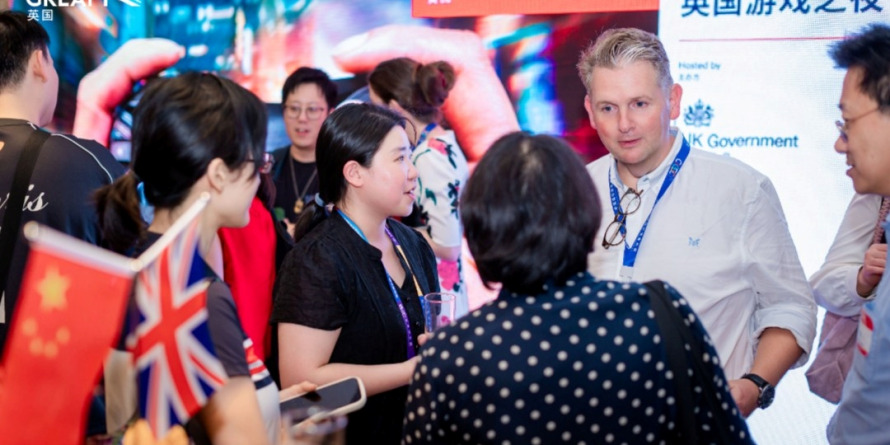
Nick Poole is CEO of UKIE.
While I hate to burst the romantic ideal, the ‘Silk Road’ was never really a road. The expression describes a complex network of trade routes connecting China and Europe by way of the Middle East and Constantinople starting in the 2nd Century BCE.
Importantly, the Silk Road worked on the principle of reciprocity – that Chinese and European markets each offer things of value to the other, which are scarce or unavailable back home.
I had a lot of time to reflect on all this on my way to Shanghai last week to support the joint Ukie/Department for Business, Innovation, Science and Technology (DBIST) Trade Mission to ChinaJoy with a side-quest to the fantastic Pocket Gamer Connects Summit Shanghai.
Key ingredients
In my meetings with Chinese officials and industry leaders, one thing became abundantly clear – there is a huge appetite for reciprocal trade between China’s world-leading video games market and UK studios, publishers and service providers.
What is equally clear is that this is not as simple as rocking up in one of China’s major cities and asking if anyone wants to buy a game. UK businesses wanting to sell into the Chinese market need three vital ingredients – a strategy, time and good partners ‘on the ground’ who understand local distribution channels and can help navigate China’s publishing and ISBN requirement.
Done right, though, accessing China’s domestic market of 683m players with an estimated annual spend of $50bn can transform the fortunes of a Western games company. In the words of one UK industry leader “if we can access even a niche of a niche in the Chinese market, it will fund the rest of the studio this year”.
For their part, there is very significant interest among Chinese video games companies in building trade relationships with the West. Many see the establishment of trade links with Western games markets as a means to sell games which may not have an audience in China.
In the words of one UK industry leader “if we can access even a niche of a niche in the Chinese market, it will fund the rest of the studio this year”.
For Chinese companies, the UK offers deep expertise in IP creation, development and publishing, alongside creative talent and experience in reaching global audiences – creating opportunities for partnership, co-development and cultural exchange.
One speaker at Pocket Gamer Connects Summit Shanghai spoke about UK-Chinese relationships based more on creative vision than pure commerce – as they put it: "pursuing the artistic vision in games, not just as a consumer product but a creative expression that carries warmth and humanity".
Wandering around the excellent Indie Showcase at PCG Summit Shanghai I felt exactly the same passion, creativity and ambition that I get from Devcom or Develop.
Frictionless 'Silk Road'
However, all this goodwill has to be tempered by reality. Many Western developers wanting to sell into or work with the Chinese market find themselves frustrated by trade frictions – whether in the form of the necessary barcode, content controls, potentially relinquishing their IP or only being able to work through a local intermediary.
If we are going to establish a truly frictionless ‘Silk Road for games’, we have to work with our political stakeholders to recognise the specific needs of our industry in trade negotiations between the UK and Chinese Governments.

Ukie was proud to bring 24 great UK games businesses to ChinaJoy in partnership with DBIST this year – ranging from indie darlings Oxalis Games to powerhouses like Kepler Interactive, Playstack and Curve Games.
We are totting up the business wins, but if my WeChat is anything to go by, we all came back with a full roster of new partners and relationships to develop in the coming months.
We are considering ways to help UK companies wanting to do business in China and how we can begin to set up long-term relationships with key players in the Chinese market. If we can get it right, I think there is an opportunity to build a mutually-beneficial connection between our ecosystems that will last for decades to come.
Image credits: Copyright @ Department for Business, Science, Innovation and Technology (DBIST) 2026.
Companies

People

Events
