Five takeaways from ChinaJoy 2026: China goes global, AI the talk of the town, and ads and payments firms take over

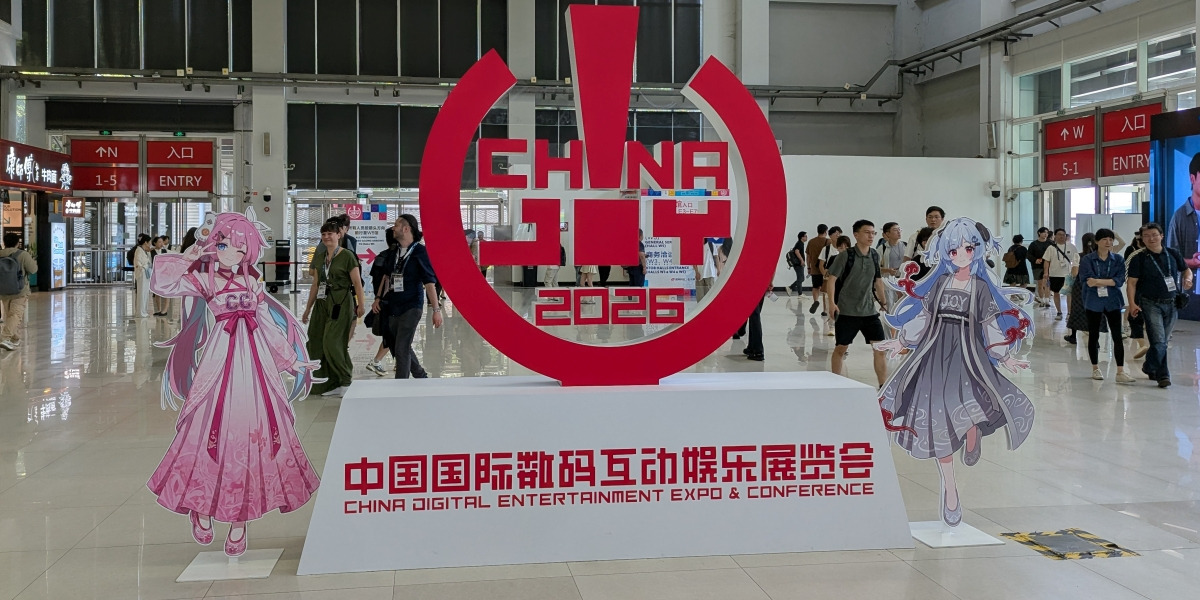
The global ambitions of China’s games industry is one of the hottest topics in the sector right now.
Last week, I travelled to Shanghai for ChinaJoy to find out what all the fuss is about and get deeper insights into what makes this market so successful.
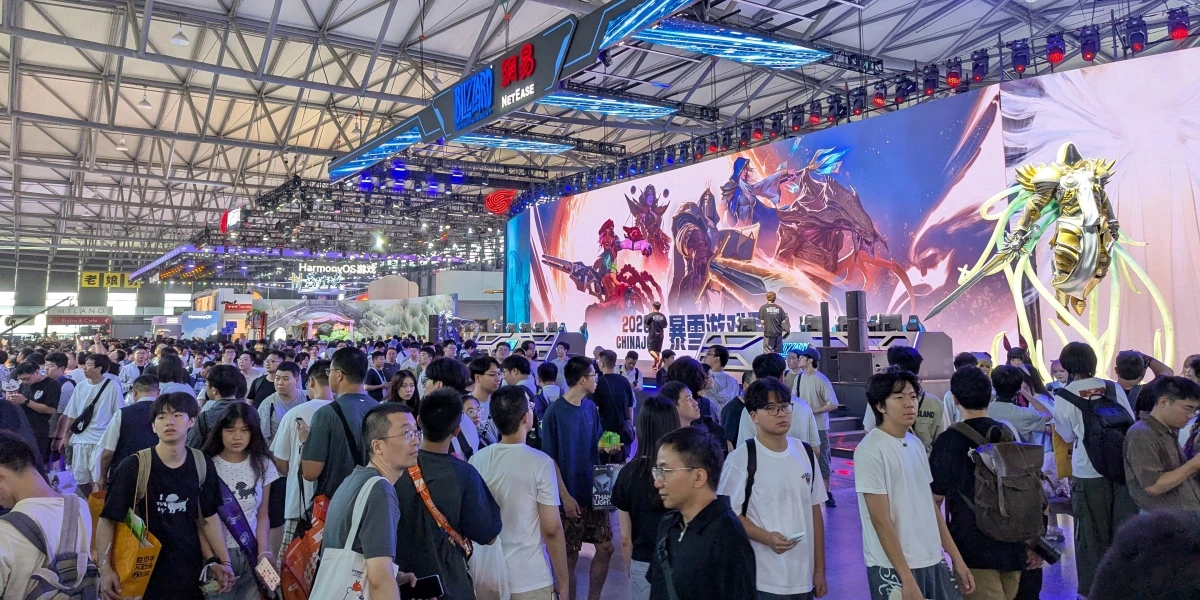
The consumer and B2B expo is one of the world’s largest gaming events. It attracted more than 900 companies from 35 countries and regions. Total attendees for the show reached 438,900, up nearly 7% year-over-year. Overseas companies were said to account for 44% of the B2B area.
For comparison, Gamescom attracted 357,000 visitors in 2025 - also up 7% Y/Y.
ChinaJoy is more than just the main event - there are a host of side events. We held our own Pocket Gamer Connects Summit Shanghai again this year, welcoming over 770 delegates from 400+ companies and 40 countries.
We also hosted the Supper Club in association with Epic Games, the Pocket Gamer Party with Century Games and a Mixer with EnjoyPay, bringing attendance at our events to over 1,000 industry professionals.
Then there were the other shows in town, such as CGDC and CGIDC (yes, they are separate events).
With so much happening, I’ve put together some of the key takeaways from a big week for the games industry. Don't forget to also check out our China Region Report, published in association in Xsolla, for more details on the market.
1. China going global
China already has a history of its games companies going global. Tencent in particular has made significant investments and acquisitions overseas - it’s currently linked with Disney Solitaire studio SuperPlay.
Meanwhile mobile studios like Century Games, Microfun and FirstFun have made a splash on the world stage, dominating the 4X strategy and merge genres. It’s not always rosy - NetEase looks to have pulled back from its overseas investments, though that doesn’t mean it will stop making games for the international market like Marvel Rivals.
On the show floor were a host of international names with sizeable presences including Discord, Xsolla, Liftoff, Moloco, Mistplay, DT, Stripe, Adjust and others. Across the conferences, including PGC Summit Shanghai, speakers hailed from companies like CD Projekt Red, Pocketpair, Revolution Software, TinyBuild, SayGames, Warhorse Studios, Obsidian Entertainment and more.
Elsewhere, there were delegtations from a number of countries, including the UK, bringing companies to do business in China and show off their games.
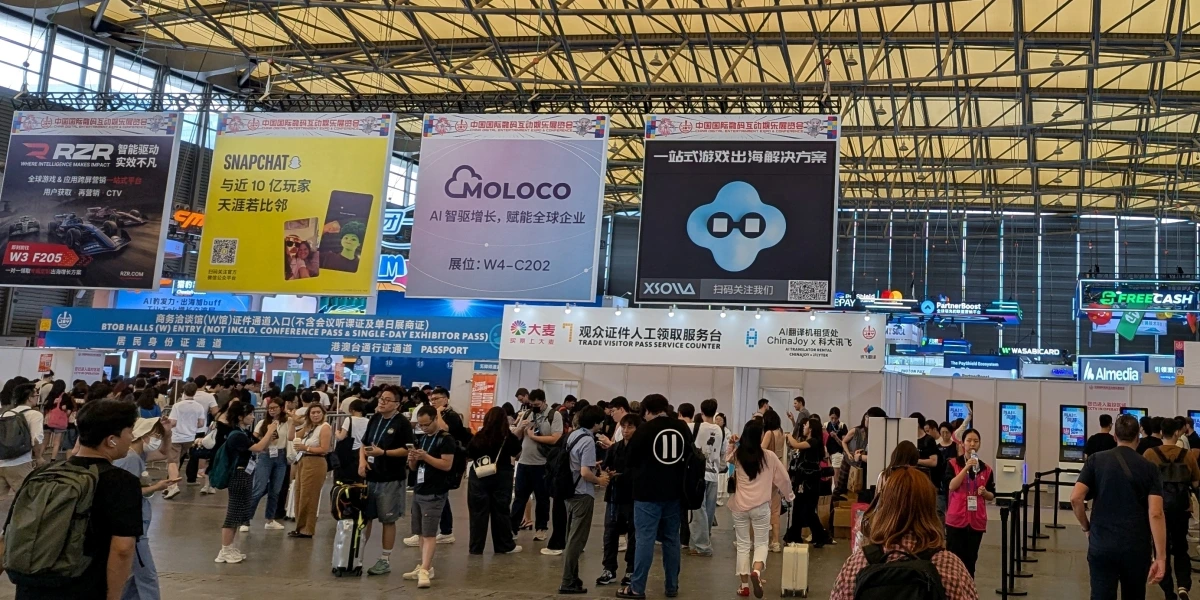
There are two sides to the story. As MyGamez CEO Mikael Leinonen claimed at PGC, there’s a growing trend of publishers returning to China. The country’s games market is by no means easy to enter for foreign companies, nor is it easy to succeed in such a highly competitive space.
But as a hub that now sets global trends, he said, China is the place for international companies looking to hold their competitive edge, keep it sharp and experience those up-and-coming trends first-hand. Studios are now taking a long-term approach to the market and not expecting quick wins for low effort.
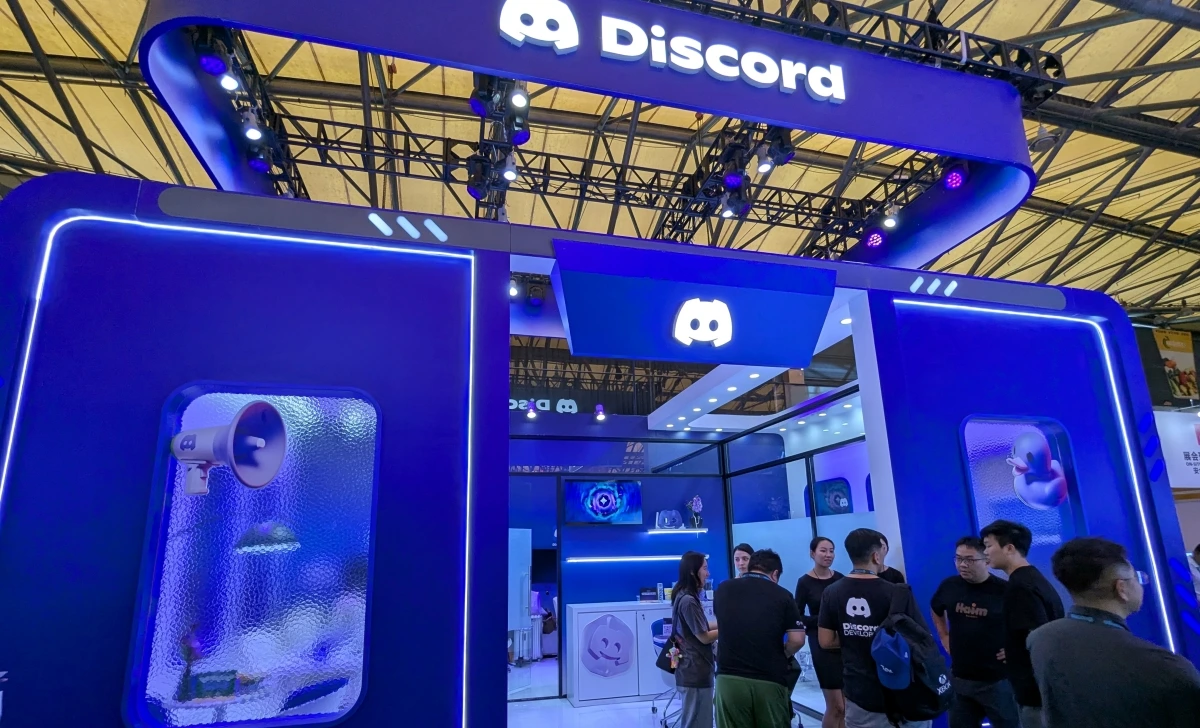
Perhaps a bigger trend though was the international companies in town not just to break into China - but to take business from Chinese firms that are seeking to go global.
For example, Discord had a booth on the B2B show floor, despite not being available in the country. When I asked why they were there, I was simply told that, well, Chinese developers may want to use the platform in other markets.
2. Ads and payment companies take over
The last point leads well into the second takeaway: I have never seen so many ads and payments companies all in one place. It felt as though every other booth in the B2B area fell into one of these categories.
There was the aforementioned companies such as Liftoff, Mistplay, Almedia, Xsolla, DT, Stripe and Moloco, as well as the likes of Cheetah Mobile, Adyen, TyrAds, Adjoe, Bigabid, Mobvista, Bidease, Kashkick, Yandex Ads… I could go on.
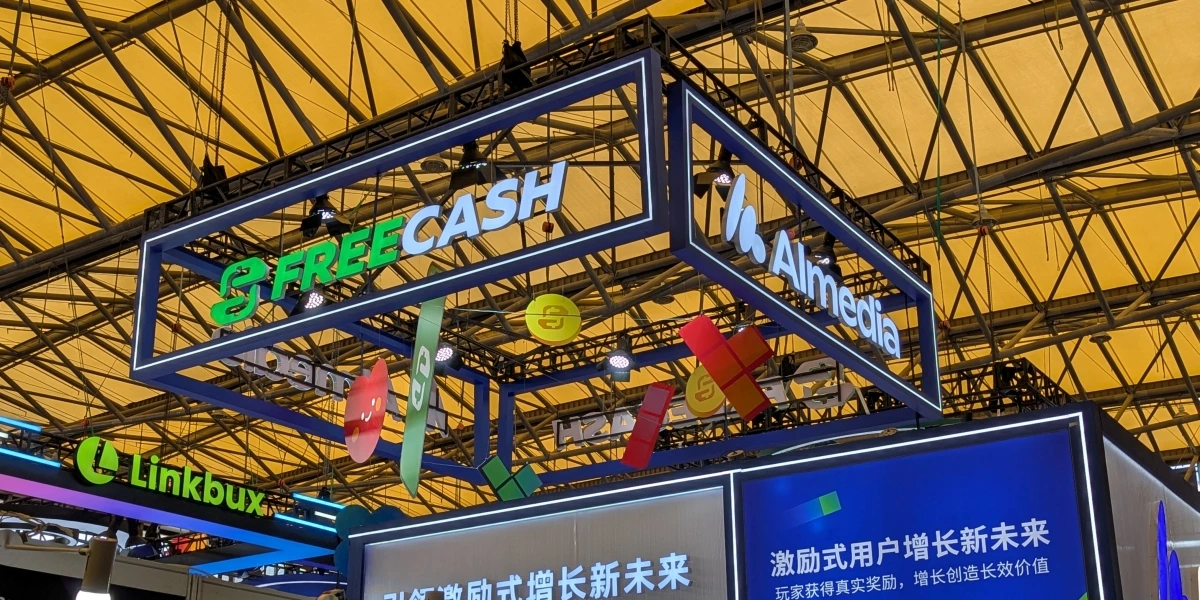
As well as conducting business for the local market, there was clearly a bid from overseas firms to snap up international business in an industry that’s finding increasing success around the world. And the competition is fierce.
3. AI is here, right now
The debate around generative AI technology has steadily been shifting to practical use-cases over the past couple years of the tech boom. There are still very real concerns about jobs - SAG-AFTRA had an 11-month strike over this very issue - while there’s also a lot of hot air around AI’s general capabilities.
But in China, the debate doesn’t really exist like it does in the West. Companies are moving fast. Gavin, a project management leader at Ourpalm, showed off a variety of use-cases where AI can be integrated into development, dramatically improving efficiency, he claimed. In his opinion, AI will cost jobs in future, while there may be no need to use a game engine like Unity at all.
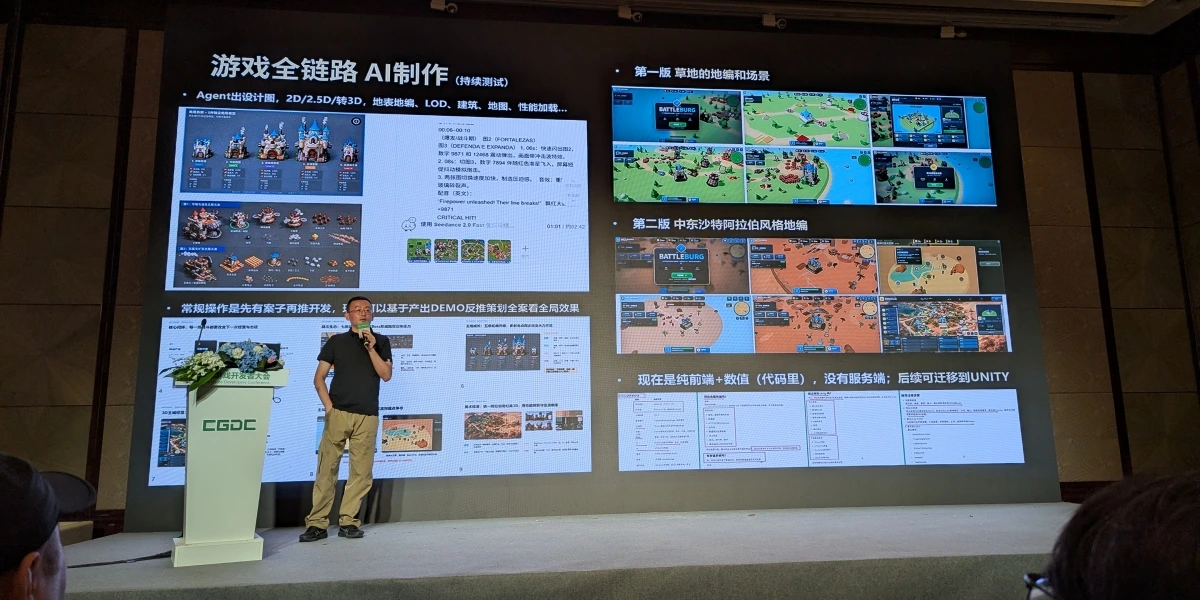
Across the show, speakers were talking about how production costs can be reduced and the tech can be used in areas such as prototyping, localisation, art and more. The consistent theme was that developers should be working with AI now to help futureproof their careers.
Mattel163 COO Devin Nambiar, who spoke at PGC, previously told us ahead of his talk that “AI has already moved the needle in several areas”.
"On monetisation it has helped us with both prediction and creating a more efficient content pipeline. Our pLTV modelling and ROAS prediction employ AI to help us dynamically adjust our UA plans to maximise paid and blended ROAS across a variety of channels, which is paramount in this highly competitive UA environment."
He added: "On the content side, using AI to guide portions of our live content creation, work alongside our designers to create new, engaging mini-game content and aid with localisation efforts has helped improve the efficiency of our overall live content pipeline - including limited-time content, seasonal content and innovative mini-games.
"Despite our concerted efforts and AI-related initiatives at a company level, in many ways we still feel we are scratching the surface and we actively want to go deeper."
And yes, on the expo floor, there were many companies promoting AI use-cases as part of their services. How much of AI’s potential will be realised remains to be seen, but Chinese companies are moving fast and they aren’t shy about its implementations.
4. Black Myth: Wukong was an inflection point
Game Science’s global hit Black Myth: Wukong was an inflection point for China’s games industry and its pay-to-play market, according to Transcend Fund principal Lirui Ding.
Speaking during a PGC panel alongside IndieLight VP Tony Shong and DD For Games founder Chelsea Anglin, Ding said when people think of China, they think of a predominantly free-to-play mobile market, rather than triple-A.
“No one ever took China seriously as a triple-A developer,” he said.
But Black Myth: Wukong changed all that - despite his estimates that 70% to 80% of the game’s sales were in China. More overseas studios, publishers and investors have now noticed the “huge momentum” happening in China’s games development scene.
And unlike other expensive triple-A hubs, development costs in China are lower right now. Though he did note that costs in Shanghai are rising.
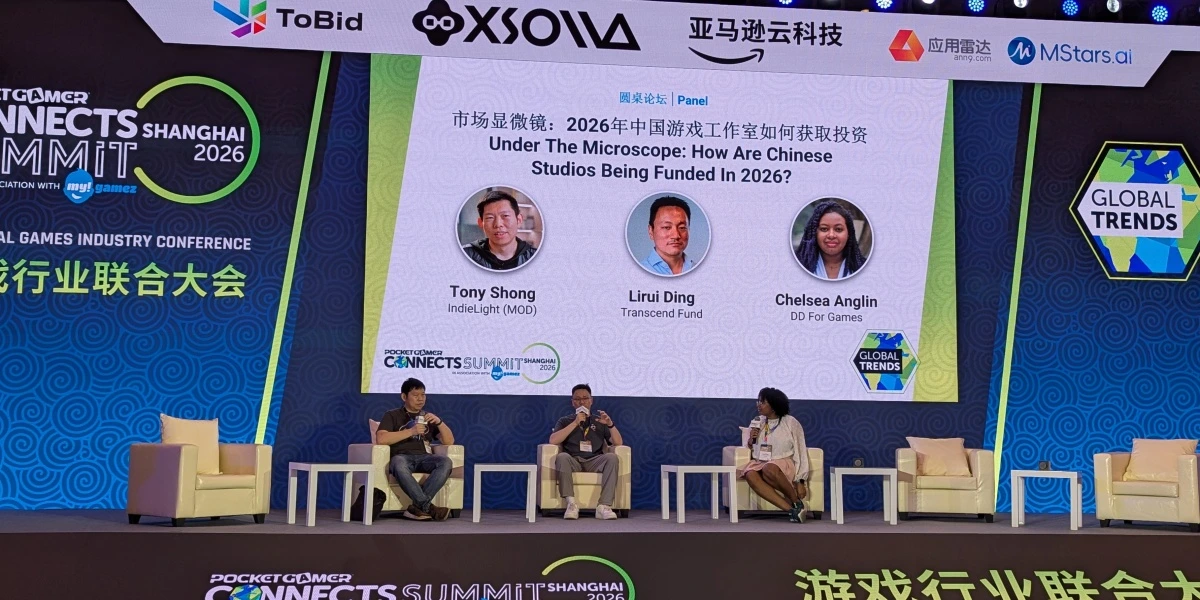
Ding added he has noticed more people attending from overseas to events like Pocket Gamer Connects Summit Shanghai. He called it a positive sign that people are actively looking at the Chinese market from a game development perspective.
“Investors who left video games are now coming back.”
Secondly, Ding said the enormous sales for Black Myth: Wukong has made companies realise that there is a “huge supply market” in China. Studios are now thinking how they can publish in the country and what’s the best way to do it, he added.
Shong echoed these sentiments, stating that he had noticed more international visitors coming to ChinaJoy since Black Myth: Wukong’s release.
5. ChinaJoy is a key international gaming event
As mentioned earlier, ChinaJoy is an enormous event. It had around 81,900 more attendees than Gamescom 2025 - though expect Germany’s premiere games show to close that gap this year after selling out expo space.
It’s perhaps not quite as international just yet - but make no mistake, there were still plenty of global companies with major booths on the show floor, while there were plenty of visitors from other countries in attendance, too. And when events hit a certain scale for B2B, they often spawn multiple side-shows and networking events too - which ChinaJoy was in no shortage of.
China is still a challenging market to enter. But increasingly, it feels as though the country is opening itself up more to the world, while its top games companies are seeking to break out of China and use their scale and competitive edge to take on global competitors internationally.
As the ‘go global’ story continues for China, expect next year’s show to be even bigger.
And we’ll be right there, with PGC Summit Shanghai set to return in 2027. In the meantime, you can check out our upcoming events, such as PGC Nordics on October 20th to 21st, right here.
Events

