Inside June's Journey's leap from mobile game to bestselling novel with Death Wasn't Invited


- Dennis Korf discusses expanding game worlds beyond mobile while ensuring Death Wasn't Invited remained accessible to both existing players and new readers.
- Carlene O'Connor shares how she collaborated with Wooga's writers to stay authentic to June Parker while bringing her own voice to the novel.
- Both reflect on how books represent a natural next step for narrative-driven games and the wider opportunity for transmedia storytelling.
In recent years, we have seen a huge influx of games appearing in other media, be it a new film, TV show, book or comic.
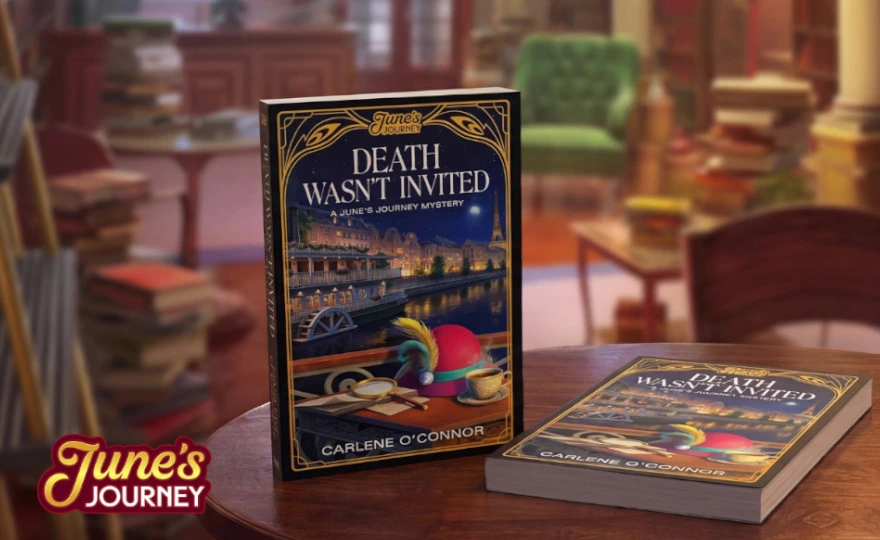
One recent addition to that lineup comes from Wooga’s June’s Journey. The Berlin-based studio has partnered with author Carlene O'Connor and Titan Books to publish Death Wasn’t Invited: A June's Journey Mystery, an original whodunit set in the world of the long-running hidden-object mobile game.
Released earlier this year, the novel has already become a USA Today bestseller, offering fans another way to experience June Parker’s world while also introducing the character to readers who may be unfamiliar with the game.
Rather than adapting an existing storyline, Death Wasn’t Invited tells a new mystery set against the backdrop of 1920s Paris, where an engagement celebration among the city’s elite descends into murder, sending June Parker on another investigation.
To learn more about how the project came together, PocketGamer.biz spoke with Wooga managing director Dennis Korf and author Carlene O’Connor about expanding a game universe into publishing, collaborating across the two creative industries and writing for millions of fans.
Expanding the world of June’s Journey
For Wooga, taking June’s Journey into publishing was less about creating a spin-off and more about expanding the world that players had already spent years exploring. Korf says the game’s emphasis on narrative made books a natural next step.
"June's Journey has always been a narrative-first game. The story, the characters, the atmosphere of the roaring twenties is what players come back to," he says.
“The novel is also an opportunity to introduce June to a new audience, in a medium that is more familiar and enjoyable for them.”Dennis Korf
He goes on to explain that over the years, the game has built a community of millions of players and wanted to explore a way for the them to experience June's Journey in an entirely new way.
The studio saw publishing as a way of reaching readers who enjoy historical mysteries, regardless of whether they had played the game.
“Novel readers and mystery game players share an audience, those who love a well-crafted story, are drawn to atmosphere and character and want to spend more time in worlds they care about," Korf explains.
“Yet, the novel is also an opportunity to introduce June to a new audience, in a medium that is more familiar and enjoyable for them.”

One of the most critical aspects of getting this new journey beyond the game right was in finding the right author.
Korf says that Wooga was looking for someone who instinctively understood historical crime fiction and character-driven mysteries. O’Connor’s work on The Irish Village Mysteries made her the team's first choice.
“Carlene already wrote exactly the kind of cosy, character-driven mystery that June’s Journey players love,” he says.
“The storyline, writing and characters of the game, not to mention the world that had been created, drew me right in.”Carlene O’Connor
O’Connor tells us that she wasn’t originally familiar with June’s Journey before being approached by Wooga, but after researching and spending months playing it, she understood why it had developed such a dedicated following.
“I received an email from a member of the Wooga team, pitching the idea and inquiring whether this might be a project of interest to me. I first had to research the game and the company before responding,” she says.
“Once I did that, and the idea and the game intrigued me, there were many more discussions to follow as we both explored whether or not I was a good fit. The storyline, writing and characters of the game, not to mention the world that had been created, drew me right in.”
She adds that the depth of the existing world surprised her, particularly the amount of character development and storytelling already present within the game.
A collaborative process
Although O’Connor ultimately wrote the novel, both she and Wooga describe the project as a genuine collaboration from beginning to end.
“I knew from the beginning that this would be a collaborative effort with the head writer and senior writer of the game.”Carlene O’Connor
Knowing the book would be read by an audience already invested and familiar with June Parker meant that authenticity to the character became a priority from the earliest conversations.
“I knew from the beginning that this would be a collaborative effort with the head writer and senior writer of the game and that we were all committed to staying true to the world and characters that the fans had so fully embraced,” O'Connor says.
Together, the team developed a detailed outline before O’Connor began writing, with regular brainstorming sessions helping to shape the mystery. She says it was very hands-on, with many video calls to outline the story and edit.
"I enjoyed working with the writing team and their passion for June's Journey inspired me to do the best I could for them and the fans."
Korf says Wooga’s writers remained closely involved throughout the early stages because of their deep experience of the game’s lore, tone and character dynamics.
However, once the foundations had been established and an outline was in place, Wooga’s writers took a step back.
“A novelist needs room to breathe, you can't micromanage a story into existence,” Korf explains. “It was a case of close involvement at the structural and character level, and then trust once the groundwork was laid.”
“A novelist needs room to breathe, you can't micromanage a story into existence.”Dennis Korf
While O’Connor was ultimately given the freedom to tell the story, she says the experience differed significantly from writing her own mystery novels.
Unlike her own series, where she creates every character and location from scratch, Death Wasn’t Invited meant stepping into an already established world and working closely with Wooga’s writing team to ensure everything remained authentic.
“The approach was a team one, as opposed to my solo writing with my other series,” she says.
Writing for an existing audience
Unlike creating an original series from scratch, writing inside an established game universe meant balancing O’Connor’s own creative voice with characters that millions of players already knew.
“When the characters are so rich and established, I only needed to tap into a vein which allowed me to feel June's voice.”Carlene O’Connor
She says that proved to be one of the biggest creative challenges throughout the project.
“But when the characters are so rich and established, I only needed to tap into a vein which allowed me to feel June's voice and thus find moments for it to deepen or find surprising thoughts, or revealing actions that can add to creative enjoyment as a writer.”
Knowing how connected the fans of the game already were to June Parker also remained front of mind throughout the development process.

“I did not want to disappoint them or the fabulous people involved in making June's Journey the success that it is."
Wooga was equally conscious that the novel needed to satisfy existing players without alienating readers discovering the character of June for the first time.
Korf explains that it was important to treat the relationship between the book and the game’s own narrative carefully, that the novel needed its “own lane”, and that it was also vital to carefully address exactly who they were writing for.
“That's a genuine balancing act: too much assumed knowledge and you lose new readers; too little and you're not giving the existing community anything beyond what they already have.”Dennis Korf
"Our existing players know this world intimately, but the book also had to work completely on its own terms for someone who has never touched the game," he says.
"That's a genuine balancing act: too much assumed knowledge and you lose new readers; too little and you're not giving the existing community anything beyond what they already have."
Getting that balance right, he adds, is ultimately what made expanding the universe worthwhile.
“It is overcoming these details that makes expanding June's world, rather than just repackaging it, so worthwhile, and Carlene got it spot on.”
What’s next
As more games branch out into other areas of entertainment, Korf believes that publishing represents an increasingly natural way for studios to grow beyond games. Rather than seeing books as an isolated experiment, he views them as part of a broader transmedia opportunity.
"Building a game that is successful and big enough to become a brand marks a true win," he says. "Once you achieve that, it becomes interesting to also evaluate how this brand can be expanded to new audiences and communities via transmedia."
“It confirms to me that stories thrive on fantastic characters and the love writers end up feeling for them.”Carlene O'Connor
For O’Connor, the project also reinforced what novels can uniquely offer alongside video games.
"I think novels uniquely offer the ability to go deep into a character's mind, embody them, and hopefully for the duration of the story, allow the readers the chance to experience life through their unique perspectives."
Looking back following the book’s successful launch, she says she is most pleased to have given June’s Journey fans another way to spend time with characters they already love.
“It confirms to me that stories thrive on fantastic characters and the love writers end up feeling for them. If you are able to tap into that, chances are the readers will be swept up in the stories you want to tell.”
Learn more about transmedia opportunites at our Pocket Gamer Connects conferences around the world, including PGC Nordics in Helsinki on October 20th to 21st.
Image credit: Wooga / Carlene O'Connor.
Companies

People
