Melon Sandbox: 150m installs and UGC evolution

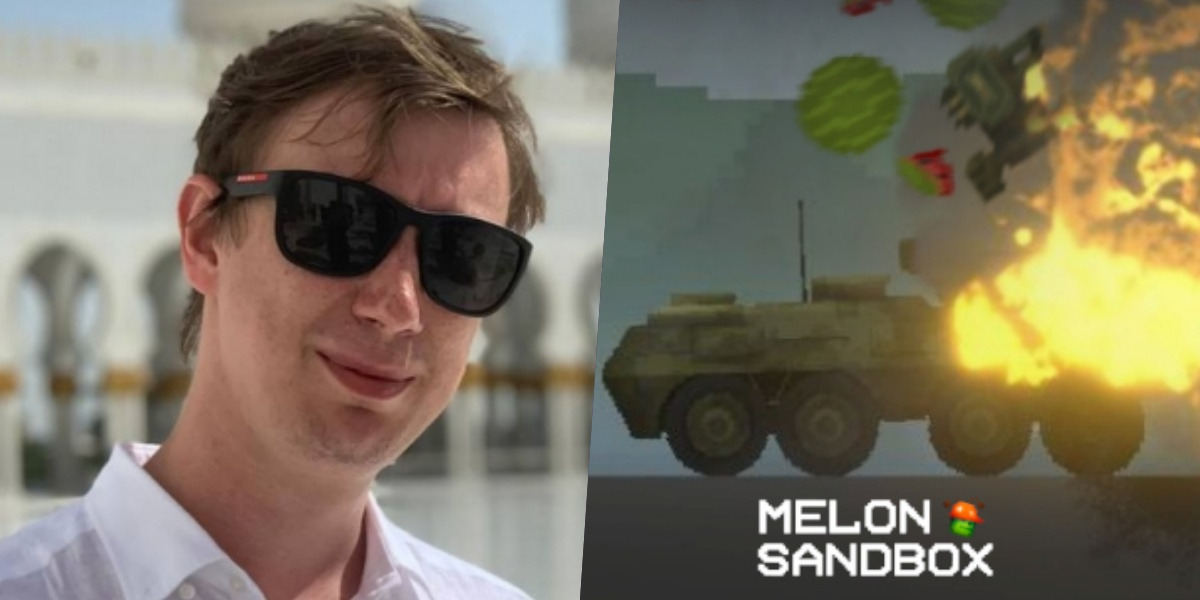
- Ragdoll physics title Melon Sandbox was published by PlayDucky, and has surpassed 150m installs since launch.
- PlayDucky founder Ivan Fedyanin explains how Melon Sandbox "sits somewhere between a sandbox game and a creator ecosystem".
- The platform has many young users, so increasing online regulations can affect marketing, product design, communication features and more.
- Between 5,000 and 6,000 UGC submissions are made daily, which need careful moderation to decide which are suitable.
Since launching towards the end of the pandemic, ragdoll physics game Melon Sandbox has reached over 150 million downloads across iOS, Android and PC. It has an average session time of 40 minutes and reached 19m monthly active users this March.
AppMagic estimates suggest the game has made $16.9m in mobile player spending to date, but total earnings are likely far higher considering its web shop and ad revenue.
After all, this is a game with multiple revenue streams: monetising its users through ads, the ad-aversed through a subscription model and willing spenders with in-game currency purchases. Among paying players, roughly half stick with Melon Sandbox for over a year.
With all this in mind, we speak with publisher PlayDucky’s founder Ivan Fedyanin to learn more about the game, how it’s grown through a broad but data-driven strategy, and its evolution beyond a game into a popular UGC platform.
Fedyanin shares that Melon Sandbox contains around 90,000 UGC creations so far, made by approximately 35,000 creators. Those creators earned more than $1m combined via Melon Sandbox in 2025.
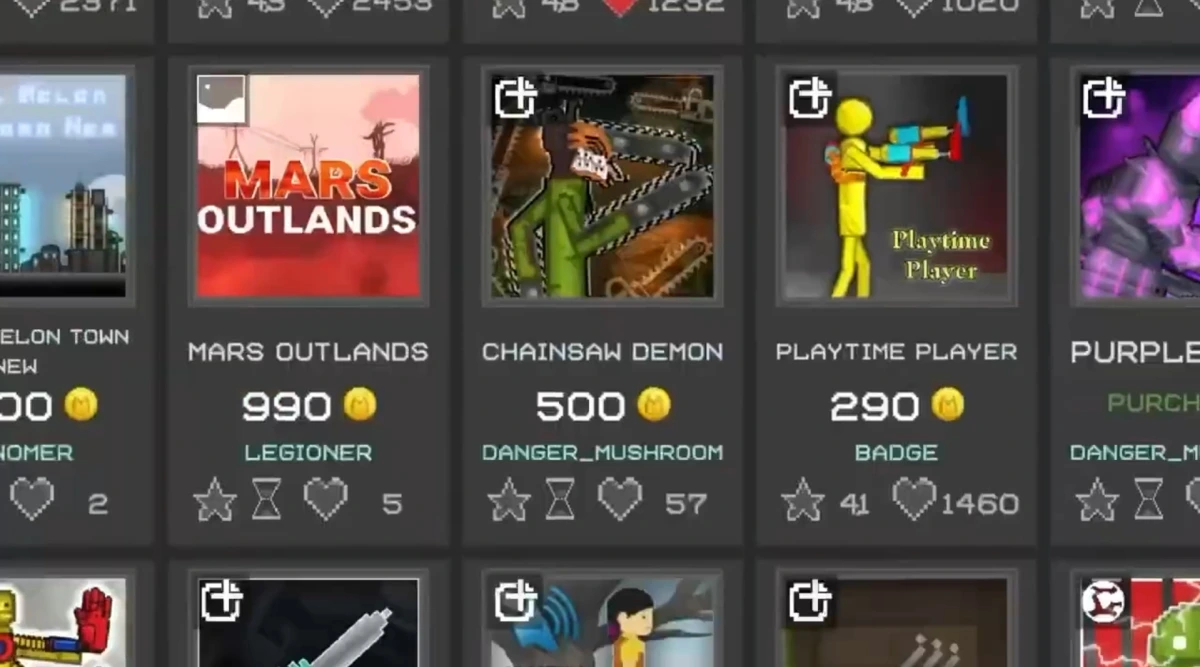
In the first three months of 2026, creator payouts already came close to half that total 2025 sum. The game is seeing peaks of over 70,000 purchases in a day.
"Those numbers matter because they show that downloads are not empty traffic: they are connected to a functioning and quickly growing content economy. Monetisation can be improved over time. A living ecosystem is much harder to fake," claims Fedyanin.
Inside the sandbox
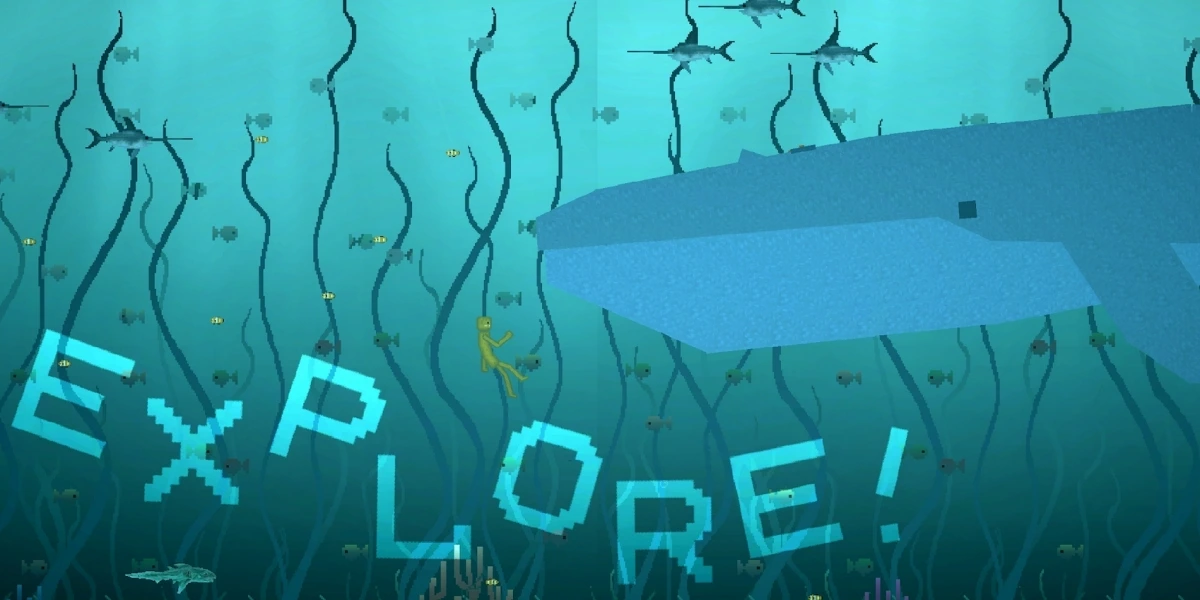
As its name implies, Melon Sandbox is a sandbox game. With its ragdoll physics, players can launch, crush, drop and smash objects, including characters who can otherwise be seen flying planes, swimming undersea and petting dinosaurs. Character designs are varied - one better equipped for snow, one for space travel, another tall enough to tower over cities.

The mobile title allows players to experiment and create their own scenes, originally just for fun. Over time, players pushed the limits of Melon Sandbox’s tools and the game began its transformation into a creation platform.
"Today, Melon sits somewhere between a sandbox game and a creator ecosystem," says Fedyanin.
He suggests Melon Sandbox is standing out in a saturated market by moving away from hypercasual and hybridcasual while still respecting the "discipline of casual publishing".
“For a creator-led product, a large audience is not just a vanity metric.”Ivan Fedyanin
But, despite clearly standing out to players, Fedyanin believes the games industry no longer celebrates install milestones as it once did. Today, the focus is on revenue, which he calls a "healthier" change but not the full picture.
"The industry has gone through a full cycle here. Five years ago, everyone was showing install numbers and celebrating how many users they could move through a portfolio of games. Then the market learned that this model was often better for ad networks than for publishers: millions of installs did not automatically translate into durable profit," Fedyanin explains.
"For a creator-led product, a large audience is not just a vanity metric. It covers distribution for creators, liquidity for the content marketplace and fuel for organic growth."
Reaching and retaining a range of users
As a creator-led product, Melon Sandbox is currently focused on community growth. Long-term, the goal is to expand its tools available to creators without compromising the simplicity of making new content.
“Today, Melon sits somewhere between a sandbox game and a creator ecosystem.”Ivan Fedyanin
"You do not need to understand game design, programming or platform economics to enjoy it. You can open the game, place objects, break things, create a scene and get a result quickly. That simple loop creates a lot of organic sharing and word-of-mouth marketing," Fedyanin believes.
"What makes it interesting is that it did not start as a platform in the abstract. It started as a playful, focused experience. People enjoyed creating situations inside the sandbox, then they started pushing the tools further: skins, constructions, custom maps, complex scenes and eventually, playable experiences."

Currently, between 5,000 and 6,000 submissions are made daily by creators in Melon Sandbox and hundreds of those go on to be published after moderation, providing plenty of UGC to keep the game fresh and players returning.
“For companies building products with young audiences, regulation is not a side topic anymore.”Ivan Fedyanin
Fedyanin says that UA efforts are "very data-driven" with every test needing a hypothesis, a result and something learned. Since Melon Sandbox isn’t a traditional hypercasual or hybridcasual game and has this UGC element, several UA strategies are deployed to target different kinds of users.
Once a process is well understood, PlayDucky is able to shift to automated UA work - a constant and repetitive process. Meanwhile, human judgement is kept to where signals remain ambiguous.
"Some campaigns are optimised for long-term payback, some for conversion into creators or mod-makers, and some for paying users. These are different audiences, so in practice, we do not have one UA strategy; we have several," explains Fedyanin.

In some cases, PlayDucky looks far beyond results from the first month - as far as day 180 or even day 270 - to determine whether a strategy ultimately pays off. Fedyanin notes: "That matters for Melon because the long tail is real."
We ask about Melon Sandbox’s retention of users after they’ve been acquired, and learn that retention stops falling "sharply" after six months. Fedyanin suggests this results in a stable audience, with players who return every month for new content, events, marketplace updates and more.
Meanwhile, retention among paying users stands at around 50% after a year.
"Melon has a different retention profile from many mobile games. It has a meaningful long-term audience, especially among players who become invested in the content ecosystem. One thing we see is that players who pay or create tend to behave very differently from a one-session user."
Regulation, regulation
Despite this success, Melon Sandbox still has lower session length, retention and monetisation metrics than the biggest competition in the UGC scene. Fedyanin acknowledges this, and attributes it in part to bigger games’ online play functionality. Multiplayer is currently in development for Melon Sandbox but must be delivered "properly" and with care.
"That means thinking not only about the player experience, but also about the economic model, because online infrastructure can become extremely expensive at scale. It also means building with stricter user-protection regulations in mind from the start," says Fedyanin.
"For companies building products with young audiences, regulation is not a side topic anymore. It affects product design, communication features, moderation, data practices and marketing."
Naturally, this includes Melon Sandbox. The platform aims to reach young users, but if regulation bans those users from social media - as seen in Australia - that can have a significant impact on marketing. Fedyanin thinks Australia's social media crackdown is indicative of the broader direction of travel for regulation.
“Melon has a different retention profile from many mobile games.”Ivan Fedyanin
This would mean marketing strategies dependent on social platforms or younger demographics would suffer. And for platforms themselves - Melon Sandbox included - regulation means taking more responsibility for age assurance and the well-being of young users.
"The strategic question becomes less ‘What is the next mechanic?’ and more ‘How do we help this ecosystem evolve safely?’," Fedyanin adds.
Avoiding collecting or exposing more information than a game actually needs is a start, as is building privacy into defaults - not hiding the option away in a game or platform’s settings. And when it comes to child safety, Fedyanin says caution around communication features is especially important.
In practice, for Melon Sandbox this means the thousands of daily UGC submissions need careful moderation to decide which are suitable for the public. Naturally, it complicates multiplayer ambitions too: players are apparently asking for voice chat, but Fedyanin says it "cannot simply be switched on".
In conclusion, regulation can change the very way in which platforms must think: "It forces companies to think beyond growth metrics and ask whether the product is safe to scale."
Companies
