The future of Xbox: What chasing one billion players means for the console giant


- Xbox is laying off 3,200 staff and divesting five studios as part of a massive restructure.
- CEO Asha Sharma has set an ambitious goal of "entertaining more than a billion people each day".
- The vision sets out Xbox's North Star for the next few years - but to come even close to achieving that means embracing other platforms.
The inevitable and long-awaited Xbox layoffs arrived this week. The gaming giant is cutting 3,200 staff over the next year, with 1,600 of those already out the door.
That comes after other substantial cuts over the past few years. Last year Microsoft laid off around 9,100 employees, a move that heavily impacted its games business.
In this week’s round of job losses, it should be pointed out that senior staff have also been retiring voluntarily - so the losses run deep.
The truth behind the statements
Even more so, five studios are being divested. Compulsion Games and Double Fine Productions have had management buyouts. Ninja Theory and Undead Labs are being sold to unnamed buyers. Arkane’s management in France has begun consultations on its future.
That loss in staff, too, has not been accounted for. Nor is the planned 50% reduction in vendor spend. So the loss at Xbox is indeed far higher.
New Xbox CEO Asha Sharma said “our business today is not healthy”. She claimed it’s operating at margins that are three to 10x lower than comparable platform and publishing businesses. After a substantial spending spree over the years, in a typical year Xbox is said to have “lost 64 cents for every dollar we invested”.
“We have also learned that we are not the best home for every type of studio,” said Sharma, a damning indictment on the Phil Spencer spending spree that powered the Game Pass push. The Wall Street Journal reported that the subscription service had 30 million subscribers, far below a target of 77m by June 2026.
One statement said that none of the publicly announced first-party games or projects are being cancelled as part of these reductions. That’s despite the divestiture of first-party studios working on new titles, such as Ninja Theory’s Senua, revealed during the Xbox Games Showcase last month. Xbox will have no control over the future of these studios or their games.
A new Xbox
After months of attempts at easy PR wins to get fans onside - now left in tatters - Xbox’s goal is starting to become clearer, even if leadership is still figuring that out itself.
Amid the damning analysis of the Xbox business, Sharma highlighted the success of Minecraft developer Mojang and Candy Crush Saga developer King - which are still said to be impacted by the sweeping layoffs. She said the two companies have “increasingly become platforms and are our largest by monthly active players” and also “bring critical geographic, demographic, and differentiation to Xbox”.
King and Mojang will now report directly to Sharma. Meanwhile, a new COO has been appointed at Xbox - former corporate VP of the Minecraft franchise Helen Chiang.
Their importance to Xbox’s future becomes even clearer with the ambitious goal of “entertaining more than a billion people each day”. One article called the ambition “borderline delusional” and compared the figure to 24 Steams all at the PC marketplace’s all-time highs.
To come close to that figure, Xbox will indeed need Minecraft and King’s mobile portfolio. Its numbers, on a monthly basis at least, might be higher than you think.
In 2024, Microsoft CEO Satya Nadella said its games division had 500m monthly active users across all platforms. During the firm’s recent Q3 2026 earnings call, Nadella claimed the company had “set new records for monthly Xbox active users in the quarter, as well as game streaming hours”. Exact figures were not disclosed.
King’s mobile games are played by more than 200m MAUs, per the company’s website. Meanwhile, back in Q2 2023, Activision Blizzard reported 356m MAUs. Of these, 238m were attributed to King, 26m to Blizzard and 92m to Activision.
Minecraft has reportedly sold 350m copies. In 2021 it was claimed to have over 140m MAUs. New estimates put this higher.
The one billion figure may be sensational, but it plots a North Star for the business and how it will operate in the coming years. Heracles Media analyst Eric Seufert said if Xbox truly aspires to reach one billion DAUs, “it must embrace cross-platform, but particularly mobile, distribution, monetised through the freemium model”.
“Thus, I view the elevation of Mojang and King as a wholesale reorientation of Xbox around several design principles: live services, cross-platform distribution, creator-centric game design, and the freemium economy.
“And while the memo does not announce an advertising strategy, the themes that Xbox is being reconstructed around suggest digital advertising as the most obvious economic mechanism available to the company in executing its articulated vision.”
Perhaps it’s worth noting that in Microsoft’s Q3 2026 financials, it stated that monthly active Windows devices surpassed 1.6bn, Bing MAUs hit 1bn for the first time and LinkedIn has 1.3bn members.
Maybe the question is being asked internally, following billions of dollars in investment, and however unreasonable it may be, why isn’t Xbox delivering the same results?
Not a single platform
For reference on the feasibility of this ambition, here are some stats for other platforms and some of the world’s top live games.
- Nintendo has 129m annual playing users as of March 2026 - the number has been largely flat over three years.
- PlayStation has 125m MAUs as of March 31st, 2026
- Steam has surpassed a peak of 41m daily active users in 2026.
- WeChat Mini-Games recorded an industry-wide MAU of 571m.
- Roblox has 132m DAUs on average as of March 31st, 2026.
- Zynga claims to have more than 183m MAUs, according to its website.
- Honor of Kings surpassed 260m MAUs in 2025 and 139m DAUs.
- Supercell has around 300m monthly players.
- PUBG Mobile had 90m DAUs as Q1 2026.
- Garena (developer of Free Fire) reported 666.5m quarterly active users in Q1 2026.
- Hungry Studio's Block Blast reached 70 million daily active users and 300m monthly active users worldwide in January.
While there are PC and console games with substantial playerbases - such as League of Legends - to get even close to one billion users daily, mobile will inevitably have to factor in in some form, as will free-to-play and live service.

While King looks to be a key part of Xbox’s future right now with hundreds of millions of players, Microsoft may have a challenge in finding audience growth from the mobile giant.
Candy Crush Saga is an enormous success as one of the most lucrative and long-lasting games of all time. But to date King has never been able to break out of casual with a hit game, while the Candy Crush series has largely seen diminishing returns with each new entry.
If anyone at Microsoft thinks King will adapt Xbox IP to mobile, it is highly unlikely. The greatest lie publishing giants tell themselves when acquiring mobile studios is that they can bring their treasured franchises to smartphones. This rarely, if ever, materialises.
So Xbox may have to look at more M&A in a mature mobile space where it’s tougher than ever - not impossible - to scale a hit new game. And this is after many top studios have been snapped up, too.
Alternatively, as Activision and Blizzard have done in the past, Xbox may look to partner with companies like Tencent and NetEase, as was seen with Call of Duty: Mobile and Diablo Immortal, to leverage its IP. That will come at a significant cost and partnerships don't always work out (see EA's mobile forays with Apex Legends and Battlefield).
Xbox may also revive its plans for a mobile app store as regulations ease around the world on that possibility. But even giants like Huawei, Samsung and Amazon has struggled to muscle in on the Western duopoly of the App Store and Google Play in the past. This, too, would be an expensive and time-consuming endeavour, despite new regulations. Breaking consumer habits and convenience is a tall order.
The Minecraft mission
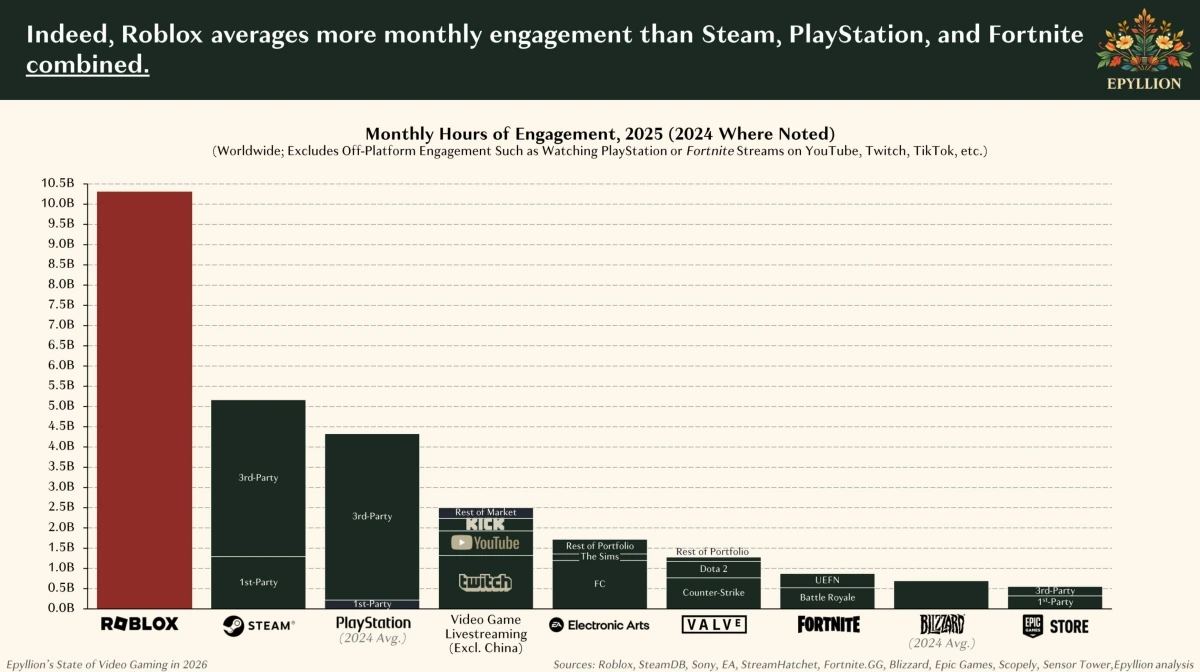
How Xbox leverages Minecraft as a potential growth lever is a curious one. Comparisons to Roblox are inevitable, but there are key differences.
Both are part of the UGC boom, but Roblox is built as a platform first. Its entire focus is building an engine and ecosystem that lets content creators build experiences and potentially generate returns. Minecraft has been built as a game first, within which players are given creative freedom.
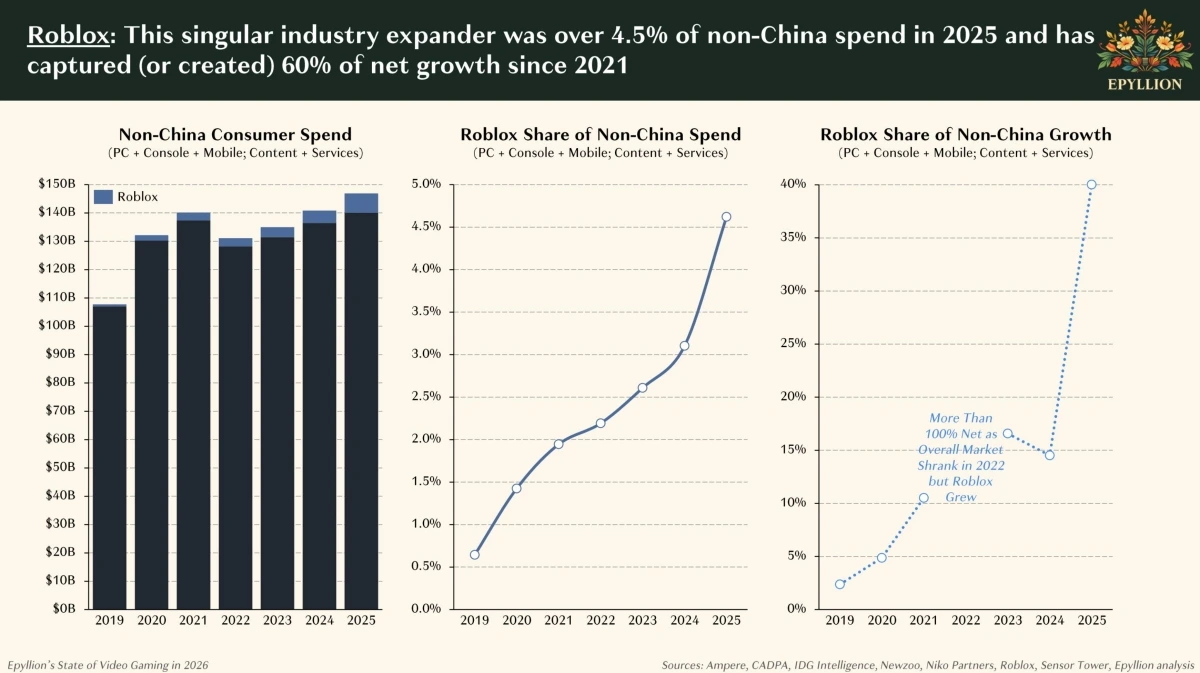
Last year Roblox CEO David Baszucki set a goal that he wants 10% of all gaming content revenue to flow through the Roblox ecosystem. Xbox’s new chief strategy officer Matthew Ball, in his 2026 State of Video Gaming report, said that Roblox has captured (or created) 60% of net growth since 2021 outside of China. Ball called it the “singular industry expander” and claimed Roblox took a 4.5% share of non-China spend across platforms, content and services.
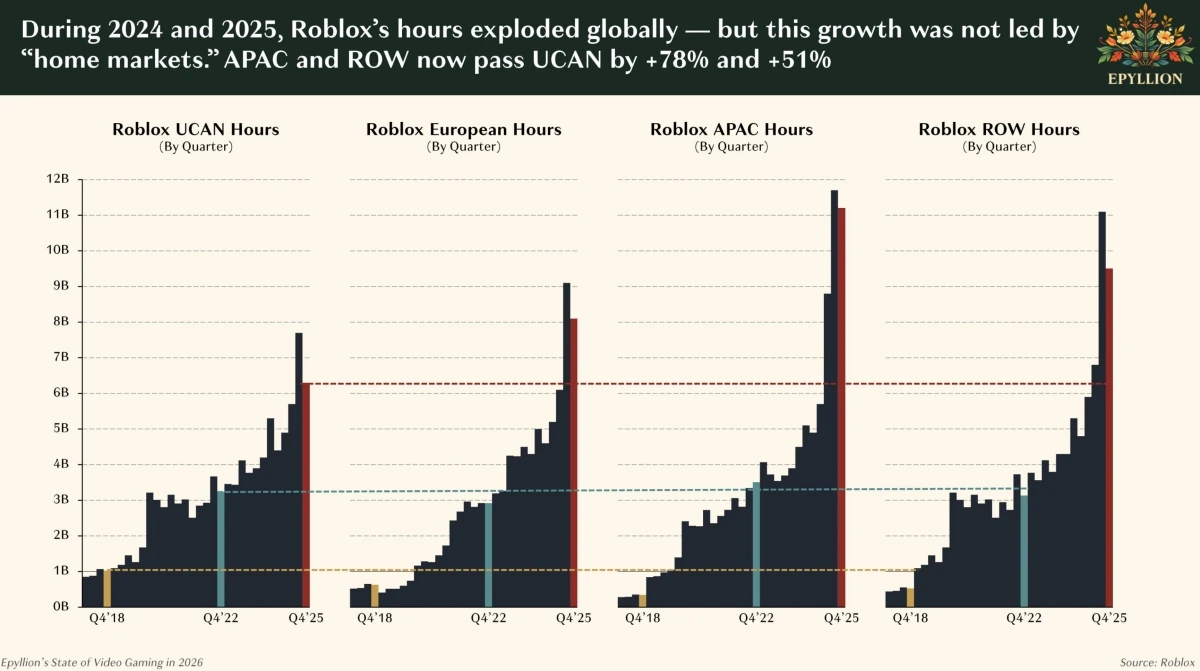
He also said that at the end of 2024, Roblox had more DAUs than PlayStation, Switch or Xbox, growing a further 69% a year later.
Former Mojang principal product manager lead Justin Johnson said implying Minecraft should become more like Roblox is a “fundamental misunderstanding of what Minecraft is as a brand, and indicative of a bigger problem”.
“Players come to Minecraft for the lore, personality, and nostalgia. Minecraft has been the safe space for children to be creative and play safely. Minecraft is the game parents who are careful about screentime allow because it earned that trust and delighted gamers from child to adult.
“It wasn't long ago that Roblox was in the news because of practices that exploited children and creators. And Roblox' brand personality is closer to Unity or Unreal than Minecraft - it's a game engine/platform. This isn't what players want Minecraft to be, it's what investors want Minecraft to be.”
He added: “Looking at an IP as a resource to strip mine is peak ‘Private Equity mentality’. This mentality led to Game Pass - whose goal was to monopolise gamer attention and extract margin from publishers/studios to fund a new middleman. The result decimated the Xbox brand and the broader industry (see also: Embracer Group). Game Pass didn't add [enough] value to the studio or gamer customer and even the investor ended up disappointed.”
People are playing the same games - and Xbox struggles to create new hits
In her memo, Sharma highlighted how Xbox has aggressively expanded its studio portfolio since 2018 - all while the number of games created each month across the industry “now outpaces the last 10 years combined”.
“We now find ourselves competing not only with the largest publishers, but also with smaller independent studios. It is neither possible nor desirable to own every great independent studio.”
Xbox has struggled to sustain some of its key franchises like Halo and Gears of War and release new hits - though its various studios have still launched some successful new titles.
But that hasn’t been enough, particularly combined with a devaluation of first-party titles from a Game Pass strategy that hasn’t scaled to sustain it.
FirstLook.gg content specialist Franz Rier noted that when Microsoft closed Press Play, two studios formed in its wake have found success: Flashbulb Games and Ghost Ship Games. The latter is behind the successful Deep Rock Galactic series that has sold 10m+ copies. The kind of IP Xbox would love to have. In fact, what is now a franchise is part of Game Pass.
It’s not unusual for employees to leave and form their own studios. But it does perhaps speak to the inability of some studios to find success within Xbox’s empire (not to mention changing strategies of the types of games Xbox leadership has wanted over the years).
As Sharma herself said: "We have also learned that we are not the best home for every type of studio."
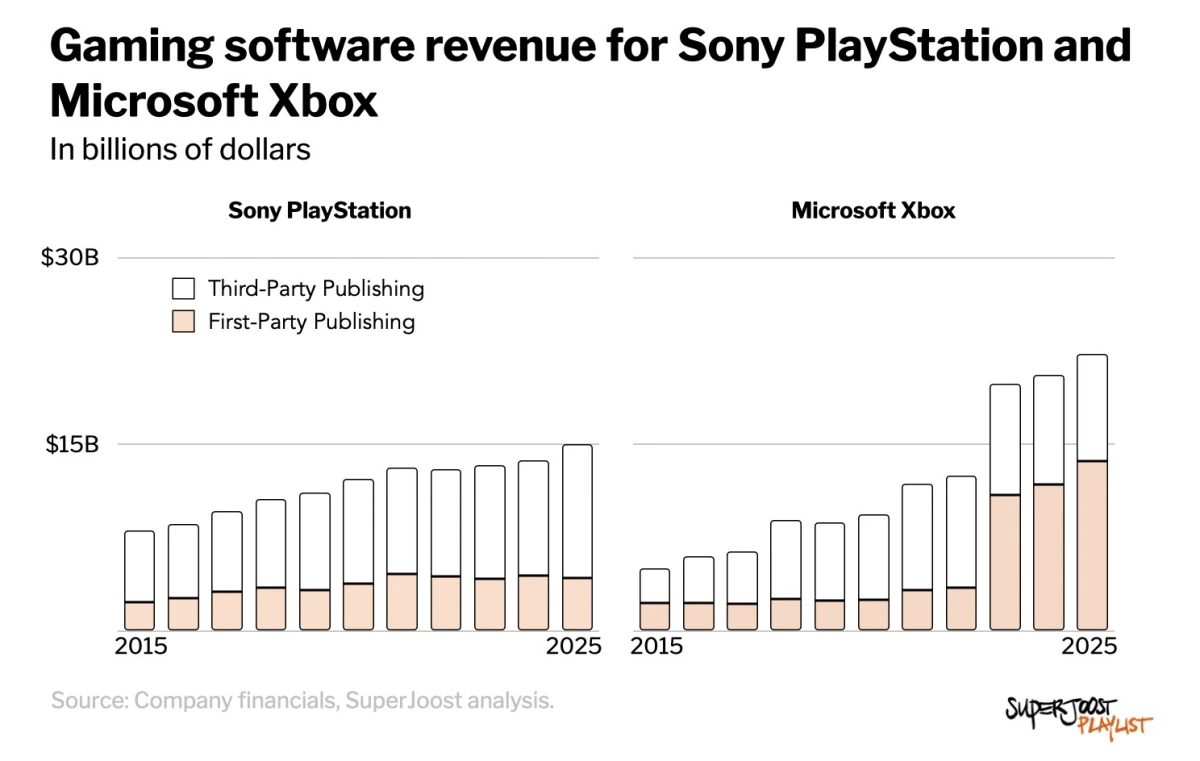
Writing about that vast array of first-party studios, Aldora CEO Joost van Dreunen, who also highlighted comments from former Xbox exec Laura Fryer, said: “The demonstrably stronger strategy is doubling down on your winners, which is the only road to breakout success. A balanced portfolio, in contrast, produces precisely the kind of underperforming releases we’ve seen from Xbox more recently.
“Expanding its first-party portfolio as dramatically as Xbox has compounded the problem. Its share of publishing revenue from owned titles jumped from 28% before the Activision Blizzard deal to 61% after.
“Its rival Sony has pushed in the opposite direction, relying on only 29% of its own IP and the rest on third-party content. Platform holders do this because it offloads risk to external developers, while still maintaining centralised control over their content rollout.”
Meanwhile, Sharma’s use of ‘platforms’ to describe Mojang and King offers another insight into the challenge the company faces when it comes to player habits and its addressable audience.
Citing Newzoo data, Ball stated in his report that the share of PlayStation and Xbox engagement hours are dominated by the top five franchises: Call of Duty, EA FC, Fortnite, Grand Theft Auto V and NBA 2K. Meanwhile, the share of PC engagement is dominated by Counter-Strike, Fortnite, League of Legends, Minecraft and Roblox. Then there’s the next top five games taking a key chunk, then everything else.
“The top PC/console franchises (each nine to 33 years old) hold a stable 45% of all player hours. And where share has been lost, it’s mostly to other five to 25 year-old hits.”
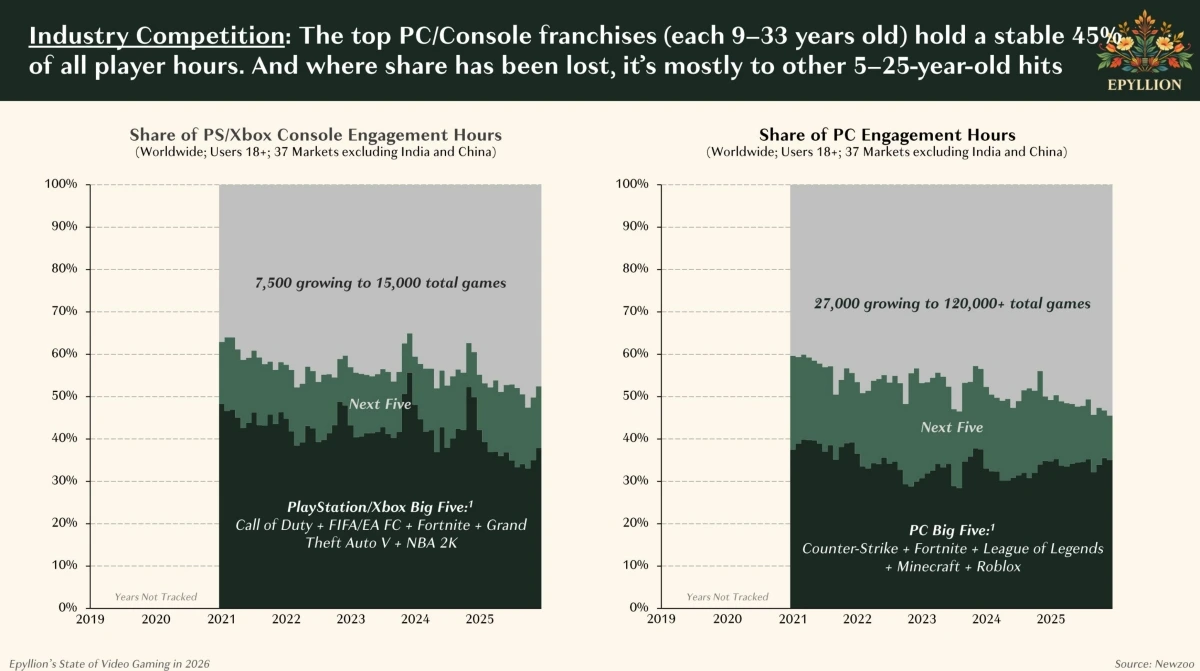
There’s a significant portion of players still playing the same small selection of games. That doesn’t mean new hits can’t be made or there isn’t a sizable market outside of these, but it’s a difficult challenge to cut through, depending on the size of success a studio is aiming for.
So what will happen next?
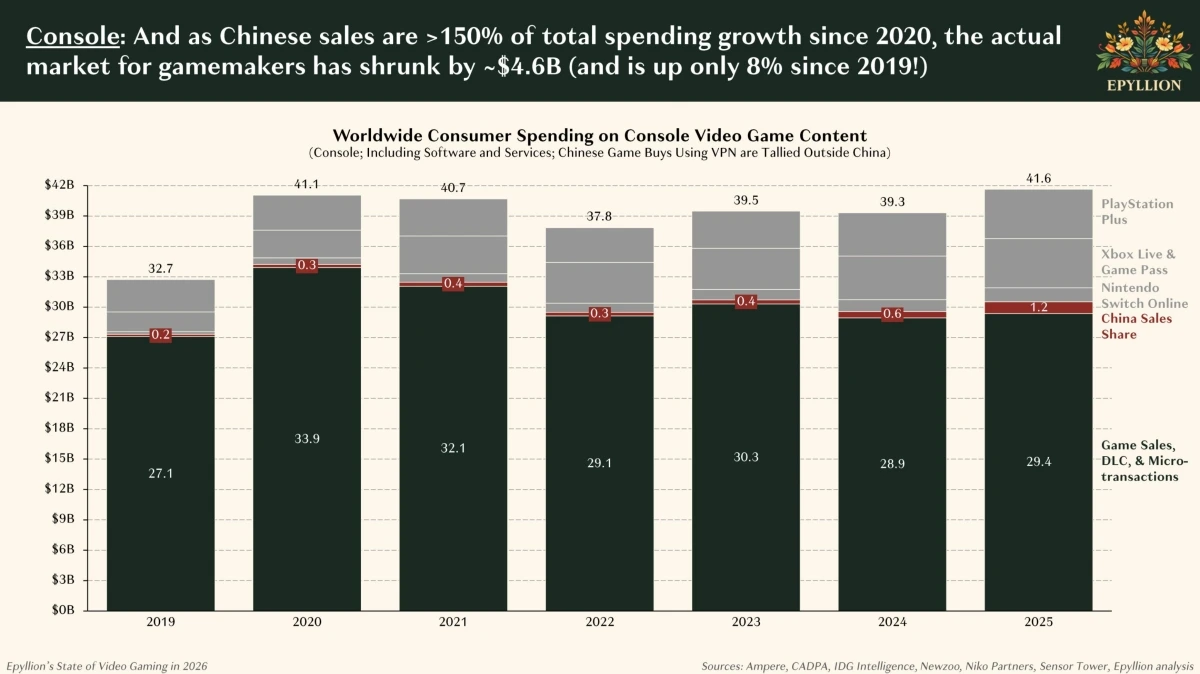
Xbox is clearly chasing a cross-platform future. Given the ceiling of the console business - Ball said console game content spending hit an all-time high of $41.6bn in 2025, the actual market for game makers is up by 8% since 2019 and down since 2020 - the ‘console-first’ PR company leadership has been pushing won’t get Xbox to that one billion engagement figure.
As an aside, it’s notable that this wasn’t explicitly called DAUs, which could suggest engagement with IPs outside of the games themselves.
The cost of new next-gen hardware will also present a challenge for consumers that can’t afford it. If Xbox follows PlayStation with a discless future, as our very own MENA reporter Isa Muhammad points out, emerging markets like Africa could be an even more difficult proposition, too.
“Around here you can’t even create a PSN account. 99% of PlayStation owners buy physical games.” The only supported country in the region is South Africa - the same goes for Xbox.
Cloud gaming, which has yet to catch on, will not fix this problem either, as the top triple-A games are still expensive.
So it leaves Xbox continuing to break out of the confines of its increasingly niche console hardware to rival platforms and mobile, focusing on growing a select number of key franchises for first-party studios (like Activision did) and embracing free-to-play and multiplayer / live service for scale to chase its North Star of “entertaining more than a billion people each day”.
That’s a very different Xbox from what consumers might expect.
Companies
