The secret ingredients behind the art of Candy Crush Saga

- Candy Crush has certain "straightforward" rules when it comes to artwork, but there's always room for experimentation and absurdity.
- Artists Silvia Toma and Emil Sellström discuss concept art, seasons and more.
With more than 14 years of history behind it, King's Candy Crush Saga has endured through significant industry changes like rising UA costs, mobile maturation, AI, Apple’s ATT and the battle between premium and free-to-play monetisation models.
Few mobile games survive beyond a decade, but Candy Crush remains an exception that continues to place among the top titles in the global revenue charts every year.
Over those many years of operation, Candy Crush has explored various fresh aesthetics with broadening themes from sweets to aliens, fruit dinosaurs like the Chewrannosaurus Rex and more. At the same time, there remain fundamental rules to keep Candy Crush looking like Candy Crush. Even at this scale, brand recognition matters.
To find out more about Candy Crush’s artistic rules, experimentation and its diverse range of seasons, we speak with lead game artist Silvia Toma and principal game artist Emil Sellström.
Both call the Candy Crush artstyle "charming" and Toma describes it as a mix of 2D and 3D art that aims to be timeless but not old-fashioned. She says the team affectionately refers to the aesthetic as "ugly-cute", with a whole style guide's worth of rules to follow.
“Papercraft is central to Candy Crush’s visual identity.”Silvia Toma
"The rules are pretty straightforward: make the 2D as flatly two-dimensional as possible and make the 3D look unreasonably tasty and edible," Toma shares.
"Papercraft is central to Candy Crush’s visual identity: the paper outlines, textures and halftones are instantly recognisable. While these elements could risk feeling dated on their own, we balance them with bright, modern colours, sharp vector graphics, delicious-looking 3D renders and snappy animation."
Classic ingredients, experimental wrappers
While certain visual elements and rules have been around for the long haul, it’s only natural that over 14 years the team creating the artwork for Candy Crush has changed. Even so, Sellström believes the artstyle has "a certain stubbornness" that endures and suggests that "everyone who’s been part of it leaves something behind".
"It almost has a will of its own," he says. "It is organic, and our role is to tend to it and guide it."
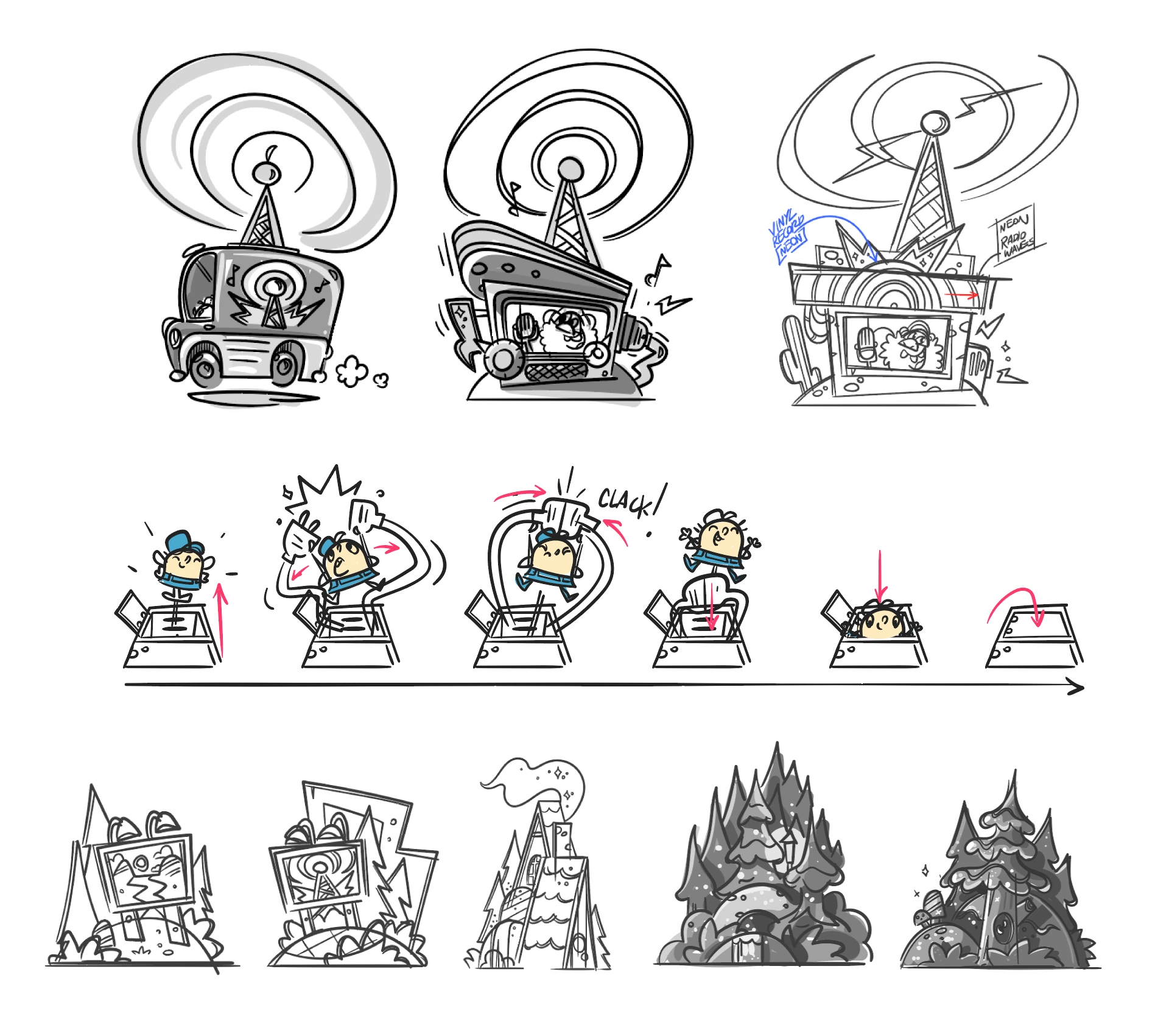
At the same time, there is always room for experimentation. Sellström argues that’s a big part of what’s kept the game running for so many years, but it’s also important not to deviate or experiment too far away from the look and feel of Candy Crush. Preserving the core visual identity is essential to ensure it is immediately recognisable.
"There is no shortage of absurdity when it comes to Candy Crush Saga art and narrative themes," adds Toma.
"For instance, when someone is working on artwork for a blocker and, after looking at the progress, we’re not all craving something to torpedo our calorie goals, we know it’s not quite right yet."
“There is no shortage of absurdity when it comes to Candy Crush Saga art and narrative themes.”Silvia Toma
She suggests that as long as core rules are met, the art itself can feature anything from aliens, sports and a bubblegum volcano to the long-running character Yeti appearing as a DJ. Apparently, the most important thing is that the artwork is fun and appealing to players.
"That should always be the number one consideration when greenlighting anything going into our game," states Toma. "That being said, beautiful, charming artwork will more often than not help seal the deal."
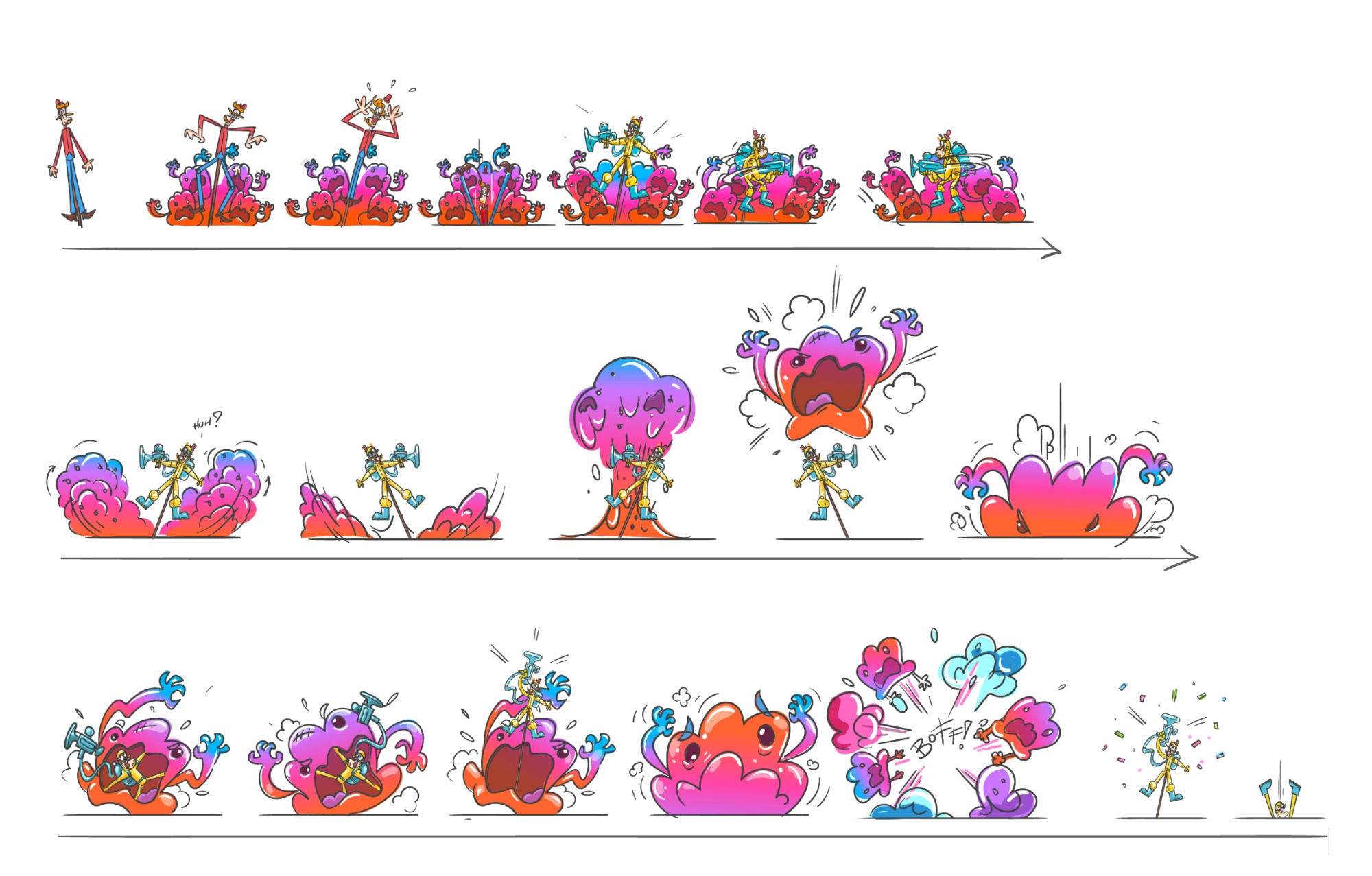
Equally, Sellström cautions against getting too carried away with concept art. It’s always helpful and makes ideas feel alive, but it’s important not to make something look more fun or more possible than can actually be achieved in-game.
Seasons, events and fresh ideas
Seasons form the backbone of new content in Candy Crush, with Music Season 2026 currently in progress. As part of the campaign, a music video has released with a remix of Shania Twain’s You’re Still the One. Meanwhile, the in-game event is centred on Yeti’s attempts to get Candy Town’s long-neglected radio station up and running.
Aiming to bring sound into the spotlight, the team designed this Music Season so that as players clear levels, they can help power up the radio station and collect and create personalised music tracks.
Candy Crush’s marketing team previously told us how seasons are designed to retain active players but do consider lapsed users and attracting newcomers, too.
Sellström adds: "It is easy to think of the visuals alone as the game’s aesthetic, but I would say music is a big part of it all too. Without the music and sound, you are missing half of the Candy Crush experience. Together, they create its atmosphere."

On the art side specifically, seasons must fit within the broader style guidance, while some also have "stricter requirements" unique to them. When a season has a strong identity of its own, there may be a specific colour palette, narrative or tone the artists must work within. Music Season and the annual esports event All Stars are named as examples with these specific requirements.
"Visually, Music Season is intentionally striking. As a recurring season, we want it to be instantly recognisable to players, so when September rolls around, all of Candy Crush becomes saturated with the season’s signature colour palette," Toma explains.
“We collect and incorporate feedback from stakeholders as we concept, with the aim of arriving at a comprehensive illustration we call the ‘seasonal key art’.”Silvia Toma
The game’s artists themselves are generalists, meaning everyone is involved in 2D, 3D, animations and more, rather than King compartmentalising each artist to a single role. At the same time, the company identifies areas each person is especially good at and aims to assign tasks accordingly.
Sellström calls this "a winning combination", adding that artists enjoying working on the tasks they’re best at also leads to the strongest possible results. Working as a centralised art team also makes it easier to ensure cohesion of style, meanwhile improvements and evolutions can happen holistically.
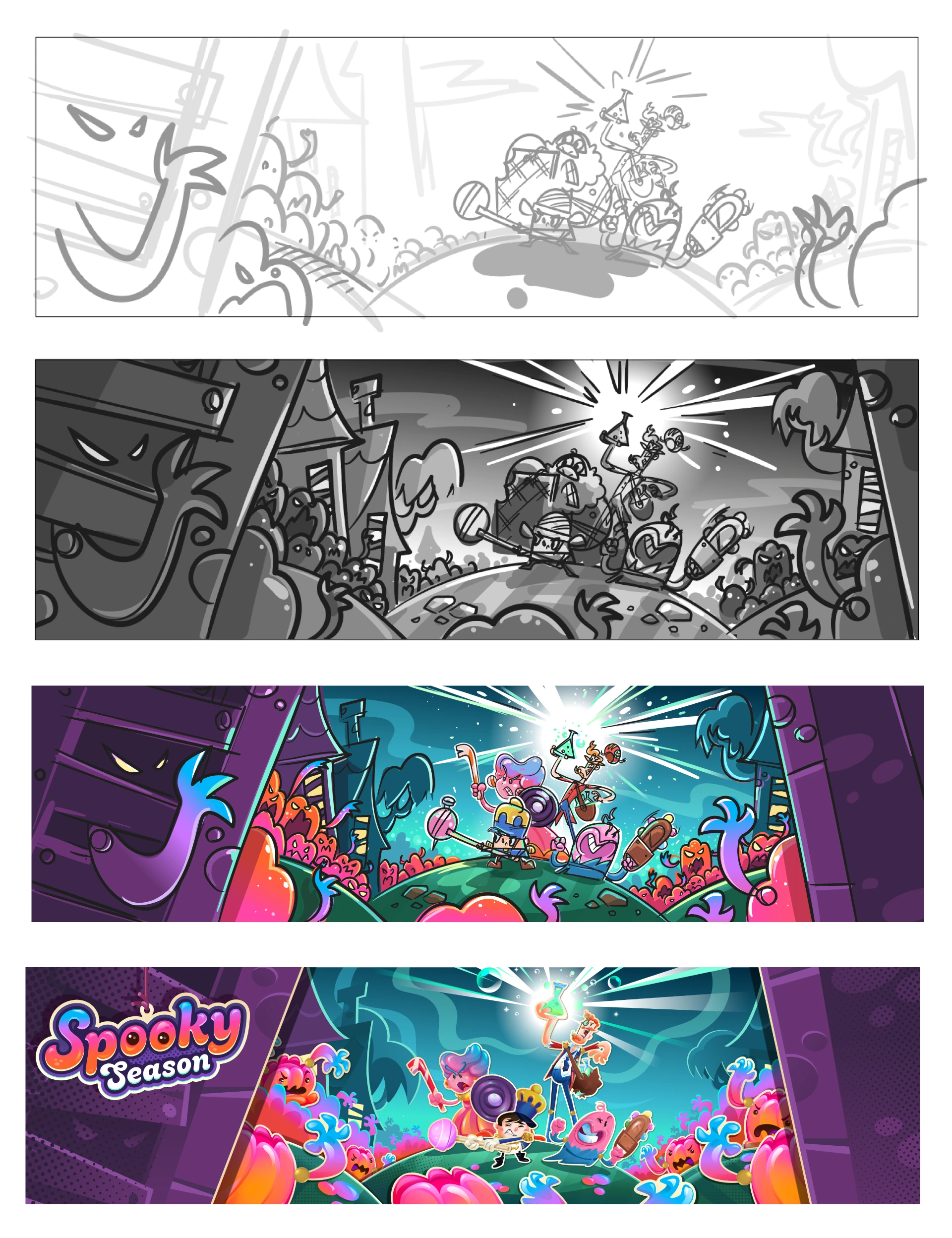
Creating seasons requires an even broader team.
"Seasons are definitely an ‘it takes a village’ kind of effort," says Toma.
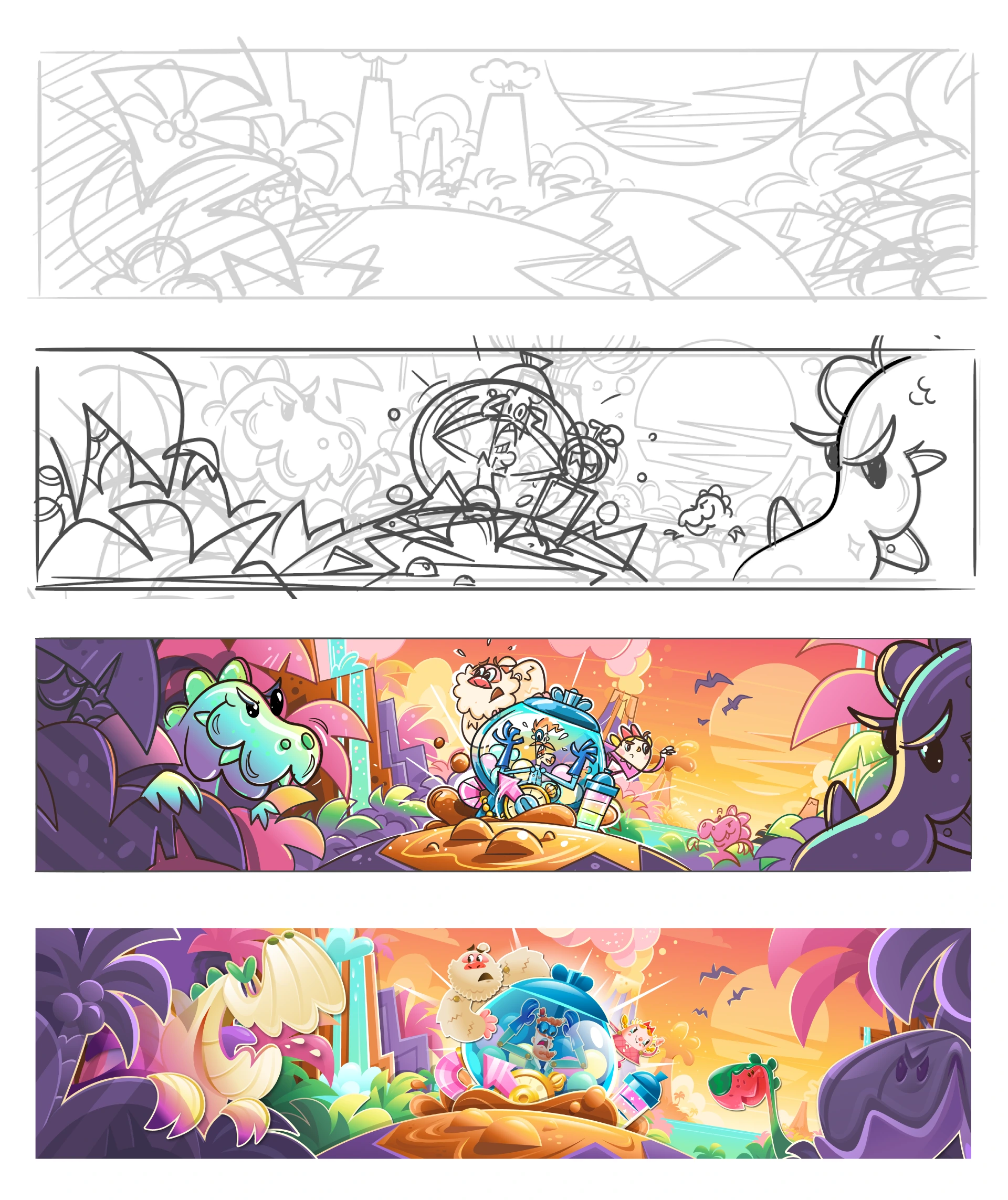
"When the general theme of a season has been decided, we collaborate very closely with the narrative design team to really understand what the season should feel like and the story we need it to tell. We collect and incorporate feedback from stakeholders as we concept, with the aim of arriving at a comprehensive illustration we call the ‘seasonal key art’.
"This artwork goes on to inform the look and feel of all events and features created under that season’s umbrella. After that, we collaborate with multiple feature teams to help deliver the various reskinned events."
From raw concept to packaged product
The time taken to produce artwork for a new season varies. Often, it takes a week or so to create the key art and ensure it answers all visual questions - looking at palette, character cast, setting, the season’s narrative and more. Creating all the art and animations required can be closer to a month - sometimes more and sometimes less - with work spread among available artists.
"It depends on the size of the season and the number of events it will cover," says Toma.
“Seasons are definitely an ‘it takes a village’ kind of effort.”Silvia Toma
Finally, we ask if any season stands out for seeing a major transformation from its initial concept art to the final product. Toma answers that these days, seasons "stick to the script" more often than not.
"Maybe the summer Meltdown Season saw a little bit of a visual tone shift?" she suggests.
"Originally, Dr Toffee, genius inventor and beloved Candy Town mayor, was going to invent a freeze ray (that would, of course, malfunction) to try to cool down the sun for a gentler summer. We didn’t think that was ridiculous enough, so he ended up with a shrink ray misfiring and growing the sun instead. We figured, what says summer more than a giant raging sun up in the sky?"
Conversely, Candy Crush’s Jurassic Season this April was probably the easiest sell.
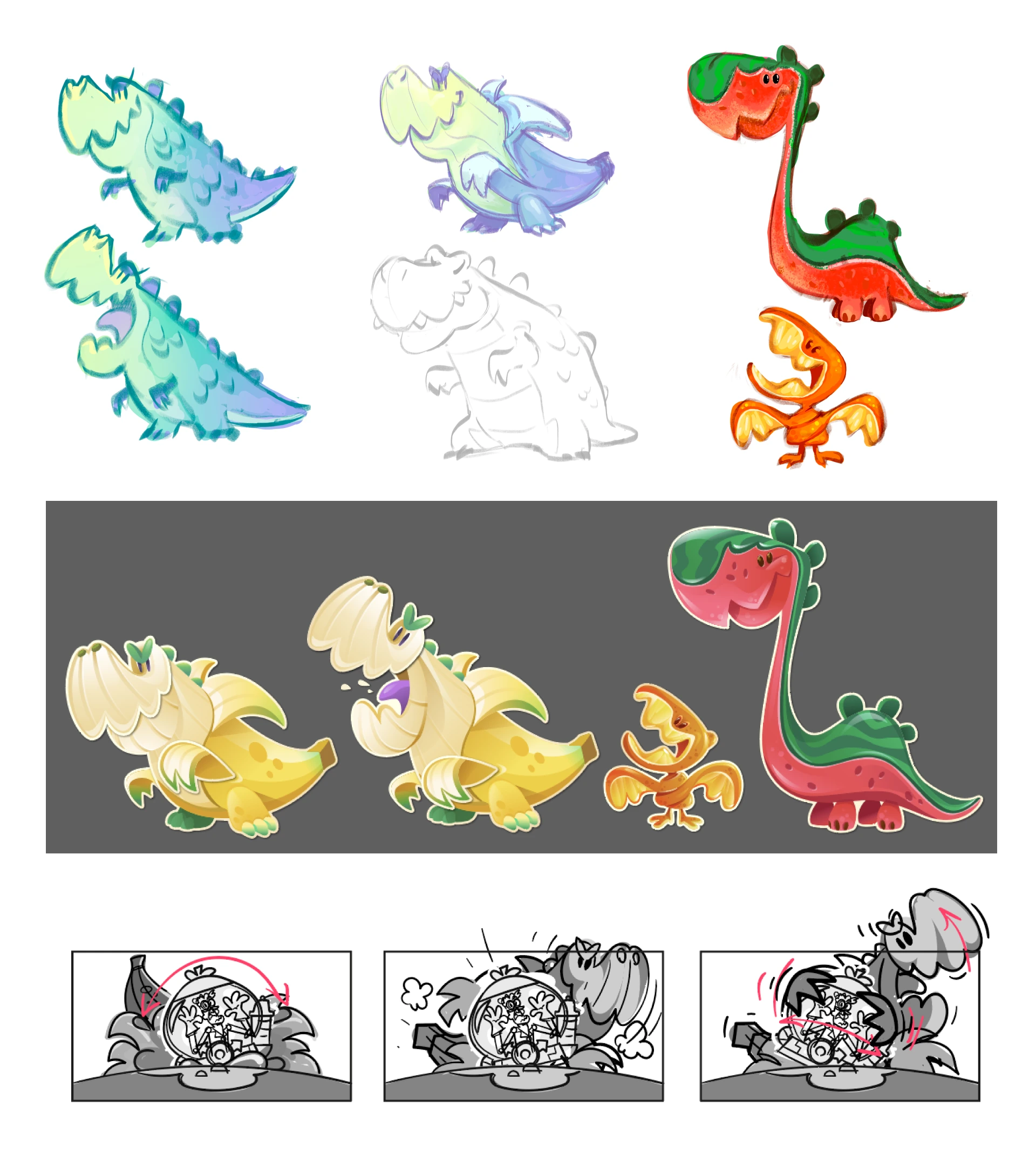
"Turns out ‘dinosaurs’ is all it takes for a very smooth approval process," Toma remarks, though adds one decision did come after the initial concept - all dinosaurs are made from fruit. "Because that’s the most primordial form of sugar."
Looking ahead, Sellström hints that Candy Town is up for a surprise this Halloween: "Hope our little Mr Toffee and Tiffi chocolate-barred up their windows and gathered enough Lollipop Hammers to repel the jelly horde," he teases.
Companies
People