The winning portfolio strategies of 2026 with two and a half gamers

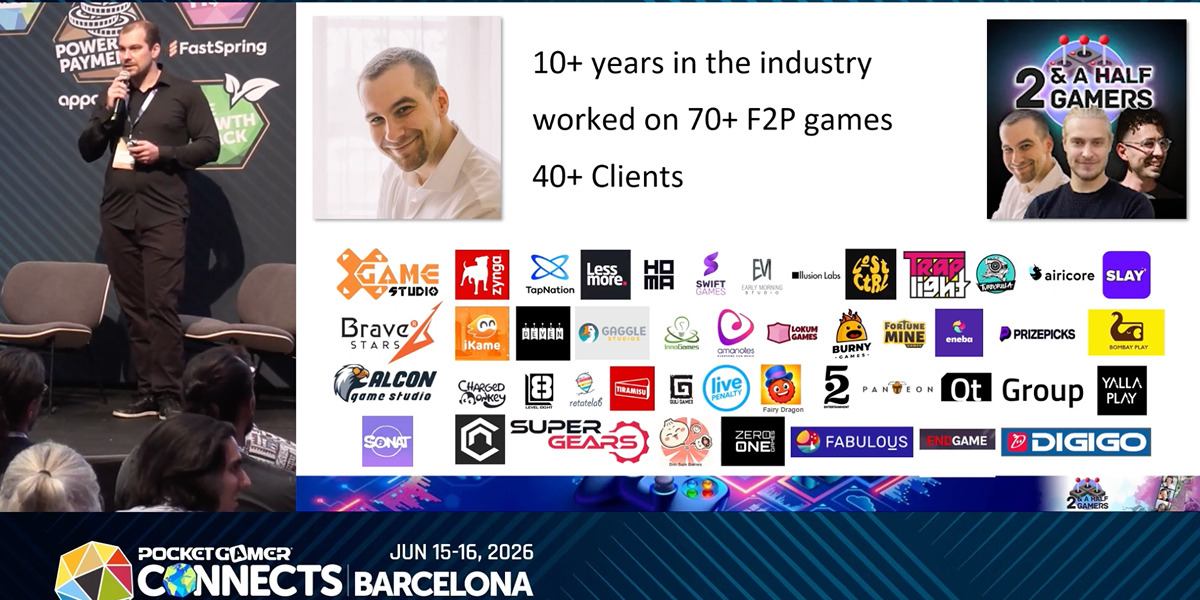
- Remiar said the best studios treat a failed game as progress, because the work feeds the next one.
- His three plays: convert ad-based demand to IAP, out-execute a rival, or take the risky shot at real innovation.
- Grand Games, "the Warren Buffett of puzzle games", wins on zero core innovation and ruthless execution.
Most studios still bet everything on one game. The companies pulling ahead are betting on the pipeline instead.
That was the argument from Jakub Remiar, game design consultant and co-founder of the two & a half gamers podcast, in a session on portfolio strategy at Pocket Gamer Connects Barcelona. The strategies are "getting extremely, extremely obvious," he said, "but still I think people are kind of sleeping on it."
We cover his talk below, from why failed games still pay off to the three strategies behind the market's biggest movers.

Everything starts with a template
Before any of it works, a studio needs a template, currently "the most efficient way to build new games." He attributes the logic to Asian and Chinese companies in particular, who work on the premise "that each game they fail is actually a plus for them, because they're working on their template."
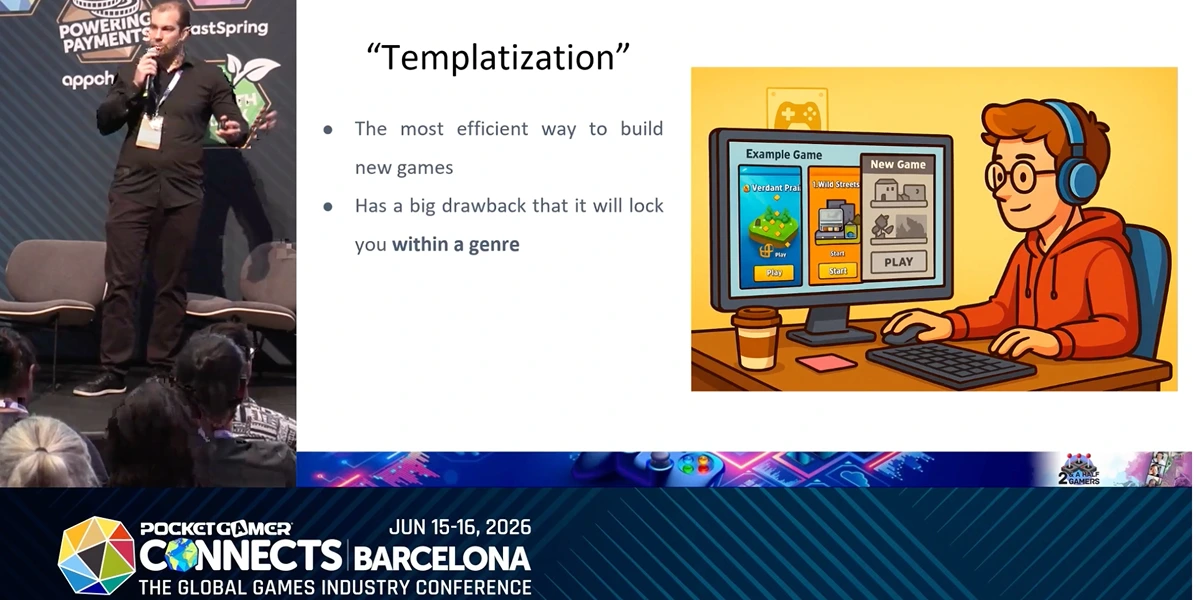
The hours from a flop are salvaged "into the template that will power their next game," so "the more games they do, the stronger this template is, therefore they can go faster." The catch: "your template will lock your genre."
Habby is the obvious case. Across Archero, Kinja Run and Survivor.io the core changes completely, from corridor shooter to runner to shoot-'em-up, "but the meta game is always the same." Later titles absorb ideas from rivals as they go: "I don't want to say steal, but they integrated a lot of stuff from guys from Legend of Mushroom."
His sharpest example was 4X, "the master of all this strategy," where games with entirely different front ends resolve into the same meta. "Think of it as a car. All the cars look different, but in the end they have exactly the same engine."
Take the traffic, change the engine
The first play is to find a category with real search demand but no monetisation and rebuild it.
Remiar's favourite example is Superplay's Domino Dreams, "not that big, but what they did is literally perfect." The category was full of actual domino games: decent organic downloads, ad-monetised, "they don't make revenue." Domino Dreams "is not a domino game, it's a domino-themed puzzle game." The team took the traffic and "put it on a much stronger engine, which is the puzzle engine."
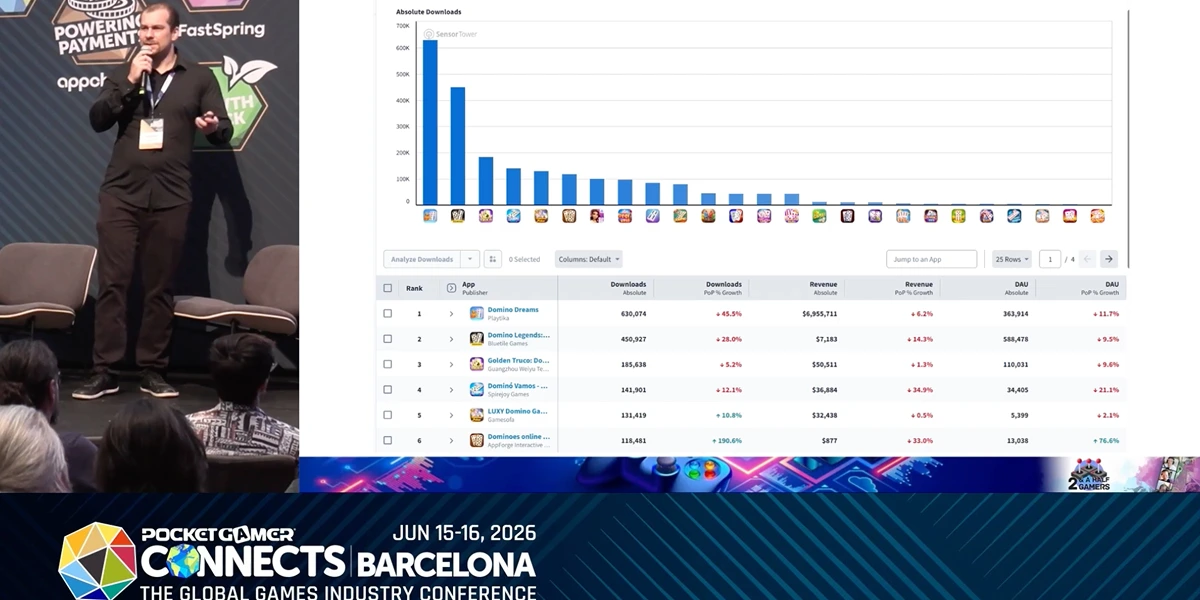
He was blunt about the objection. "When you talk to domino people, it's like, 'oh no, but this is not domino, our players don't want this.' Nobody cares. I'm sorry. People will search for domino, they'll find Domino Dreams. Your domino game is dead."
Grand Games ran the identical play with Magic Sort, turning a water-sort category doing six million monthly downloads on pure ad revenue into a polished IAP puzzler.
We can do it better
The second play requires no originality. "You don't really need to be innovative from the core," he said. "You need to be innovative on execution."
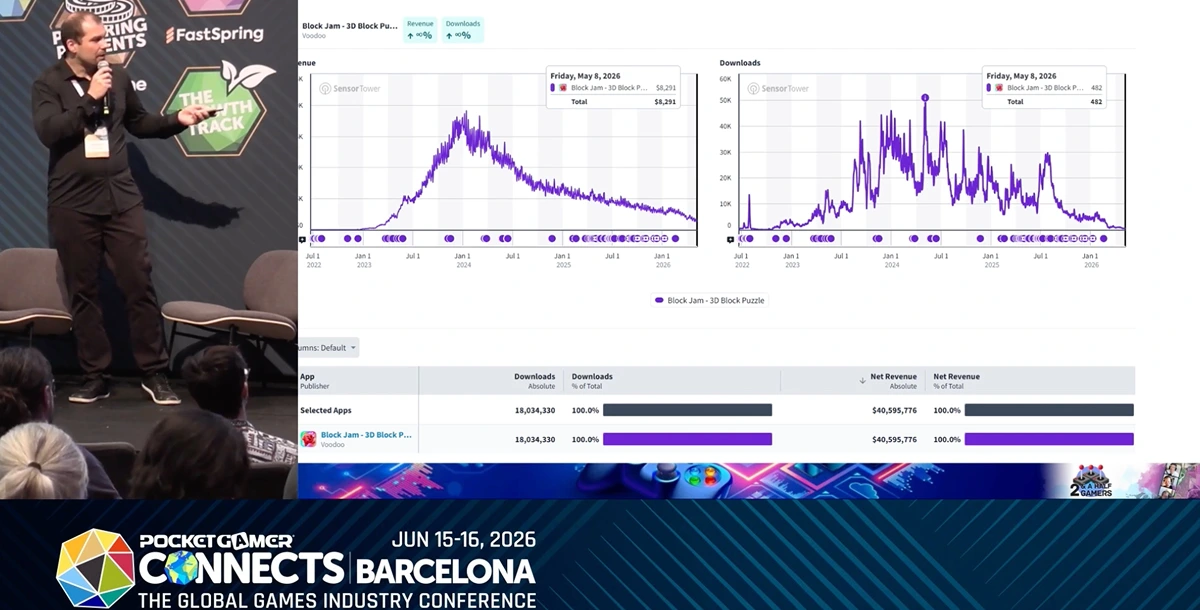
His illustration was two near-identical block puzzlers: Rollic's Color Block Jam and Grand Games' Block Out. Mechanically they are "literally nearly exactly the same," but the level design is "vastly different."
Block Out works on "a very, very specific principle of zero empty space," hiding sections until they unlock, so "you cannot even think forward." That cuts levels "into these snackable pieces," producing far more attempts - a game scaling hard on "literally zero innovation on the core" and "extreme innovation on the level design."
Now we reinvent the wheel
The last play is "the most risky, but also the biggest winning strategy of them all."
Rollic's Screw Jam peaked near $200k a day in 2024 and faded. Screwdom, from Vietnam, added a third dimension, and "the game design vector got so extended that it pretty much provides completely different gameplay." It now runs at around $300k a day, a rare Vietnamese IAP success from a scene where "most of the time they just copy games or fast follow games."
Pixel Flow made the same leap by extending a shooting mechanic from one direction to four. What stuck with him was who managed it: "Anybody could do that for pretty much a year, but only she was able to do it." Its creator had been making games for 14 years, hence his conclusion that "extreme innovation usually requires extreme genre knowledge."
Why the misses don't matter
Remiar closed on Grand Games as the portfolio running all three plays. Magic Sort was play one: "We took something from the demand that was there, we turn it into IAP monster. It's ours now." Car Match was play two, and "didn't really work out that much." Its block title he says he called two months early, because the demand was sitting in plain sight. "It's just a no-brainer to do it, even though it will fail. Doesn't matter."
The studio takes no radical swings. It "executes extremely, extremely efficiently" and can afford the misses because the pipeline absorbs them. "This will probably fail, this will probably fail - doesn't matter. One of those will most probably be the winner."
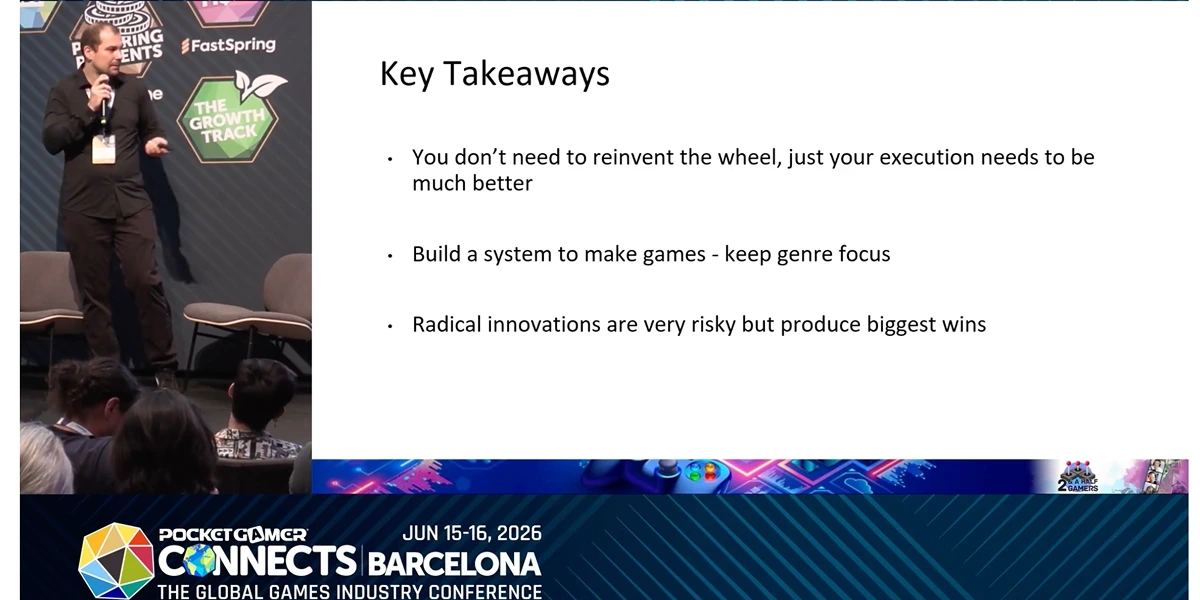
His parting advice: build a system to make games, keep genre focused and "bet everything on your pipeline."
PGC Summit Shanghai
Much of the playbook Remiar described starts in Asia. Pocket Gamer Connects Summit Shanghai returns on July 29th, just ahead of ChinaJoy, with tracks on publishing, funding and market access. Secure your ticket here.
Companies

People

Events
