Transcend Fund's Lirui Ding on what Chinese studios need most in 2026


- Lirui Ding has sat on both sides of the table - first at Activision Blizzard and now backing ~40 studios at Transcend Fund.
- What earns his conviction is genuine differentiation, whether that's sharp instinct for great game design or the effective use of AI in the gameplay itself.
- His message ahead of "Under The Microscope": capital was never the scarce thing in China's games market.
As a principal at Transcend Fund, and formerly on the strategy and M&A team at Activision Blizzard, Lirui Ding has spent his career studying what separates studios that get acquired from those that simply don't make it.
Ahead of his panel "Under The Microscope: How Are Chinese Studios Being Funded in 2026?" at PGC Summit Shanghai on July 29th, he told PocketGamer.biz why capital was never the scarce thing.
PocketGamer.biz: You've been on both sides - corp dev inside Activision Blizzard and now writing cheques across ~40 studios. What does that double vantage point show you that most people miss?
Lirui: Inside Activision Blizzard I worked on strategy and the M&A and investment side - how one of the largest players in the world decides where a studio fits and what it will pay to own it.
What that teaches you is that the traits which make a studio valuable to an acquirer are almost never the ones that let it survive long enough to get there. Gaming value is realised overwhelmingly through M&A of content, with decades of precedent for how it happens, so we can underwrite toward a real exit - but most investors only underwrite that exit story, not the survival story.
And the thing you only see from the inside is what actually decides a deal: rarely the numbers, almost always culture, ego and expectations that were never grounded.
The best acquirers know this too. They buy great studios and protect them rather than absorb them - and none of it shows up in a deck.
Across those 40 companies, what's the common thread in the ones that earn your conviction, and the early signs that make you pass?
“The best founders pair whatever their edge is with the discipline to ship and volunteer their player and retention data before I ask, because they already live inside it.”Lirui Deng
What I'm really looking for is differentiation - a genuine competitive advantage, something a well-funded incumbent can't simply copy. That comes from a few places. Often it's taste: an instinct for what makes a game feel alive, which technology and budgets can't replicate - we say fun is the moat. Increasingly it also comes from AI and that's part of almost every conversation right now.
AI isn't the only way to build an edge, but it's one startups genuinely have over incumbents - the big players structurally can't adopt it at the level that matters, so a small team can build something they can't. The best founders pair whatever their edge is with the discipline to ship and volunteer their player and retention data before I ask, because they already live inside it.
The passes are the mirror image: a deck whose moat is "we move fast," founders who can't describe their first hundred players as real people and teams where nobody has shipped and there's no plan to de-risk that. Execution risk for first-time teams is the most under-priced risk in this asset class.
What are you most excited to back in games right now and what's quietly overhyped?
“What I'm far more excited about is AI in games: AI as the actual material of the experience, creating gameplay that wasn't possible before.”Lirui Deng
I draw a line between AI for games and AI in games. AI for games is the production story - making content cheaper and faster, validating demand before you build. That's real and it matters, but it's ultimately cost-out, and everyone is chasing it.
What I'm far more excited about is AI in games: AI as the actual material of the experience, creating gameplay that wasn't possible before. Worlds that respond to you, characters with genuine memory, systems that generate a different experience every time you play.

Cost saving makes an existing game cheaper; this makes a new kind of game - and new experiences are where the outsized, category-defining outcomes come from, not shaving a margin. Overhyped is the flip side: the belief that generative AI is the moat. It's the opposite - it commoditises production. If your only edge is that you use AI, so does everyone in my inbox this week.
The durable edge is still taste, community, distribution, and live ops and, increasingly, a genuinely novel experience built on AI that a competitor can't just prompt their way to.
How is AI changing the way you actually value a studio?
Two ways, and they map to that same distinction. On the AI-for-games side it changes the cost basis, so capital efficiency improves and I'm re-underwriting how far a cheque should travel - but that efficiency alone is fragile, because if a small team can produce fast, so can whoever clones them next quarter.
So the durable value sits on the AI-in-games side: is the experience itself defensible? I also look at which layer a team's AI actually operates on - better context is trivial and everyone does it, AI doing skilled work makes people nervous, and AI agents genuinely doing the work is where the leverage sits, which is exactly the layer most studios refuse to touch.
A team that truly operates there, and turns it into a game players can't get anywhere else, is far rarer and more valuable than the deck traffic suggests. And I discount "we use AI" claims heavily until I've seen it's real and not a demo.
What do Western investors still get embarrassingly wrong about the Chinese market?
That it's one market. It's a set of ecosystems that barely overlap, and the reflex that China copies the West is years out of date - in live-service design, monetisation, and how AI-forward the talent is, the innovation flows the other way.
“Western investors treat Chinese and Asian strategic money as either dumb money or purely defensive, when these players are globalising deliberately.”Lirui Deng
The bigger miss is how they read the capital. Western investors treat Chinese and Asian strategic money as either dumb money or purely defensive, when these players are globalising deliberately - they want access to content and talent, their demands are specific and rational, and the entry points are knowable: publishing partnerships, minority stakes and LP positions.
Seeing all that doesn't mean the risks aren't real - regulatory timing, trust and localisation in reverse are structural, so you have to be selective. But you can't price any of it from a distance.
Your PGC Shanghai session - "Under The Microscope: How Are Chinese Studios Being Funded in 2026", takes a close look at Chinese studio funding. What's the question you're most looking forward to digging into? What instrument is actually doing the funding.
Go looking for a clean priced equity round and you'll conclude the market is frozen - it isn't, the money just moves through different pipes now. Pure equity is giving way to hybrids everywhere - revenue-share, recoupable structures, publishing advances, strategic minority stakes - and in Asia especially the capital increasingly arrives as a publishing partnership or a strategic stake rather than a venture cheque.
So the real question underneath "how are Chinese studios funded in 2026" is two: who still needs outside equity at all - a lot of the strongest studios are profitable or strategically backed and don't - and for everyone else, whether the money on the table is capital or a relationship in disguise. That reorders who you should even be talking to.
No spoilers, but what's the one thing you want people thinking about as they leave "Under The Microscope"?
That capital was never the scarce thing. So the reframe I want in people's heads points back at them: stop asking what you'd pay to get in and start asking what you bring that the capital already in this market can't.
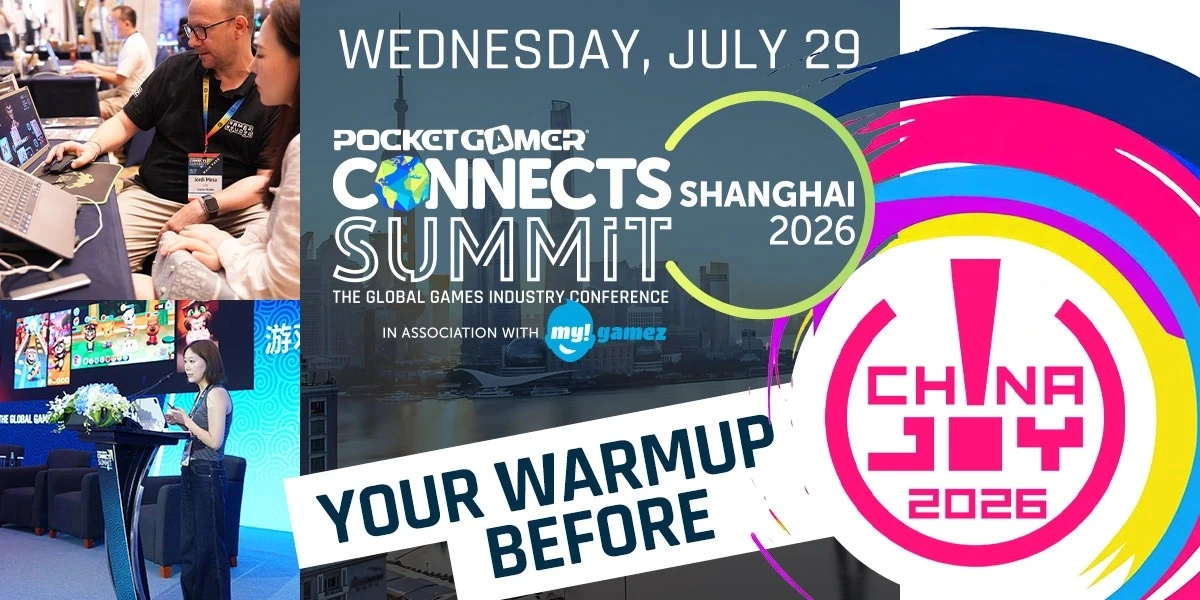
Register for PGC Shanghai Summit here to hear from Ding and a lineup of investors, publishers and studio leads shaping the region's next wave of funding.
Companies

People

Events
