How Supremacy: Warhammer 40,000 developer Twin Harbour Interactive wins back lapsed players

- Twin Harbour’s first test failed because the audience was too broad.
- Big updates and seasonal peaks are the best times to win players back.
- Small studios can start with 5–10% of their UA budget.
As acquisition costs rise, Twin Harbour Interactive, maker of Supremacy 1914, Call of War 1942, World War 3 and Warhammer 40,000, is turning to players who have already left.
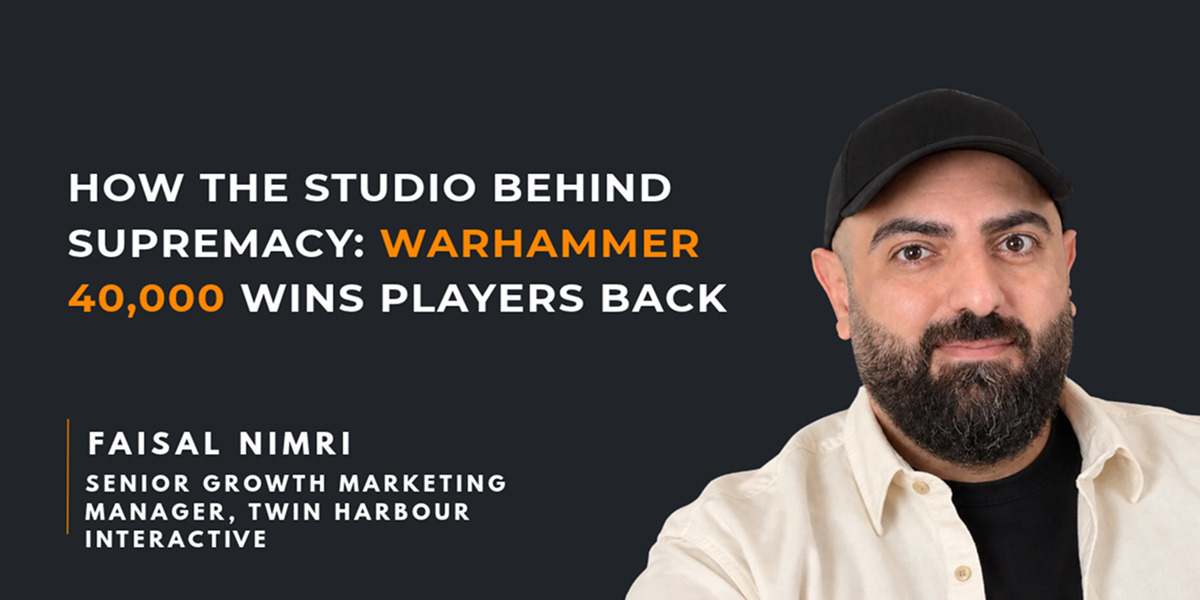
We spoke to Faisal Nimri, senior growth marketing manager, ahead of his session at PGC Jordan about why the studio is investing in re-engagement, what its first failed test taught it and how smaller studios can start on a limited budget.

The case for re-engagement
Twin Harbour has historically concentrated on user acquisition, but rising costs prompted a change in approach.
"As CPIs are getting higher and higher, UA is becoming more challenging," Nimri says. Given its years of live operation and a large base of mid-core strategy players, the studio considered retargeting "a natural fit for us."
Re-engagement remains relatively new for the company, which began investing in it approximately 18 months ago. "We're still new," he says.
Measuring what works
To establish whether re-engagement advertising generates additional revenue, Twin Harbour uses incrementality testing. Nimri compares the methodology to a pharmaceutical trial: one group is exposed to the advertising, while a control group is not.
Twin Harbour typically assigns 80% of an audience to the test group and 20% to control, then measures the difference in revenue. Standard attribution, he notes, only "tells you who clicked, where this click is coming from". Incrementality testing measures whether the advertising changed player behaviour.

The studio considered three approaches. Running tests internally would have required significant team resources. Relying on a retargeting partner’s free measurement would have limited comparisons between channels. The third option was a third-party tool.
It selected AppsFlyer's incrementality product, as its attribution provider already held the relevant audiences and integrations.
A failed first test
The first test did not deliver. "The first test was a failure. It didn't generate any uplift," Nimri says. The cause was targeting. "The audience was very broad. So we learned the hard way that you need to do segmentation."
“Recycling UA creative for retargeting is a big mistake. Lapsed players are already familiar with the game and need a reason to come back and to experience a new thing.”
The team now separates non-paying from paying users, and further divides paying users into high, mid and low spenders. Following this change, incrementality testing became a regular practice.
Comparing channels
To evaluate partners, Twin Harbour runs specific tests. Two channels each receive 40% of a segment, while the remaining 20% serves as a control group. After three to four weeks, the better performing channel is tested against a new challenger. Larger audiences can support three channels simultaneously.
Timing the campaign
According to Nimri, re-engagement "works best when it's paired with a big update", such as a new hero, map or game mode. Seasonality offers a second opportunity: Christmas in the US and Europe, and Ramadan and Eid in the MENA region. "People have more time. They see an ad, they are reminded of a game they played in the past."
Common mistakes
Nimri's principal warning concerns creative. "Recycling UA creative for retargeting is a big mistake," he says. Lapsed players are already familiar with the game and need "a reason to come back and to experience a new thing".
The second mistake is impatience, as reaching statistical significance requires time. "Sometimes you have to keep the campaign running for an extra week."
Guidance for smaller studios
For studios with limited budgets, Nimri recommends starting small by allocating 5% to 10% of an existing user acquisition budget to retargeting. He also suggests adjusting the test split from 80/20 to 50/50.
"This way you reach statistical significance faster," he says.
The change shortens tests from approximately four weeks to two, reducing cost. For studios in Amman, he suggests running an initial test during Ramadan and scaling investment if the results are positive.
Hear Nimri speak at PGC Jordan next week

Hear Faisal Nimri speak at PGC Jordan next week in his session, "A Guide to Re-Engagement and Incrementality Testing". Tickets are available here.
Companies
People

Events