A tale of two indies: How Triband and Midjiwan outlasted the boom-bust cycle

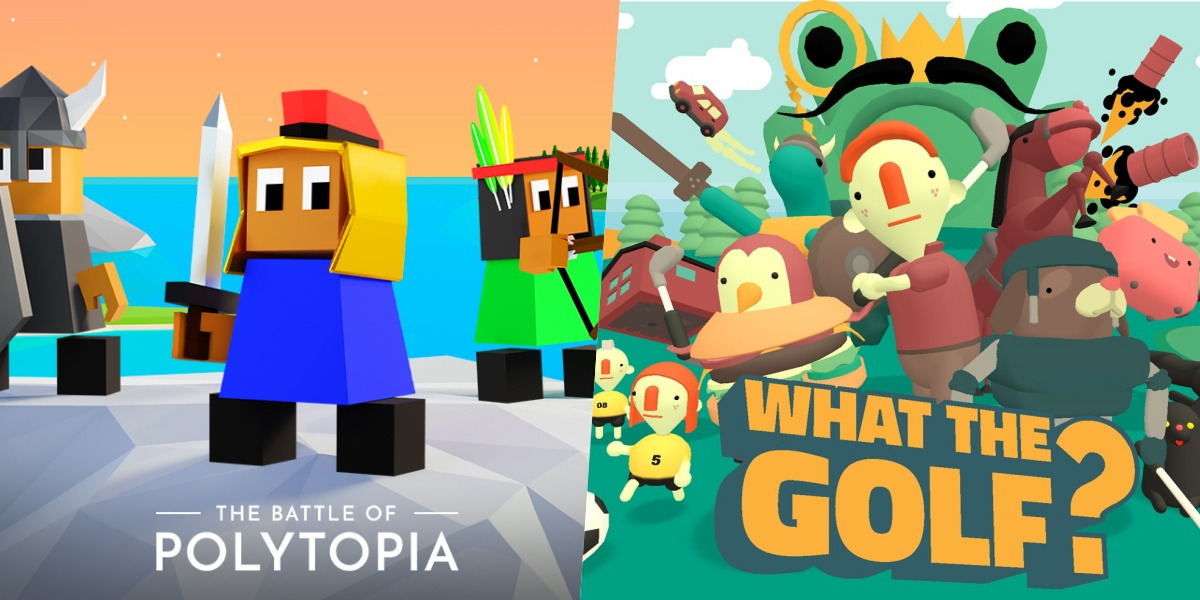
- Triband's WHAT THE CLASH? won Apple Arcade Game of the Year, built entirely on subscription rather than free-to-play mechanics.
- Midjiwan turned a solo 2016 project into 25 million downloads and the game's first World Championship.
- PGC Nordics is backing that same spirit, rolling indie ticket prices back to 2016 rates.
Between them, King, Supercell and Rovio have spent two decades proving the Nordic region can build global hits.
The chart toppers are not the only Nordic story, though. The region's indie scene has always been worth paying attention to and two studios a few hundred kilometres apart make the case better than most - Midjiwan in Stockholm, Sweden and Triband in Copenhagen, Denmark.
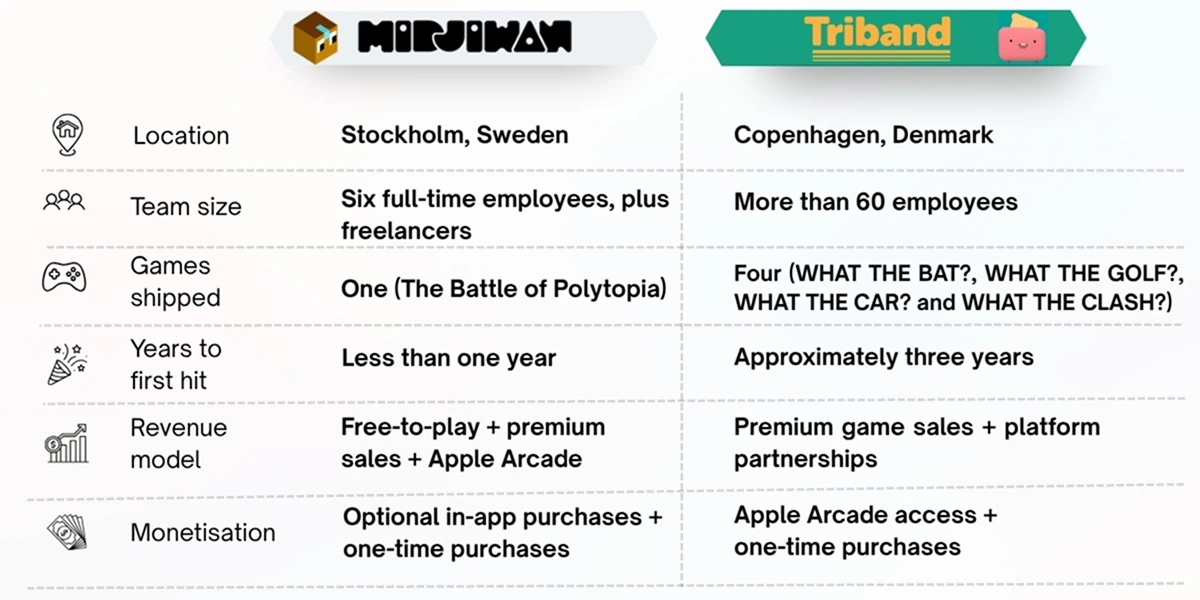
Neither company has a billion-dollar acquisition behind it, a live ops war room or anything resembling a loot box. And yet with an annual esports World Championship tournament, multiple awards for the best mobile game and millions of downloads collectively, neither shows any sign of slowing down.
We take a closer look at both studios, hear from each CEO and find out why PGC Nordics has built its Big Indie Pitch around exactly this kind of story.
Triband: The studio that made comedy a business model
Triband, the Copenhagen studio, was founded in 2015 by Peter Bruun and Tim Garbos, who met while working together at Danish studio Sybo.
What The Golf?, the studio’s first game, didn't begin as a comedy concept. It went through so many pivots under an earlier working title that the team eventually folded every abandoned idea into a single game, structured as a tour through its own discarded development history.

What The Bat? and What The Car? followed, the latter earning a DICE nomination for Mobile Game of the Year, and then What The Clash?, which took Apple Arcade Game of the Year at the 2025 App Store Awards and Best Mobile Game at the BIG Festival Awards.
Headcount has grown steadily since, to over 60, though the studio has deliberately kept production units small, organising staff into teams not much larger than the original What The Golf? group rather than scaling up any single project.
"Tim (Garbos, co-founder) and I both worked on the initial team behind Subway Surfers back in 2012, so we've had our fair share of free-to-play experience - the good and the not-so-great," says Triband CEO Peter Bruun. "So it wasn't temptation we had to resist; it was more like something we'd already done and deliberately moved on from.
"When we founded our own studio, we wanted to build something that reflected our values of playfulness and creativity. That's hard if your design process starts with retention curves instead of jokes and gameplay.
"Apple Arcade turned out to be the perfect match for us: player privacy, high-quality, family-friendly games, no ads, no microtransactions. It lets us focus on making great games. We'll never be King or Supercell, but we were never trying to be."
Midjiwan: 10 years, one game, no in-game currency
Midjiwan's only game, The Battle of Polytopia, began in 2016 as a solo project, with game creator Felix Ekenstam sketching tribes and hexagons in his spare time. A decade later, the studio consists of a handful of people in Stockholm.

Last October it passed 25 million organic downloads, announced alongside the game's first esports Polytopia World Championship, with finalists heading to a live grand final in Stockholm.
The downloads figure is less interesting than how it was reached. Polytopia carries no in-game currency and sells only expansions and cosmetics, a monetisation model closer to premium PC gaming than to mobile norms. For a turn-based 4X strategy game, a genre that has traditionally lived on desktop, the majority of its installs are on mobile.
Midjiwan effectively took a genre the mainstream mobile market had never tried to serve and built a decade-long business inside it.
"I think Polytopia's staying power in this extremely competitive market is a testament to the fact that we've created a game players are happy to keep playing for many years," says Midjiwan CEO Christian Lövstedt. "I believe our non-aggressive monetisation model has played an important role in the game's longevity.
"The majority of mobile players seem perfectly happy to play games with much more aggressive monetisation or constant ad spam. Since that model dominates the market, it suggests that, overall, most players prefer that approach over ours."
A second Nordic tradition
None of this means the giants are losing ground, with King, Rovio and Supercell collectively earning a massive $20.4 billion last year, according to AppMagic data.
But 2025 wasn't without it casualities: Supercell's full acquisition of Merge Mansion studio Metacore came with roughly 160 job losses and Nordic studios are now bracing for the EU's incoming Digital Fairness Act, aimed squarely at the monetisation mechanics that built the big mobile publishers.
Set against that, Triband and Midjiwan look less like anomalies and more like a second Nordic mobile tradition consisting of small teams, low overheads, no live ops arms race and games design that is not focused on aggressive monetisation.
PGC Nordics' indie focus
Stories like Triband and Midjiwan's are exactly why Pocket Gamer Connects Nordics (October 20th to 21st) built its Big Indie Pitch - to make sure small studios have a stage. If you're one of them, indie ticket prices have been rolled back a decade: same show, same access, 2016 pricing, with early bird tickets available here.
PGC Nordics also runs the Big Indie Zone, a dedicated expo space where indie developers demo their games to delegates, publishers and investors over two days, complete with an Audience Choice Award voted on by attendees.
Developers can also apply to pitch live to a panel of industry experts through the Big Indie Pitch, for mobile or PC/console titles.
There's a free ticket and expo table up for grabs too - enter the competition here.
Companies


People