Colossal Order's CEO on data, gut feeling and why "a game for everyone is a game for no one"


- Colossal Order chose PC simulation games in 2009 because everyone else was moving to mobile.
- Fans asked for features like multiplayer and a scenario editor, but few players actually used them.
- The studio will no longer start a new game without market research, and its next project is already underway.
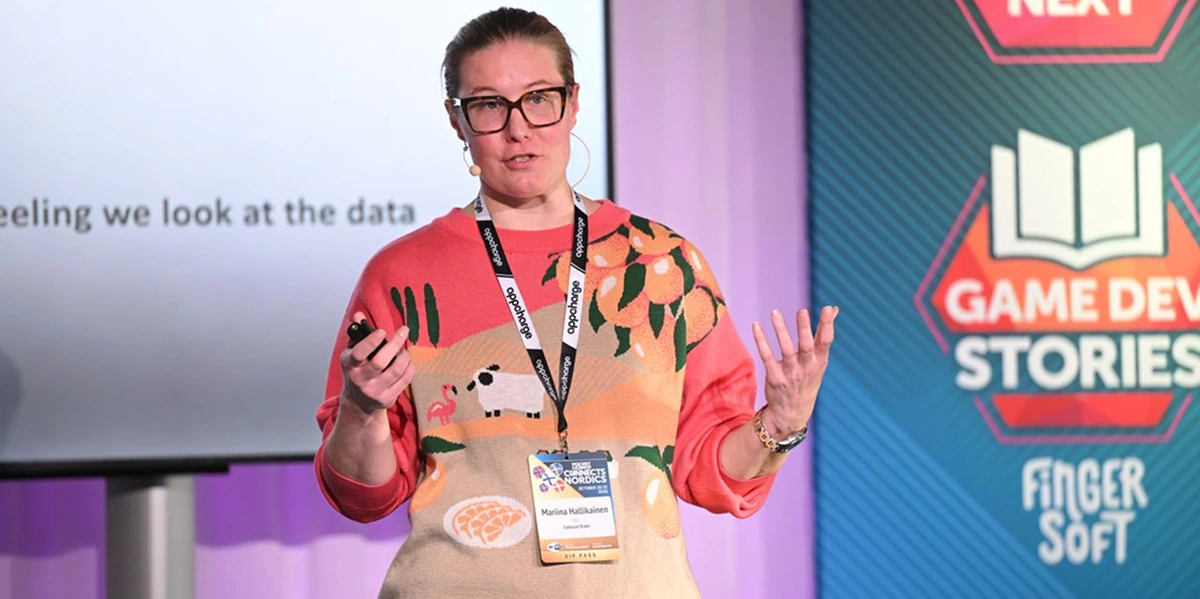
When a colleague asked Colossal Order CEO Mariina Hallikainen how the studio chose games that kept finding their audience, her first answer was gut feeling.
On reflection, she realised that wasn't quite true. "Looking back, we understand we were not lucky. We were looking at the data," she told the audience at Pocket Gamer Connects Nordics last month, in a session titled 'Whose game is it anyway?'.
"We just had a very limited amount of it, and nowadays we have plenty."
The Tampere-based studio, now 29 developers, made Cities in Motion 1 and 2 and Cities: Skylines 1 and 2. It parted ways with publisher Paradox Interactive in late 2025 and is now working on an unannounced new game.

Niche on purpose
When Colossal Order was founded in 2009, the industry was telling developers that PC was dead and mobile was the future.
The five-person team went the other way. They didn't have mobile expertise and the simulation genre had little competition.
"It's not sexy now and it wasn't sexy back then," Hallikainen said. "We felt that there would be a possibility for us to focus on a genre where there's less competition, but we believed that there's still very much of an audience out there."
The long-term goal was always a city builder, but that was too big for a team of five. So the studio built toward it, starting with Cities in Motion, which it pitched as "Transport Tycoon on a SimCity scale".
“When you're talking with the community, you're only talking with those that are the most active, usually also the most critical ones."”Mariina Hallikainen
By the time of Cities: Skylines, the pitch was easier. SimCity had left players unsatisfied and Colossal Order offered to fill the gap.
Along the way, Cities in Motion taught the studio something it hadn't planned for: players wanted to mod.
"We had no idea that people would be modding the game," she said. Its in-house engine was easy to break apart and players started building their own creations.
From then on, modding went into every game. "We build games for creators," Hallikainen said. That insight helped Cities: Skylines run for eight years after its 2015 launch, as the studio found new opportunities within its existing audience.
The loudest voices aren't always accurate
Community is key, Hallikainen said, but the people commenting are not the whole audience.
Most players, she pointed out, aren't commenting at all. They're simply playing the game. "When you're talking with the community, you're only talking with those that are the most active, usually also the most critical ones," she said.
She gave two examples. Cities in Motion 2 got multiplayer because "everyone wanted one", but few people played it. Cities: Skylines got a scenario editor for the same reason, with the same result.
Either the features weren't fun or the studio was "listening to the loudest opinions and not understanding our audience fully". That is why telemetry and surveys matter as much as community feedback.
Looking at the data
Colossal Order is applying those lessons to its next game, which Hallikainen would not name. She said only that it "does not have many competitors".
This time, the research comes first. "Before we do any spending, we are basically looking at the data. What does the data tell us? Can we actually trust our gut feeling?"
That means studying competing games, identifying who the audience is and which platforms they play on, and testing ideas through betas, surveys and early community building.
She stressed that this need not be costly. "A market study, it's not expensive," she said. "The tools are available." Colossal Order will no longer start a new project without one.
Scope to your audience
Hallikainen's final lesson was to size a game to its audience. Cities in Motion was cheap to make and sold modestly, but it was profitable.
"We already knew when making the game that it would not be huge. So there was no point spending too much money on it," she said.
Asked how a studio can predict the market for a game that takes three years to make, she was candid. "You truly can't know what happens in the future," she said. Research limits the unknowns, but it cannot remove them. "Players are like a fickle beast."
Her summary borrowed a familiar line: "A game for everyone is a game for no one."
Hear more from Hallikainen at PGC London

Hallikainen returns to the stage for the fireside chat 'Running a Studio on Different Terms: Leadership through a Reset' at PGC London on January 18th and 19th. Get your ticket now.
Companies
People

Events
