Game ownership, Love and Deepspace controversy, Pikmin Bloom's record revenue and WeChat's mini-game boom | Week in Views

The games industry moves quickly and while stories may come and go there are some that we just can't let go of…
So, to give those particularly thorny topics a further going over we've created a weekly digest where the members of the PocketGamer.biz team share their thoughts and go that little bit deeper on some of the more interesting things that have happened in mobile gaming in the past week.

Craig Chapple
We were already running our Mobile Mavens around what happens when support ends for a game (see the Stop Killing Games movement) when Sony announced it would stop selling games on discs from January 2028. That followed the news that GTA VI wouldn’t be launching on disc either.
The industry has long been moving to digital. Mobile of course exists without the need for physical software, while PlayStation players have increasingly been downloading their games (according to Sony) and PC users have long used Steam as their primary store of choice.
It puts the points of the Stop Killing Games movement further into focus. Mobile is particularly bad at preservation - there are many games from yesteryear that’ll be lost to time. And like the controversies around those big live service console and PC games that launch with major budgets only to get cut within weeks and months, mobile publishers are not shy in killing games.

So what’s the solution? Behold Ventures associate Ali Farha said: “For me, the core of it comes down to one thing: players have the right to know what they're buying and how long they'll have it. If a studio can't grant full ownership, that needs to be stated clearly up front.”
Burny Games head of UA Olha Tarasova said if players feel a game could simply disappear, it could make them more hesitant to make suture purposes. She recognised, however, that it’s not realistic for every live-service game to be supported forever.
“For me, the key is transparency. Players are generally understanding when a game reaches the end of its lifecycle, but they expect clear communication and fair expectations from publishers.

“That's why having a transparent lifecycle policy isn't just an ethical consideration; it's also a long-term business decision that can strengthen player confidence, retention, and ultimately the willingness to invest in games over time.”
It’s a difficult topic but one that publishers and industry trade bodies should take seriously.
Mode 7 Games joint CEO Paul Kilduff-Taylor, who has been following Stop Killing Games closely, astutely noted: “The industry itself needs to listen to this strong signal from players. It should take serious steps to improve game preservation and commit to valid end-of-life plans wherever possible.”

Paige Cook
Love and Deepspace's Valko romance cancelled following backlash
This week brought one of the more unusual stories we have covered in a while. There’s far too much to unpack fully here, but we do go into the topic on this week’s podcast. The condensed version is that Love and Deepspace's planned sixth love interest, Valko, has now been cancelled following significant backlash.
The criticism about the character came from several directions. There were concerns over a reference that linked back to a sensitive historical moment, alongside criticism of some of the promotional messaging surrounding the character of “bringing a wolf into the house”, sparking concern around women’s safety.

By the end of it all, Papergames decided to cancel the character permanently. What surprised me, though, wasn't the cancellation of the character but the fact that they said they would never introduce another new character.
To me, that’s an incredibly bold comment for a live service game.
This whole thing serves as a reminder of just how important it is to thoroughly research every aspect of new content before it reaches the player. From characters, names, promo material, dialogue, and imagery, all of these should be looked at from various perspectives to avoid scenarios like this, and it does feel like Papergames dropped the ball with that.
However, I can’t help but think they’ve boxed themselves in with this statement of no new characters at all.
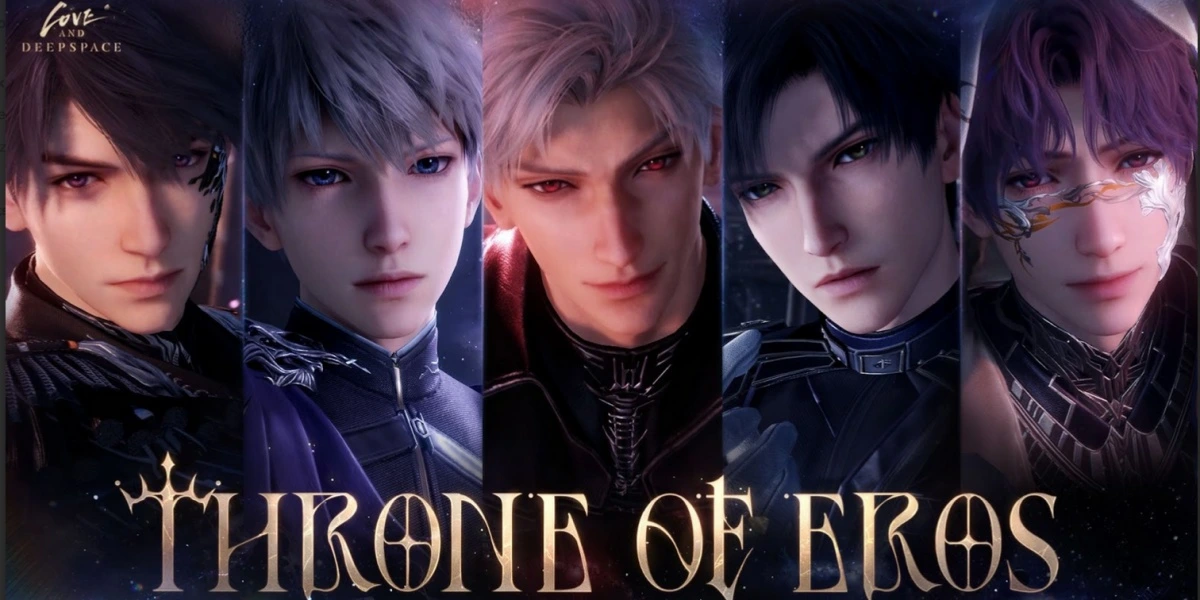
Existing players have wanted more focus on the current five characters, as they feel the content drops have been slow, which makes sense, but I’ve also seen a divide because the audience outside of China seems very disappointed that Valko has been cancelled, and petitions are being signed for his return.
Live service games thrive on new content and evolution. Yes, the main cast may be enough, but often new characters are one of the biggest ways to keep a long-lived game feeling fresh and to offer more entry points for new players. The promise to never add another character feels like a very difficult one to keep.

Aaron Astle
Pikmin Bloom skyrockets to record revenue as Taiwanese spending surges 902%
Pikmin Bloom's revenue has skyrocketed to record heights, with player spending in Taiwan up 902% year-over-year.
Six months into 2026, this walking-based mobile game has earned 94% of its entire 2025 revenue between the major app stores. Last year was already a landmark year for the title, reaching a new revenue record after the acquisition by Scopely.
AppMagic estimates suggest Pikmin Bloom made an unprecedented $38.1 million in 2025, and now it's already at $35.7 million in 2026. While many games start strong and peter out, Pikmin Bloom has been available since 2021 and has been quietly blossoming in the background.

Prior to Scopely, Bloom's monthly record was $3.7 million in December 2024. In May 2026, it reached a new peak of $8.7 million. With the way revenue’s shot up lately, in a sense it's having a Brawl Stars moment.
Japan has long been Pikmin Bloom's most-lucrative market, but in H1 2026 that's shifted to Taiwan. The country has contributed 52% of all player spending on Google Play and the App Store this year. The team isn't resting on its laurels, either. As Taiwan booms, Pikmin Bloom chose South Korea as the site of its latest event, currently fourth among the game’s most lucrative markets. So, is a South Korean surge next?

Mariam Ahmad
What the West can learn from China’s WeChat mini-games
WeChat's mini-games have quietly become one of the biggest stories in mobile and this week, SocialPeta's CMO and head of overseas business, Summer Liu laid out the sheer scale of it.
The ecosystem turned over $2.3 billion in the first half of 2024 alone, up 60% year on year. Liu's argument is that the mini-game isn't really a genre but an engine: a three-in-one machine that validates gameplay cheaply, monetises through a hybrid of ads plus IAP and funnels the keenest players into full app versions.

Over 60% of China's top-grossing mini-games now run a companion app and the model already exports - Nobody's Adventure: Chop-Chop began life as a WeChat title before going global and reportedly clearing eight figures a day.
The catch, Liu is careful to flag, is that you can't simply photocopy it. The ecosystem very much depends on WeChat's billion-plus users, social graph and unified payments, none of which the West has an equivalent for.
The lesson in all of this? Validate cheap, balance ads and IAP and design for fragmented attention. It's a timely breakdown ahead of PGC Summit Shanghai on July 29th, where China's market will be front and centre.