Ludia CEO Jimmy Gendron weighs in on acquisitions, life after Jam City and mobile’s new reality


- Ludia bought itself back from Jam City in early 2025, after cuts took it from nearly 400 staff to about 130.
- Now independent, it plans to buy profitable mid-market studios while other buyers hold back.
- CEO Jimmy Gendron wants to show a Canadian-owned mobile publisher can reach real scale from Montreal.
Ahead of PGC Summit Montreal on November 10th, we're putting the spotlight on Canada's games industry. The event will take place during MIGS - you can find more details here.
Ludia’s past few years have followed a pattern familiar across mobile: an acquisition, a market correction and a round of cuts. Where its story differs is the ending.
In early 2025, a group of Canadian investors and senior management bought the Montreal studio from Jam City. Now independent again, it is hiring, building new games and looking for studios to acquire.
We sat down with Ludia CEO Jimmy Gendron to discuss what the lean years taught the studio, where he sees value in today’s M&A market and why Canada still lacks a mobile publisher of real scale.
Smaller and sharper
When Jam City acquired Ludia for $165 million in 2021, the studio employed almost 400 people. By the time of the buyout, it was down to around 130.
“Jam City acquired Ludia in late 2021, and the three years that followed were difficult for the entire gaming industry,” CEO Jimmy Gendron says. “Changes to privacy on mobile made user acquisition harder and more expensive and player engagement normalised after Covid.”
What survived was the core: the teams behind Jurassic World Alive, Jurassic World: The Game and Dragons: Rise of Berk.
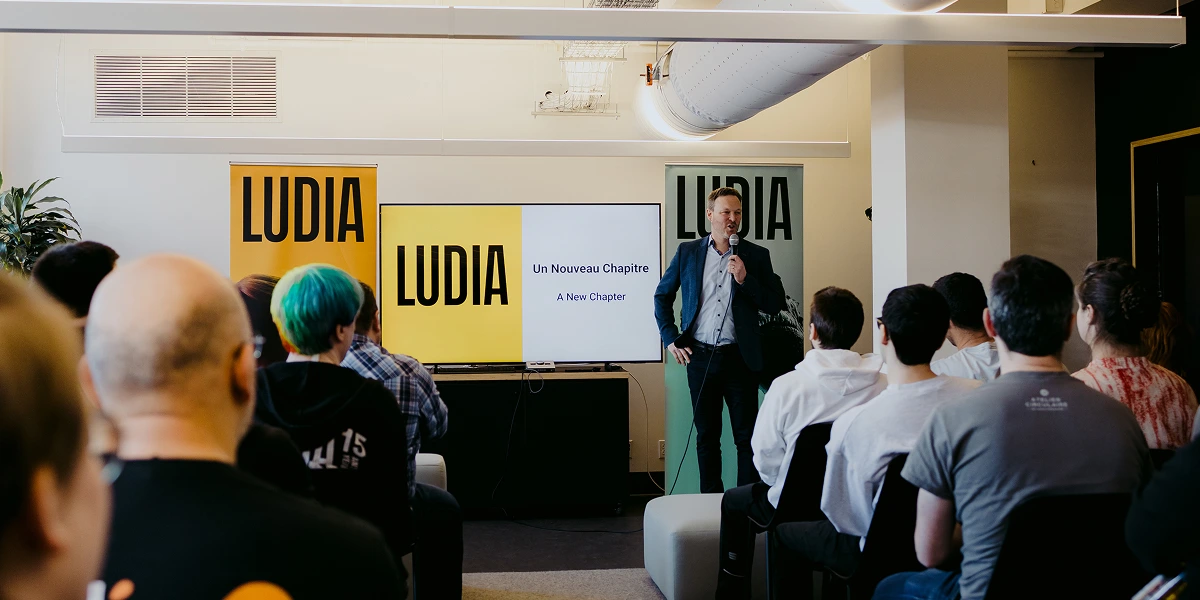
“What we learned is that smaller teams are a powerful forcing function,” Gendron says. “Our teams were more selective on where to invest in our three game franchises and more resilient than larger ones had been.”
It has since started to grow again. Since its founding in 2007, Ludia has generated over CAD $1.3 billion in lifetime revenue and more than 500 million downloads, making it Canada’s largest independent mobile game studio. It now employs around 190 staff, founder Alexandre Thabet is back as chairman and Gendron’s stated aim, first set out when the buyout closed, is to build the next leading independent publisher in Canada.
Going it alone
The buyout was backed by a group of Québec and Canadian institutions, including Fonds de solidarité FTQ, Investissement Québec, BDC Capital, Export Development Canada and Groupe W. The biggest change, Gendron says, is the alignment that inevitably comes with acquisition.
“Independence gives us alignment across our investors, management and teams,” he says. “Our investors have backed a vision to build a leading independent publisher in Canada. That alignment and support is what lets us commit capital to new games and acquisitions on a long horizon.”
“A studio is its people. If they do not come out of a transaction with more conviction around what they are building, I think you have bought very little.”Jimmy Gendron
It has also shaped how Ludia thinks about the studios it wants to bring in. “A studio is its people,” Gendron says. “If they do not come out of a transaction with more conviction around what they are building, I think you have bought very little.”
There is a trade-off. “What you give up as a relatively smaller independent publisher is the cushion,” he admits. “In theory, a larger diversified parent company can absorb a launch that misses or a soft year in a franchise; on your own, you feel every one of those directly.”
Buying into the middle
That thinking extends to M&A: Ludia plans to buy stable, profitable studios while much of the industry is still cutting back.
“If you look at the M&A landscape, there are fewer buyers than there used to be,” Gendron says. “The largest publishers at the top of the market will always compete for the breakout successes, as we saw with Loom Games, but there is much less activity for strong studios in the middle of the market. That is where we see the opportunity for a company like ours.”
The criteria, he says, are “simple to state and hard to find”. First the people: a team that wants to keep building and runs live operations with discipline. Then the business: a game or small portfolio with the makings of a long-running franchise and a community that has stayed loyal for years.
“We are not looking for scale at any price,” he says. “We are looking for teams and games that are already strong and that can be stronger with Ludia behind them.”
Canada's missing piece
Gendron sees two gaps in Canada’s mobile scene: very few mobile studios and publishers of real scale and a thinner pipeline of small teams iterating towards global hits than in markets such as Türkiye.
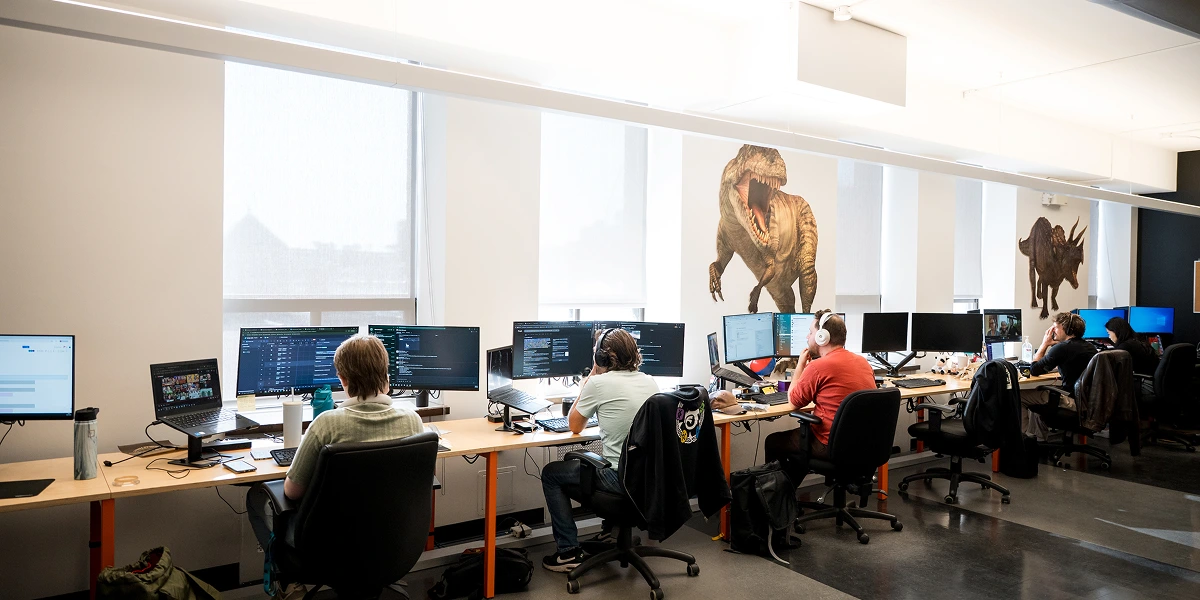
“Canada’s games industry was built on console and PC, and that is where its talent, schools and public attention still point,” he says. “Mobile is more than half of the global market, yet you can count the Canadian mobile studios of real scale on one hand.”
He is careful not to claim Ludia is the fix. “It is bigger than any single company. What I hope we can do is show that it is possible. If a Canadian-owned mobile publisher can reach real scale from Montreal, I hope this inspires others to follow.”
Fantasy-genre fit
Jurassic World has defined Ludia for over a decade and Gendron rejects the idea that leaning on licensed IP is a weakness.
“Partnering with a third-party IP is a risk if you treat it as a shortcut. It becomes a strength if you treat it as a craft,” he says.
The deciding test for any new project is what Ludia calls fantasy-genre fit: does the fantasy a fandom wants to live out match the mechanics the team wants to build?

“Jurassic World: The Game works because the fantasy every fan of the films shares is building and running their own park, and that is exactly what the game lets you do,” Gendron says. “A great IP in the wrong genre fails, and a great mechanic with the wrong fandom struggles to find its audience.”
Raising the bar
Asked what the mobile industry got wrong over the past five years, Gendron answers from a Western perspective: it underestimated how fast the bar was rising.
“During Covid, player engagement surged and the whole ecosystem, studios and publishers, scaled up as if that level was the new normal and as if the competitive landscape would stay the same,” he says. “Neither was true.”
“Mobile is more than half of the global market, yet you can count the Canadian mobile studios of real scale on one hand.”Jimmy Gendron
Meanwhile, Chinese publishers built a far more data-driven model - faster to iterate, more rigorous in live ops and UA - and have taken the lead in entire genres.
For Ludia, the response is twofold: keep investing in “baseline capabilities” around live operations, data and performance marketing and give game teams the room to build better experiences faster.
Back to its roots
That focus also explains why Ludia is staying mobile-only while many peers chase PC and console. “Mobile is more than half of the global games market and it is where our expertise is,” Gendron says.
The return of Thabet, who founded Ludia in 2007, ties the next chapter back to the first.
“Alex founded Ludia on an idea that has held up remarkably well: take the fandoms people already belong to and build games that let them play for years and even decades,” Gendron says.
He concludes: “Our ambition is to entertain millions of fans across several long-running game franchises and a company built to last well beyond the people running it today.”

Want to know how Ludia keeps a game going for over a decade? Senior product manager Lucas Labordiere and game director Karl Dandan will share how in “Live Ops Strategy: Managing a 10+ Year Old Successful Liveops Game” on the PGC stage at MIGS. Tickets are here.
Companies

People

Events
