State of Play: The challenges and opportunities facing the Nordic games industry

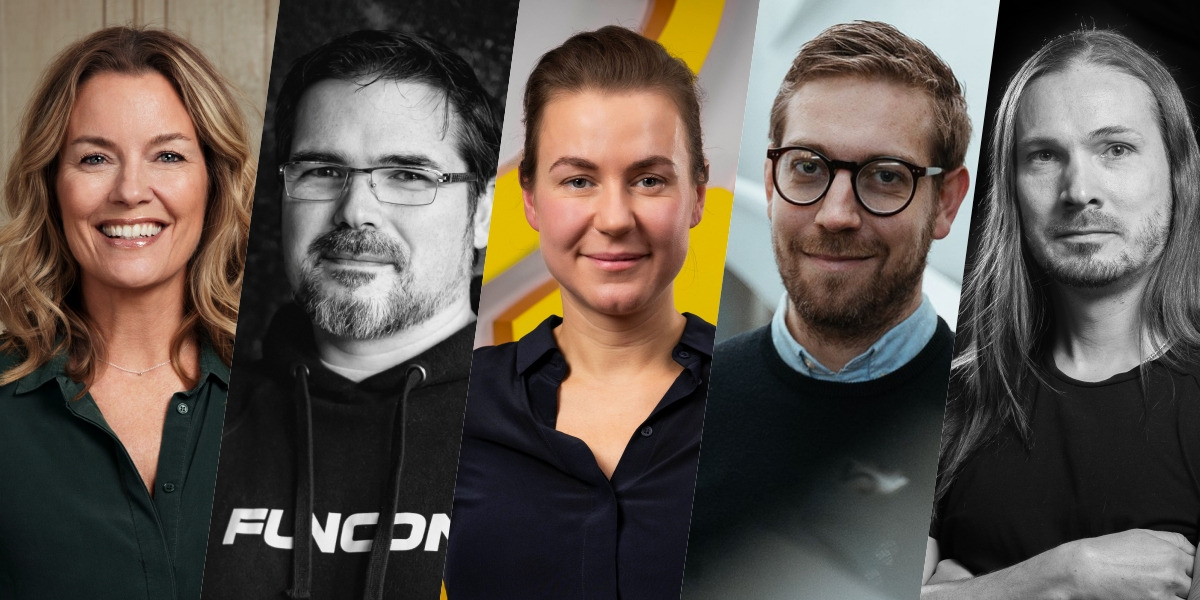
- Sweden's games hub is riding high off the back of recent successes like Peak and Arc Raiders.
- Finland's games industry faces key challenges to return to its 'A game'.
- Games Denmark believes there is "real momentum" in the country's games sector.
- Norway has a "small but growing" industry, with Funcom releasing hits like Dune Awakening.
This article is from of our upcoming Nordic games industry region report, created in association with Xsolla. Learn more about the region at Pocket Gamer Connects Nordics in Helsinki on October 20th and 21st.
The Nordics have had an immeasurable impact on the global games scene.
The region has given us blockbuster franchises such as Minecraft, Battlefield and Hitman. More recently, this part of the world has led the way when it comes to mobile, with behemoths such as King, Sybo, Supercell and Rovio defining the scene, while indie hits like Peak, What the Car and Noita have pushed the medium forward.
Measuring the size of the Nordic games market is tricky; Sweden and Finland are readily tracked by data provider Newzoo – coming in at $800 million and $400 million in consumer spending for 2025 – while there is far less information out there about Denmark, Norway and Iceland.
Regardless, the region has proved itself time and time again. The Nordic games industry is full of surprises and there's every reason to believe that tomorrow's hits will be made here.
Sweden
There's a lot of optimism in the Swedish games industry. The country has continued its storied tradition of must-play hits; during 2025, Embark Studios launched Arc Raiders, a game that has sold 16 million copies to date, while indie breakout Peak from Aggro Crab and Landfall has sold north of 10 million units.
However, data from research firm Newzoo shows a somewhat flat market. The company reports that during 2025, Swedish consumers spent around $800 million on video games. From 2020 until 2024, this figure stood at in the region of $700 million and is set to increase to around $900 million by 2028.
37.5% of consumer spending was on mobile during 2025, while 50% came from console. The remaining 12.5% was from gamers on PC.
Meanwhile, during 2024, Swedish companies made SEK 73 billion ($7.8 billion) in revenue around the world, according to the country's trade body, Dataspelsbranschen, aka Swedish Games Industry.

Despite some doom and gloom, Jenny Huldschiner, the chair of Dataspelsbranschen and the co-founder and COO of Arc Raiders developer Embark Studios, describes the market as "flourishing", pointing to the cultural cache that the country's games have globally.
Paula Ingvar, the general manager of Candy Crush Saga at King, also describes the Swedish industry as being in "a really strong place" at the moment.
"There continues to be a real craft in how games are made, built on a long-standing tradition of creating games with great player experiences that have global impact," she says.
Asked about the opportunities present in the Swedish games industry, Huldschiner points to the sheer variety that sits within the market.The local market boasts everything from mega studios like DICE all the way down to smaller companies like Landfall.
"We have a good mix of smaller indie studios as well as more established players, making games in different genres for most platforms. Games made in Sweden are recognised for quality and innovation, and Swedish games continue to play a central role in the global market, dominating platforms like Steam."
“Despite rapid technological advancements, many studios are stuck in costly ways of working.”Jenny Huldschiner
In terms of challenges facing the Swedish games market, the CEO of casual specialist Mag Interactive, Daniel Hasselberg, points to the country's high cost of living, arguing that the country stands to "benefit from the significantly higher throughput per person that AI enables". The exec believes that the technology will introduce new efficiencies that make it quicker and easier to make tomorrow's hits.
"Especially on the coding side, it is very exciting to see how much faster things can get done and how quickly you can go from idea to playable prototype," he continues.
"Be it a new game or a new feature, it is very helpful to be able to play it within hours or days instead of weeks. The need for large teams is decreasing, which is very helpful when each person comes with a relatively high cost."
Many of the challenges that Huldschiner sees in the Swedish games industry are true around the world, especially during times of belt-tightening and instability: no money and no appetite for risk.
"For a lot of studios, there is risk aversion, with more sequels and remakes instead of new IPs," she explains. "Globally, there's a shortage of investments for the industry.
"There are also broad regulations on how to design games, for example, a reinterpretation of in-game purchases. And despite rapid technological advancements, many studios are stuck in costly ways of working."

Looking to the next five years, Huldschiner says that she hopes to see more risk and money coming back into the Swedish games industry.
"I hope investment levels return so smaller studios can be founded," she says. "It's essential for a thriving ecosystem. I also hope we see less risk aversion, so players can enjoy more new IPs."
“The uncertainty created by the CPC Principles and the DFA is weighing on the Swedish games industry.”Paula Ingvar
Ingvar adds: "Games are both a key part of Sweden's creative and tech economy, and equally an important export. The industry needs to have the right conditions, regulatory frameworks and recognition to flourish, attract talent and grow, but right now, the uncertainty created by the CPC Principles and the DFA is weighing on the Swedish games industry.
"In five years, I hope that Sweden will still be known for making great games. And that the industry will see growth and stability - adding more talent, more ideas and more great games that are easily accessible to be enjoyed by players around the world."
Finland
When it comes to consumer spending, Finland's games market has seen little growth since 2020, remaining at around $400 million, according to data from Newzoo. Half of that figure comes from console, with PC and mobile taking about a quarter of the pie each. By 2028, the company forecasts that the Finnish games market will reach about $500 million in revenue, with this growth coming from mobile.
Discussing the sector, Miika Tams, the SVP for puzzle games and the general manager for Angry Birds Dream Blast over at Rovio, describes it as "resilient despite tough times".
"In Finland, it’s a space of great global talent, driven by a strong ecosystem of different kinds of companies with their specific focus areas," he explains. "You can find very atmospheric single-player PC games, and also casual mobile games you can pick up for a few minutes that all hail from Finland."

This sentiment is echoed by the director of Finnish games trade body Neogames, KooPee Hiltunen, who told PocketGamer.biz last year: "Despite some difficulties in the previous couple of years, the Finnish game industry is still strong. Big companies are doing just fine and the indie scene is more active than it has been in years. Companies are looking for new opportunities and platforms, and regulatory initiatives like DMA will hopefully offer some possibilities for growth in the future years.”
Tams says that the opportunity within the Finnish games industry is doubling down on what he knows the sector can do "making global hit games".
"In this, our super power is a game industry community that is very closely knit – people support each other," he says.
"Additionally, the local industry is looking a lot more at making games holistically and expanding the experience of the game through marketing, for example. These are no longer strictly separate things, but they’re all part of the show."
“We can’t get stuck on past successes. Instead, we need to roll up our sleeves and tackle the challenge.”Miika Tams
One of the big challenges facing the Finnish games industry – thanks to a heritage and specialism in mobile – is the fact that that part of the global market isn't growing.
"We can’t get stuck on past successes. Instead, we need to roll up our sleeves and tackle the challenge," says Tams. "Excitement and passion for what we do is going to help the Finnish game industry continue to conquer the world."
Another challenge, as always, is funding. Last year, Neogames' Hiltunen said that while the situation is improving, changes in the market can make securing financing difficult.
“The sentiment in the industry seems to be that getting investment is harder than before," he says. "The old mobile ‘scale-up with money’ model isn't functional anymore, due to the high UA price.
"Investors are looking for a new approach to the game business, but how to find a winning bet? For investors, technology, especially AI-based, seems to be one. In Finland, we are pretty good at all kinds of R&D, so I hope we can turn this situation to our favour."

Regardless of challenges facing both Finland and the global market, Tams is optimistic about the future of his country's games industry.
"I'd love to see us back on our A game," he says. "The entire Finnish industry making new hit games, introducing new amazing IPs – proving that the Nordics are a place where a game can grow to become a global success."
Hiltunen adds: “[By 2030] our goal is to be an autonomous, sustainable industry with a strong community and strong regional cluster organisations. Our share of global game industry turnover was around 1.8% in 2023, and we are looking to increase or at least maintain that share, which would mean at least doubling the industry turnover by 2030. It is an ambitious goal, but we have all the means to reach it."
Denmark
The most recently-available figures from trade body Games Denmark – produced in 2022 – show that there are 164 companies working in the Danish games industry. These firms brought in a total of DKK 3.6 billion ($563 million) and produced exports worth SKK 2.6 billion ($406.9 million). There are also 1,281 people working in Denmark's games industry.
“What is particularly exciting is that Denmark is no longer just producing isolated success stories.”xxxx
Though it hasn't seen the same level of success and recognition as some of its neighbours, Denmark's games industry represents a huge opportunity. Until now, the country has been known to produce occasional hits and blockbusters – such as the Hitman franchise from IO Interactive, Sybo's Subway Surfers and Deep Rock Galactic from Ghost Ship Games – but that could be about to change.
The executive director of Games Denmark, Niels Wetterberg, says that there is "real momentum" in the country's video games industry at the moment.
"Much of it comes from a generation of highly talented studios that, over the last five to six years, have managed to turn creative success into sustainable companies," he explains.
"That matters, because sustainable growth creates ripple effects across the entire ecosystem: more experienced talent, new studios, investor confidence and ultimately a greater willingness to take creative and commercial risks.
"What is particularly exciting is that Denmark is no longer just producing isolated success stories. We are beginning to see the foundations of a long-term industry."

The strength and opportunity within the Danish games industry is the variety of studios in the market. Wetterberg points to established players, such as IO Interactive, as well as smaller studios "driven by experimentation".
"As game development tools continue to democratise, the industry is likely to reward smaller and more agile teams capable of moving quickly, taking creative risks, and building highly distinctive experiences," he says.
"In a market increasingly defined by discoverability rather than pure production scale, originality becomes a competitive advantage. Denmark has historically performed well exactly in that space."
As is the case in many parts of the world, Wetterberg says that the Danish industry is being somewhat held back by a lack of understanding surrounding its "economic and cultural significance".
"This creates a gap at both ends of the ecosystem," he says. "For early-stage developers, it can mean limited access to seed funding, fewer opportunities for local market validation, and a general difficulty in translating creative potential into sustainable businesses.
"At the same time, larger studios often struggle to recruit enough specialised talent locally, particularly as international competition for experienced developers intensifies."
“If Denmark wants a world-leading games industry, it has to invest in the surrounding infrastructure.”Niels Wetterberg
Without external support, established players in Denmark's games industry have started to invest in the sector themselves.
"Established studios are mentoring smaller teams, experienced talent is founding new companies, and industry-wide collaboration is stronger than it has ever been," Wetterberg explains. "That gives reason for optimism about continued long-term growth."
Looking to the future, Wetterberg says that Games Denmark is set to launch a "national strategy" for the sector that will position the country competitively around the world.
"The key point is that this cannot be solved with one or two isolated measures. If Denmark wants a world-leading games industry, it has to invest in the surrounding infrastructure: talent, education, financing, export, and long-term industry support," he explains.
"More broadly, Denmark also needs to become significantly better at incentivising investment in startups and especially scaleups across the creative and tech sectors. Sweden has shown how powerful the right frameworks can be in creating a vibrant investment culture and globally competitive companies."
He concludes: "There is a lot that Danish policymakers can learn from that."
Norway
Of the Nordic countries, Norway is the second smallest next to Iceland. That's not to say that the country doesn't compete on a global level; hits such as Dune Awakening from Funcom show that the Norwegian studios can make global hits.
The CEO of Funcom, Rui Casais, describes the sector as "small but growing, with skilled small studios releasing interesting and creative games in addition to the occasional bigger hit”.
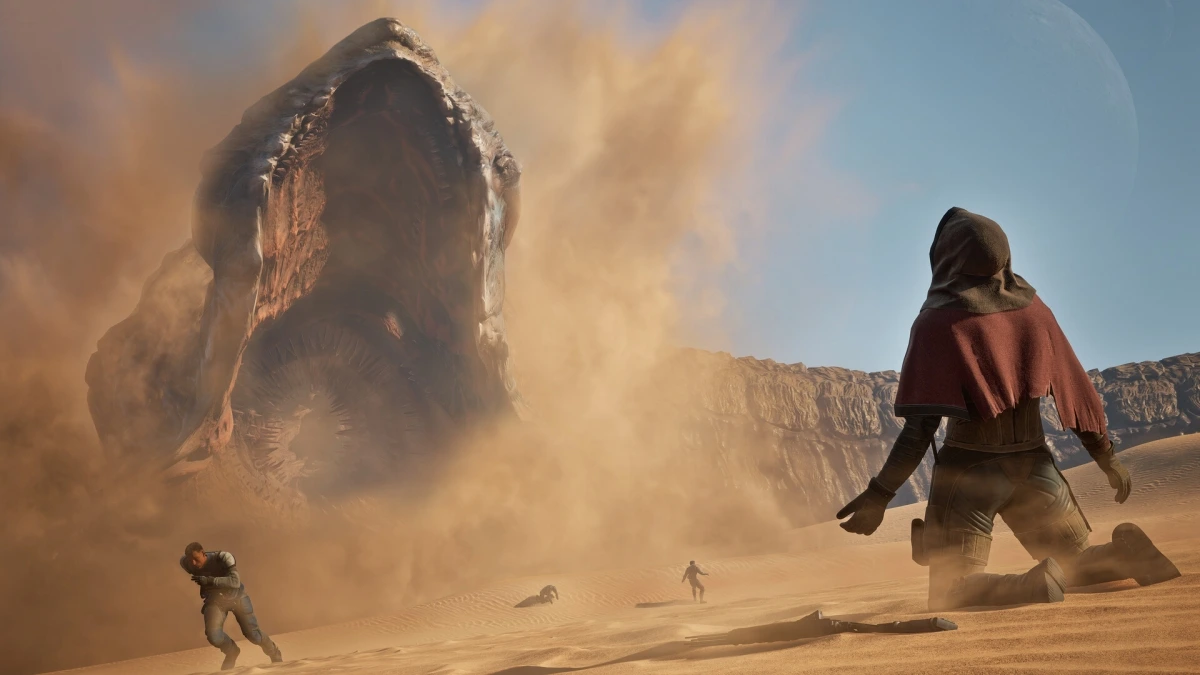
In terms of opportunities, Casais says that Norway's social set-up should be enticing and could be a draw for foreign workers to come over and work.
"Norway's social system provides a safety net many countries do not have, and I think this could be a great baseline to encourage entrepreneurship and creative exploration in the video games space, as the cost of failure isn't as severe as in countries with weaker social systems."
However, games is a tiny industry for Norway, especially compared to giant sectors such as energy.
"Those companies attract most of the talent and can provide well-paid, comfortable jobs that naturally can be quite appealing when compared with the riskier nature of game development," he says.
"Also, culturally Norwegians seem to favour more 'classical' jobs and companies rather than entertainment or highly experimental technology ones."
While there is an existing cultural program through which game projects can be supported, Casais says that there needs to be broader support for video games specifically.
“Norway's social system provides a safety net many countries do not have and I think this could be a great baseline to encourage entrepreneurship and creative exploration in the video games space.”Rui Casais
"I'd really like to see more industry-focused support to encourage healthy businesses being established and operated, and attract investment," he says.
"Tax credits or rebates, beneficial loans, co-investment programs and so on. Fundamentally, I believe the country should encourage companies that create employment and create real long-term economic value for the country, in addition to those that create cultural value. Our industry is a combination of both aspects after all."
Asked to give a five-year outlook for the Norwegian games industry, Casais says that it's a tricky question given the current global macroeconomic situation, but he says that he is confident that developers in the country will weather the storm.
"It's quite hard to have a five-year outlook in the industry right now for Norway or anywhere else, our industry is undergoing changes both internally on how games are made but also externally in terms of addressable market, competition and available investment," he says.
"Everyone will have to adapt, and I hope Norway's gamedev scene stays on top of things."
Learn more about the region at Pocket Gamer Connects Nordics in Helsinki on October 20th and 21st.
Companies





People