How Türkiye's Bold Games plans to set itself apart

This interview is part of our Türkiye region report, published in association with Xsolla, which you can download for free here.
Ulaş Mergen, the CEO of Bold Games, has no illusions about how competitive the Turkish mobile games market is.
The exec – heading up the latest hot studio in the business – is more than aware that “most” of the newly founded mobile games companies will fail. “That is nature,” he tells PocketGamer.biz.
Mergen was desperate to join the mobile games industry and was hired by Dream Games, back when the Royal Match maker was just a startup, as a graduate in 2020.
“Mobile gaming was the only competitive sector in Türkiye at the time,” he explains. “Unfortunately, there aren’t many opportunities in Türkiye where you can build globally. That is why I joined the mobile gaming environment. I loved every second of it.”
Bold ambitions
Since his time at Dream, he’s worked at Rollic and Bigger Games, where he met his Bold co-founders, Baris Incesu, Atakan Tuglu and Candas Demirel.
The company’s ethos or culture is inspired by, but separate, from what other companies are doing in the country. Mergen says that a company like Dream Games is “100% operational excellence”, with a focus on top-grossing genres.

Rollic, meanwhile, is reported to make thousands of prototypes per year, whereas a studio like Grand Games is about exploring the different subgenres within the casual puzzle genre on mobile. Then there’s Bold Games’ culture, which Mergen says is “making some product innovations on already-well-executed casual puzzle games.”
The CEO says that his studio’s first title, Market Match, is a combination of Goods Sorting and Match Factory. The team enjoyed the “look and feel” for the former, but wanted more depth from the swiping mechanics, ultimately deciding that the stacking system and step mechanics of the latter were worth exploring.
“We can do a lot of product innovations in that genre,” Mergen says. “It is not like discovering America all over again. We are only making small tweaks, but as Bold Games, we want to make different games. When you take your phone and open our game, you will find something different.
“We believe that there are three different areas in the game: mechanics, levels, and execution. We really like art execution, but if you don’t have a solid mechanic and level design, you cannot succeed purely with art execution. We are trying to innovate in game mechanics and level design.”
“There are no complexities, no inefficiencies. Whenever you ask a question, you don’t need to have a meeting for it.”Ulaş Merge
Recently, Bold Games made headlines for securing a $6 million investment led by Arcadia Gaming Partners, Makers Fund and e2vc. Mergen says that this funding isn’t to scale Market Match.
“It’s a seed investment that will help us expand our team with people who believe in our vision, believe in us and want to make great games,” he says. “The investment is only to build the team, not Market Match.”
At the moment, Bold Games is only nine people strong. When Mergen says he wants to scale the studio, he isn’t talking about a major recruitment drive and would ideally like the company to be 12-to-14-strong at most.
“We really believe in small teams. And small offices,” he says. “Every day we work at our office quite close to each other. It is really important for us. There are no complexities, no inefficiencies. Whenever you ask a question, you don’t need to have a meeting for it. We solve problems right there in the office. We don’t actually want to involve that many meetings in our culture. Small studios and small teams make great games.”
Development culture
For now, Bold Games isn’t actively seeking further investment, but Mergen says that the studio will need significantly greater funds to scale Market Match and another game at some point in the future. “You need much more money to scale a game in 2026,” he says.
One of the things that the Turkish games industry is known for is its rather aggressive approach to prototyping. Bold Games might not be at the level of Rollic, which reportedly produces and kills 1,000 prototypes in a single year, but since its inception in 2025, the Market Match creator has made making concepts faster a core part of its mission.
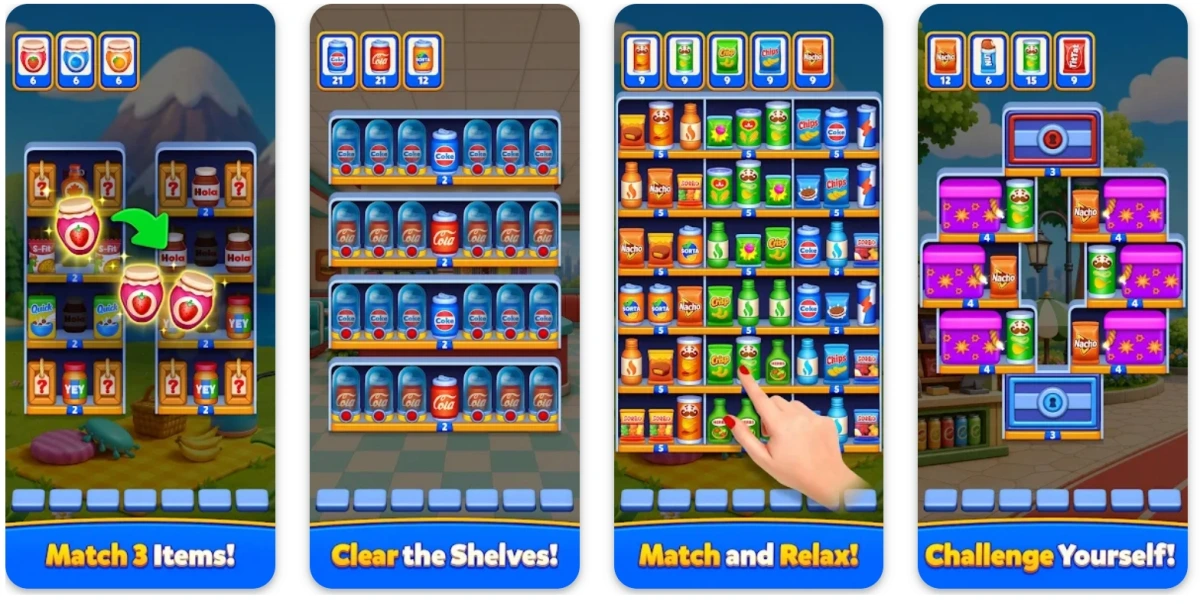
“We aim to have a prototype after one week, just for the game mechanics,” Mergen says. “After that, there are seven weeks of implementation; after that time, we’ll have 100 playable levels, five obstacles and one mechanic that we like to make level design. We need to show that we can do level design for that mechanic.
“Six or seven months ago, seven weeks was quick. But with AI developments, we are now seeing that seven weeks is slow again. Maybe we need to tighten it to four weeks. In a month, I will probably see a new AI model which will increase our workload capacity greatly.
“That is why, right now, I am not sure whether four weeks is quick or not. It’s quick now, but in another one or two months, we’ll be saying that we need to tighten it because we can do things a lot faster thanks to AI.”
To close, we ask Mergan about what Bold’s five-year plan looks like. Unsurprisingly, he has big ambitions for his studio.
“We dream about having dozens of games,” he says. “We are a mobile games studio and we don’t want to make one or two titles. We have casual puzzle DNA because we all come from the puzzle genre. You’ll probably see a lot of puzzle games from us rather than going into other genres across the next five years.
“We want to dig into new types of puzzle games, new kinds of subgenres. We’re playing a lot of games, trying to understand how we can make those kinds of games better. Is there a way for us to make a more entertaining version of that game?” He concludes: “In five years, we will have many more casual puzzle titles.”
Companies