Transmedia tactics: "Over-leveraging before you have a community is how studios die"

- Toma Komitski will discuss transmedia at PGC Barcelona 2026.
- Ahead of his talk, we speak about the ideal strategies for smaller studios compared to famous IPs.
Transmedia has entered a new era in recent years, with movie adaptations of video games no longer inevitably lambasted as poor translations pleasing no one, but rather celebrated as titles resonating with long-time fans and appealing to newcomers.
Films like The Super Mario Galaxy Movie, the Sonic the Hedgehog trilogy and Detective Pikachu have delivered narratives that non-fans can follow while also appealing to veterans - with attention to detail, respect for the source material and plenty of Easter Eggs.
Beyond movie adaptations, transmedia has taken forms like TV shows, anime and web series. Be it Angry Birds or Clash of Clans, even mobile IPs are evolving into multi-medium brands.
“If you don't align your budget with the intent of the media, you’ll go broke before the ecosystem matures.”Toma Komitski
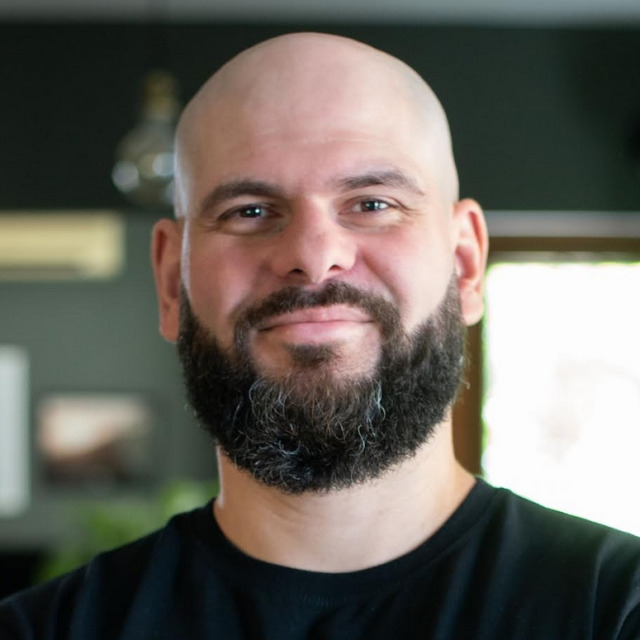
Ahead of his talk at PGC Barcelona (June 15th and 16th), we speak with Chase A Cloud’s head of sales and business development Toma Komitski about transmedia tactics, lessons to be learned from hits like The Super Mario Galaxy Movie and the importance of "narrative ecosystems".
"You have to think transmedia on day one, but spend transmedia on day 100," he advises.
"If you don't bake the ‘transmedia DNA’ into your worldbuilding from the start - meaning your lore is flexible enough to bridge into film or toys - you’ll find yourself retrofitting a story that doesn't fit, which is incredibly expensive and usually feels forced."
At the same time, Komitski believes that developers shouldn’t focus on too many projects at once: a lead product needs to be the anchor.
"Plan globally, execute locally. Design the universe to be infinite, but wait for the market signals from your game before you pull the trigger on the series or the board game. Ambition is great. Over-leveraging before you have a community is how studios die."
Tools of the transmedia trade
Chase A Cloud operates as a hybrid studio that’s "half original IP lab, half strategic production partner". The company is based in Sofia, Bulgaria and specialises in animation, production management, pre-production and development.
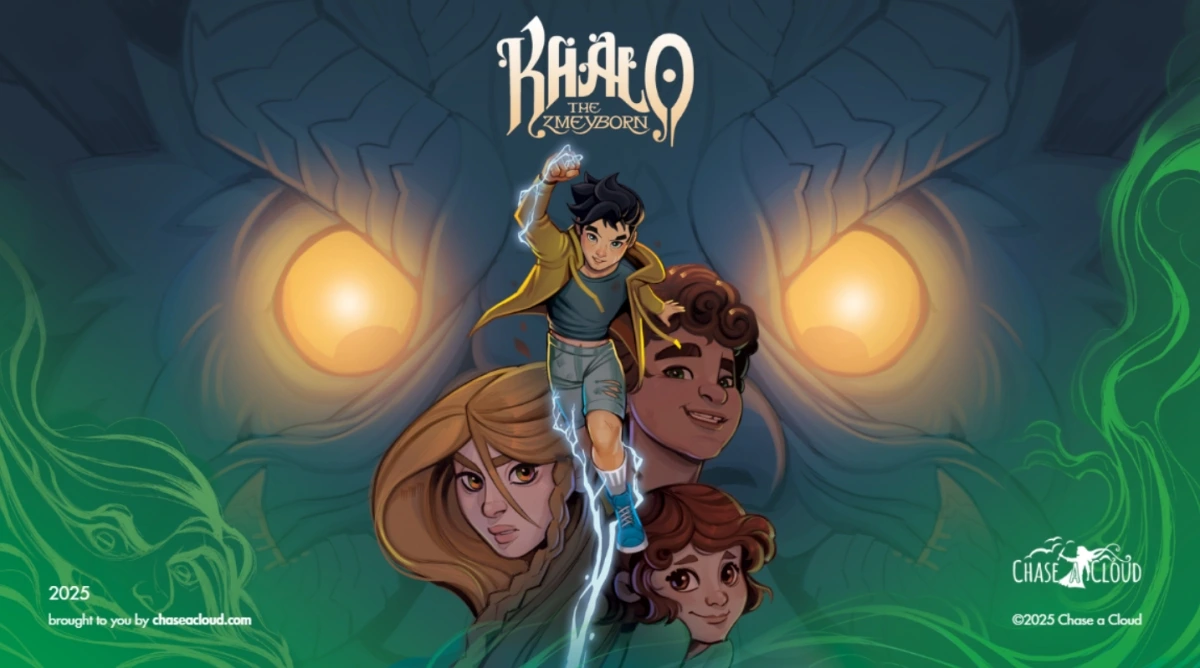
Over almost 20 years, Chase A Cloud has produced animations and live-action stories for LEGO, Mattel, National Geographic, book series Khalo the Zmeyborn and more.
"On the IP side, we are the guinea pigs. With Khalo the Zmeyborn, we’ve already moved from books and board games into a global mobile game launch this summer and a feature film in production. We aren't just theorising about transmedia - we’re living the 'battle scars' of scaling an indie IP into a multi-product universe," says Komitski.
"The second column is how we apply those lessons to our partners. We don't just provide animation services. We offer transmedia architecture. Whether it's for LEGO or a mid-sized game studio, we help them build the connective tissue - the cinematics, the lore-marketing and the cross-media strategies - that turns their product into a long-term storyverse."
“Over-leveraging before you have a community is how studios die.”Toma Komitski
He encourages developers to work with partners who understand the "languages" of multiple media formats. If a game is to be adapted into a series, developers can’t expect to succeed by simply viewing episodes as long-form cinematics. Similarly, a TV show or film looking to expand into games shouldn’t approach the medium as if games were "interactive movies".
"They are fundamentally different cultures. Don’t just hire ‘hands’ to execute," suggests Komitski. "You need a team - internal or external - that values the authorship of the world over the technicalities of their specific silo."
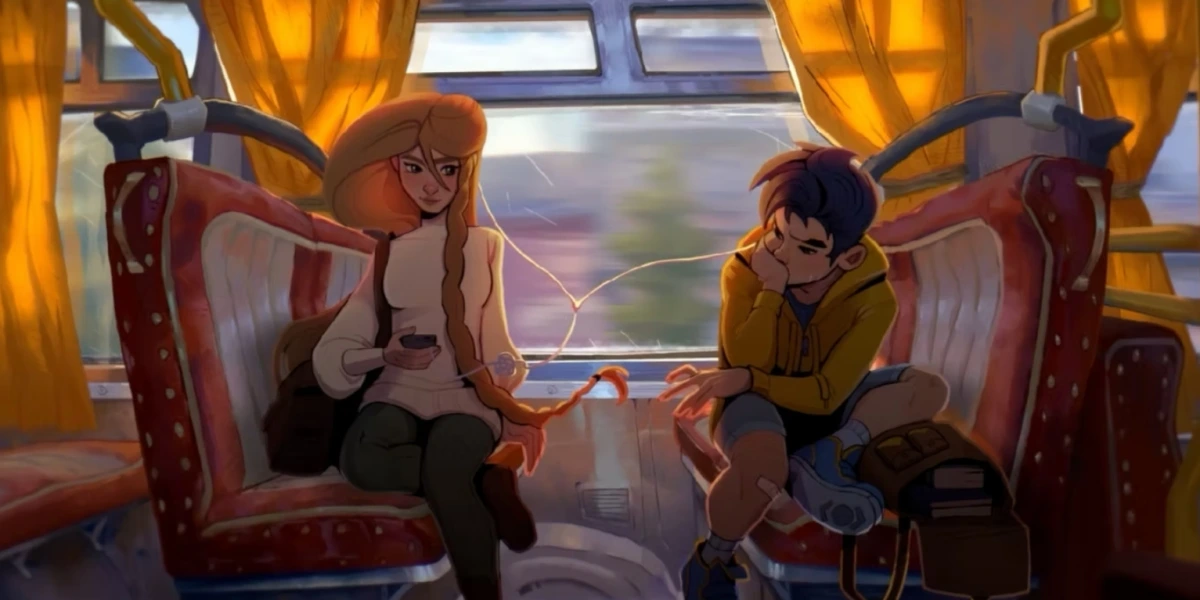
Komitski also advises that a game IP looking to expand into transmedia should first categorise every product in its ecosystem as either a driver of revenue or as a "signal generator". If a studio launches a comic book series tied to its game, for example, those comics don’t necessarily need to make a profit or even break even on their own.
He warns that trying to make everything profitable all at once can be a pitfall. What's important is that transmedia efforts have a measurable impact elsewhere.
"Measure it by the compound effect it has on your game’s UA costs," he says. "If you don't align your budget with the intent of the media, you’ll go broke before the ecosystem matures."

We ask if his advice is the same for a mobile game IP specifically. Komitski answers that the strategy for mobile differs significantly because many mobile titles already reach a large number of users. Komitski believes that, as mobile games may trend towards "thin emotional resonance", the challenge instead becomes establishing depth.
In essence, when a mobile game goes transmedia the goal isn’t just to reach more users: the game can do that already. Rather, such initiatives should be about giving players a reason to care about the characters even after they close the game.
"The potentially biggest mistake mobile devs could make is thinking their transmedia needs to look like their game," Komitski advises.
"It shouldn't. If your mobile game is a 'snack', your transmedia expansion needs to be the 'meal' that builds long-term loyalty and lowers your future UA costs. You aren't selling a game anymore."
Best and brightest
On the upper end of famous, successful transmedia initiatives are hits like A Minecraft Movie, The Super Mario Bros. Movie and its recent sequel, The Super Mario Galaxy Movie.
“They understand that for a transmedia jump to work, the new medium must offer something the original medium couldn't.”Toma Komitski
The Super Mario Bros. Movie is the most lucrative game adaptation ever on a box office basis, having generated almost $1.4 billion in cinemas back in 2023.
In 2025, A Minecraft Movie made an estimated $960.4m, according to Box Office Mojo. It has just been surpassed by The Super Mario Galaxy Movie’s $983.7m and counting. As a result, the Mario franchise now holds the top two spots for video game adaptations.
Komitski calls The Super Mario Galaxy Movie a "masterclass in IP preservation versus IP expansion", noting how Nintendo leveraged Wii game Super Mario Galaxy’s space-themed gameplay and "turned it into a visual spectacle that justifies the theatre ticket".
"They understand that for a transmedia jump to work, the new medium must offer something the original medium couldn't: in this case, scale and cinematic emotion," he says.

Naturally, not every transmedia adaptation can expect to float around the $1bn mark. A smaller IP also shouldn’t immediately target a theatrical release.
Komitski suggests that beneath transmedia’s buzzword appeal and "marketing gloss", the reality is often "a mess of misaligned KPIs and disconnected teams". First, he wants studios to stop thinking in terms of siloed products and to start thinking in terms of a scalable narrative ecosystem.
And, rather than box office blockbusters, he thinks most game IPs should focus on high-resonance, low-friction platforms like a comic series, a web series or short-form animations on the internet.
These can be treated as live market experiments, Komitski says, allowing developers room to "fail fast, refine your tone of voice and build a community without a $100m price tag".
To conclude, Komitski argues studios should be thinking about transmedia opportunities, but at an appropriate scale. If an IP can’t attract 50,000 people to a high-quality web short, it won’t be winning cinema ticket sales either.
"In transmedia, you earn the right to the big screen by winning the small screens first," he summarises.
"Chasing a movie deal too early is the fastest way for a small IP to lose creative control and go broke. Big franchises like Sonic or Minecraft use the box office as a brand victory lap. They already have millions of fans and decades of data.
"A theatrical release is a destination, not a starting point."
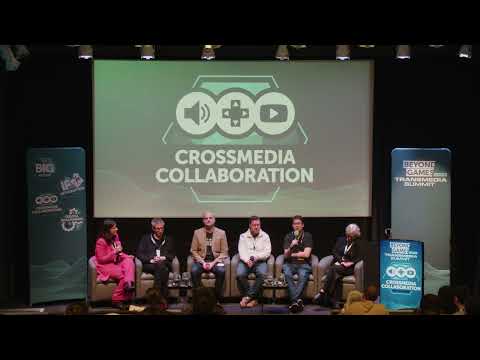
Komitski will give a talk on further transmedia tactics at PGC Barcelona 2026, taking place on June 15th and 16th. Tickets are available now.
Companies
People
Events
