The Brian Ward era: How Savvy built Saudi Arabia's games industry and what happens next

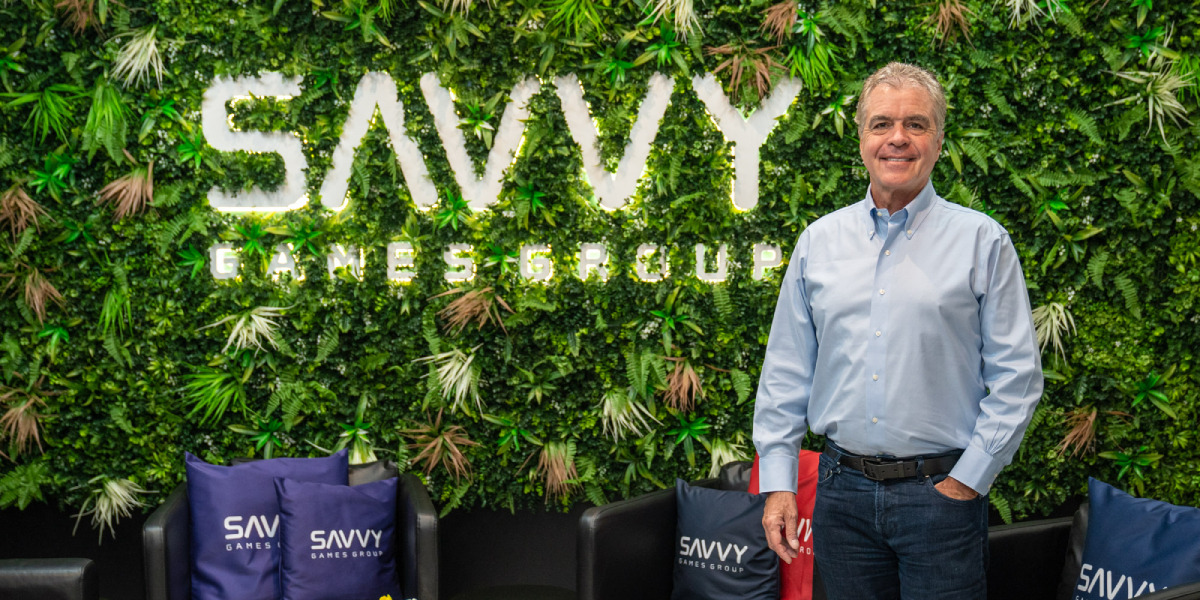
Brian Ward’s time as CEO of Savvy Games Group has come to an end. Since joining the company in 2021 as founding CEO, he quickly became one of the main faces of Saudi Arabia’s push into the global games industry. Now, four years before the Kingdom’s 2030 target, he is stepping down.
Ward's departure comes sooner than expected. It seemed likely that he would still be running Savvy in 2030, when Saudi Arabia could properly look back and judge whether its huge bet on games and esports had worked and Vision 2030 had become a reality. That will not happen now.
Rest assured, Ward leaves behind a company that looks very different from the one he joined. Savvy has spent billions buying some of the biggest companies and businesses in games, while also trying to build a games ecosystem inside Saudi Arabia.
The results have been mixed, but there is no question that Savvy - and thus, Saudi Arabia - has become a major force in games during the Brian Ward era.
A buying spree
When Ward joined Savvy, he was handed one of the most unusual jobs in the games industry. Saudi Arabia's Public Investment Fund (PIF) had set aside $38 billion to help turn the Kingdom into a global gaming powerhouse by 2030, and Ward was the man chosen to spearhead this ambition.
He brought over 25 years of industry experience to the role, including nine years as CEO of mobile games developer LottoInteractive, as well as senior positions at Microsoft, Electronic Arts and Activision - where he helped turn Call of Duty into one of the biggest franchises in gaming history.
The biggest part of Ward’s time at Savvy has been its long list of headline-making deals. The company bought esports businesses including ESL and FACEIT in 2022, which were later brought together as ESL FACEIT Group.
Then came the $4.9bn purchase of Scopely in 2023, a deal that gave Savvy control of one of the biggest mobile games companies in the world, including Monopoly Go, which went on to become a huge success, reaching $6bn revenue in record time.

Scopely, backed by Savvy, acquired Niantic's games business for $3.5bn, bringing Pokémon Go into its wider portfolio. The Monopoly Go developer also acquired a majority stake in Loom Games, a deal that valued the Istanbul-based studio at more than $1bn. More recently, Savvy agreed to buy Mobile Legends: Bang Bang developer Moonton Games for around $6bn, although that deal is still waiting to close.
There were also plenty of other investments across games and esports. But the other part of the Ward era that can be easy to overlook is the work happening outside Savvy's acquisitions that may prove even more important in the long run.
Beyond the acquisitions
If Saudi Arabia was serious about building a games industry by 2030, it needed people to actually work in it. Under Ward's watch, Savvy built partnerships with technology companies, universities and schools to create a talent pipeline and provide students with a route into the industry. It also established Savvy Games Studios in 2022, later rebranded as Steer Studios, and placed it under veteran Ubisoft executive Yannick Theler.
At university level alone, partnerships with King Saud University, Alfaisal University, King Abdulaziz University, the American University of Bahrain and others have introduced dedicated games and esports programmes to institutions that had no formal pathway before.
Meanwhile, Savvy and the Ministry of Education's Play to Learn competition brought in more than 719,000 students from 7,705 schools, with students submitting more than 155,000 game concepts. This partnership with the Ministry also extends to incorporating game development into Saudi school curricula and the national e-learning platform Madrasati.
There were also programmes aimed at finding developers rather than simply teaching them. Last year, a GameOn GameJam with HP and Saudi Electronic University brought university teams together to create games around sustainability, with the winning teams moving into Savvy Academy's three-month incubator.
All of these sit alongside Savvy's wider partnerships with companies including Roblox, Unity, AWS, HP and SBI Holdings in Japan, as well as its work with investment firm Merak Capital and NEOM, to give Saudi gaming startups access to funding, industry connections and international networks.

Savvy wasn't simply trying to create or grow existing Saudi gaming businesses. It was also actively trying to convince major global games companies to establish a presence in the KSA. Its 2024 invitation to companies including Nintendo and Capcom was essentially an attempt to make Riyadh a regional base for the industry. Since then, companies including Scopely, through its Mirai studio, Xsolla, Territory Studio, and Side have established or committed to establishing a presence in the Kingdom.
None of this is glamorous. MoUs and school competitions do not make widespread headlines the way a $4.9bn acquisition does. But the pipeline Ward oversaw, from classroom to accelerator to studio, is a big part of his legacy that Vision 2030 will be measured against. If anything, it shows that Savvy was trying to build the infrastructure around the games industry, not just buy its way into it.
Not everything went as planned
Savvy's esports push has also been far less straightforward, with layoffs at ESL FACEIT Group and a shift in focus, with Ward saying the company had “pretty much done what we needed to do” in terms of its major esports investments, while remaining bullish on the sector.
At the same time, Saudi Arabia's wider esports ambitions continue through the Esports World Cup and Qiddiya City, both of which remain major parts of the Kingdom's push to become a global esports hub.
Then there is Embracer. Savvy was revealed as the mystery partner behind a planned $2bn investment in the publisher before pulling out of the deal in 2023. The collapse played a part in triggering Embracer's financial crisis, leading to more than 1,000 layoffs, studio closures, project cancellations and the sale of major assets. It eventually led to Embracer breaking itself apart.
Of the $38bn set aside for gaming, Ward said in March that Savvy had spent around $13bn, less than a third of the total. He also warned that the fighting linked to the Iran conflict could damage the region's reputation as a place for global gaming businesses. More recently, the inaugural Esports Nations Cup was postponed from November 2026 to November 2027 following an assessment of the wider regional situation.
The bigger picture at PIF
Though Ward framed his departure as “the right time for new leadership”, his exit is also part of a larger shift happening across PIF's investments.
Amit Midha, who led the PIF's technology investment company Alat, was dismissed earlier this year following a PIF spending review that saw the company drop its semiconductor ambitions.
LIV Golf, the breakaway golf league that has received more than $5bn from PIF since 2022, is facing a possible bankruptcy filing after PIF pulled its funding at the end of the 2026 season. Neo Space Group, established by PIF in 2024 to build a national space ecosystem and support Vision 2030, also lost its CEO Martijn Blanken earlier this year.

And that's not all. At Newcastle United, long-serving manager Eddie Howe left in July, while several key players have since been offloaded as the club reshapes its squad under new manager Matthias Jaissle, recruited from PIF-owned Al-Ahli Saudi Football Club, with financial rules limiting how freely it can spend.
Then there’s NEOM, the futuristic city project that was one of PIF's most talked-about bets, which has been significantly scaled back from its original vision, with work on The Line halted until after 2030 and now focused on being constructed in a “financially sustainable” way. The mega project was also cited as one of the reasons the sovereign wealth fund was reportedly short on fresh capital for new investments.
Across all of these ventures, PIF appears to be entering a more cautious phase, pulling back from some of its bigger, long-term bets and, in some cases, changing the people running them. There have also been reported concerns inside Savvy about how the company and the newly acquired EA - a PIF-led $55bn mega deal - would work alongside each other as two huge gaming businesses under the same Saudi ownership.
What comes next
Turqi Alnowaiser, a senior PIF executive who heads its international investments division, will run Savvy on an interim basis following Ward’s exit. He also played a central role in PIF's $55bn acquisition of EA, giving him a direct hand in one of the biggest deals in gaming history.
If and when PIF appoints a new permanent CEO, Ward's long-term successor won't be starting from scratch, far from it. They will take over a company with Scopely, ESL FACEIT Group, Steer Studios and a large collection of investments across the games industry, including around $12bn worth of gaming shares. On top of that, there’s still around $25bn to spend if the available funds outlined for Savvy from the start haven’t been shrunk.

With Alnowaiser's appointment, Savvy now has a closer relationship with PIF, which itself now controls a much larger collection of gaming assets, most notably EA. It could also mean Savvy enters a more controlled and careful phase after years of expansion and acquisitions. Whether that change in direction has played any part in the recent departures is another question.
As for the relationships Ward spent five years building with publishers and studios around the world, and the knowledge he accumulated about how this industry actually works, none of that automatically transfers. The question of how Savvy and EA operate as sister companies under the same owner has no clear answer yet either.
The next few years will determine whether the foundations built during Ward's tenure can deliver the results the Kingdom wants by 2030. Whatever happens from here, the Brian Ward era will be a huge part of how Saudi Arabia's games industry got to where it is today and where it goes next.
Companies

People
